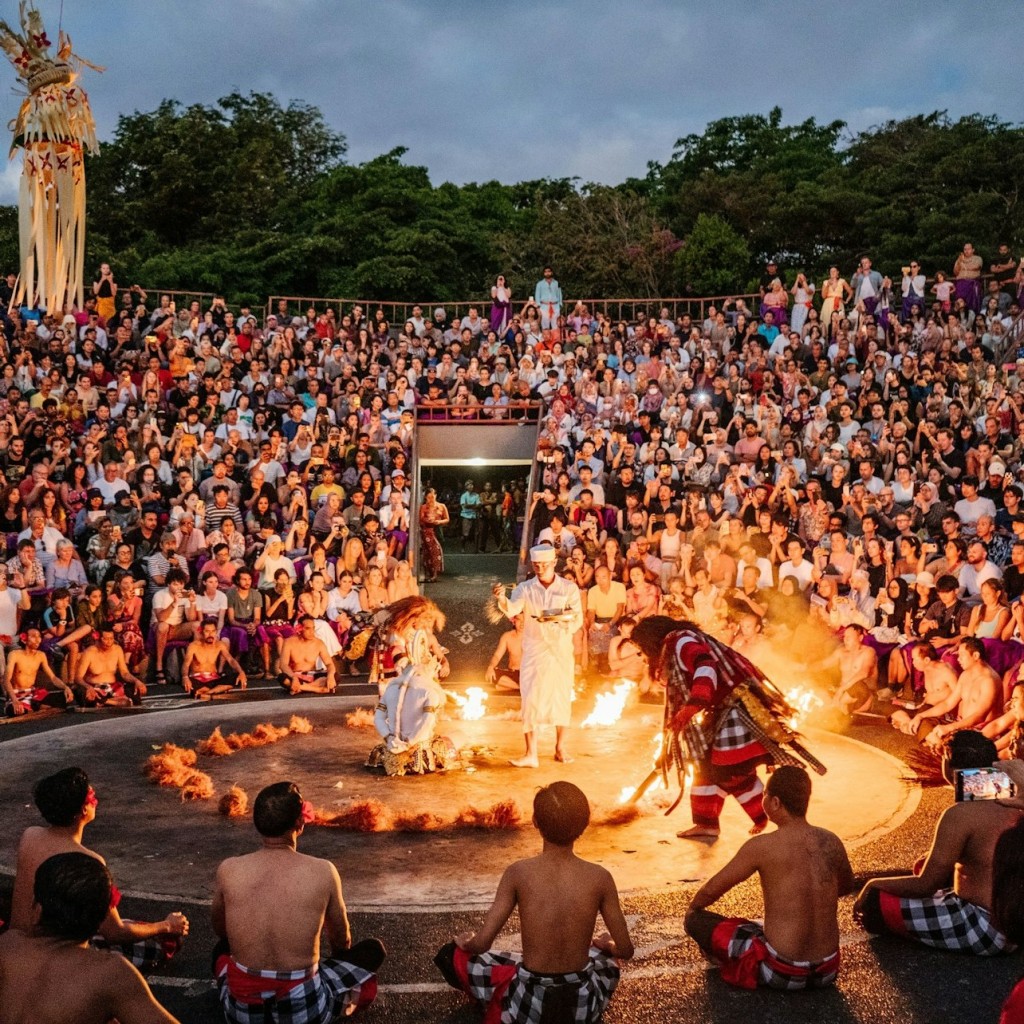
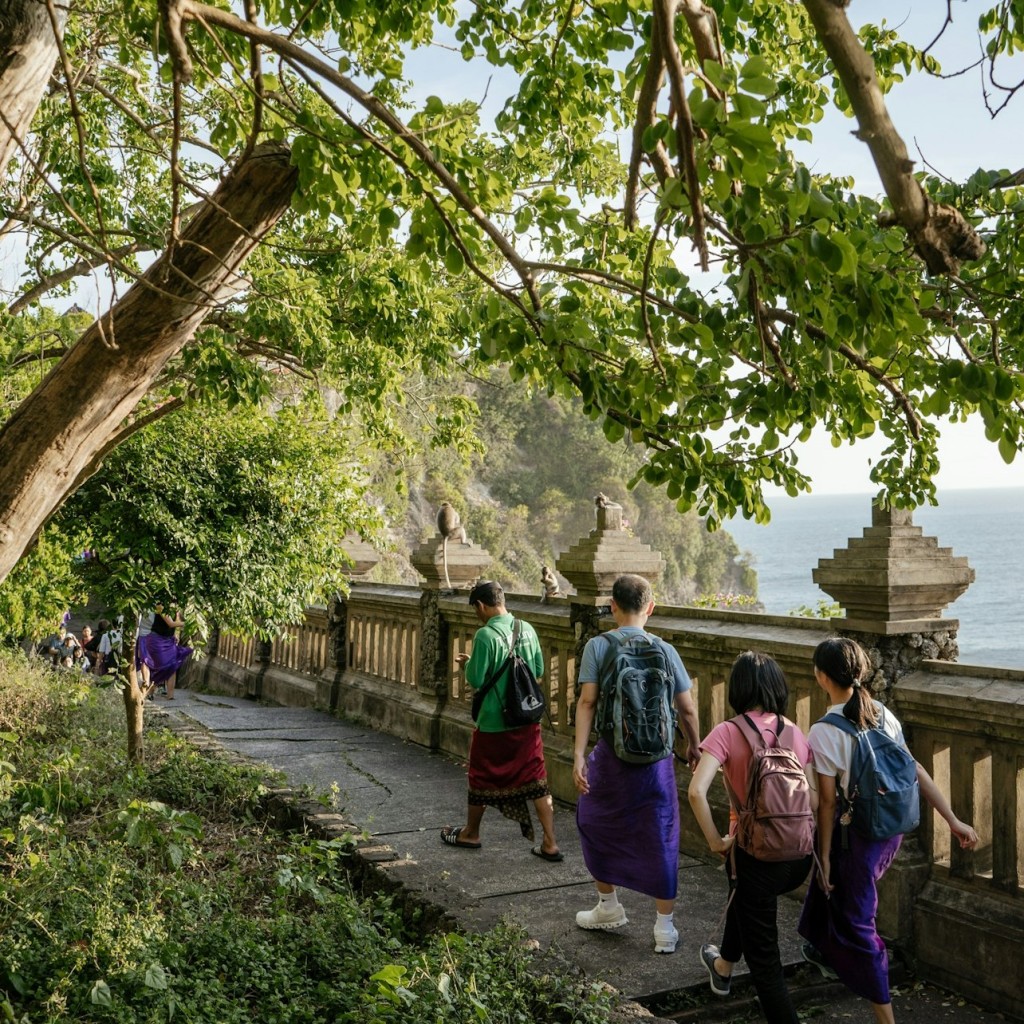
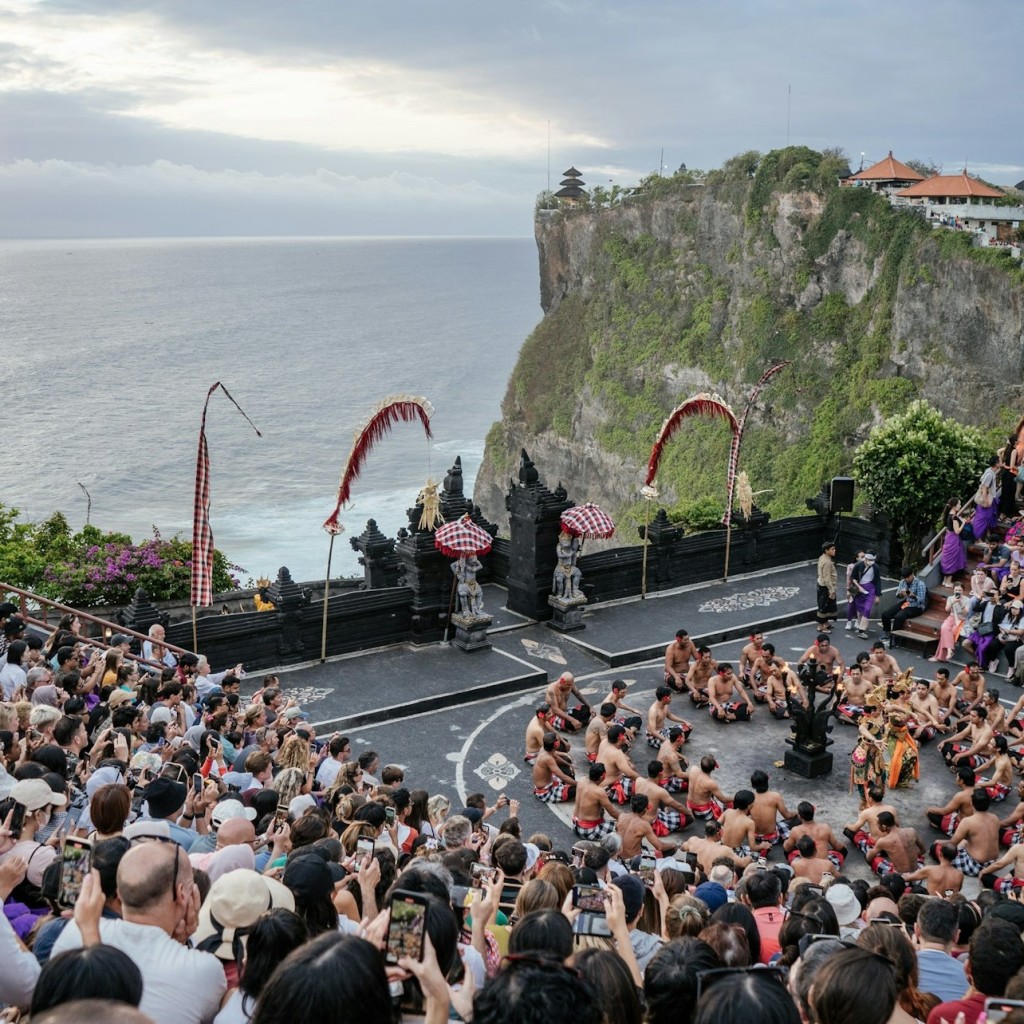
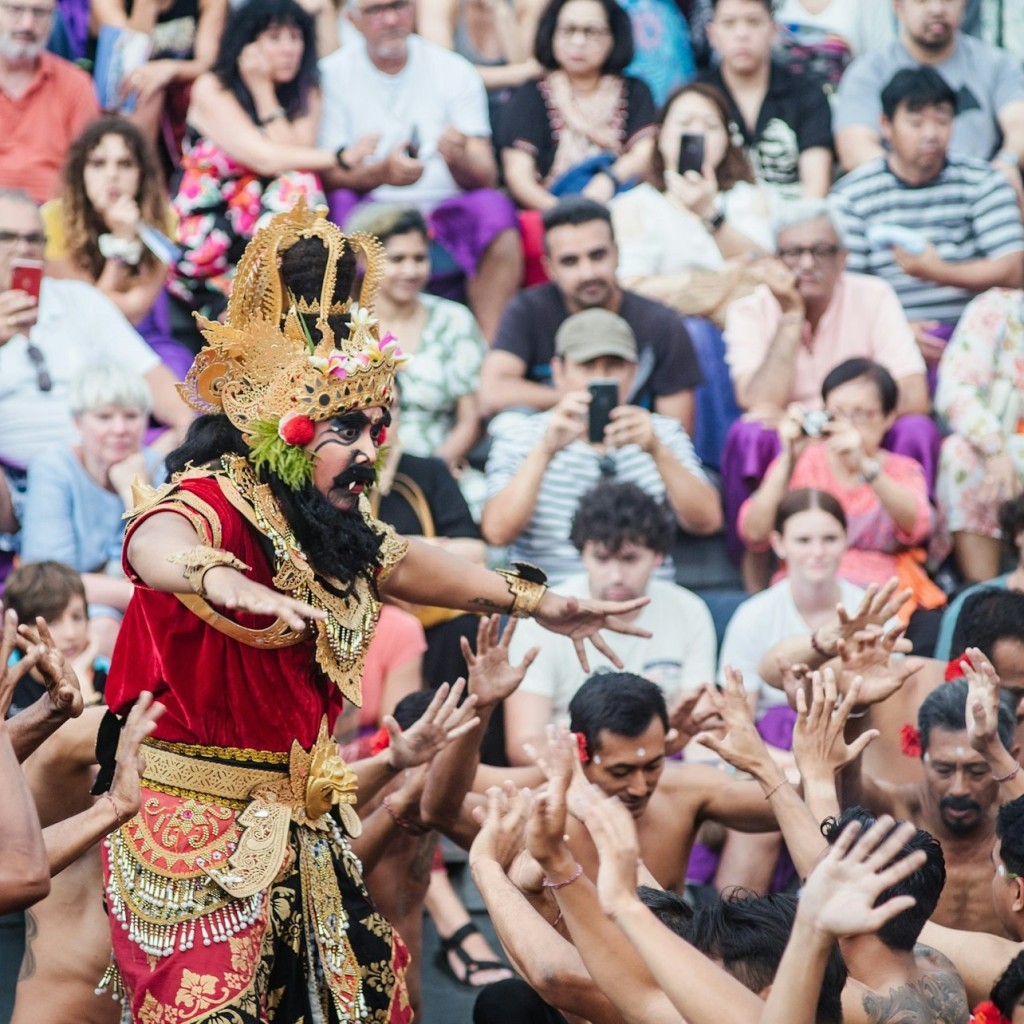
Uluwatu Temple, or Pura Luhur Uluwatu, stands as a testament to Bali's rich cultural and religious heritage. Believed to have been constructed in the 11th century, this sacred site is dedicated to Sang Hyang Widhi Wasa, the Supreme God in Balinese Hinduism. The temple's origins are attributed to Empu Kuturan, a Javanese Hindu priest who initiated its construction. Later, it was further influenced by Dang Hyang Nirartha, another revered priest who chose Uluwatu as his final place of worship. The temple complex features ancient sculptures, intricately carved gates, and traditional Balinese architecture. The inner sanctum is reserved for prayers and religious ceremonies, while the outer areas are accessible to visitors. The surrounding cliffs provide panoramic views of the Indian Ocean, making it a popular spot for sunset viewing. The daily Kecak fire dance performance enhances the cultural experience, narrating the epic Ramayana against the backdrop of the setting sun. Uluwatu Temple remains an active place of worship, imbued with a sense of peace and spiritual energy.