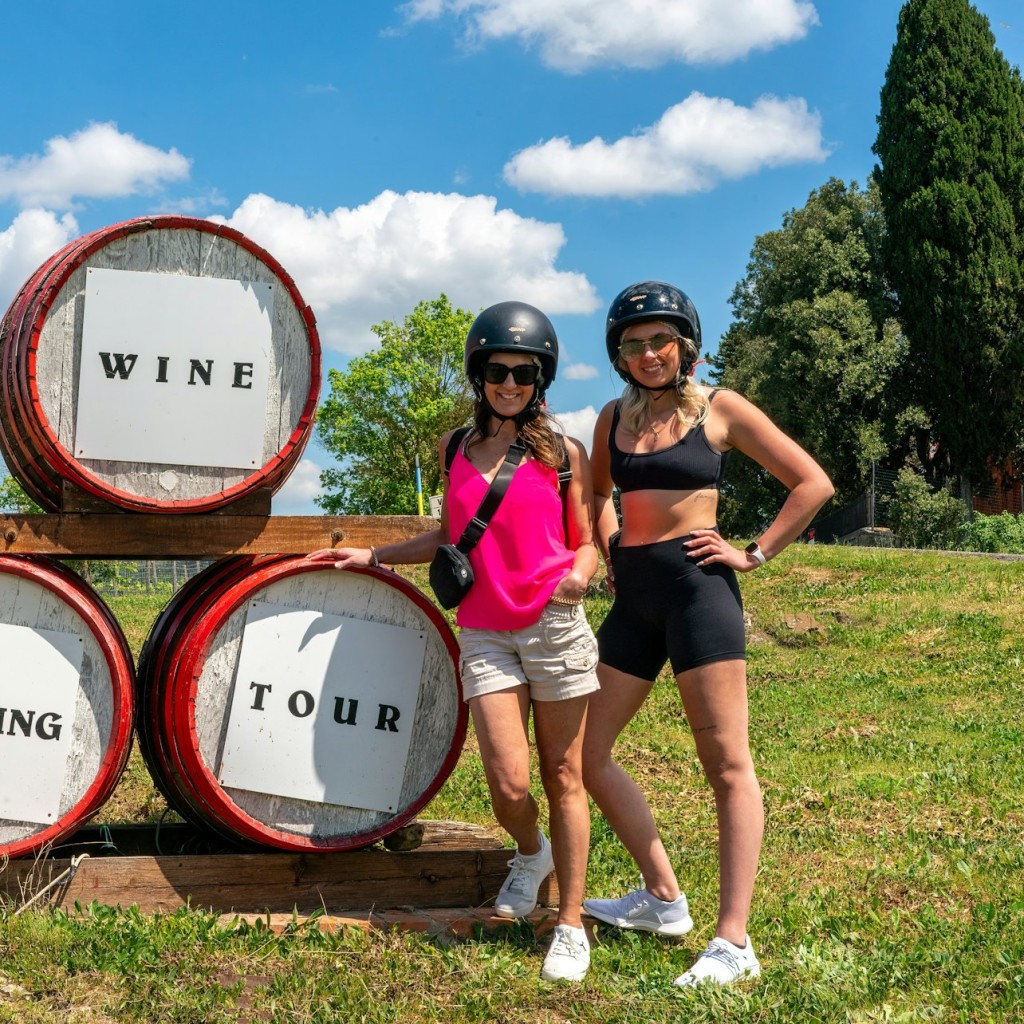
انطلق في رحلة مبهجة عبر المناظر الطبيعية الأيقونية لتوسكانا مع جولة لا تُنسى على دراجة فيسبا. توفر هذه المغامرات المصحوبة بمرشدين منظوراً فريداً، مما يتيح لك الانغماس في جمال المنطقة بوتيرة مريحة. اشعر بالرياح وأنت تتنقل عبر التلال المتدحرجة، وكروم العنب القديمة، وبساتين الزيتون المشمسة. اكتشف الجواهر الخفية، والقرى الريفية الخلابة التي تعود للقرون الوسطى، ونقاط المراقبة البانورامية الخلابة التي تمثل جوهر توسكانا. جولة الفيسبا هي أكثر من مجرد ركوب؛ إنها تجربة إيطالية أصيلة، تمزج المغامرة بالثقافة والمسرات الطهوية، وهي مثالية لخلق ذكريات تدوم طويلاً.