Combo Tickets: Ancient Agora & Roman Agora with Audio Guide (Ancient Agora & Roman Agora: E-ticket with 2 Audio Tours)Combo Tickets: Ancient Agora & Roman Agora with Audio Guide (Ancient Agora & Roman Agora: E-ticket with 2 Audio Tours) - 1Combo Tickets: Ancient Agora & Roman Agora with Audio Guide (Ancient Agora & Roman Agora: E-ticket with 2 Audio Tours) - 2Combo Tickets: Ancient Agora & Roman Agora with Audio Guide (Ancient Agora & Roman Agora: E-ticket with 2 Audio Tours) - 3

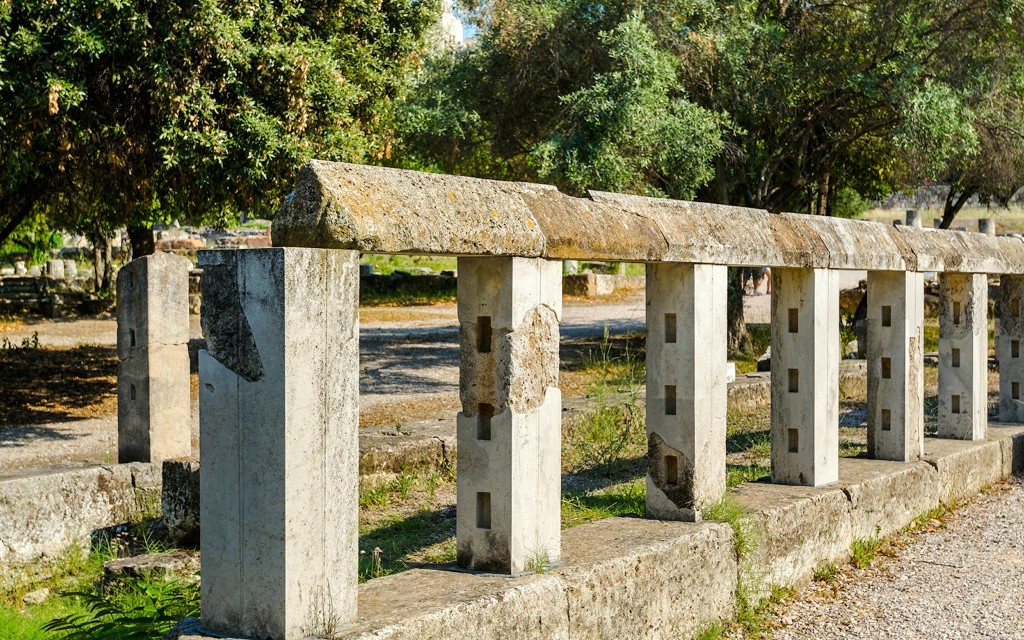
Explore the Ancient Agora through these captivating images.

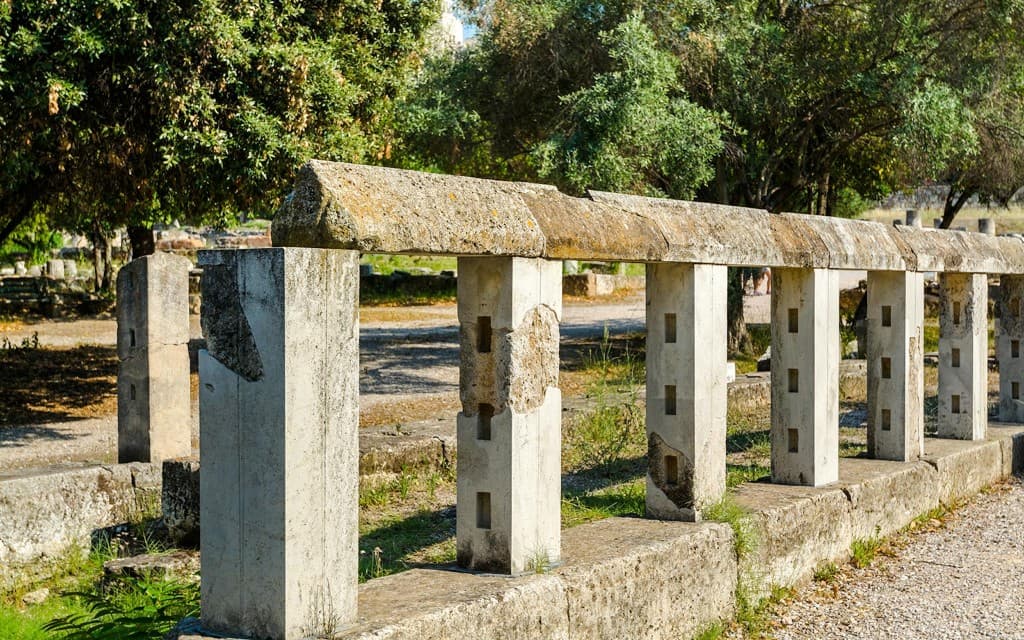
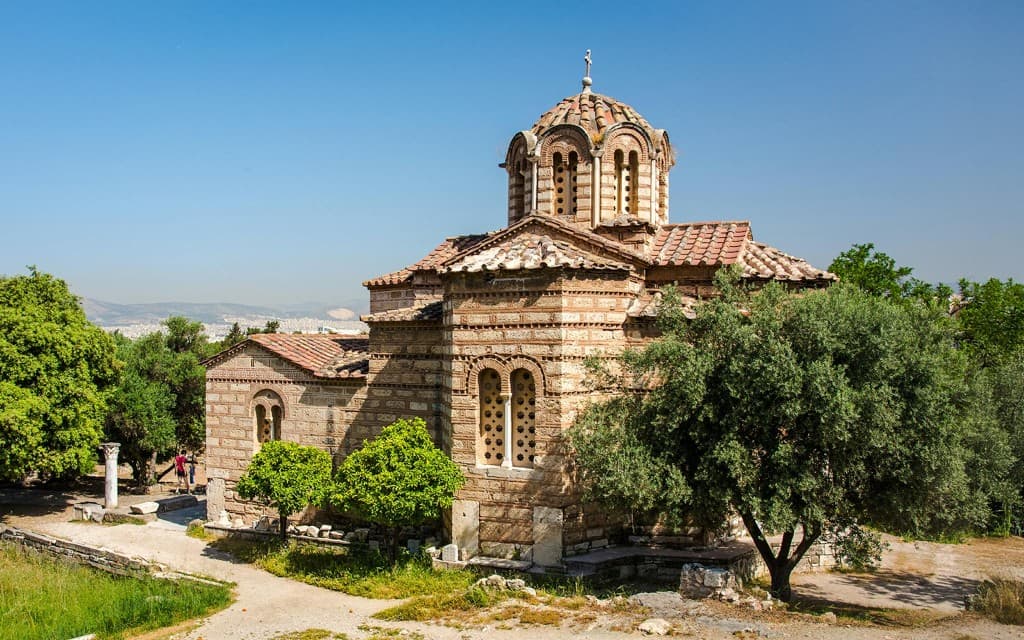
Step back in time and immerse yourself in the heart of ancient Athenian democracy at the Ancient Agora. Located in the center of modern Athens, this historic site was once the bustling hub of political, social, and commercial life. Wander through the ruins of temples, public buildings, and marketplaces, and imagine the lively debates and everyday activities that shaped ancient Greek society. The Ancient Agora offers a captivating glimpse into the world of Socrates, Plato, and other influential figures who frequented this very ground. Explore the birthplace of democracy and experience the enduring legacy of ancient Athens.

From44.35
ADULT
1899 age
44.35
Meeting Point
Athens
Epaminonda 6,Epaminonda 6, Athina 105 55, Greece
Opening Hours
The Ancient Agora is generally open daily, with hours varying depending on the season. It is recommended to check the official website for the most up-to-date information.
Visit Duration
The average visit duration for the Ancient Agora is between 2 to 3 hours.
Best Time to Visit
The best time to visit the Ancient Agora is during the spring or fall for pleasant weather and fewer crowds.
Address
Location: Athens 105 55, Greece.

Experience details at a glance

What's Included

  • Entry to the Ancient Agora
  • Entry to the Roman Agora
  • Entry to the Temple of Hephaestus
  • Entry to the Museum of the Ancient Agora in the Stoa of Attalos
  • Audio guide for Ancient Agora and Roman Agora on your smartphone (Android and iOS)
  • Offline content (text, audio narration, and maps)

What's Excluded

  • Hotel pick-up and drop-off
  • Transfers
  • Live guide
  • Headphones
  • Food and beverages
  • Personal expenses

Your experience

Unlock the stories of Athens’ two great marketplaces with a single combo ticket to the Roman and Ancient Agoras, complete with two self-guided audio tours on your smartphone.

Getting started

Once you receive your ticket by email, download the app and the two audio tours before your visit. Begin your adventure at the entrance to the Roman Agora (Epaminonda 6–22), just a short 230-meter walk from Monastiraki metro station along Areos Street.

Athens under Roman rule

Explore the Roman Agora, Athens’ bustling marketplace under Roman rule, where marble gates, ingenious timekeepers, and lively shops reveal the city’s blend of Greek tradition and Roman innovation.

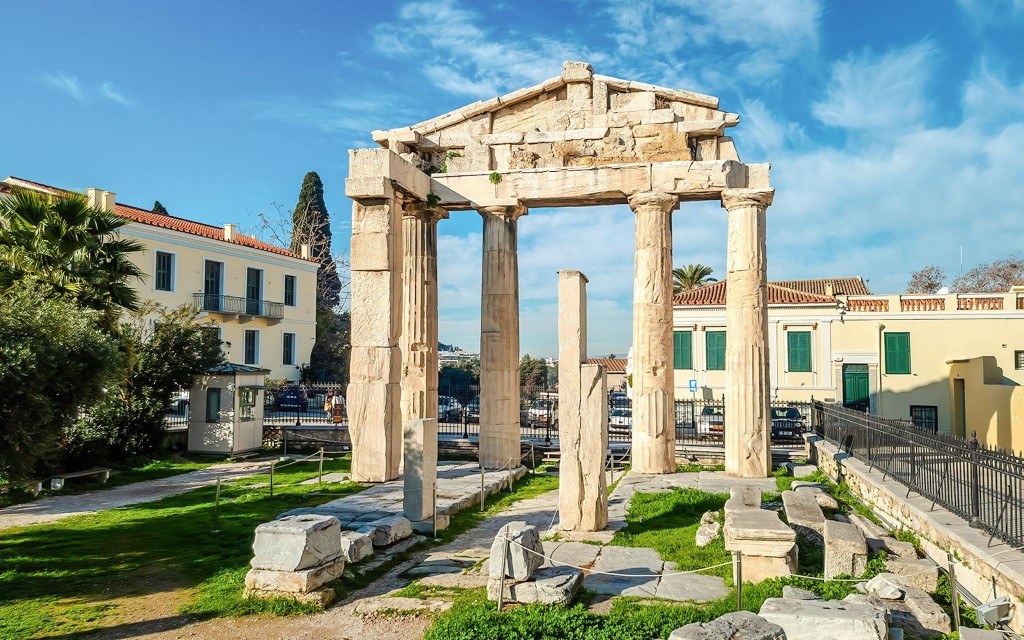
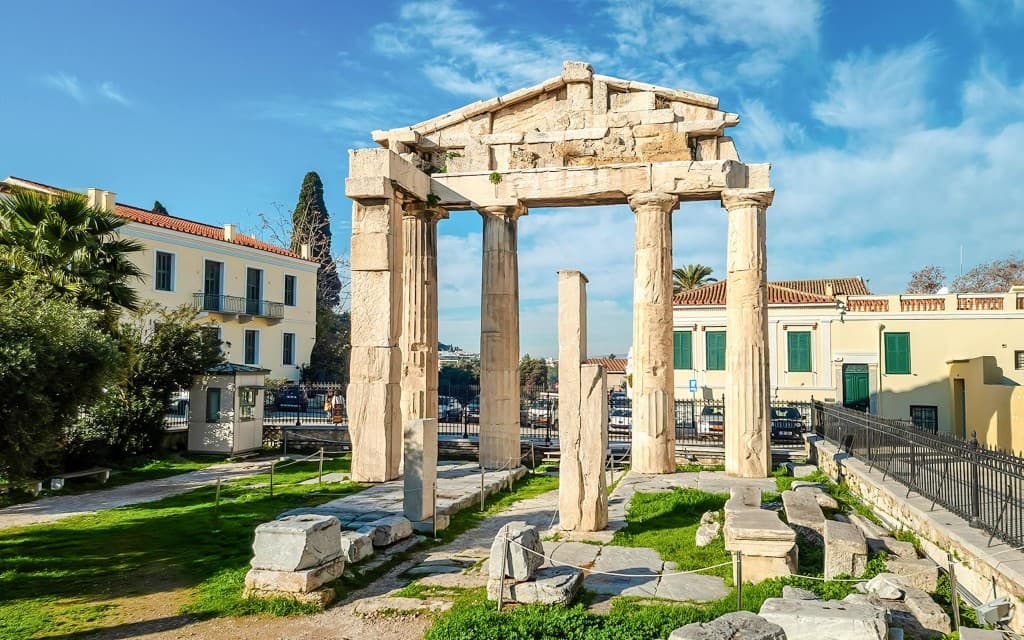
  • Athena’s marble getaway: Your journey begins at the Gate of Athena Archegetis, a marble gateway donated by Julius Caesar and Augustus. Hear how traders, philosophers, and citizens once passed through its towering columns, a passage that reflected both Roman influence and devotion to Athens’ patron goddess.

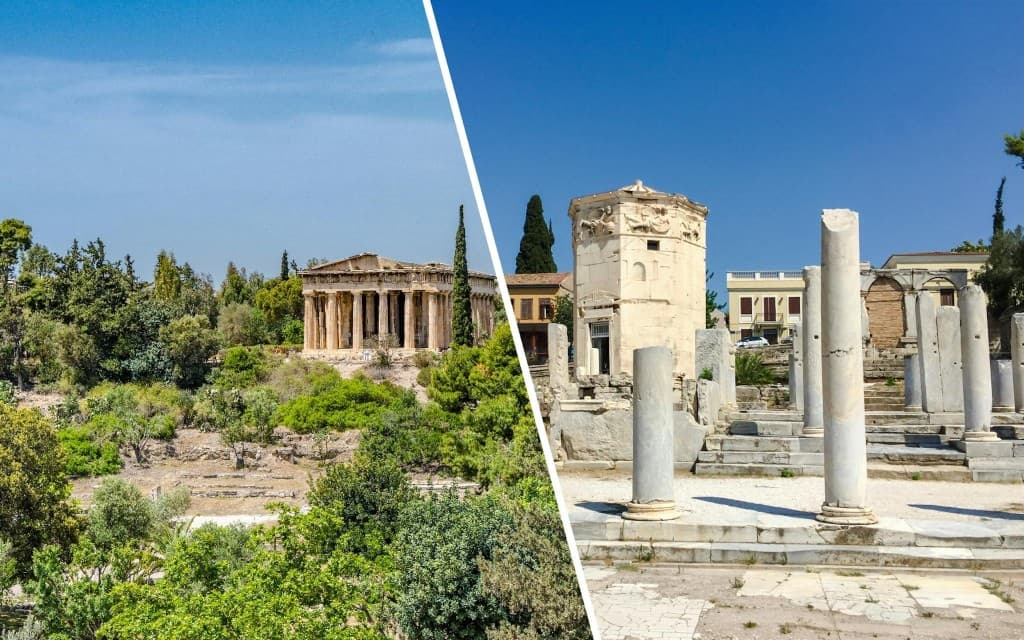
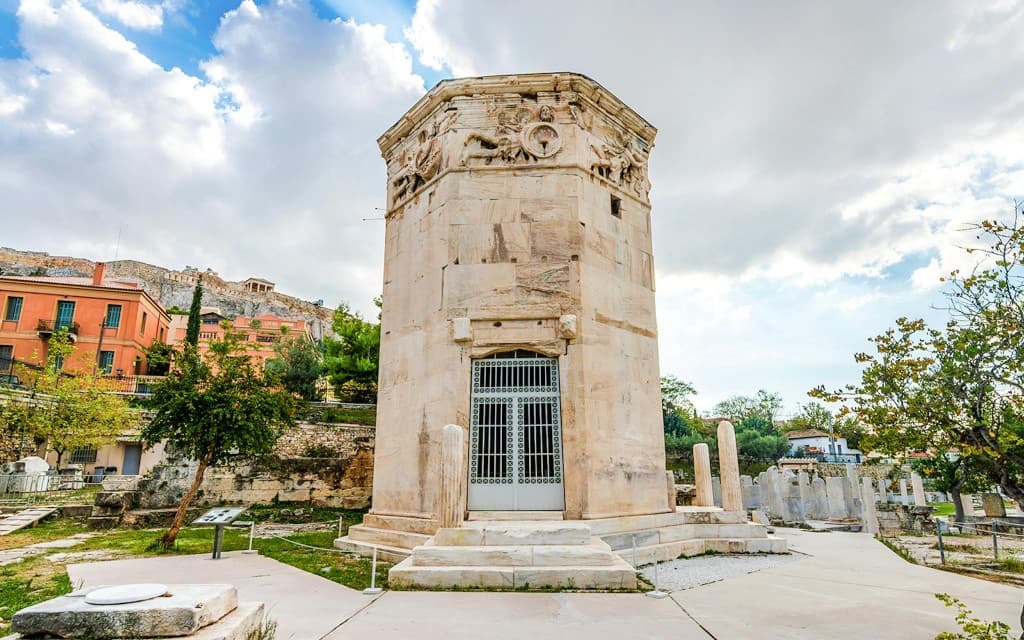
  • Where the winds tell time: Next, head to the Tower of the Winds, an ingenious octagonal clock that combined sundials, a water clock, and carved figures of the eight wind gods, an age-old blend of art, science, and mythology.

  • Water, trade, and everyday life: Walking further, you’ll encounter the fountain house, the Vespasianae (public latrines), and the outlines of ancient shops. Your audio guide brings these modest ruins alive with tales of bustling trade, gossip, and the social interactions that defined daily life under Roman rule.

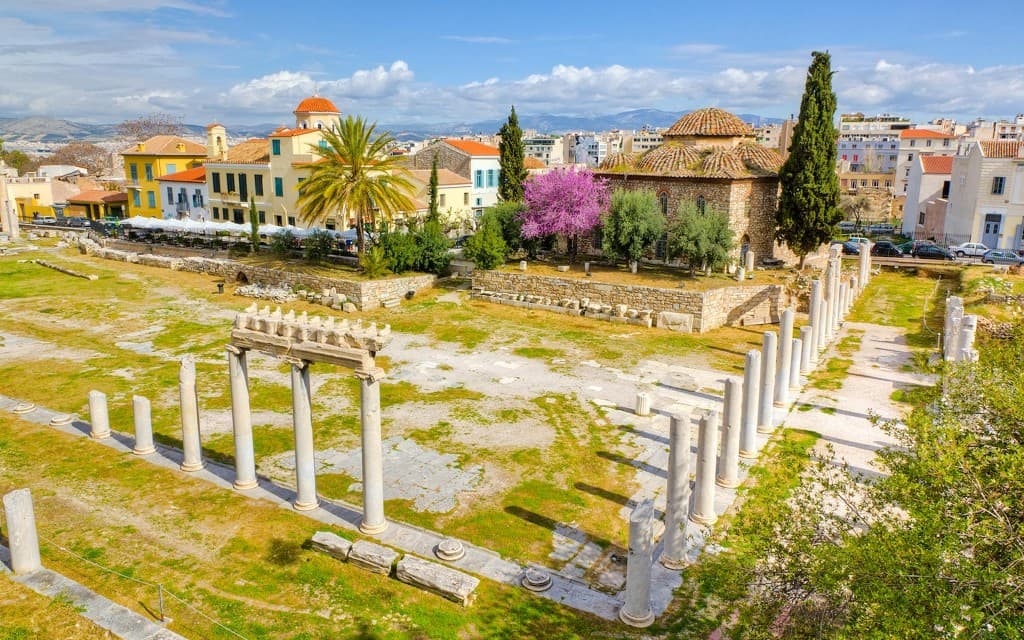
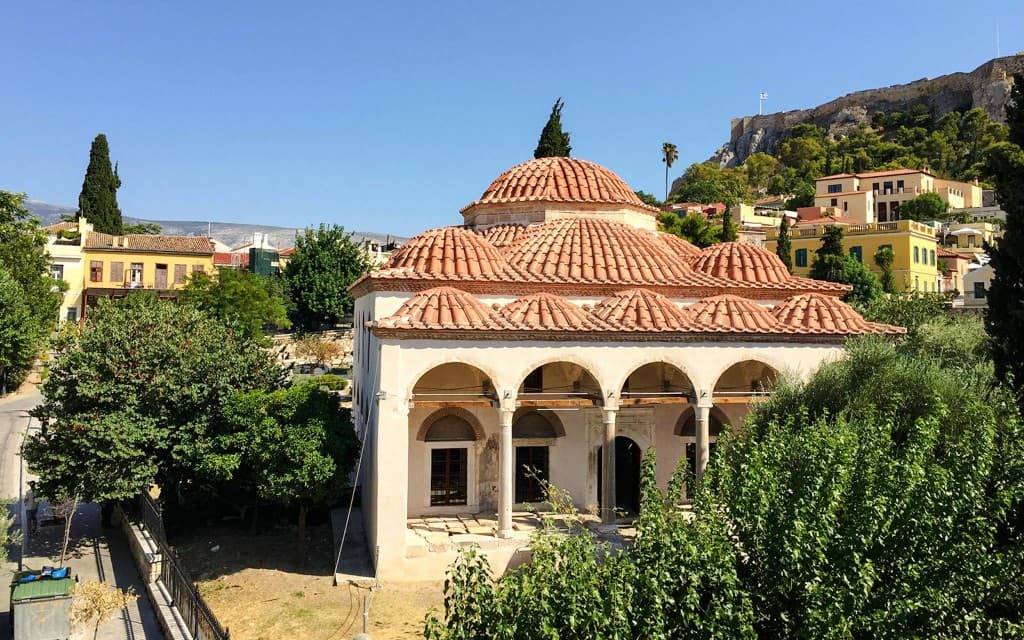
  • Athens through the ages: The tour concludes at the Mosque of the Conqueror, a 15th-century Ottoman addition built atop the ruins of the Roman marketplace. Once a place of worship and later repurposed as a museum and storehouse, it embodies the many transformations Athens has undergone—from ancient Greek democracy to Roman rule, Byzantine influence, and finally Ottoman conquest.

The birthplace of democracy

Afterward, walk to the Ancient Agora on Adrianou Street, a lively stretch near Monastiraki Square and Thissio station. Here you’ll come across temples, stoas, and assembly halls that once carried the voices of debates, philosophies, and decisions that shaped the course of Western history.

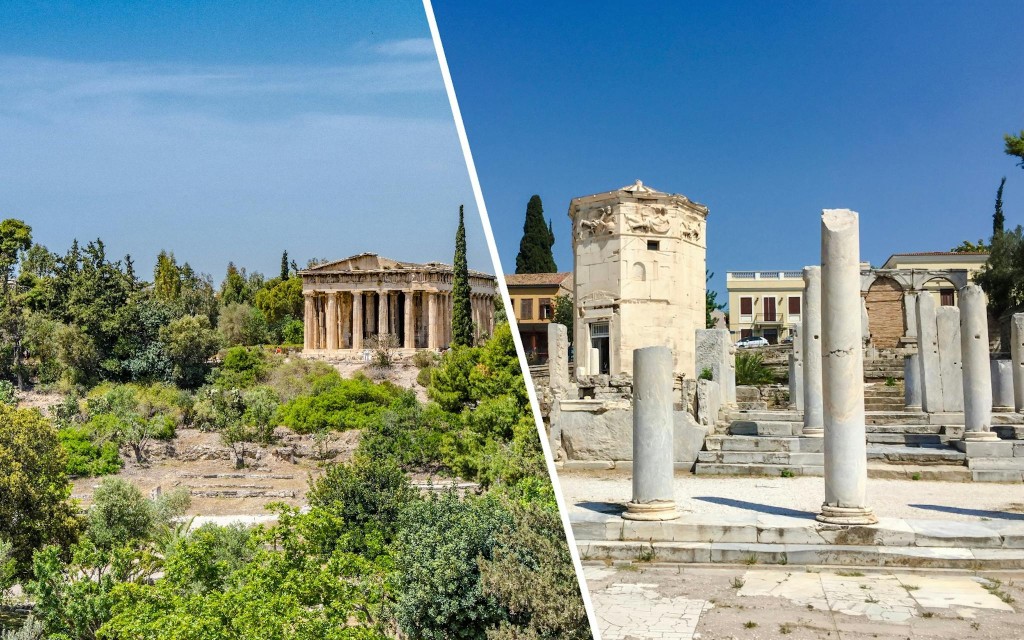
  • The heart of Classical Athens: Stop by the Temple of Hephaestus, one of the best-preserved Doric temples in Greece. Dedicated to the god of fire and craftsmanship, it stood watch over workshops where artisans forged bronze and marble creations for the city. Along its walls, you can still make out carved scenes of the hero Theseus battling legendary creatures like the Minotaur and the Centaurs.

  • Where democracy took shape: At the Bouleuterion, 500 citizens were chosen by lot to draft Athens’ laws, debate new policies, and post decrees for all to see. It was here that Aristides earned the title ‘the Just’ for his honesty, and Pericles delivered speeches that propelled Athens into its Golden Age of art, philosophy, and empire.

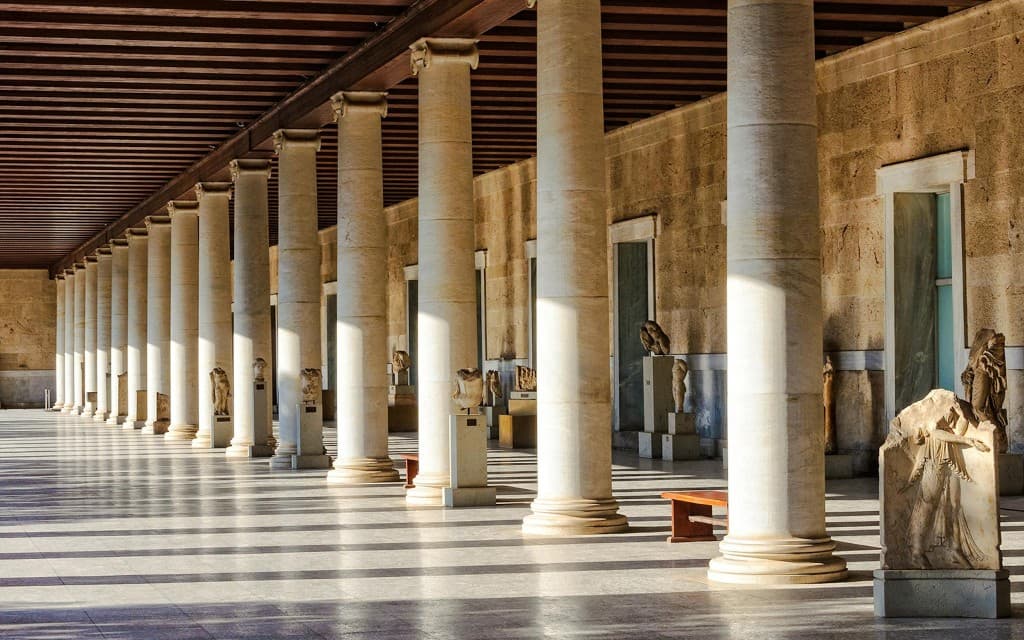
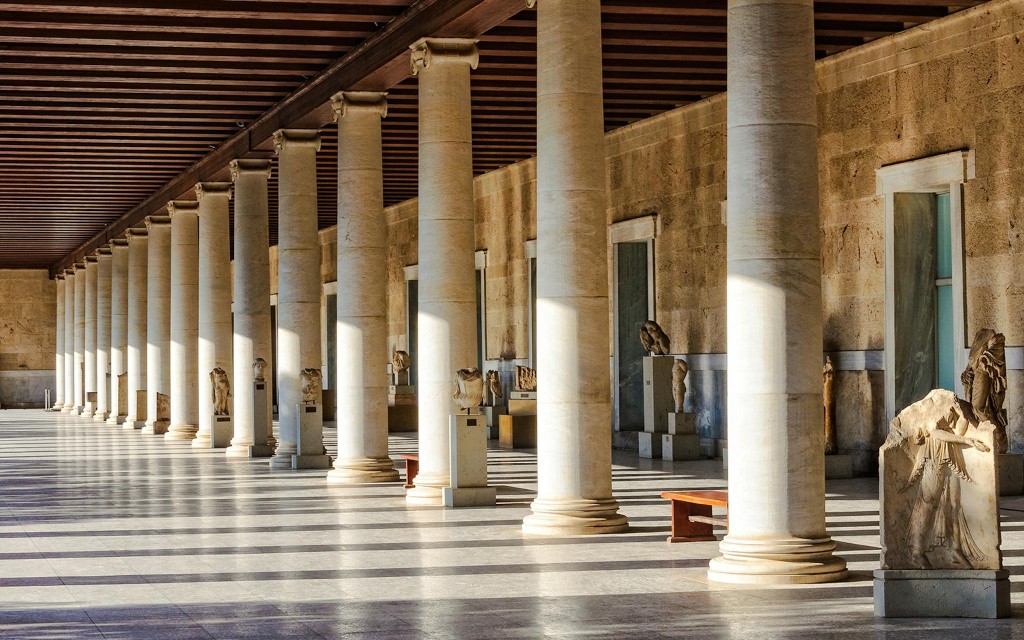
  • Inside the Stoa of Attalos: Now housing the Museum of the Ancient Agora, this reconstructed colonnade displays artifacts that reveal both the ingenuity and the harshness of Athenian justice. Ostraka, pottery shards once used to vote unpopular leaders into exile, sit alongside clever devices that randomized jury selection, showing how Athenians balanced fairness with severity in their pursuit of democracy.

  • Voices of the people: Finally, climb the Pnyx, the great stone platform where citizens once assembled to hear orators and cast their votes on war, peace, and policy. Nearby, the Prison of Socrates recalls the philosopher’s trial and execution, sparking reflection on freedom of speech, civic duty, and the city that both nurtured and condemned its greatest thinker.

Your tour concludes at the Stoa of Attalos, where history, artifacts, and stories converge, leaving you with a vivid sense of how Athens forged ideas that still resonate across the world today.

A complete journey through Athens’ legacy

Together, these tours create a seamless narrative: the Roman Agora shows you how Athens adapted under new rulers, while the Ancient Agora takes you back to its Golden Age. With the Acropolis rising above both sites, and stories of gods, philosophers, and everyday citizens guiding you at every step, you’ll leave with a deeper understanding of how Athens became one of history’s most influential cities.
Know Before You Go

Know before you go

What to bring

  • Wear comfortable, durable shoes, as much of the ground is uneven and can become dusty and slippery in dry weather.

  • Carry a refillable water bottle—there is a fountain for refills by the Stoa of Attalos, which is particularly useful in the hot summer months.

  • Bring a hat, sunscreen, and extra water, since shade is scarce around the ruins and the sun can be intense.

  • Ensure your smartphone is fully charged so it lasts for the entire audio experience.

  • Use your own headphones for the best listening experience.

What’s not allowed

  • Flash photography and tripods are prohibited on-site. Professional filming or photography requires prior authorization from the Ministry, and staff may intervene if you attempt to set up equipment without a permit.

  • Flying drones is not allowed over archaeological sites without special clearance, so please do not attempt to use one here.

  • Pets are not permitted within the sites, except for certified service animals.

  • Do not pick up, move, or take stones, pottery fragments, or other remains, as antiquities are strictly protected by Greek law.

Accessibility

  • Both the Roman and Ancient Agora are only partially wheelchair accessible. At the Roman Agora, visitors with reduced mobility can enter through the main entrance on Dioskouron Street, while at the Ancient Agora, there is an accessible entrance via the Apostolou Pavlou gate near the Temple of Hephaestus.

  • Inside both sites, much of the terrain is uneven, with gravel paths, slopes, and ancient paving, which makes full wheelchair access very limited. If you use the main entrance to the Ancient Agora at Adrianou 24, it is best to have a companion to help navigate, and you may also contact site staff at +30 210 3214824 or +30 210 3210180 for assistance.

  • Each site provides inclusive features for visually impaired visitors, including Braille information boards and tactile maps.

  • The museums at both Agoras are fully accessible for visitors with reduced mobility and wheelchair users. The Museum of the Ancient Agora in the Stoa of Attalos also offers an accessible restroom and tactile site plans and brochures in Braille (Greek and English).

Additional information

  • Each booking is valid for one device; please make separate reservations if you plan to use more than one.

  • You can enter the archaeological sites only during your selected time slot. Your ticket is valid from 15 minutes before until 15 minutes after your chosen slot.

  • Arrive at least 30 minutes early to allow time for security and entry. Note that entry is permitted up to 20 minutes before closing time.

  • After booking, you’ll receive an email with instructions to access and download your audio tour; be sure to also check your spam folder.

  • Download your tickets and audio tour in advance over Wi-Fi, as the mobile signal at the sites may be weak.

  • Due to ongoing construction works, the main entrance of the Ancient Agora is temporarily closed. Please use the temporary entrance on Apostolou Pavlou Street, near Akamantos Street.

  • You’ll need an Android smartphone (version 5.0 or later) or an iOS device (version 15.0 or later). The audio tour is not compatible with Windows Phones, iPhone 6/6 Plus or earlier, iPod Touch 6th generation or earlier, iPad 4th generation or earlier, iPad Air 1st generation, or iPad Mini 3rd generation or earlier.

  • Make sure your phone has 200 to 300 MB of free storage space to download the audio tour.

  • Head to the entrance on Epaminonda 6-22, Athina 105 55 to begin your Roman Agora experience. The tour ends at the Mosque of the Conqueror, after which you continue to the Ancient Agora at 24 Adrianou Street. That tour concludes inside the site at the Stoa of Attalos, a short walk from the entrance.

  • The course of your visit may change, and certain restrictions may apply. Please follow all on-site guidelines at all times.

Concession eligibility

  • EU citizens under 25, including students, enjoy free admission year-round with a valid ID or passport, but must queue at the ticket office to collect a zero-value pass.

  • Non-EU citizens under 25 are entitled to discounted rates during the peak season (April to October) with a valid ID, and must also queue at the ticket office.

  • Children under 5 years old enter free of charge.

Instructions

- Entry to the Ancient Agora - Entry to the Roman Agora - Access to the Temple of Hephaestus - Access to the Museum of the Ancient Agora in the Stoa of Attalos - 3-hour self-guided audio tour of both sites on your smartphone (Android and iOS) - Audio guide available in English, Spanish, German, French, and Italian - Offline content (text, audio narration, and maps)

About Ancient Agora of Athens Tickets, Tours & Visitor Information

The Ancient Agora of Athens served as the central public space for nearly a thousand years. It was the heart of Athenian democracy, where citizens gathered to discuss politics, conduct business, and socialize. This vast open area was surrounded by important buildings, including temples, law courts, and council chambers

The Agora was not only a political center but also a religious and commercial hub, hosting festivals, athletic contests, and a vibrant marketplace. Walking through the ruins today, you can still feel the echoes of the past and appreciate the significance of this site in shaping Western civilization. The Temple of Hephaestus, one of the best-preserved ancient Greek temples, stands proudly on a hill overlooking the Agora.

Highlights

Just steps apart, explore two of Athens’ greatest marketplaces with one ticket and trace centuries of history, culture, and daily life side by side.
In the Ancient Agora, stand before the Temple of Hephaestus, one of Greece’s best-preserved temples, and admire the Stoa of Attalos, now home to a museum filled with artifacts of Athenian life.
At the Bouleuterion, hear how 500 citizens drafted laws and how figures like Aristides *the Just* and Pericles shaped the world’s first democracy.
In the Roman Agora, pass through the marble Gate of Athena Archegetis and marvel at the Tower of the Winds, the clever clock that told time and weather.
Your audio guide brings the ruins to life with stories of lively trade, heated debates, and cultural change—from the rise of Greek democracy to Roman power and Ottoman rule.

Why Book Online?

  • Booking your Ancient Agora of Athens tickets online offers a seamless and stress-free experience
  • While tickets are available on-site, purchasing in advance guarantees your entry, especially during peak season. 
  • Booking online through our platform ensures you receive verified tickets, often with exclusive online deals
  • You can also choose from various ticket options, including guided tours and combination tickets for multiple archaeological sites
  • Enjoy the convenience of instant confirmation and skip the ticket line, giving you more time to explore this historic landmark.

History

The Ancient Agora of Athens has a rich and complex history dating back to the 6th century BC. It evolved from a marketplace into the center of Athenian democracy. During the Classical period (5th and 4th centuries BC), the Agora was at its peak, serving as the political, commercial, and social hub of Athens. It was the site of important events, including the trial of Socrates. Over the centuries, the Agora suffered damage from various invasions and natural disasters. In the Roman period, new structures were built, and the area continued to be a significant public space. Excavations of the site began in the 19th century and continue to this day, revealing more about the history and function of this ancient landmark. The American School of Classical Studies at Athens has played a major role in the archaeological exploration of the Agora.

Opening Hours

The Ancient Agora is typically open daily, but the exact opening hours vary depending on the season and day of the week. Generally, the site opens around 8:00 AM and closes in the late afternoon or early evening. It's advisable to check the official website or other reliable sources for the most current and specific opening hours before planning your visit.

Best Time to Visit

The best time to visit the Ancient Agora is during the shoulder seasons of spring (April-May) and fall (September-October). The weather is mild and comfortable, and the crowds are smaller compared to the peak summer months. Visiting in the early morning or late afternoon can also help you avoid the midday heat and the busiest times. Weekdays are generally less crowded than weekends.

What to See Inside

  • The Ancient Agora is an open-air archaeological site with several key structures and areas to explore. 
  • The Temple of Hephaestus is a highlight, offering a remarkable example of ancient Greek architecture
  • The Stoa of Attalos, now a museum, houses a collection of artifacts discovered at the Agora, providing insights into daily life in ancient Athens
  • Explore the ruins of the Bouleuterion, where the Athenian council met, and the law courts, where legal proceedings took place. 
  • As you wander through the site, imagine the vibrant marketplace and the lively discussions that once filled this central public space
  • The spatial experience evokes a sense of connection to the past, making history come alive.

Things to Know

Before booking your Ancient Agora of Athens tickets, keep the following in mind: 

  • Tickets can be purchased online or at the entrance. 
  • Consider booking a guided tour for a more in-depth experience. 
  • Wear comfortable shoes, as you'll be walking on uneven terrain. 
  • Bring water and sunscreen, especially during the summer months. 
  • Photography is allowed, but flash photography may be restricted in certain areas. 
  • Check the weather forecast and dress accordingly. 
  • Allow ample time to explore the entire site.

Visitor Rules

Visitors to the Ancient Agora are expected to respect the historical significance of the site. 

  • Do not climb on the ruins or remove any artifacts. 
  • Follow the instructions of the staff and stay within the designated areas. 
  • Food and drinks are generally not allowed inside the archaeological site, except in designated areas. 
  • Be mindful of other visitors and avoid making excessive noise. 
  • The site is protected by security personnel, and any violation of the rules may result in expulsion.

Is It Worth Visiting?

Visiting the Ancient Agora is an enriching experience that transports you back to the heart of ancient Athens. As you walk through the ruins, you can almost hear the echoes of the past and imagine the lively debates that shaped Western civilization. The Temple of Hephaestus stands as a testament to the architectural prowess of the ancient Greeks, while the Stoa of Attalos offers a glimpse into daily life in the Agora. Whether you're a history buff or simply curious about the past, the Ancient Agora is a must-see destination that will leave you with a lasting appreciation for the legacy of ancient Greece. The site offers a unique opportunity to connect with history and gain a deeper understanding of Athenian democracy.

Frequently Asked Questions

How can I book tickets for the Ancient Agora of Athens?

You can book tickets for the Ancient Agora of Athens online through our website for verified tickets and potential deals.

Where is the Ancient Agora located?

The Ancient Agora is located in the center of Athens, near Monastiraki Square.

What are the opening hours of the Ancient Agora?

The opening hours vary depending on the season. It's best to check the official website for the most up-to-date information.

How much time should I spend at the Ancient Agora?

The average visit duration is between 2 to 3 hours.

Is it better to book tickets online or at the entrance?

Booking online guarantees your entry and may offer exclusive deals. You can book your tickets on our website.

What should I wear when visiting the Ancient Agora?

Wear comfortable clothing and shoes suitable for walking on uneven surfaces.

Are guided tours available at the Ancient Agora?

Yes, guided tours are available and can provide a more in-depth experience. Check our website for available tours.

Can I take photos at the Ancient Agora?

Yes, photography is allowed, but flash photography may be restricted in certain areas.

Is the Ancient Agora worth visiting?

Yes, the Ancient Agora offers a fascinating glimpse into the heart of ancient Athenian democracy and is a must-see for history enthusiasts.

How do I get to the Ancient Agora?

The easiest way to get there is by Metro to Monastiraki Station (Lines 1 and 3), which is a short walk from the entrance.

How to Get There

The Ancient Agora is located near Monastiraki Square in central Athens. Location: Athens 105 55, Greece. The easiest way to get there is by taking the Metro to Monastiraki Station (Lines 1 and 3), which is a short walk from the entrance. You can also reach the Agora by bus or taxi.

From
44.35
per person
ADULT
1899 age
44.35
Check Availability
Cancellation PolicyFree cancellation is not included for this option.
Meeting Point
Athens
Epaminonda 6,Epaminonda 6, Athina 105 55, Greece
Opening Hours
The Ancient Agora is generally open daily, with hours varying depending on the season. It is recommended to check the official website for the most up-to-date information.
Visit Duration
The average visit duration for the Ancient Agora is between 2 to 3 hours.
Best Time to Visit
The best time to visit the Ancient Agora is during the spring or fall for pleasant weather and fewer crowds.
Address
Location: Athens 105 55, Greece.
From
44.35
Check Availability