What's Included
- Fast-track entry to the Basilica of Santa Croce
- Access to Pazzi, Bardi and Peruzzi chapels
- Access to tombs
- Access to Refectory Museum (Cimabue's Cruxifix)
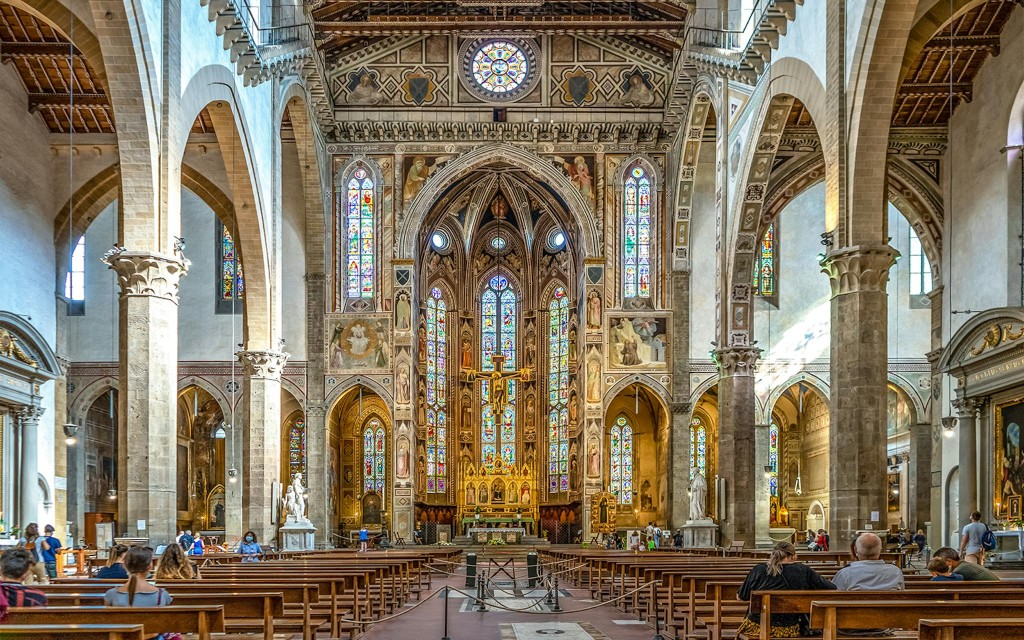
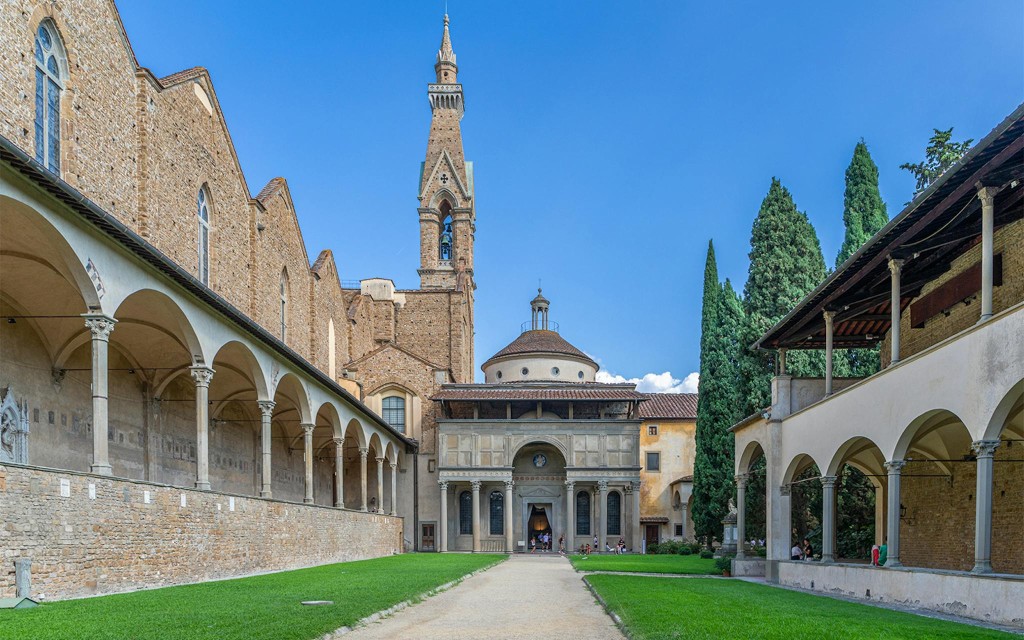
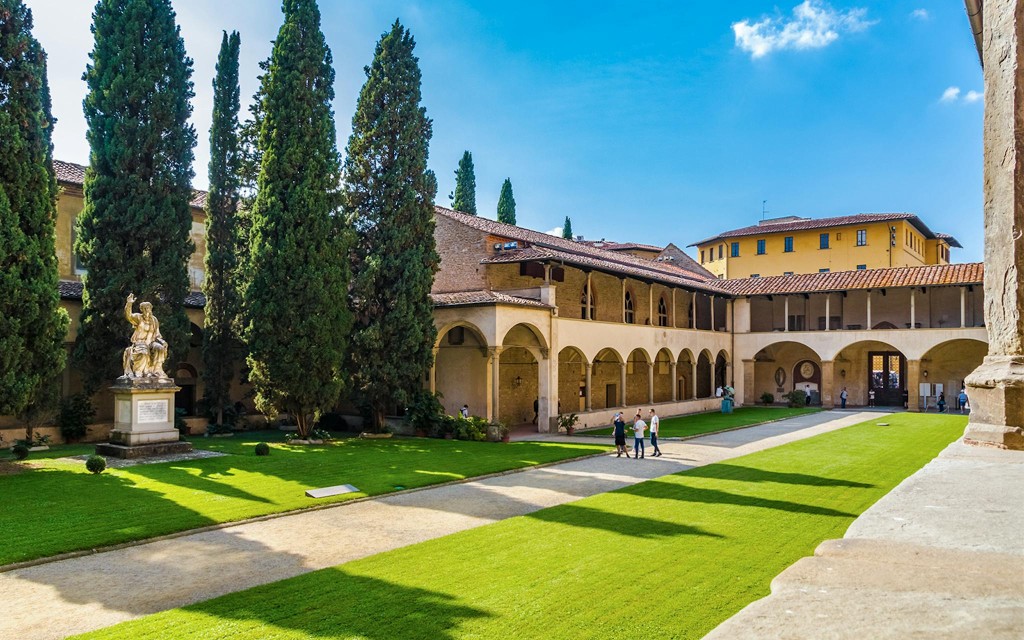
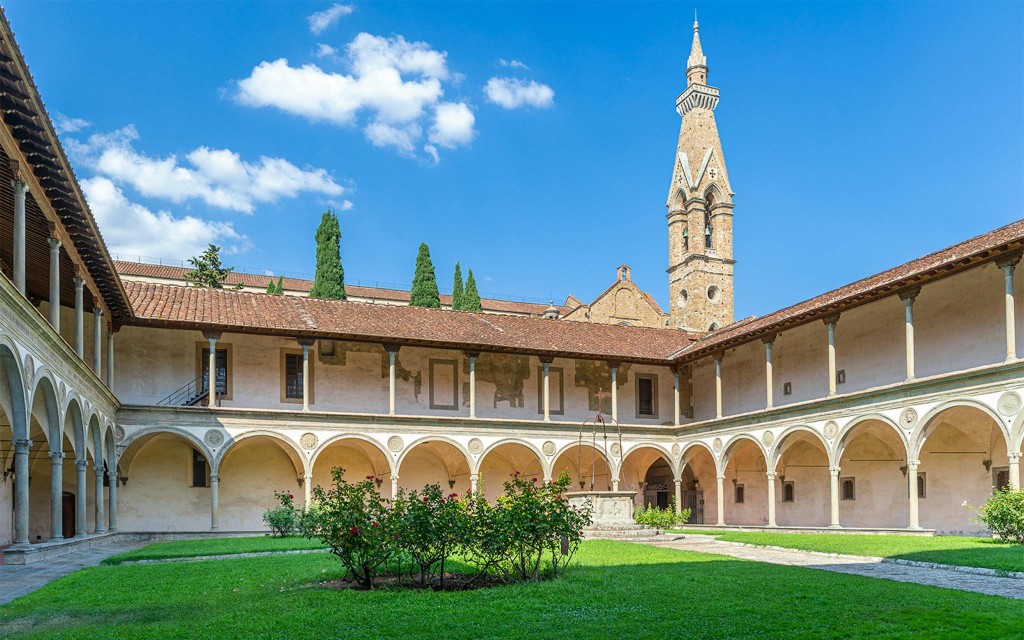
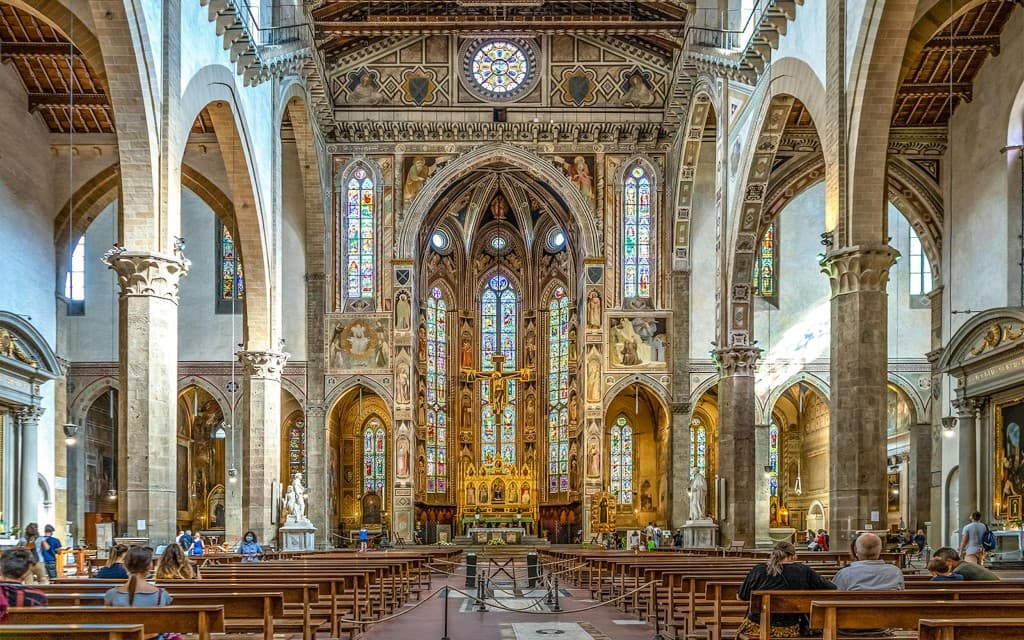
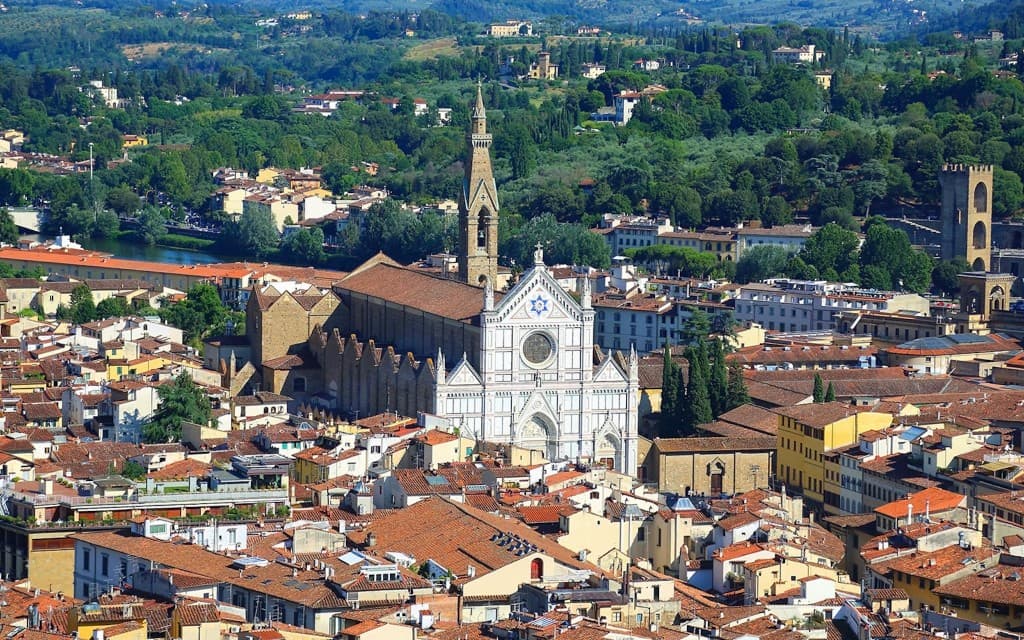
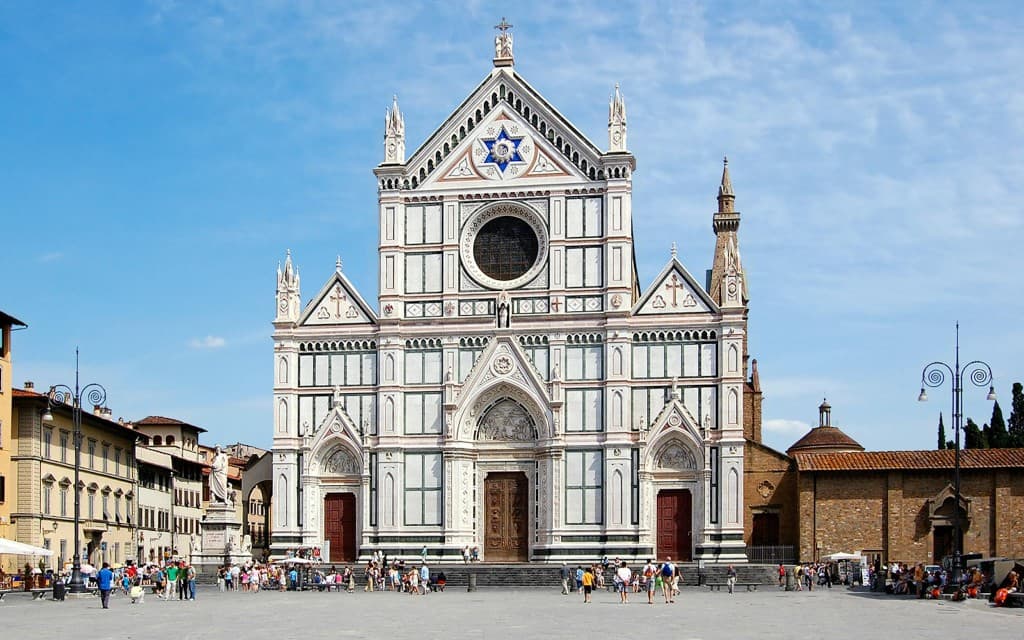
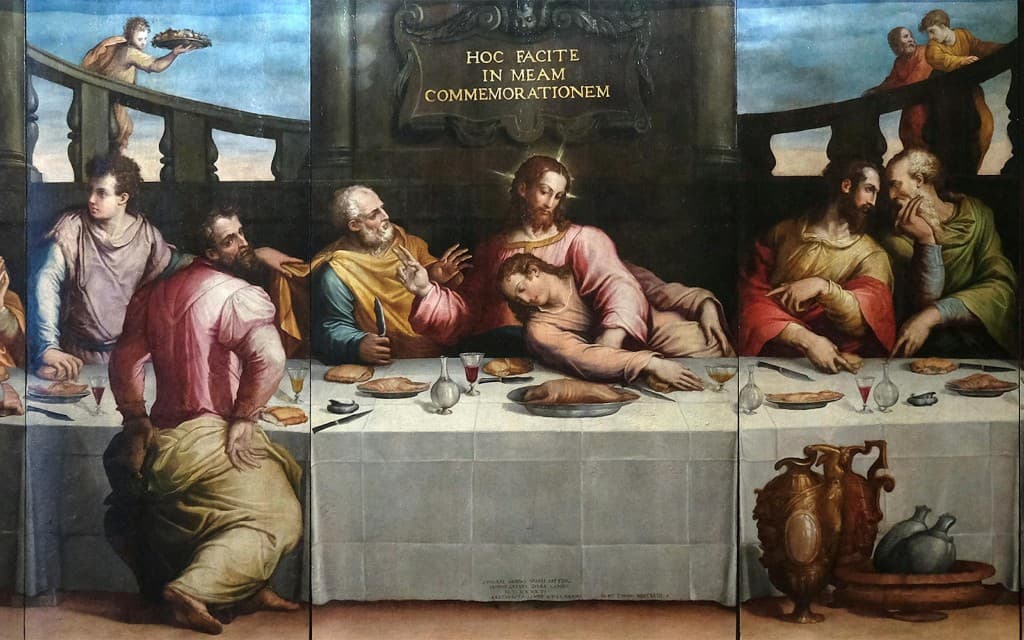
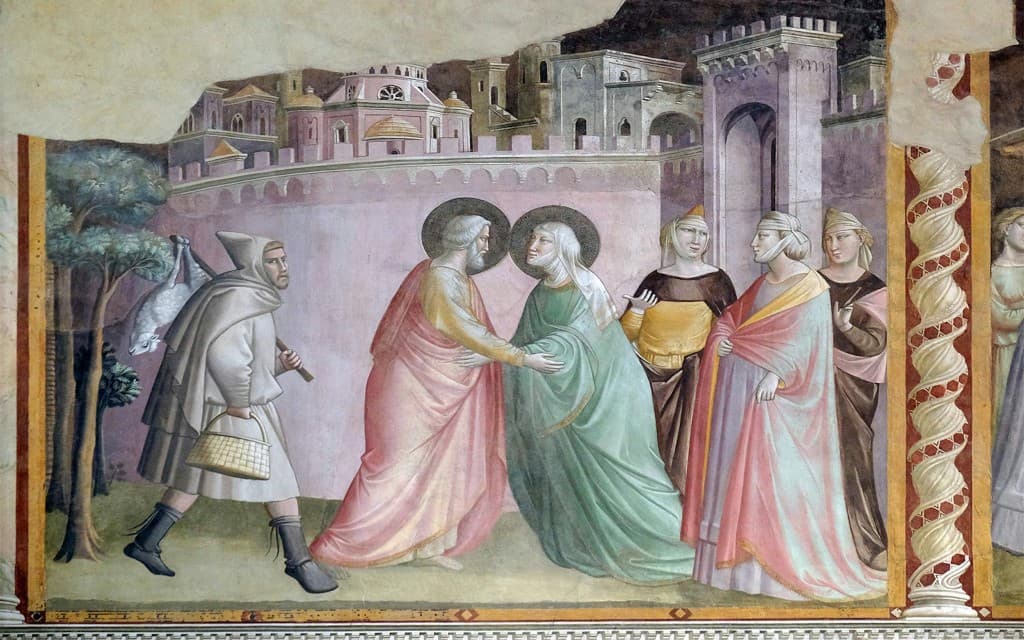
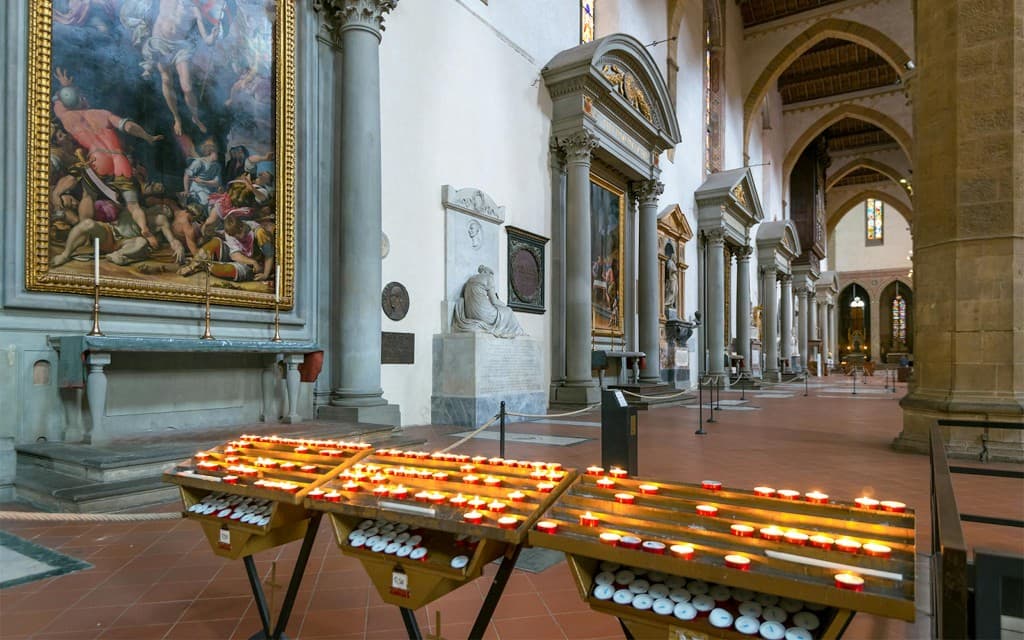
Explore images showcasing the grandeur and artistic treasures within the Basilica of Santa Croce, offering a visual preview of its famous tombs, frescoes, and stunning architecture.
The Basilica of Santa Croce stands as one of Florence's most significant and revered landmarks, often referred to as the 'Temple of the Italian Glories'. This magnificent Franciscan church is not only an architectural marvel but also the final resting place for some of Italy's most celebrated figures, including Michelangelo, Galileo Galilei, Niccolò Machiavelli, and Gioachino Rossini. Visitors are drawn to its solemn beauty, rich history, and the extraordinary collection of Renaissance art housed within its walls. A visit offers a profound journey through Italian history, art, and culture, revealing the legacies of those who shaped the modern world. Explore stunning frescoes, intricate tombs, and serene cloisters that define this iconic Florentine basilica.
As a sacred religious site, a respectful dress code is required for entry into the Basilica of Santa Croce. This typically means that shoulders and knees must be covered. It is advisable to avoid wearing tank tops, strapless tops, short shorts, or mini-skirts. Hats should also be removed upon entering the basilica. Adhering to these guidelines ensures entry and shows reverence for the cultural and spiritual significance of the venue.
Santa Croce holds 250 tombs, Giotto's frescoes, and Brunelleschi's finest chapel. This ticket gets you into all of it without having to wait in the ticket queue.
Present your ticket at the entrance on the north side of the basilica in Largo Bargellini. No counter exchange needed. Once inside, the complex is self-guided and yours to explore at your own pace. Plan for one to two hours to cover the main highlights.
Basilica di Santa Croce
Florence's largest Franciscan church has been the burial place of the city's greatest minds since the 13th century. Step inside the vast Gothic nave and let the scale of it settle before you start to explore.
Walk the length of the nave and look down: the floor itself is a mosaic of tomb markers, each one a name from Florence's past.
Pause in front of the tombs of Michelangelo, Galileo, and Machiavelli, set into the walls of the main nave. Each monument was designed by a different hand and reflects the era it was made in.
Spend time in the Bardi and Peruzzi Chapels, where Giotto painted two fresco cycles in the early 14th century. These are among the earliest surviving examples of naturalistic painting in Western art.
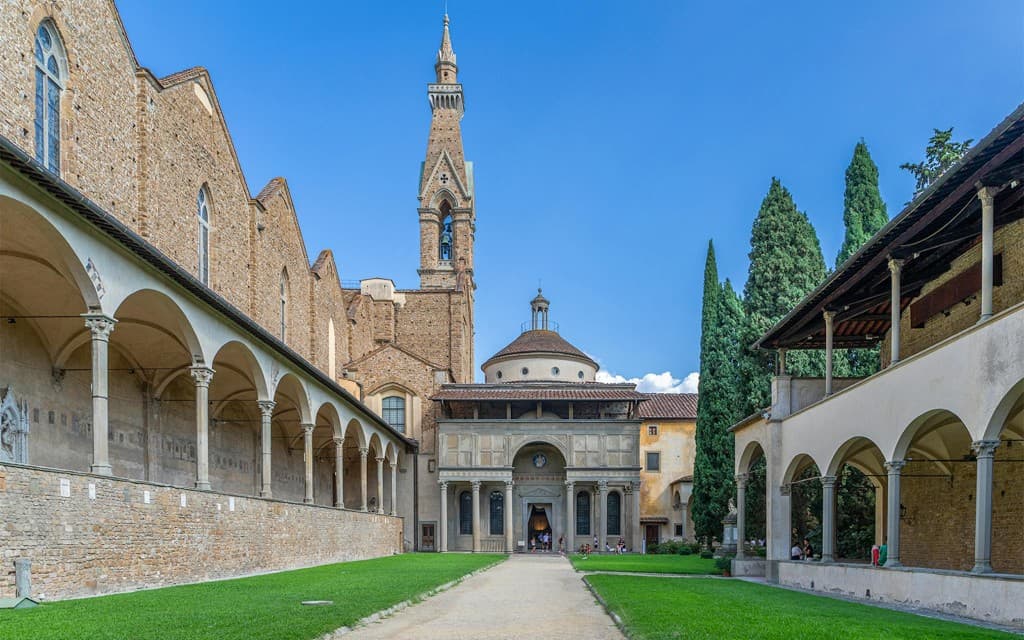
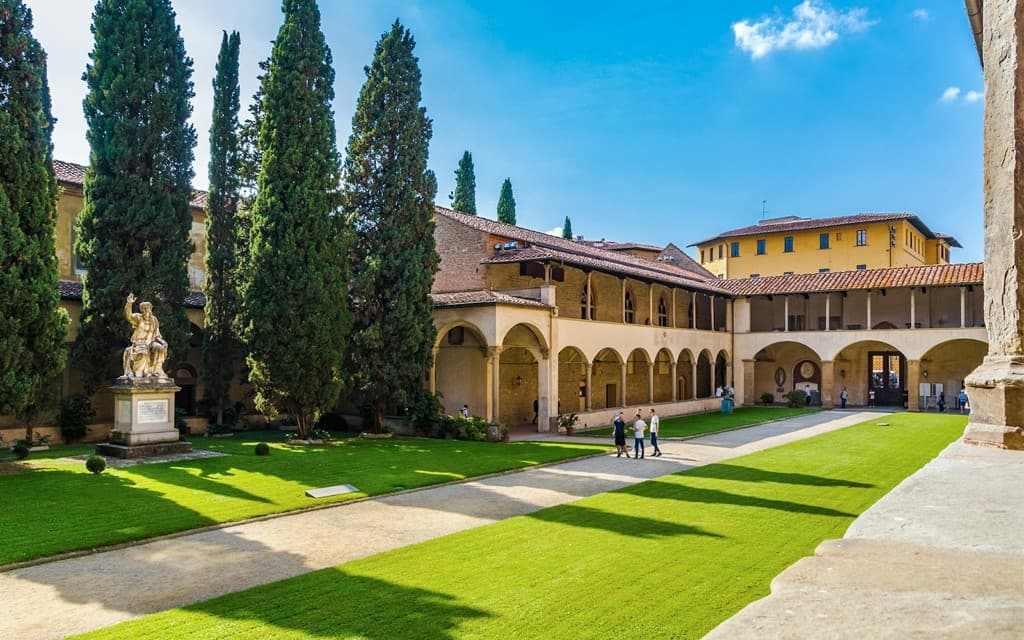
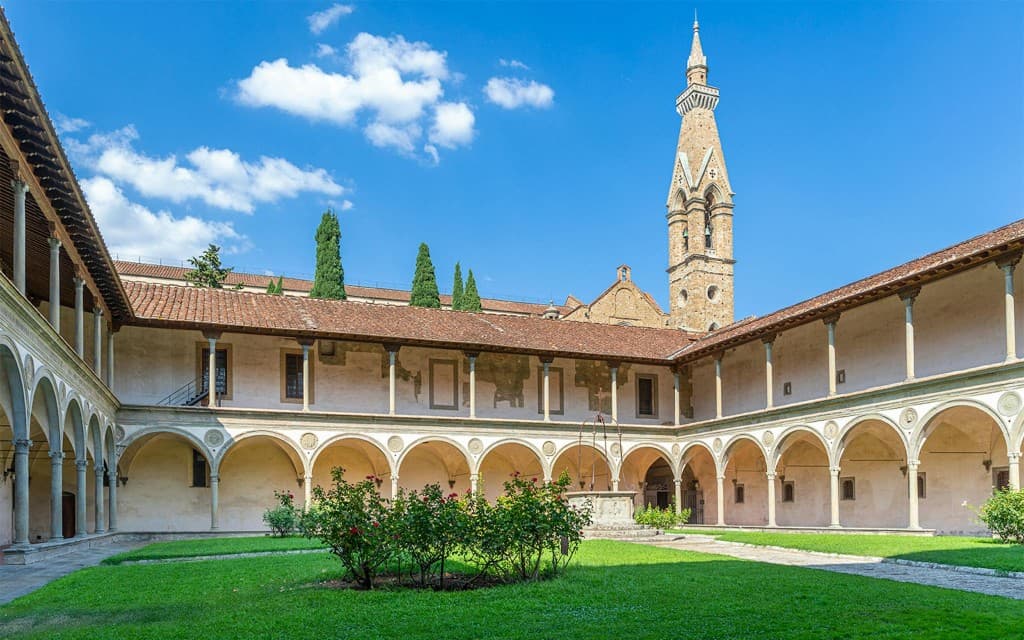
Cross to the cloister and enter Brunelleschi's Pazzi Chapel, completed in the 1470s. The proportions are deliberate and precise — it is one of the clearest examples of early Renaissance architecture in Florence.
Continue through to the Opera Museum, the crypt, and the Medici Chapel. All are covered under your ticket with nothing additional to pay.
The average user takes about 50 minutes to tour the basilica independently, but visitors can stay for as long as they like till the closing time i.e. 5:30pm.
Since this is an active place of worship, visitors must dress respectfully before entry. Shoulders and knees must be covered.
The Basilica of Santa Croce is a monumental Gothic church located in the Piazza di Santa Croce, Florence, Italy. Its construction began in 1294, possibly designed by Arnolfo di Cambio, and it served as a spiritual center for the Franciscan order. Over centuries, it evolved into a pantheon for illustrious Italians, earning its nickname. The basilica's striking façade, completed in the 19th century, is adorned with polychrome marble, setting a grand tone for the treasures within. Inside, the vast nave is flanked by numerous chapels, each a repository of priceless art. Giotto's frescoes in the Bardi and Peruzzi Chapels are particularly notable, showcasing early Renaissance masterpieces. Beyond the art, the sheer historical weight of the place is palpable, with the tombs of legendary artists, scientists, writers, and politicians creating a powerful connection to Italy's past. The adjacent cloisters and the Pazzi Chapel, a Renaissance architectural gem designed by Filippo Brunelleschi, further enrich the visitor's experience, offering serene spaces for reflection away from the bustling city.
Booking your Santa Croce Basilica entry tickets or guided tours online offers several advantages. It ensures you secure your admission, especially during peak seasons, and can often provide access to skip-the-line options, saving valuable time. Pre-purchasing tickets means you avoid queues at the entrance, allowing for a more relaxed and efficient start to your visit. Additionally, many online tickets include immediate confirmation and flexible cancellation policies, providing peace of mind and convenience for planning your itinerary in Florence. Consider a Santa Croce Basilica Complex Entry Ticket or a guided tour to enhance your understanding of this significant site.
The history of the Basilica of Santa Croce dates back to the late 13th century, with its foundation stone laid on May 3, 1294. It was built on the remains of an earlier church, commissioned by the Franciscan order, and is traditionally attributed to the design of Arnolfo di Cambio. The basilica quickly became a significant center for the Franciscan friars and a powerful symbol of Florentine republicanism. Over the centuries, its prominence grew as wealthy Florentine families sponsored chapels, adorning them with masterpieces by leading artists of the time, including Giotto. By the 16th century, the church began to be used as a burial place for distinguished Florentines, a tradition that expanded significantly during the Renaissance and Napoleonic eras. It was during these periods that it earned its reputation as the 'Pantheon of Italy,' becoming the resting place for luminaries like Michelangelo, Galileo Galilei, and Niccolò Machiavelli. The Gothic façade, a later addition, was completed in the mid-19th century, contributing to its iconic appearance today. Throughout its history, Santa Croce has survived floods, wars, and social changes, always remaining a testament to Florence's enduring legacy in art, science, and thought.
The Basilica of Santa Croce typically operates with varying opening hours throughout the year. Generally, it is open from Monday to Saturday, usually from mid-morning, often around 9:30 AM, until late afternoon, usually around 5:30 PM. On Sundays and public holidays, the hours are often shorter, usually opening in the early afternoon, perhaps from 1:00 PM to 5:30 PM. These times are subject to change for religious ceremonies or special events. It is advisable to account for these potential variations when planning your visit.
To fully appreciate the Basilica of Santa Croce without the largest crowds, visiting during the early morning hours, shortly after opening, or in the late afternoon, an hour or two before closing, is often recommended. Weekdays generally offer a more tranquil experience compared to weekends. Spring and fall provide pleasant weather for exploring Florence, making these seasons ideal for a visit. While summer sees more tourists, early morning visits can still provide a quieter atmosphere. Avoiding religious holidays, if possible, can also help in experiencing the basilica with fewer disruptions.
Inside the Basilica of Santa Croce, visitors can explore a wealth of artistic and historical treasures. The most prominent features are the tombs and monuments dedicated to Italy's greatest minds, including Michelangelo Buonarroti, Galileo Galilei, Niccolò Machiavelli, and Gioachino Rossini, among others. Each tomb is a work of art in itself, reflecting the era in which it was created. The basilica also houses significant artworks, most notably Giotto's frescoes depicting scenes from the life of St. Francis in the Bardi and Peruzzi Chapels. Don't miss the Pazzi Chapel, a remarkable example of Renaissance architecture designed by Filippo Brunelleschi. The Santa Croce Leather School, operating within the complex, offers a glimpse into traditional Florentine craftsmanship. The cloisters provide a tranquil escape, showcasing the beauty of monastic architecture.
When visiting the Basilica of Santa Croce, it's helpful to wear comfortable shoes as you'll be walking through a large complex. Consider purchasing an audio guide for a deeper understanding of the basilica's history, art, and famous tombs. Photography is generally allowed for personal use, but flash photography is often prohibited, and discretion is encouraged, especially during religious services. Public restrooms are usually available within the complex. Be prepared for security checks at the entrance. The Santa Croce Leather School, accessible from the cloisters, is worth a visit for unique souvenirs and to observe artisans at work.
Visitors are expected to observe a respectful demeanor within the Basilica of Santa Croce, as it remains an active place of worship. This includes maintaining silence, especially in the chapels and near the altars. Food and drink are not permitted inside the basilica. Large bags or backpacks may need to be checked at the entrance. Please follow any instructions from staff and respect designated areas. Running or loud conversations are discouraged to preserve the solemn atmosphere of the site.
The Basilica of Santa Croce is undoubtedly worth visiting for anyone traveling to Florence. It offers a unique blend of historical significance, artistic masterpieces, and architectural grandeur. As the burial site for some of Italy's most influential figures, it provides a tangible connection to the Renaissance and beyond. The opportunity to witness Giotto's frescoes, explore Brunelleschi's Pazzi Chapel, and experience the quiet reverence of the cloisters makes it an enriching and unforgettable experience. It's a place where art, history, and spirituality converge, offering profound insights into Italian culture.
The main attractions include the tombs of Michelangelo, Galileo, Machiavelli, and Rossini, Giotto's frescoes in the Bardi and Peruzzi Chapels, and the Pazzi Chapel designed by Brunelleschi.
Yes, as a religious site, visitors must dress respectfully. Shoulders and knees should be covered. It is advisable to avoid tank tops, short shorts, and mini-skirts.
Most visitors spend approximately 1.5 to 2 hours exploring the basilica complex, including the church, chapels, and cloisters.
Photography for personal use is generally permitted, but flash photography is usually prohibited to protect the artworks. Always be respectful of other visitors and religious services.
The basilica strives to be accessible, though some older sections or uneven flooring might present challenges. It is generally recommended to use the main entrance for easier access.
It earned this nickname because it serves as the burial place for many illustrious Italian figures, including artists, scientists, writers, and political leaders, cementing its role as a national pantheon.
Yes, guided tours are often available, providing deeper insights into the basilica's history, art, and the stories behind its famous inhabitants. You can also find audio guides.
The Basilica of Santa Croce is conveniently located in central Florence and is easily accessible on foot from most major attractions, such as the Duomo or Piazza della Signoria. For those using public transport, several local bus routes stop near Piazza di Santa Croce. The closest major bus stops are typically a short walk away, making it a straightforward destination to reach within the city.
As a sacred religious site, a respectful dress code is required for entry into the Basilica of Santa Croce. This typically means that shoulders and knees must be covered. It is advisable to avoid wearing tank tops, strapless tops, short shorts, or mini-skirts. Hats should also be removed upon entering the basilica. Adhering to these guidelines ensures entry and shows reverence for the cultural and spiritual significance of the venue.