
What's Included
- Guided tour of Alhambra with skip-the-line entry
- Expert English, Spanish, Italian, French or German-speaking guide
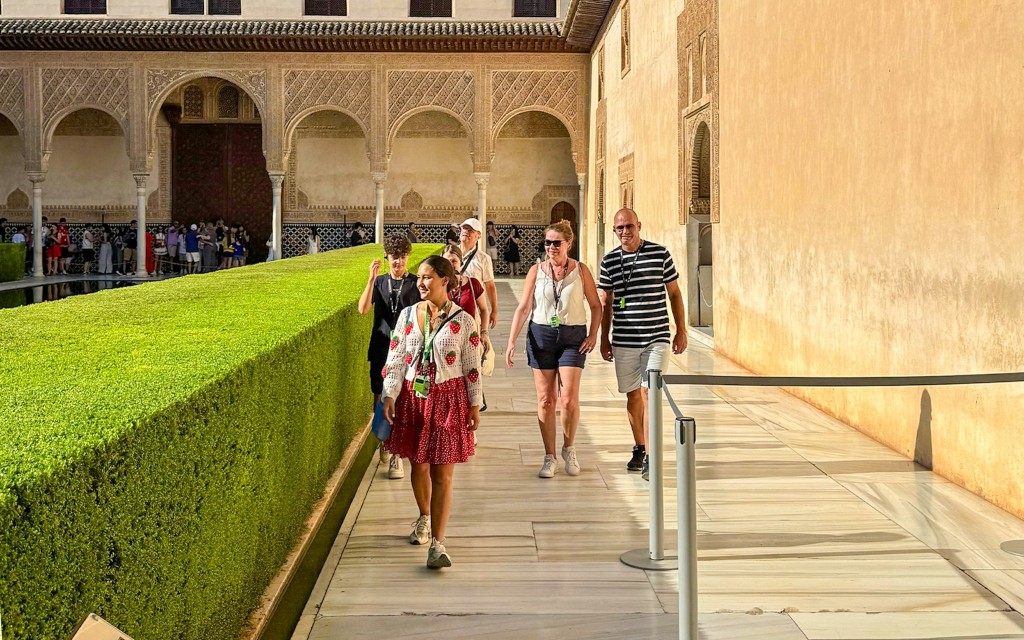
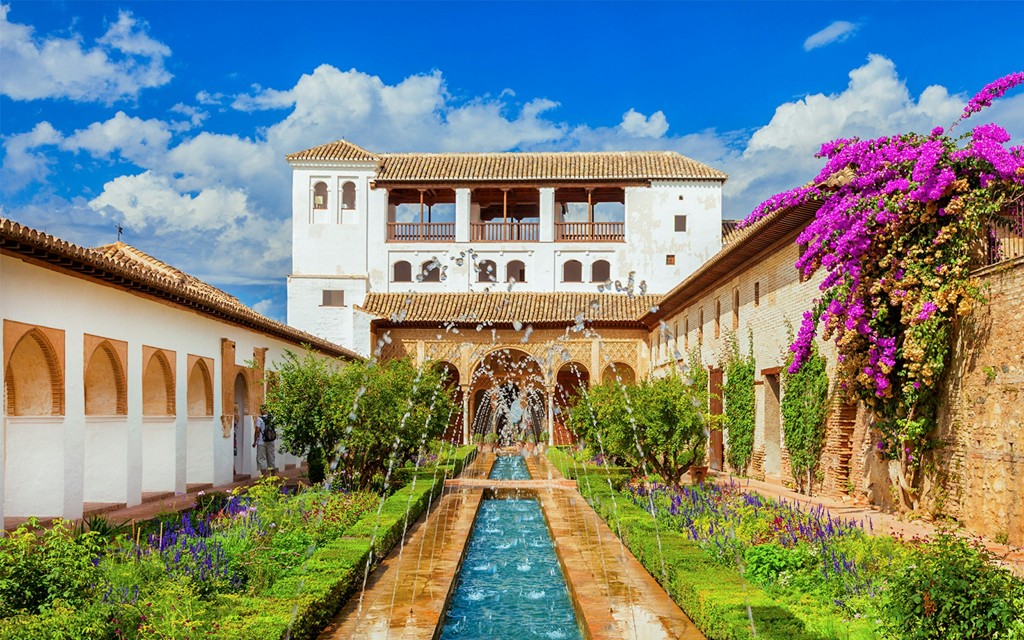
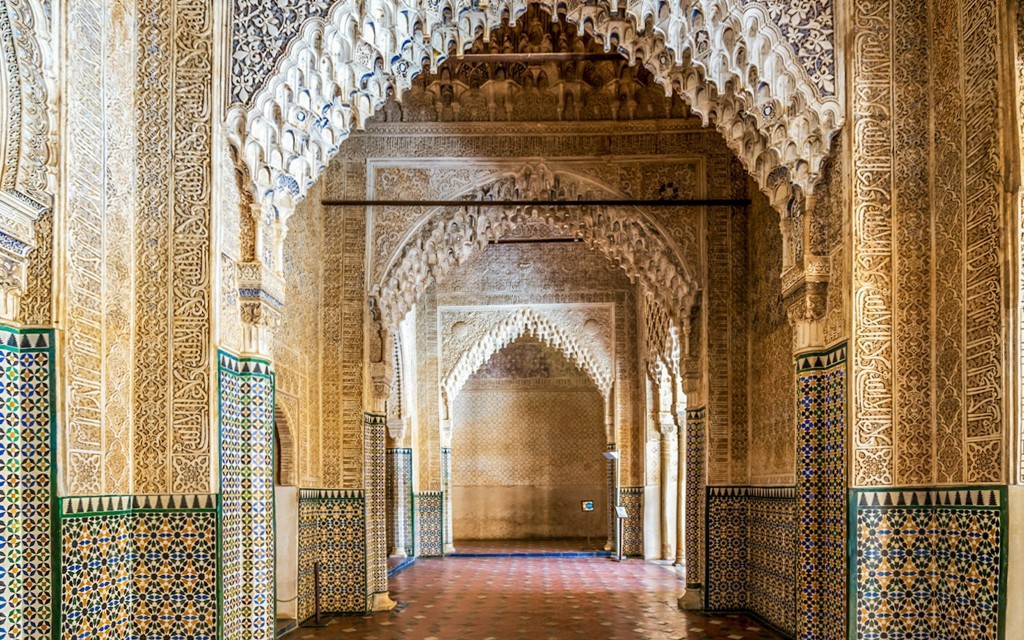
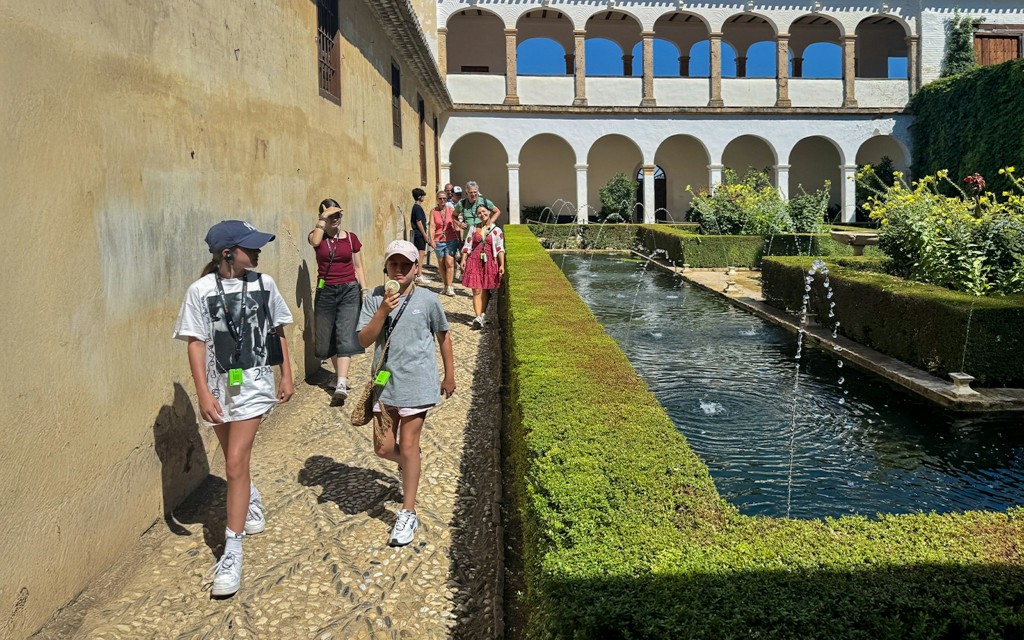
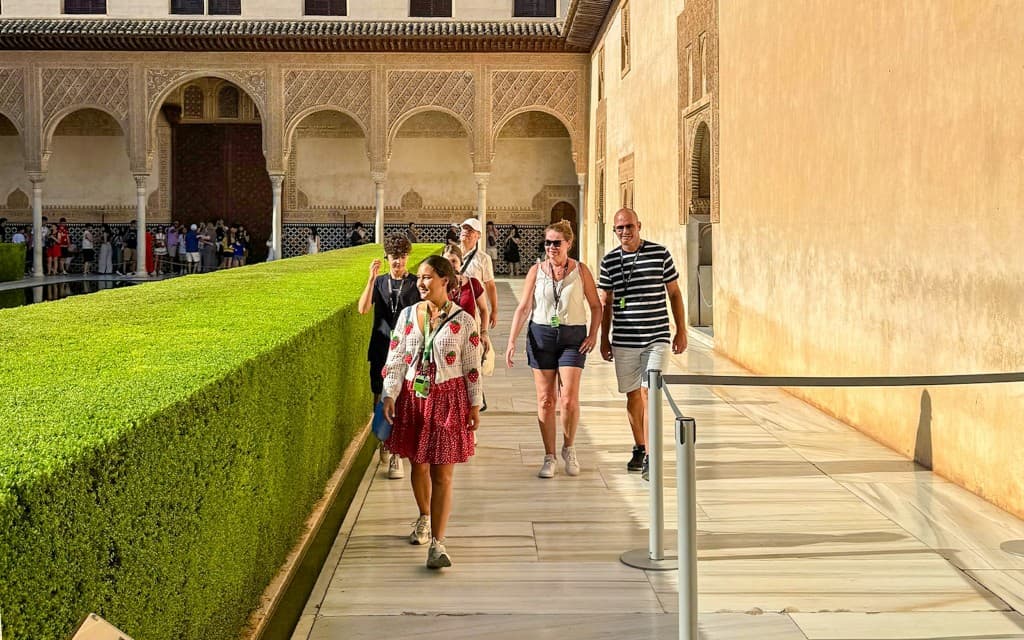
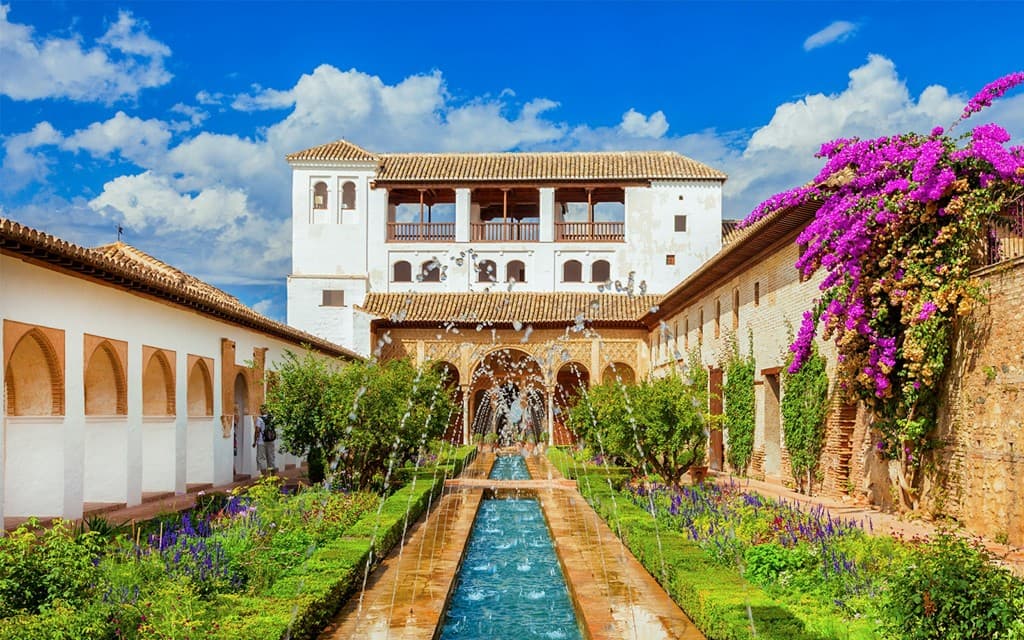
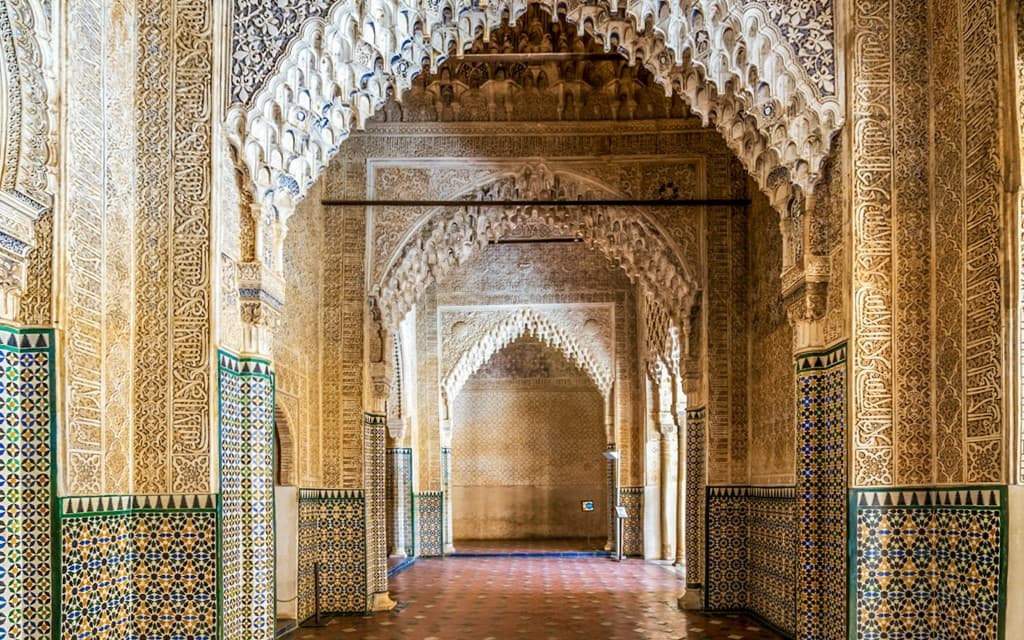
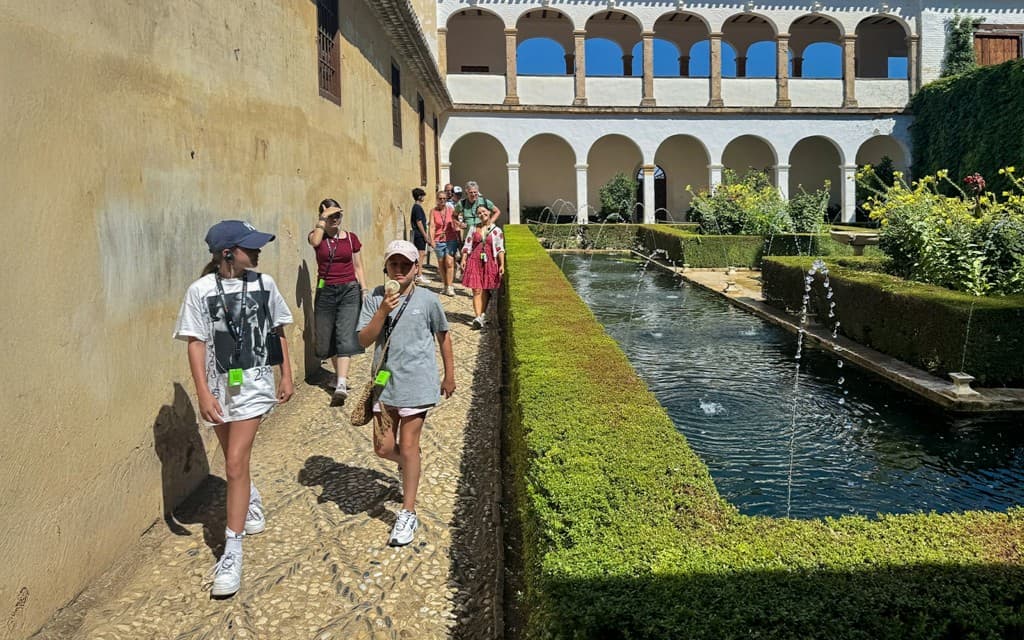
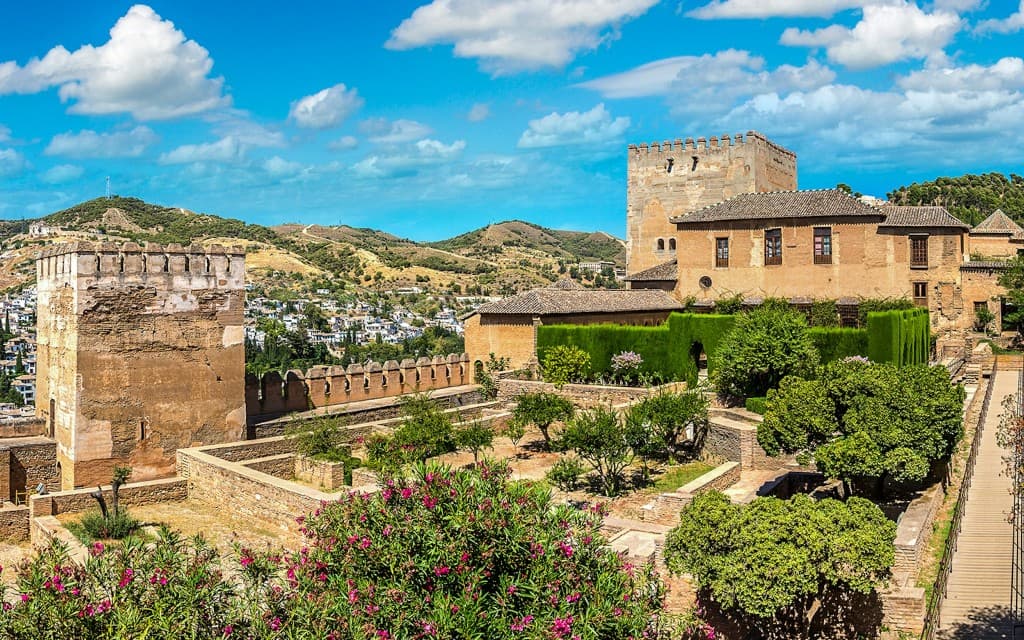
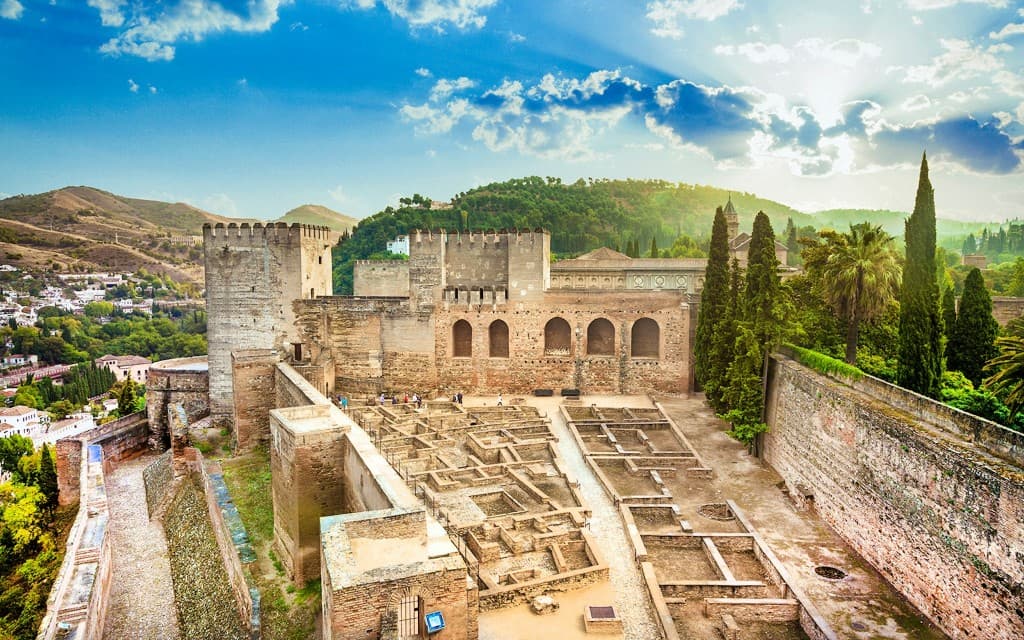
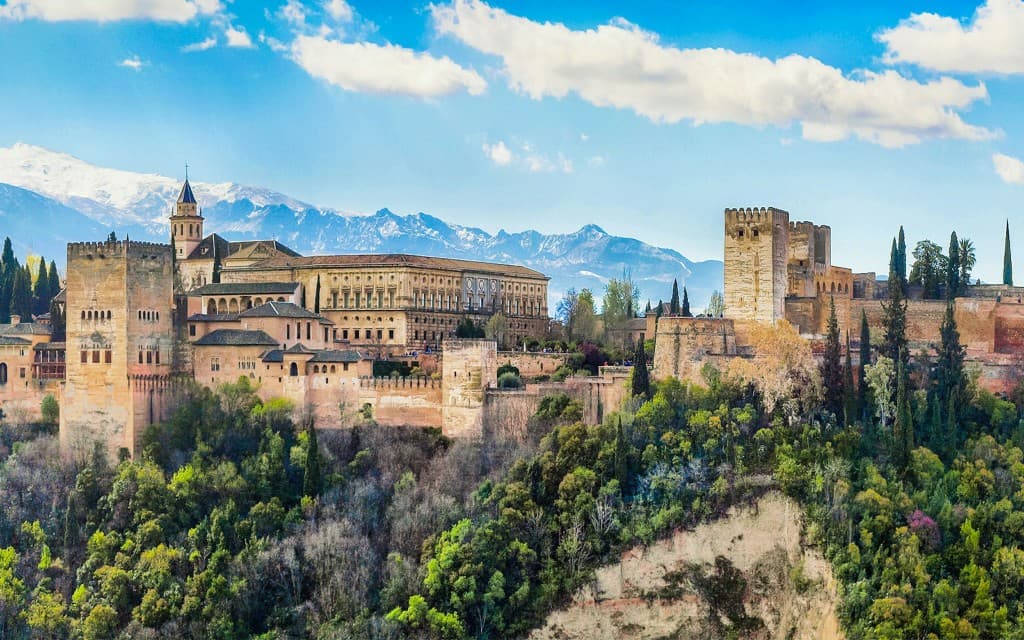
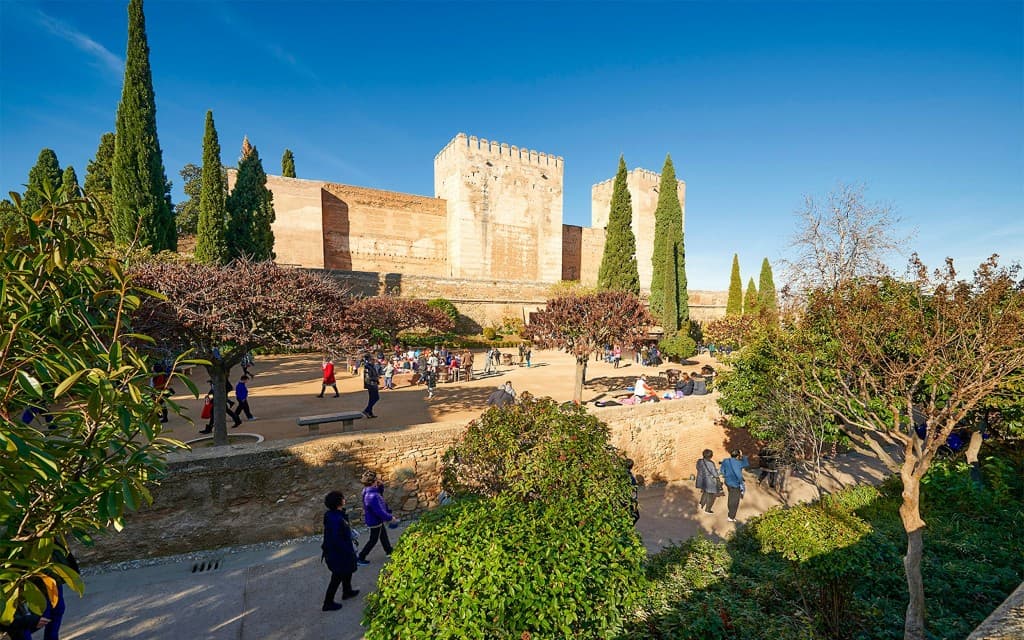
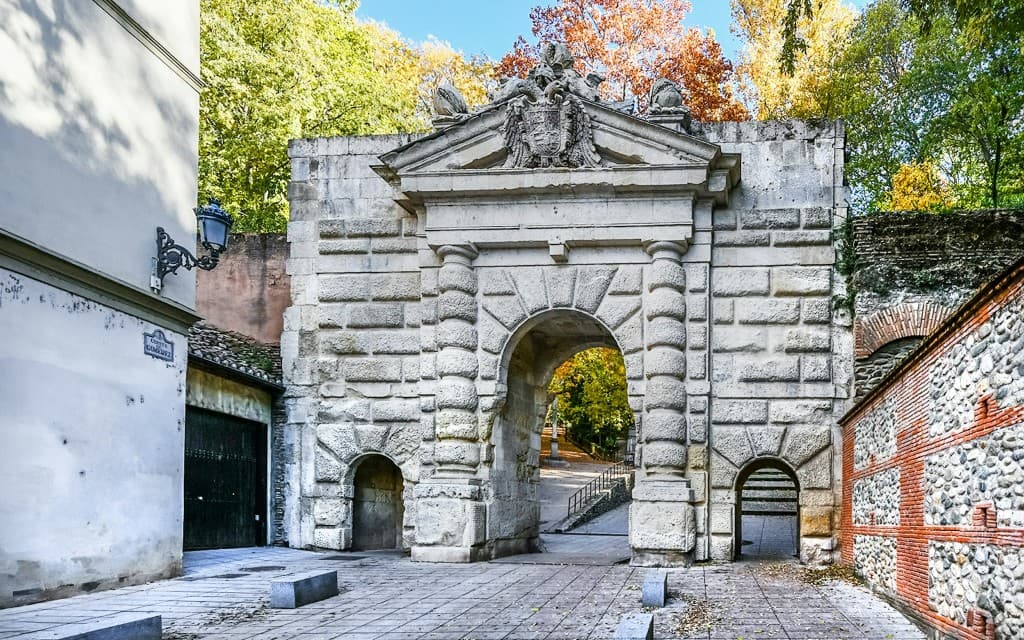
Explore the visual splendor of the Alhambra through these captivating photos.
The Alhambra, a spellbinding palace and fortress complex, graces the city of Granada, Spain, as a testament to the rich history and cultural fusion of the region. Perched atop a strategic hill overlooking Granada, the Alhambra stands as a breathtaking masterpiece of Islamic architecture, seamlessly blending intricate artistry with serene natural surroundings. Its stunning design, elaborate courtyards, and panoramic views create an unforgettable experience for every visitor. Visiting the Alhambra is more than just seeing a historical site; it's an immersive journey into a world of ornate beauty and tranquil harmony. The play of light and shadow across its delicate stucco work, the soothing sounds of water features, and the fragrant gardens evoke a sense of wonder and peace. It offers a profound connection to the past and a feast for the senses.
While there is no strict dress code for visiting the Alhambra, dressing respectfully is encouraged.
Skip the ticket line and explore the Alhambra’s UNESCO-listed wonders with an expert guide in your chosen language.
Getting started
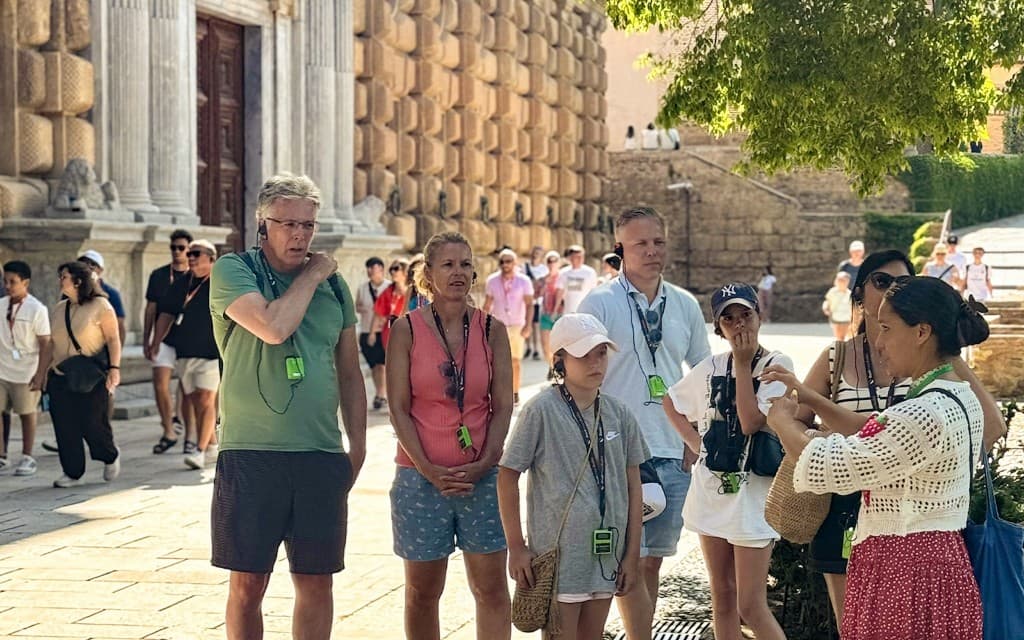
Meet your guide near the main entrance of the Alhambra for ticket validation and a quick security check. After a brief introduction, your group sets off to begin the guided exploration of this historic site.
What to expect
Alhambra complex
Recognized as a UNESCO World Heritage Site, the Alhambra stands as a testament to Spain’s Moorish heritage and architectural mastery. Dating back to the 13th century, this palace-fortress complex is celebrated for its cultural significance and artistic detail.
Features
Alcazaba Fortress: Explore the oldest section of the Alhambra, once a military stronghold, and take in panoramic views of Granada from its towers.
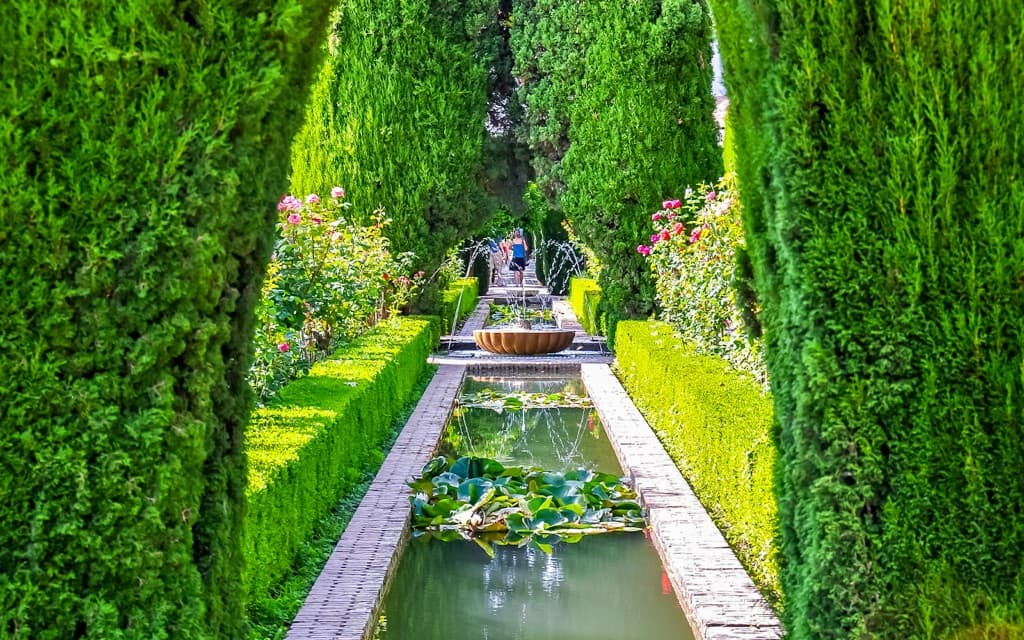
Generalife Gardens: Wander through lush gardens that served as the Nasrid sultans’ summer retreat, featuring intricate water features and shaded walkways.
Islamic art and architecture: Admire decorative stucco, geometric tilework, and detailed arches that showcase the artistry of Al-Andalus.
Multilingual guided insights: Tours are available in Spanish, English, German, French, and Italian, offering rich historical context and local stories.
Small group experience: With a maximum of 30 participants, enjoy a more personal and interactive tour.
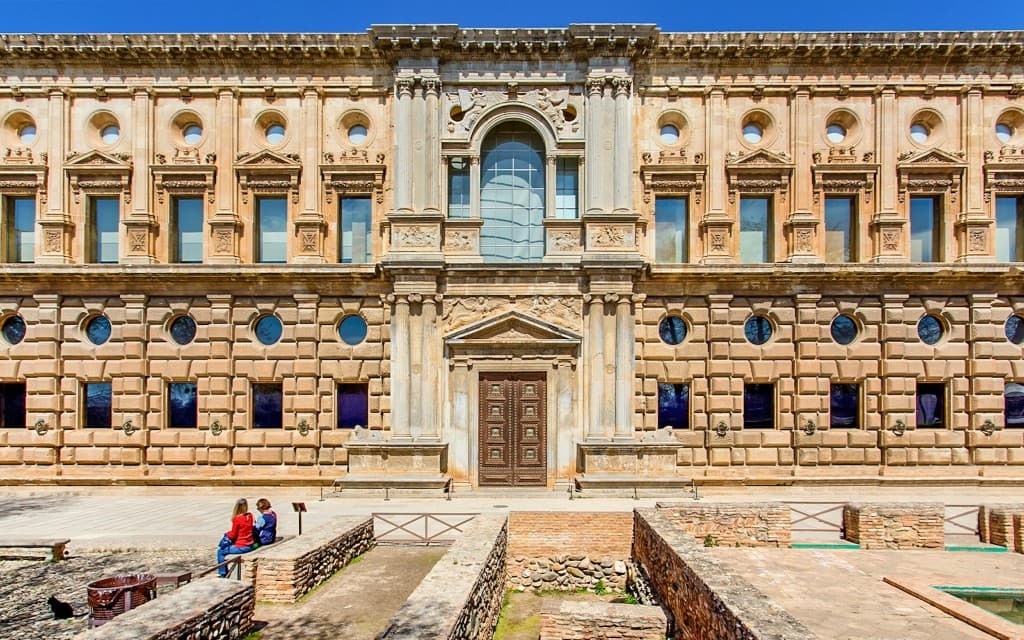
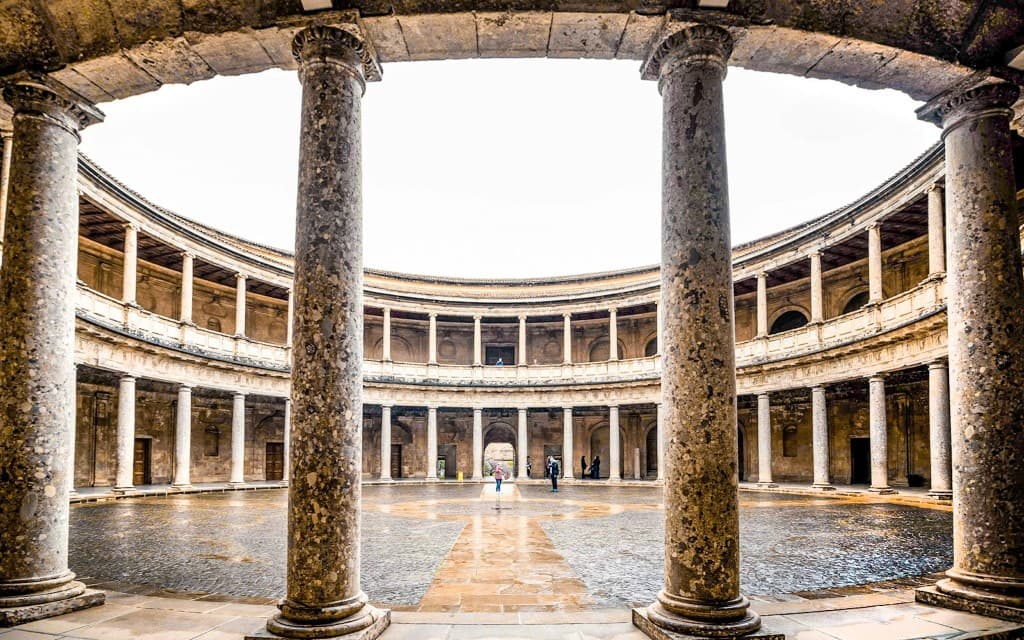
Optional exterior highlights: Some tours include the Palace of Charles V and the surrounding forests, adding further depth to your visit.
What to bring
Bring a valid passport or ID card for all participants, including children; this is required for entry.
Ensure you provide the full name, date of birth, and passport details for each participant at the time of booking; failure to do so may result in denied access.
What’s not allowed
Headphones are not included and are not permitted unless specified by the guide.
Entry to the Nasrid Palaces is not included with this experience.
Large bags, suitcases, and oversized luggage are not allowed inside the Alhambra for security reasons.
Pets are not permitted, except for registered service animals.
Alcohol, drugs, and any form of intoxication are strictly prohibited on the premises.
Accessibility
Additional information
If your chosen time slot is unavailable, you will be booked into a new time slot by the supplier.
All ages can participate in this experience.
Transportation, food, and drinks are not included.
Please arrive at the meeting point at least 15 minutes before your scheduled tour time.
The Alhambra, a UNESCO World Heritage site, is a palatial complex that embodies centuries of Spanish history. Originally constructed as a military fortress in the 9th century, it evolved into a lavish palace under the Nasrid dynasty in the 13th century. The Alhambra served as the royal residence and the seat of government, showcasing the opulence and sophistication of Moorish rule in Spain. More than just a palace, the Alhambra is a carefully designed environment that harmonizes architecture with nature. Its shaded courtyards, trickling fountains, and aromatic gardens were designed to evoke paradise on earth, offering respite and beauty. The strategic placement of the complex provides stunning panoramic views of Granada and the surrounding landscape, reinforcing its role as a symbol of power and prestige.
Today, the Alhambra stands as a reminder of the cultural exchange and artistic achievements that flourished in medieval Spain. Its intricate details, innovative engineering, and profound sense of place continue to inspire awe and admiration in all who visit.
The history of the Alhambra spans centuries, beginning in the 9th century with the construction of a fortress on the site. In the 13th century, the Nasrid dynasty transformed it into a palatial city. Under the rule of Muhammad I Ibn al-Ahmar, the Alhambra became the royal residence and a symbol of the Nasrid dynasty's power and cultural influence. The Alhambra reached its zenith in the 14th century under Yusuf I and Muhammad V, who were responsible for many of its most iconic structures, including the Palace of Comares and the Court of the Lions. The intricate stucco work, elaborate tile mosaics, and sophisticated water systems showcase the advanced artistry and engineering of the time.
In 1492, the Catholic Monarchs, Ferdinand and Isabella, captured Granada, bringing an end to Moorish rule in Spain. The Alhambra then became a royal palace. Charles V later added a Renaissance-style palace to the complex in the 16th century, creating a blend of architectural styles. The Alhambra has undergone several restorations and preservations, solidifying its status as a UNESCO World Heritage Site and a testament to the rich and complex history of Spain.
The Alhambra is open on all days of the week:
The best time to visit the Alhambra is during the spring (April-May) or fall (September-October) for pleasant weather and fewer crowds. Arriving early in the morning or later in the afternoon can help you avoid the busiest times. Weekdays are generally less crowded than weekends. Consider a night visit for a different perspective and a cooler experience.
Before booking your Alhambra tickets, keep the following in mind:
Visitors to the Alhambra are expected to adhere to the following guidelines:
Alhambra tickets can be booked online through our website, ensuring a guaranteed entry and access to exclusive deals.
You can purchase Alhambra tickets directly through our platform for a seamless booking experience.
It's recommended to book Alhambra tickets well in advance, ideally weeks or even months before your visit, due to high demand.
The general Alhambra ticket typically includes access to the Nasrid Palaces, Alcazaba, Generalife gardens, and other main areas of the complex.
Arrive at least 30 minutes before your scheduled entry time to allow for security checks and ticket verification.
Entry to the Alhambra requires a valid ticket, which must be purchased in advance or, if available, at the on-site ticket office.
Yes, guided tours of the Alhambra are available and can be booked through our website for a more in-depth experience.
While there is no strict dress code, dressing respectfully is encouraged. Comfortable shoes are recommended for walking.
The average visit duration for the Alhambra is 3 to 4 hours, allowing ample time to explore the main areas.
Photography is generally allowed inside the Alhambra, but flash photography may be restricted in certain areas. Be sure to check specific guidelines upon entry.
The Alhambra is located on a hill overlooking Granada. Location: C. Real de la Alhambra, s/n, Centro, 18009 Granada, Spain. The easiest way to get there is by taking the C30 or C32 bus from Plaza Nueva in the city center. You can also walk up to the Alhambra, though it is a steep climb. Taxis are readily available as well.
While there is no strict dress code for visiting the Alhambra, dressing respectfully is encouraged.