

What's Included
- Admission ticket to the Pinacoteca Ambrosiana and to the Crypt of San Sepolcro
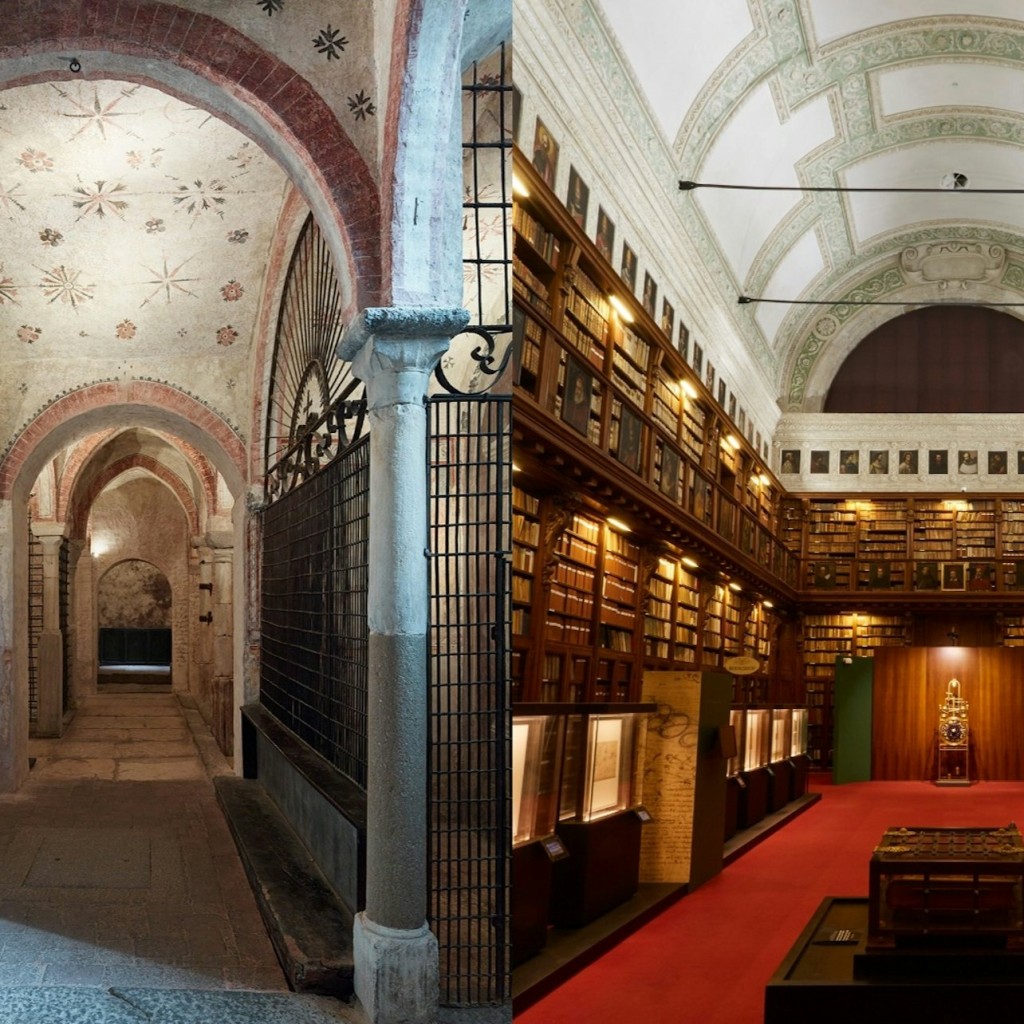
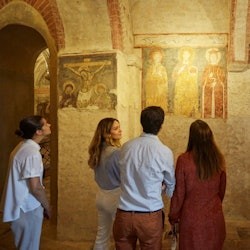
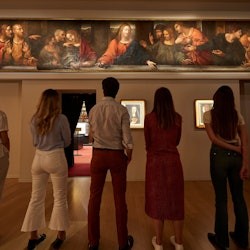
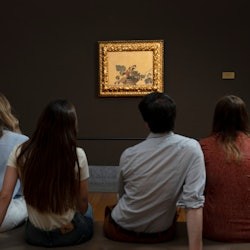
Explore a visual journey through the Pinacoteca Ambrosiana with these captivating images, showcasing its architectural beauty and the timeless masterpieces held within its walls.
Discover the Pinacoteca Ambrosiana, one of Milan's oldest and most prestigious art galleries, housing an extraordinary collection of masterpieces from the Renaissance and Baroque periods. Founded in the early 17th century by Cardinal Federico Borromeo, this cultural gem offers a unique journey through Italian art, history, and intellectual heritage. Visitors can immerse themselves in works by renowned artists such as Leonardo da Vinci, Caravaggio, Raphael, Botticelli, and Titian. Beyond its impressive paintings, the complex also includes the historic Biblioteca Ambrosiana, a library boasting ancient manuscripts and rare books, making it a pivotal site for art lovers and history enthusiasts alike.
There is no strict dress code for visiting the Pinacoteca Ambrosiana. However, as it is a cultural institution housed in a historic building, smart casual attire is generally appropriate. Comfortable shoes are recommended as you will be doing a fair amount of walking and standing to explore the galleries.
The Pinacoteca Ambrosiana stands as a testament to Milan's rich cultural legacy, offering a deep dive into centuries of artistic excellence. Its foundation by Cardinal Federico Borromeo in 1618 aimed to create a center for culture and learning, combining a public library (Biblioteca Ambrosiana) with an art academy and a gallery. The collection features a breathtaking array of paintings, sculptures, and drawings, meticulously gathered over generations. Highlights include Leonardo da Vinci's celebrated Codex Atlanticus, a vast collection of his technical drawings and writings, as well as Caravaggio's intense 'Basket of Fruit'. Other significant works include Raphael's 'Cartoon for the School of Athens', Botticelli's 'Madonna of the Pavilion', and Titian's 'Adoration of the Magi'. The Pinacoteca provides an intimate setting to appreciate these treasures, allowing for a profound connection with the minds of the past. It continues to be an active cultural institution, preserving and showcasing invaluable artifacts that narrate the story of European art.
Booking your Pinacoteca Ambrosiana tickets online is a convenient way to secure your visit and enhance your experience. Online booking often allows you to choose specific entry times, helping you plan your day efficiently and potentially bypass ticket queues upon arrival. This ensures a smoother entry, especially during peak tourist seasons. Additionally, purchasing tickets in advance, such as the Combo Pinacoteca Ambrosiana & San Sepolcro Crypt Entry Ticket, can offer access to multiple attractions or special exhibitions, providing better value and a more comprehensive cultural itinerary.
The Pinacoteca Ambrosiana was conceived and founded by Cardinal Federico Borromeo, cousin of Saint Charles Borromeo, in 1618. Driven by a vision to establish a center of culture, learning, and piety, the Cardinal initiated the creation of the Biblioteca Ambrosiana in 1609, one of Europe's first public libraries. The Pinacoteca, an art gallery, was subsequently established to provide an art academy for young students and to display the Cardinal's rapidly growing collection of artworks. Borromeo personally acquired a vast number of paintings, sculptures, and ancient texts, aiming to make art and knowledge accessible. He endowed the institution with his entire library and art collection upon his death in 1631, ensuring its continuity. Over the centuries, the collection expanded significantly through donations and strategic acquisitions, becoming one of Italy's most important repositories of art and historical documents, including invaluable manuscripts and the renowned Codex Atlanticus by Leonardo da Vinci.
The Pinacoteca Ambrosiana typically welcomes visitors from Wednesday to Monday, with opening hours generally from late morning to early evening. It is usually closed on Tuesdays. Specific opening and closing times can vary depending on the season, public holidays, and special events. It is advisable to consider these variations when planning your visit, especially around national holidays or during the quieter winter months, to ensure access to the collections.
To fully appreciate the masterpieces at the Pinacoteca Ambrosiana without large crowds, consider visiting during the shoulder seasons of spring (April-May) or autumn (September-October). Weekday mornings, shortly after opening, are generally the quietest times. Weekends and public holidays tend to attract more visitors, so if you must visit then, arriving early is recommended. The museum offers a contemplative experience, which is best enjoyed when the atmosphere is calmer, allowing for undisturbed viewing of iconic works like the Codex Atlanticus or Caravaggio's 'Basket of Fruit'.
Inside the Pinacoteca Ambrosiana, prepare to be immersed in a world of artistic and intellectual discovery. The main gallery houses masterpieces from various periods, including the Renaissance and Baroque. Key exhibits include Leonardo da Vinci's 'Codex Atlanticus', a monumental collection of his drawings and writings, which is displayed through rotating selections. Do not miss Caravaggio's stunning 'Basket of Fruit', a pioneering work of still life. Raphael's large 'Cartoon for the School of Athens' offers a rare glimpse into the creation of a Vatican fresco. Beyond paintings, explore the atmospheric rooms containing works by Botticelli, Titian, and Jan Brueghel the Elder. The historic Biblioteca Ambrosiana, a significant part of the complex, showcases ancient manuscripts, incunabula, and rare books, providing insight into scholarly pursuits across centuries.
Plan to spend at least 2 to 3 hours exploring the Pinacoteca Ambrosiana to fully appreciate its extensive collection. Photography without flash is generally permitted for personal use in most areas. Audio guides are often available in multiple languages to enhance your understanding of the artworks and the museum's history. The Pinacoteca is located in a historic building, so some areas may have stairs; however, facilities for accessibility are usually provided. Consider combining your visit with a ticket to the nearby San Sepolcro Crypt for a deeper dive into Milan's history.
Visitors are expected to observe standard museum etiquette, including refraining from touching artworks, speaking softly, and ensuring mobile phones are on silent. Food and drinks are generally not permitted within the exhibition halls. Large bags and backpacks may need to be stored in lockers or a cloakroom provided by the museum. Running or disruptive behavior is prohibited to ensure a pleasant experience for all guests and to protect the valuable collections.
The Pinacoteca Ambrosiana is unequivocally worth visiting for anyone with an interest in Renaissance and Baroque art, history, or Italian culture. It offers a rare opportunity to see world-renowned masterpieces by Leonardo da Vinci, Caravaggio, and Raphael in an intimate, elegant setting. The historical significance of the Biblioteca Ambrosiana, with its ancient texts, further enriches the experience, distinguishing it from other art galleries. It provides a profound cultural immersion that goes beyond mere art viewing, making it a highlight of any trip to Milan.
Key artworks include Leonardo da Vinci's Codex Atlanticus, Caravaggio's 'Basket of Fruit', Raphael's 'Cartoon for the School of Athens', and pieces by Botticelli and Titian.
While it is an art museum, older children with an interest in art and history may find it engaging. It is less interactive than some other museums, but the visual impact of the masterpieces can be captivating.
The Biblioteca Ambrosiana is an integral part of the Pinacoteca complex. Access to the library's historical rooms and rotating exhibitions of manuscripts is generally included with your Pinacoteca ticket.
Yes, guided tours are often available, sometimes for an additional fee, or as part of specific ticket packages. Audio guides are also typically offered in multiple languages.
The Pinacoteca Ambrosiana generally strives to be accessible, but as it is a historic building, some areas might present challenges. It is advisable to inquire about specific accessibility provisions when planning your visit.
Most visitors spend approximately 2 to 3 hours exploring the Pinacoteca Ambrosiana to fully appreciate its collections and the historic setting.
Yes, combo tickets such as the 'Combo Pinacoteca Ambrosiana & San Sepolcro Crypt Entry Ticket' are often available, offering access to multiple cultural sites in Milan.
The Pinacoteca Ambrosiana is centrally located in Milan and is well-served by public transportation. You can reach it via Metro Line 1 (Red Line) or Line 3 (Yellow Line) to Duomo station, which is just a short walk away. Several tram and bus lines also have stops within easy reach of the museum. From Duomo Square, the Pinacoteca is typically a 5-10 minute walk through the city center, making it convenient to combine with other nearby attractions.
There is no strict dress code for visiting the Pinacoteca Ambrosiana. However, as it is a cultural institution housed in a historic building, smart casual attire is generally appropriate. Comfortable shoes are recommended as you will be doing a fair amount of walking and standing to explore the galleries.