What's Included
- Entry to Notre-Dame Cathedral of Paris
- Entry to the Sainte-Chapelle
- Live guide
- 2-hour walking tour
- Small-group tour
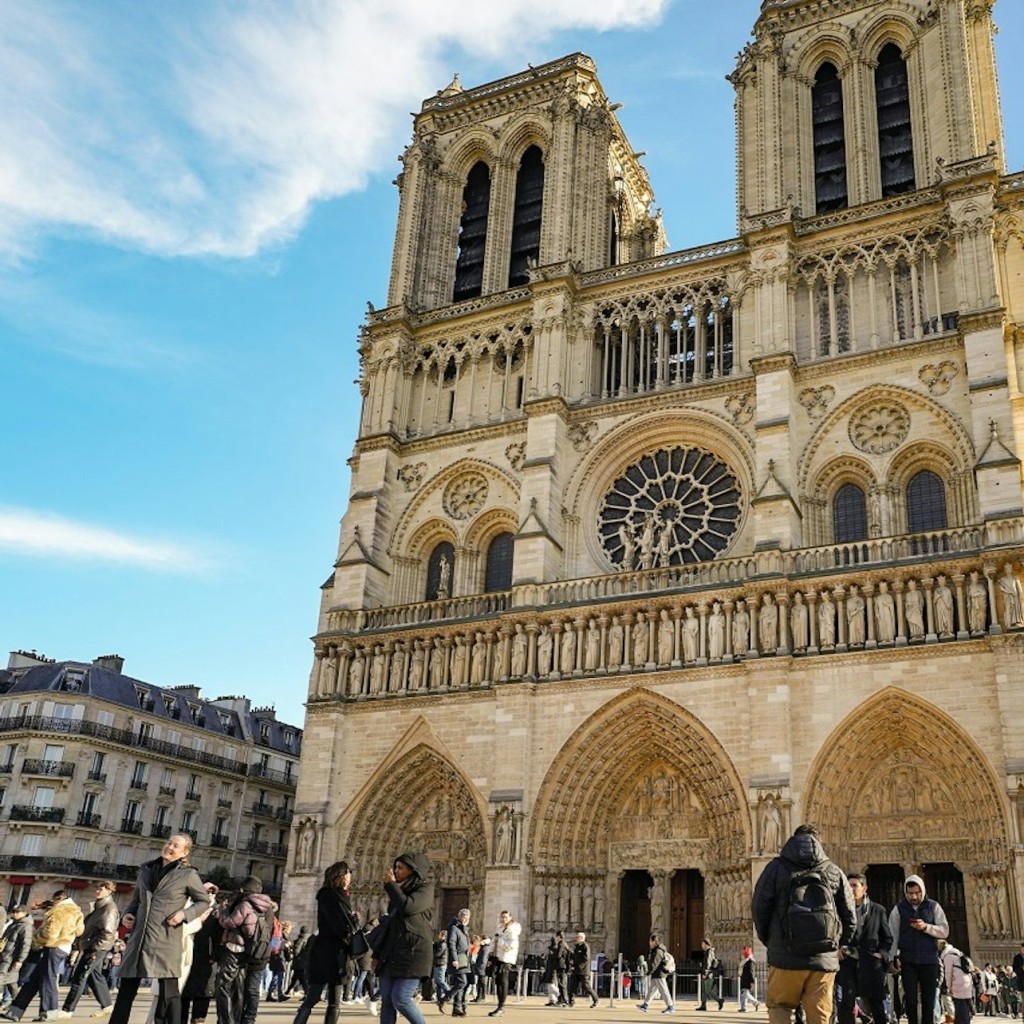
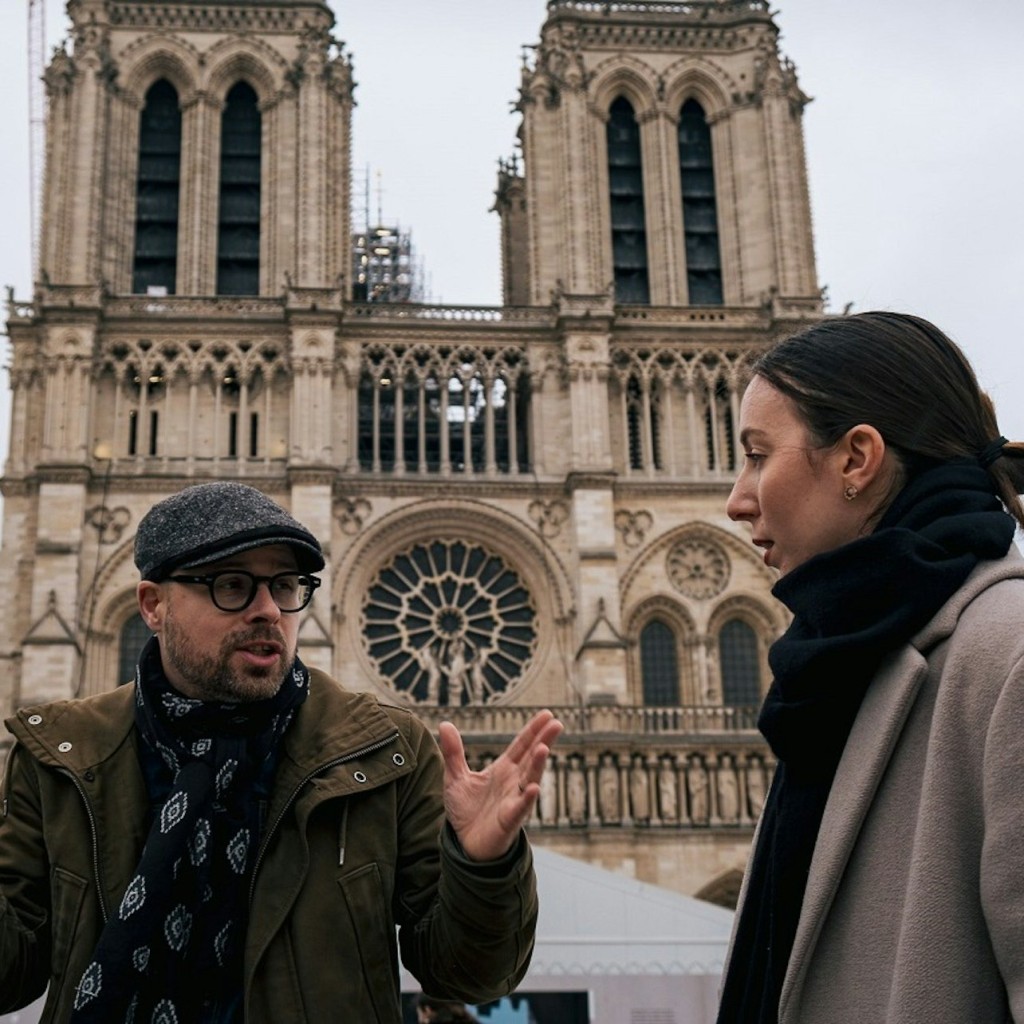
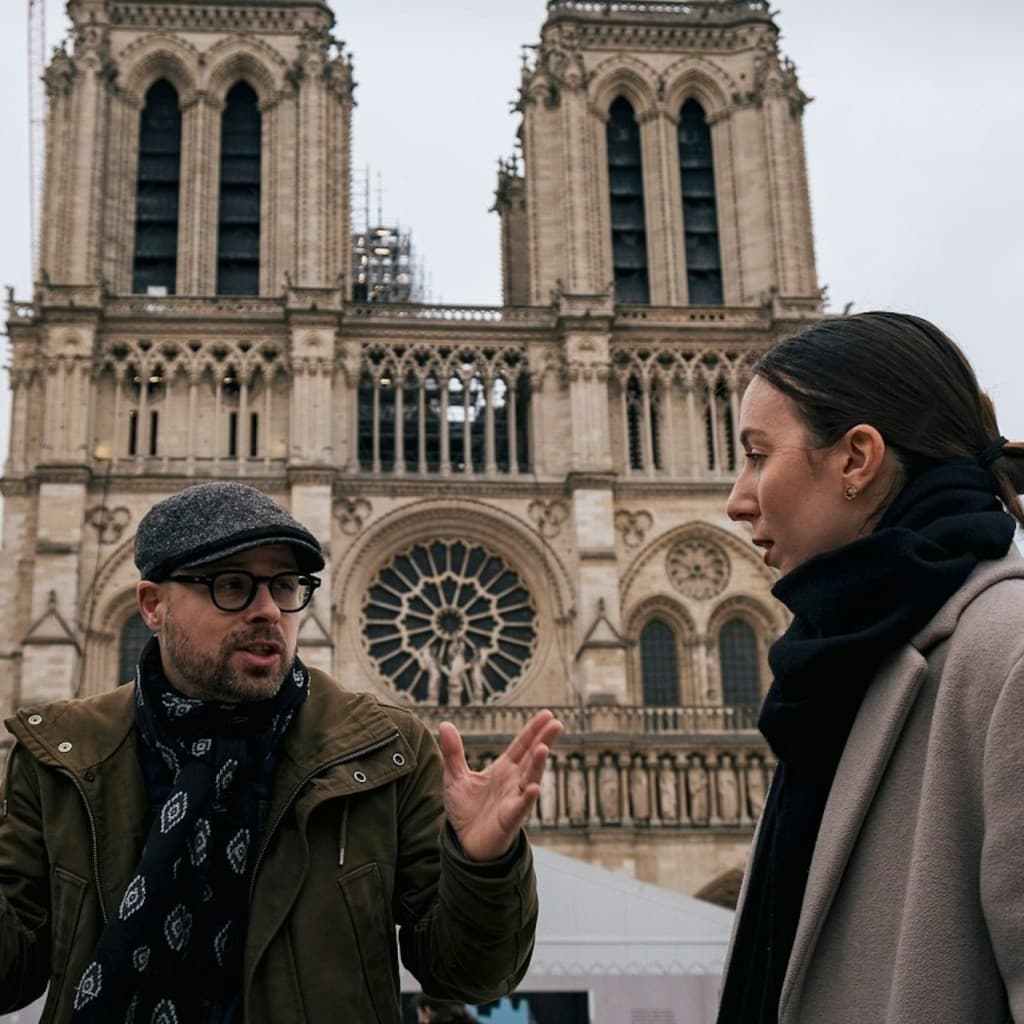
Explore the beauty and history of Notre-Dame de Paris through these images.
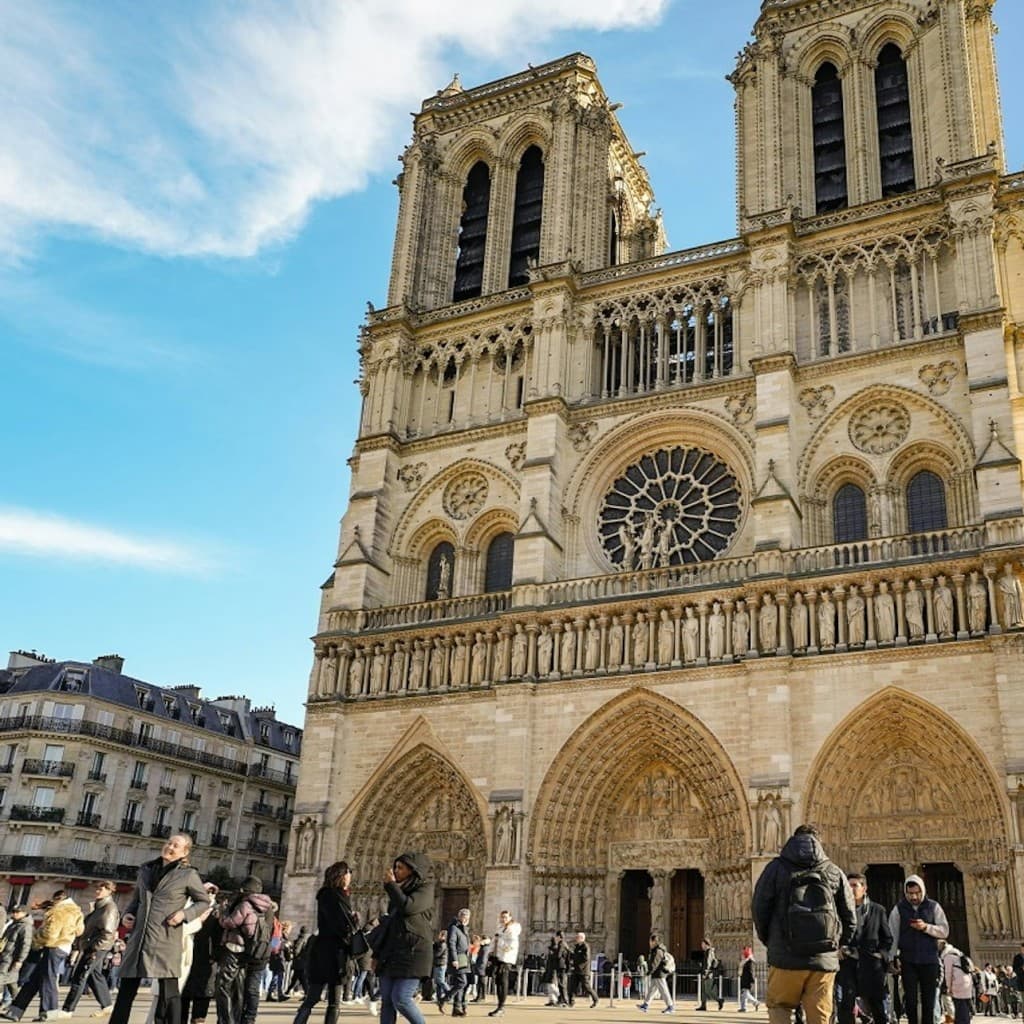
Notre-Dame de Paris, a masterpiece of Gothic architecture, stands as a symbol of Paris and French culture. Located on the Île de la Cité, this cathedral has witnessed centuries of history, from royal coronations to pivotal moments in the nation's story. Its stunning facade, intricate sculptures, and soaring spires evoke a sense of awe and reverence, inviting visitors to step back in time and experience the grandeur of the Middle Ages. Though currently undergoing restoration, its cultural and historical significance continues to resonate deeply.
There is no strict uniform, but modest attire is appreciated. Clothing covering shoulders and knees is recommended, especially during religious hours or when attending services.
Notre-Dame de Paris, or officialy Cathédrale Notre-Dame de Paris, is one of the most iconic cathedrals in the world, revered for its architectural innovation and spiritual importance. Since its construction in the 12th and 13th centuries, it has served as a major center of Catholic worship and a focal point of French national identity. The cathedral's design showcases the pinnacle of Gothic architecture, featuring soaring arches, ribbed vaults, and the use of light to create a sense of divine transcendence.
Notre-Dame is not only a religious site but also a cultural monument, attracting visitors from all over the globe who come to admire its beauty and learn about its rich history. Despite the fire in 2019, restoration efforts are underway to preserve its legacy for future generations, with plans to reopen to the public.
Entry to Notre-Dame is free, but waiting times can be very long, particularly on weekends and during peak months. By reserving in advance, many visitors secure a timed arrival and, in some cases, assistance from a host, making access more organized and predictable.
Online booking also allows you to upgrade your visit. You can choose interior or outdoor guided tours, helping you understand the architecture, the fire, and the ongoing restoration. Certain areas require separate admission, including the Towers, the Treasury and the archaeological crypt. Combo options are also popular to combine your visit to the cathedral with nearby attractions and historic walks.
On our website, you can easily compare verified options, understand exactly what is included, and book the visit that fits your schedule with confidence.
The construction of Notre-Dame de Paris began in 1163 under the reign of Louis VII, with the intent to replace an earlier church on the same site. Bishop Maurice de Sully initiated the project, envisioning a grand cathedral that would reflect Paris's growing importance. The main construction was completed in 1345, marking the culmination of nearly two centuries of work.
Throughout its history, Notre-Dame has been the site of numerous significant events, including the coronation of Henry VI of England in 1431 and the coronation of Napoleon Bonaparte in 1804. The cathedral suffered damage during the French Revolution but was later restored in the 19th century under the direction of Eugène Viollet-le-Duc.
In April 2019, a catastrophic fire destroyed the roof and spire, prompting an extraordinary international rebuilding campaign. After five years of effort, the cathedral reopened on December 7, widely regarded as a symbol of resilience, solidarity, and renewed cultural pride. Restoration and preservation work continue, shaping how visitors experience the monument today.
Cathedral Notre-Dame de Paris is open daily, with slightly different schedules depending on the day of the week. Entry closes before the official time, so late arrivals may not be admitted.
Cathedral hours
Last entry: 30 minutes before closing
Some highlights operate independently and require their own tickets.
Treasury:
Archaeological Crypt of the Île de la Cité:
Towers:
The best time to visit Notre-Dame de Paris is on a weekday, particularly Monday through Wednesday, when crowds are generally lighter. Weekends are the busiest, and lines tend to grow quickly in the afternoon.
Mornings usually offer the most peaceful atmosphere, with beautiful light filtering through the stained glass. Mid-afternoon is typically the most congested period. Thursday evenings can be a good alternative thanks to extended hours after many day visitors have left.
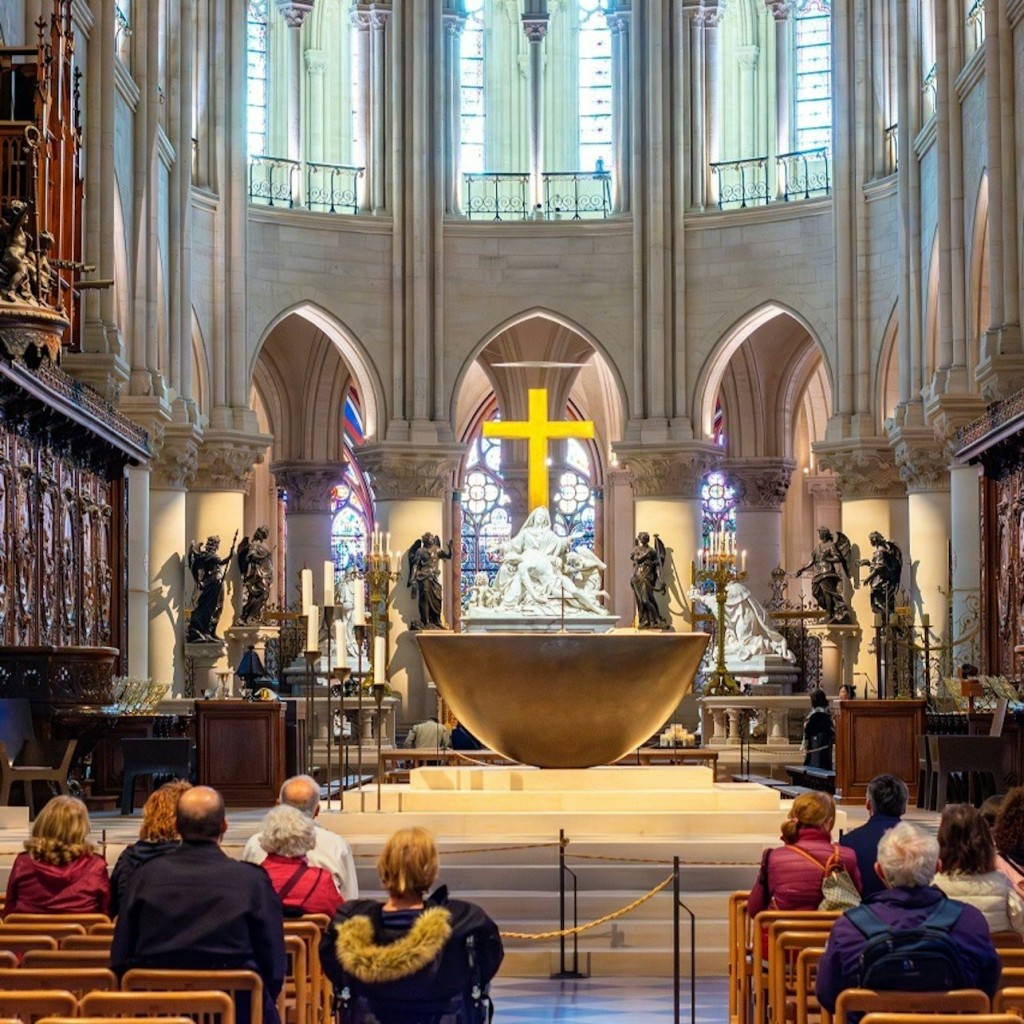
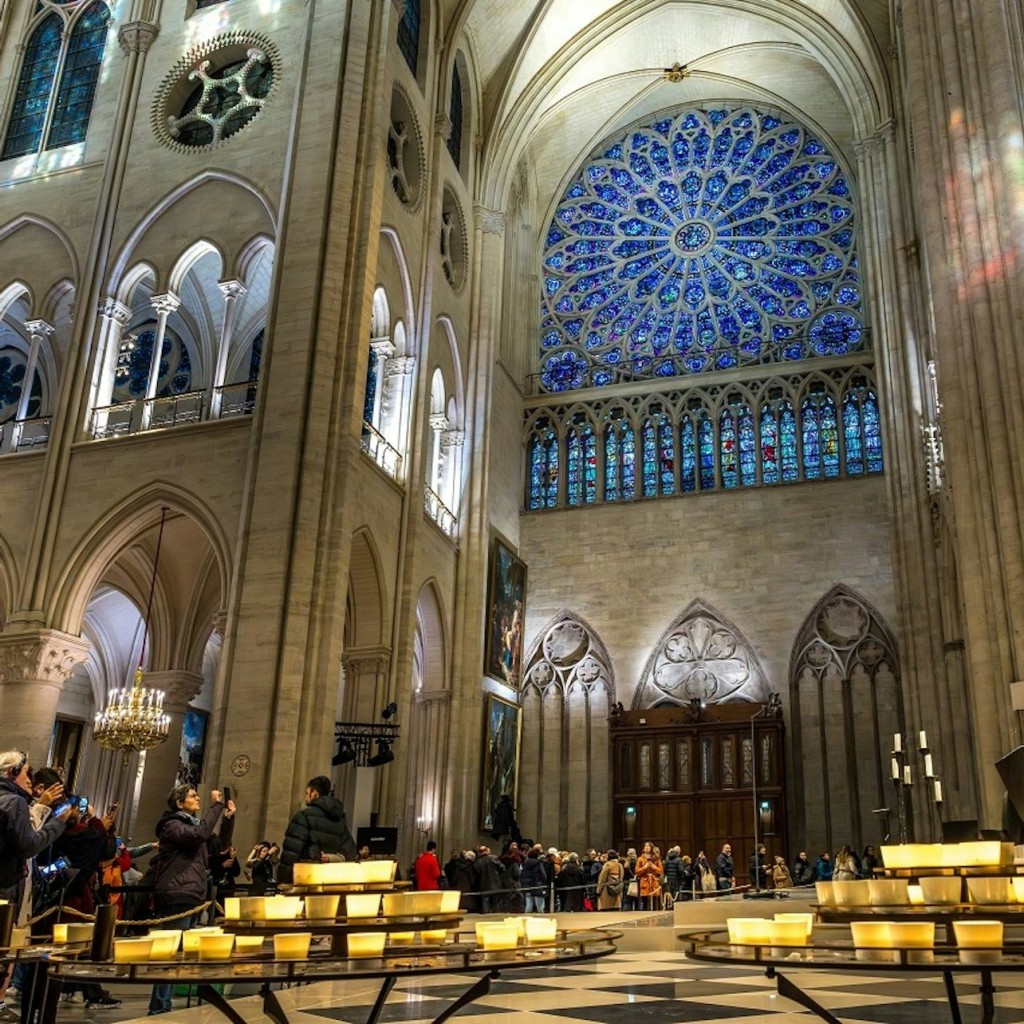
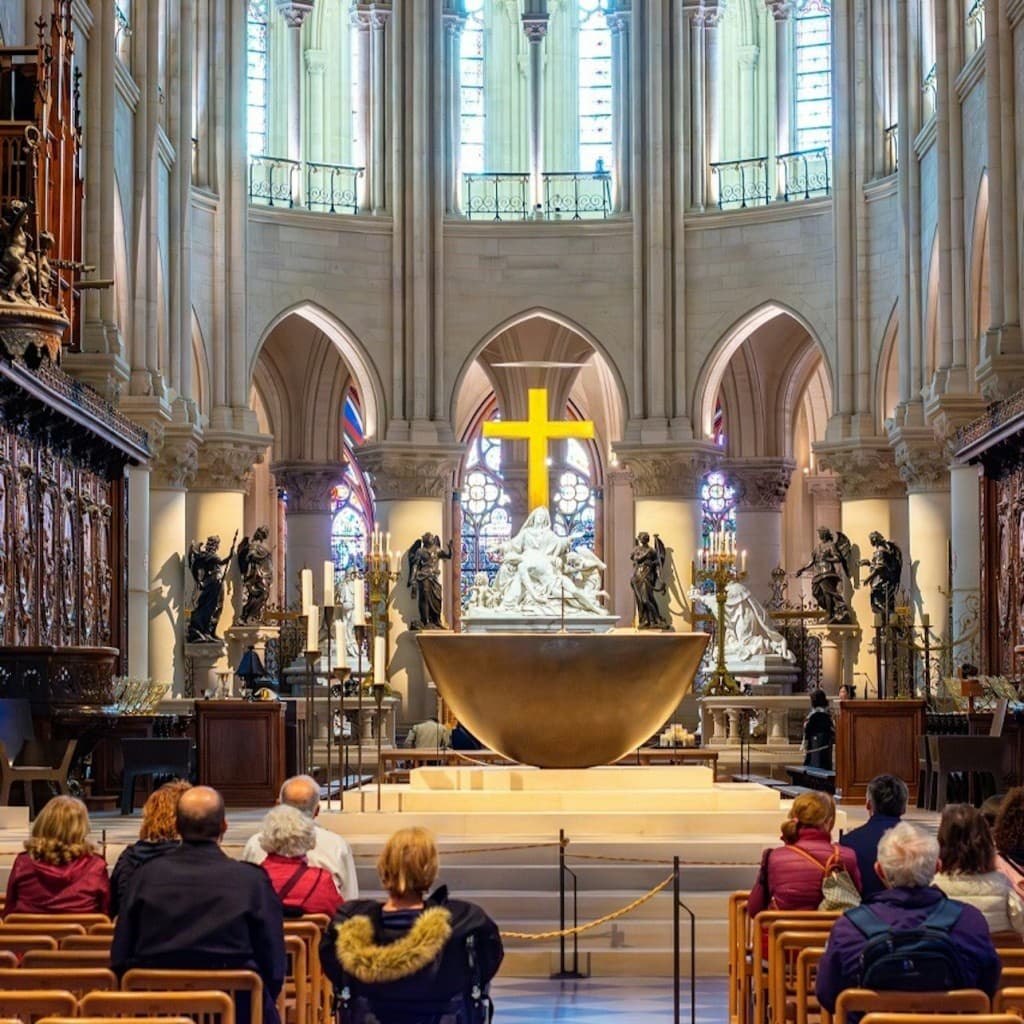
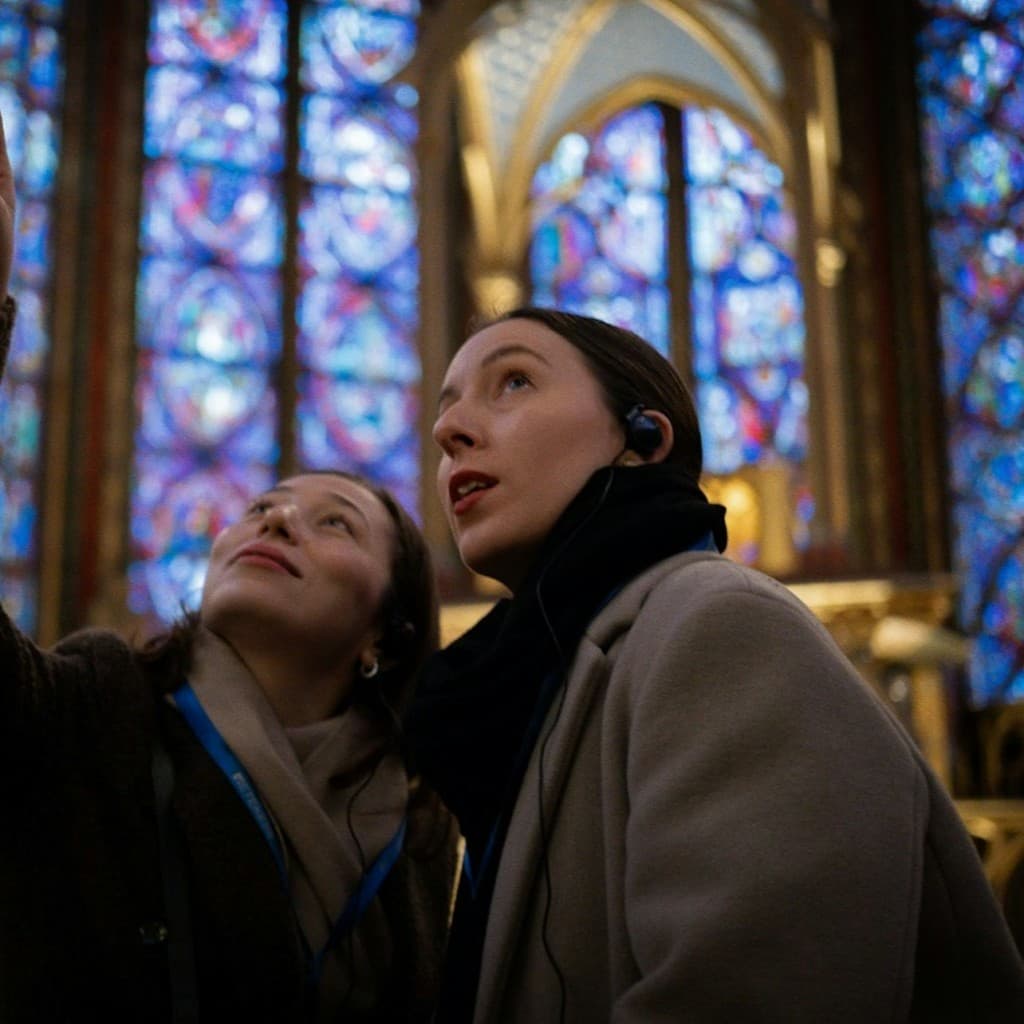
Stepping inside Notre-Dame de Paris, the vast scale of the cathedral immediately becomes clear. Light filters through stained glass, voices soften, and the Gothic structure draws your eyes upward.
The nave leads toward the altar, framed by soaring columns and ribbed vaults that demonstrate the engineering ambition of the Middle Ages. Along the sides, chapels contain religious art, memorials, and spaces for quiet reflection.
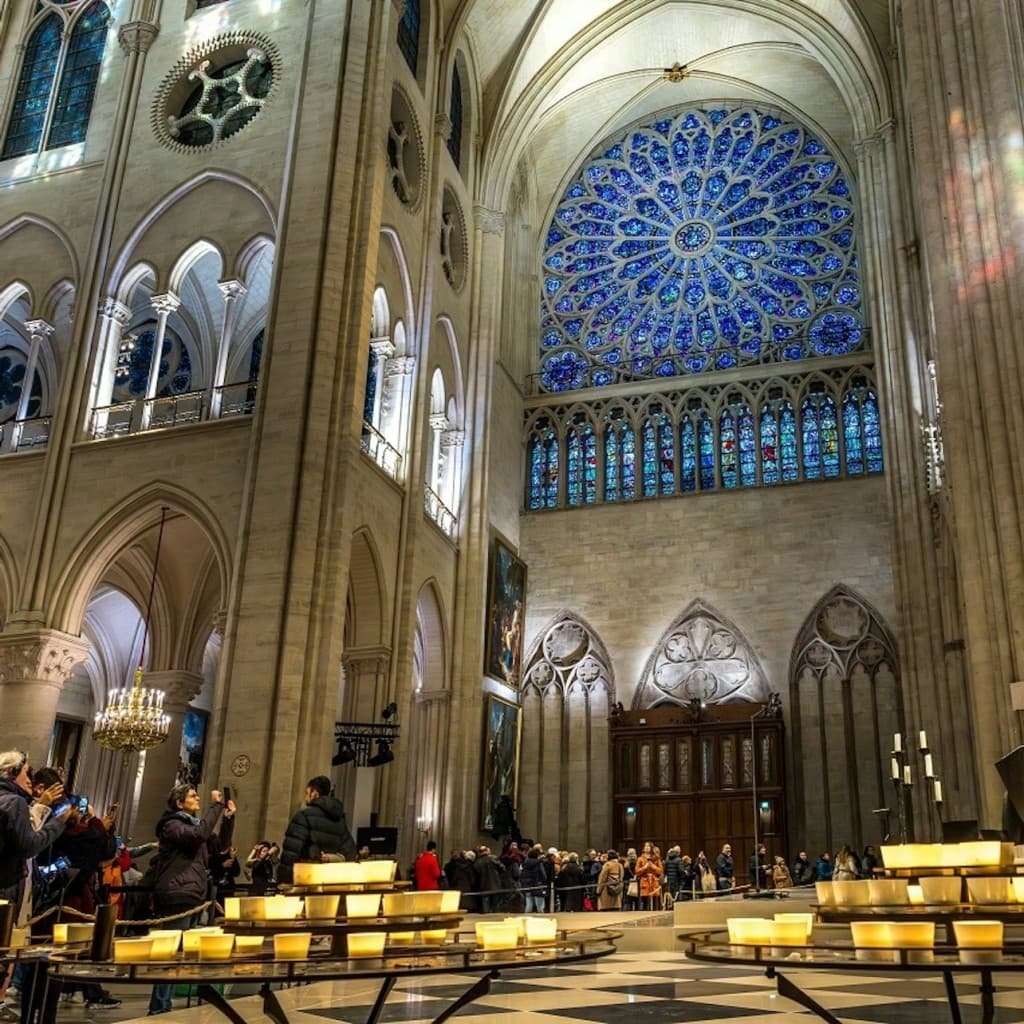
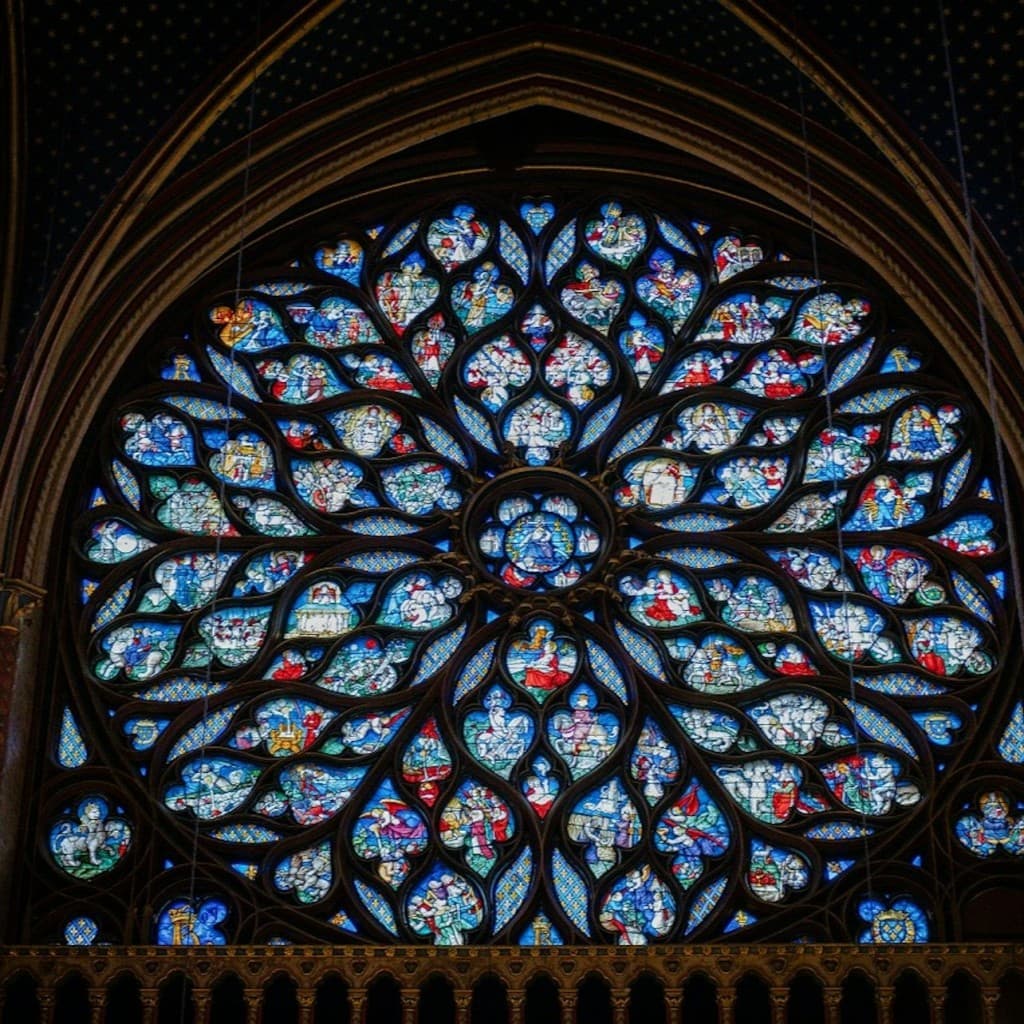
One of the most striking features is the collection of rose windows. Their colors and detail change throughout the day as sunlight moves across the interior.
Visitors can also observe areas connected to the recent restoration, offering insight into the craftsmanship required to preserve a monument of this importance.
Some of the most famous experiences connected to Notre-Dame are located outside or operate with separate access.
Before booking your Notre-Dame de Paris tickets, keep the following in mind:
Notre-Dame de Paris is an architectural marvel and a symbol of French history. Few landmarks carry the historical, artistic, and emotional weight of this cathedral. Standing before the façade, you are looking at nearly nine centuries of architecture, craftsmanship, and national memory. Inside, the vast interior, stained glass, and ongoing restoration efforts create a visit that feels both timeless and contemporary. Even after the fire, or perhaps because of it, the cathedral represents resilience as much as beauty. Seeing it in person connects you to moments that shaped France and to the global effort that brought it back to life. For many travelers, it is an essential stop in Paris.
Entry to the cathedral is free, but many visitors choose reserved entry or guided experiences to avoid long lines. On our website, you can compare verified options, inclusions, and schedules before booking.
Notre-Dame de Paris stands on Île de la Cité, in the historic center of Paris, easily reachable from major attractions on both banks of the Seine.
After the 2019 fire and extensive reconstruction, Notre-Dame reopened to visitors on December 7 following five years of restoration.
General access to the cathedral is free. However, guided tours, the Treasury, the archaeological crypt, and tower visits require separate tickets.
The cathedral is open daily, with longer hours on Thursdays. Entry usually ends 30 minutes before closing, and schedules may adjust for services or special events.
Most visitors spend around 1 to 2 hours inside, with additional time if they join a guided tour or visit the crypt or towers.
Yes. Options range from outdoor history walks to in-depth interior tours led by licensed guides. Availability depends on the day and format.
Metro Line 4 to Cité is one of the easiest options. The cathedral is also within walking distance from many central neighborhoods and river crossings.
Inside and around the cathedral, you may notice ongoing conservation work and displays explaining how artisans rebuilt damaged sections after the fire.
Modest clothing is recommended because the cathedral remains an active place of worship. Covering shoulders and knees is appreciated, especially during services.
Notre-Dame de Paris is located on Île de la Cité in the heart of Paris.. The easiest way to get there is by Metro, using line 4 to Cité station. Several bus lines also serve the area, and it is easily accessible by foot from many central Paris locations.
There is no strict uniform, but modest attire is appreciated. Clothing covering shoulders and knees is recommended, especially during religious hours or when attending services.