





What's Included
- Entrance to Pena Palace & Pena Park
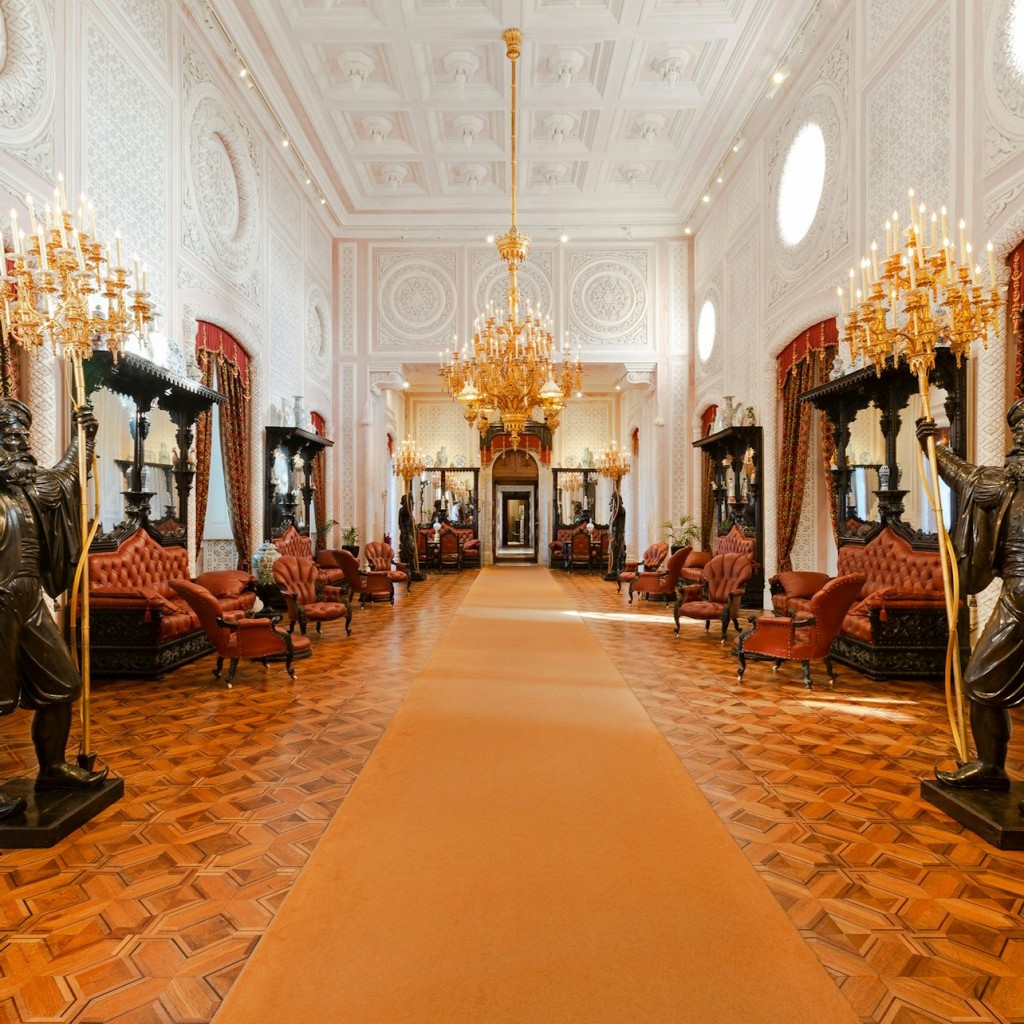
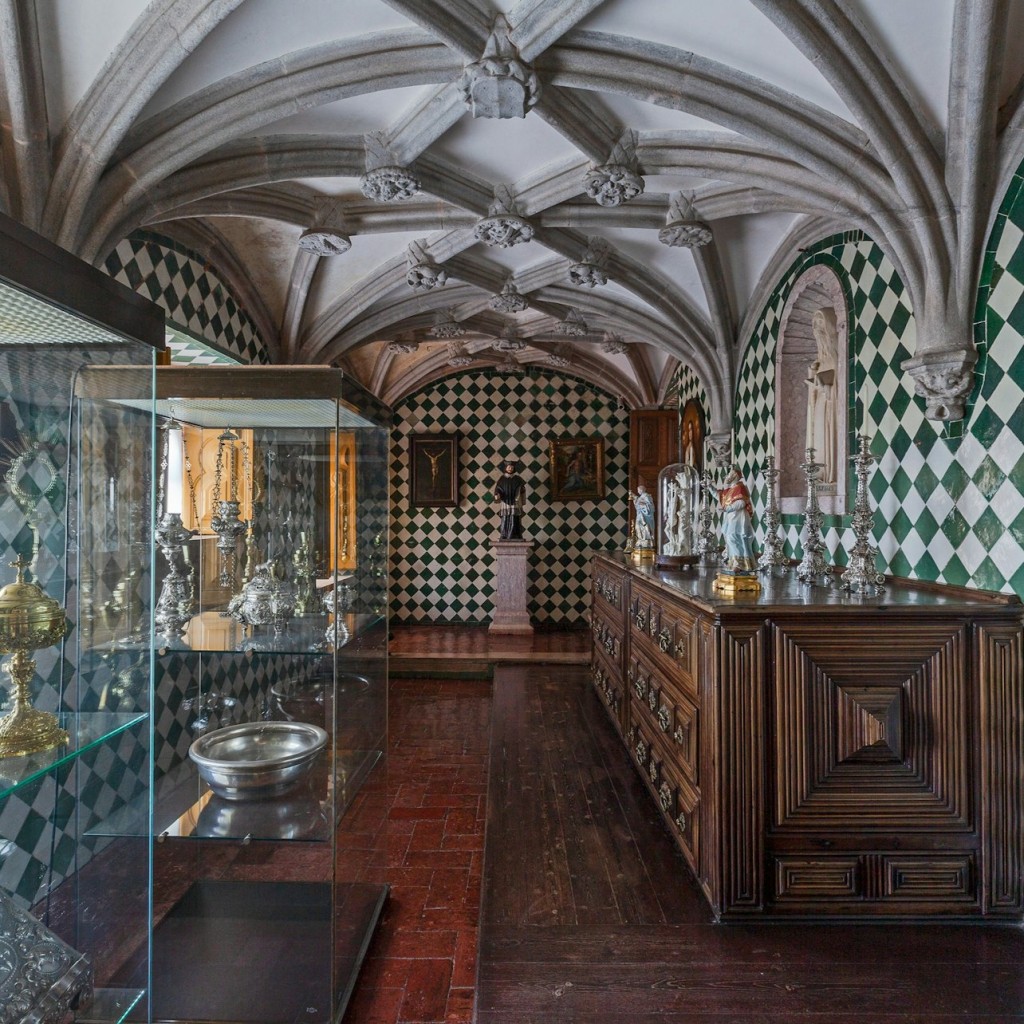
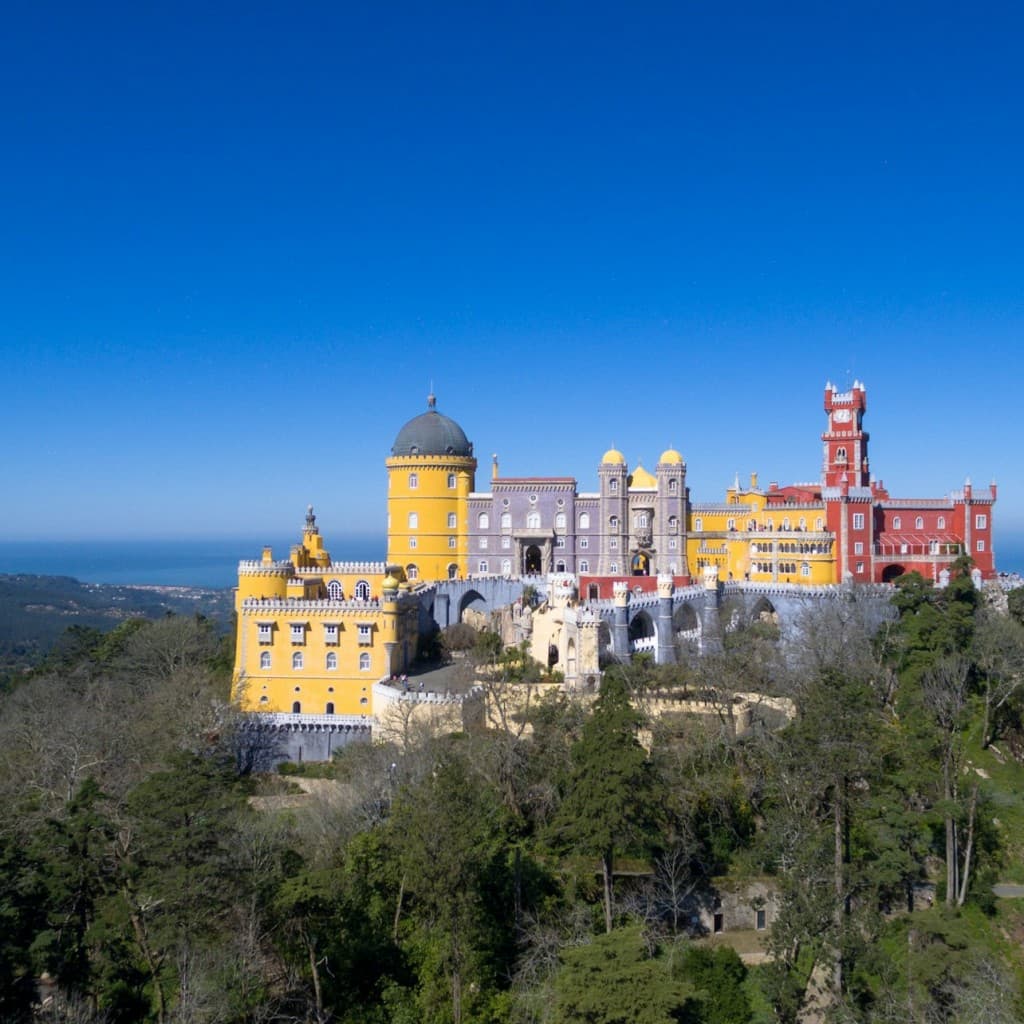
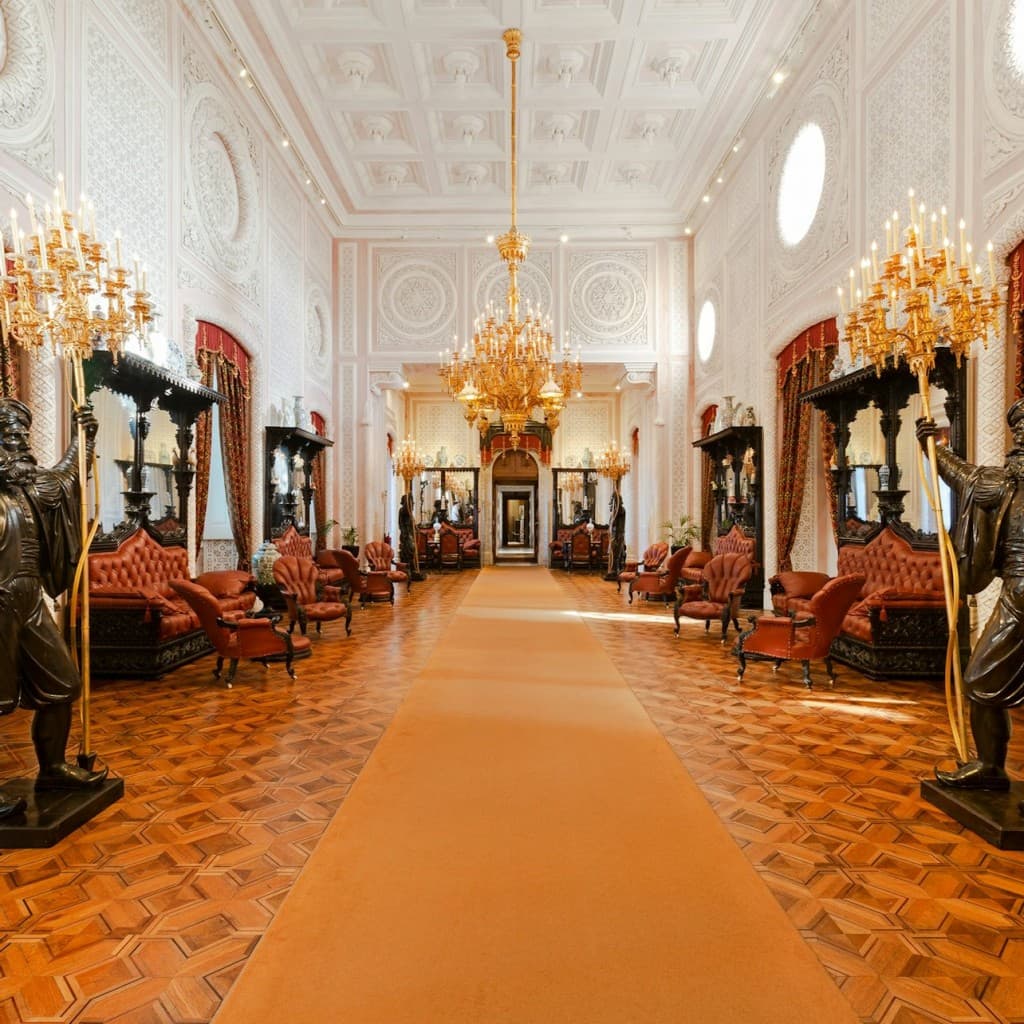
The following images showcase the beauty and grandeur of Pena Palace, from its colorful exterior to its opulent interior and stunning surrounding landscape.
Perched high on a hilltop in Sintra, Portugal, Pena Palace is a vibrant and romantic architectural marvel. This UNESCO World Heritage Site is a breathtaking blend of architectural styles, from Gothic and Manueline to Moorish and Renaissance. Its colorful turrets, ornate decorations, and stunning views create a fairytale-like atmosphere that enchants visitors from around the globe. Pena Palace is more than just a castle; it's a journey through history, art, and natural beauty, offering an unforgettable experience for all who wander its grounds. A visit here is a must for anyone seeking to immerse themselves in Portugal's rich cultural heritage and breathtaking landscapes.
Pena Palace stands as a testament to 19th-century Romanticism, embodying the artistic and architectural dreams of King Ferdinand II. Designed as a summer residence for the Portuguese royal family, the palace's unique design reflects a fusion of styles and a deep appreciation for art and nature. Its location, high in the Sintra Mountains, was carefully chosen to provide panoramic views and a sense of serene isolation.
Today, Pena Palace serves as a national monument and a symbol of Portugal's rich history. Visitors can explore the opulent state rooms, wander through the lush gardens, and marvel at the intricate details of the palace's exterior. The palace's vibrant colors and fantastical architecture create a truly magical experience, transporting visitors to another time and place. The palace also showcases many important historical artifacts, giving visitors a look into the day-to-day lives of the Royal Family.
Booking your Pena Palace tickets in advance helps secure entry to one of Portugal’s most visited landmarks, where daily capacity is limited and time slots often sell out. Visitors who purchase tickets on-site frequently encounter very long queues at the entrance, especially during peak travel months.
Booking online through our platform also lets you compare different ways to experience the palace. Options may include guided tours, combo tickets with other Sintra landmarks such as the Moorish Castle or Quinta da Regaleira, or organized day trips from Lisbon that also visit destinations like Cascais.
Pena Palace's history dates back to the Middle Ages when a chapel dedicated to Our Lady of Pena was built on the site. In the 15th century, King John II transformed the chapel into a monastery, which remained a place of religious retreat for centuries. However, the Great Lisbon Earthquake of 1755 left the monastery in ruins.
In 1838, King Ferdinand II acquired the former monastery and envisioned transforming it into a Romanticist palace. He commissioned the German architect Baron Wilhelm Ludwig von Eschwege to design the palace, drawing inspiration from various architectural styles. The palace was completed in the 1850s and served as a summer residence for the Portuguese royal family until the monarchy was abolished in 1910.
In the 20th century, Pena Palace was classified as a national monument and opened to the public. It has since become one of Portugal's most popular tourist attractions, drawing visitors from around the world to marvel at its beauty and history.
The Pena Palace and its surrounding park follow slightly different visiting hours.
The best time to visit the Pena Palace is during spring and early autumn, when the weather is mild and visitor numbers are lower. Within the week, Tuesdays, Wednesdays, and Thursdays are typically the least crowded days.
A good strategy is to explore Pena Park in the morning and schedule your palace entry later in the afternoon when visitor numbers tend to decrease.
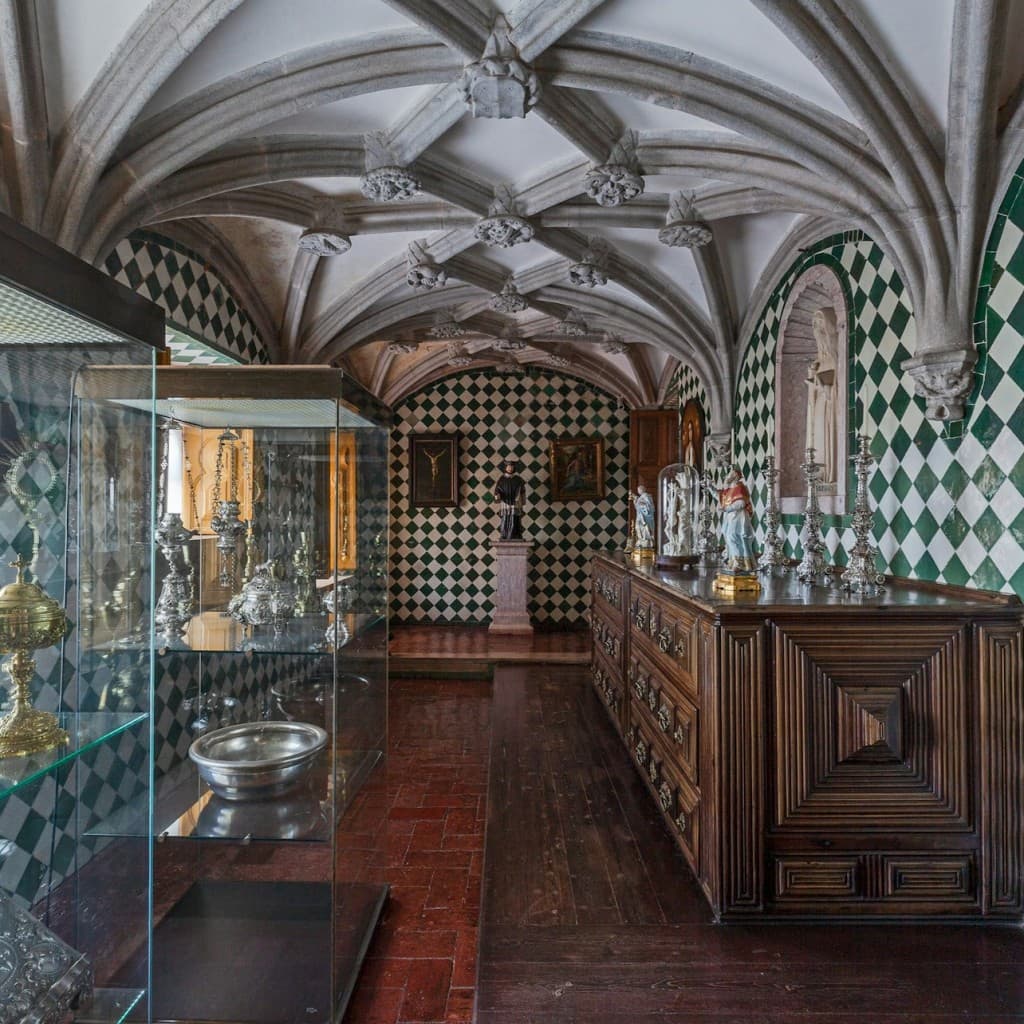
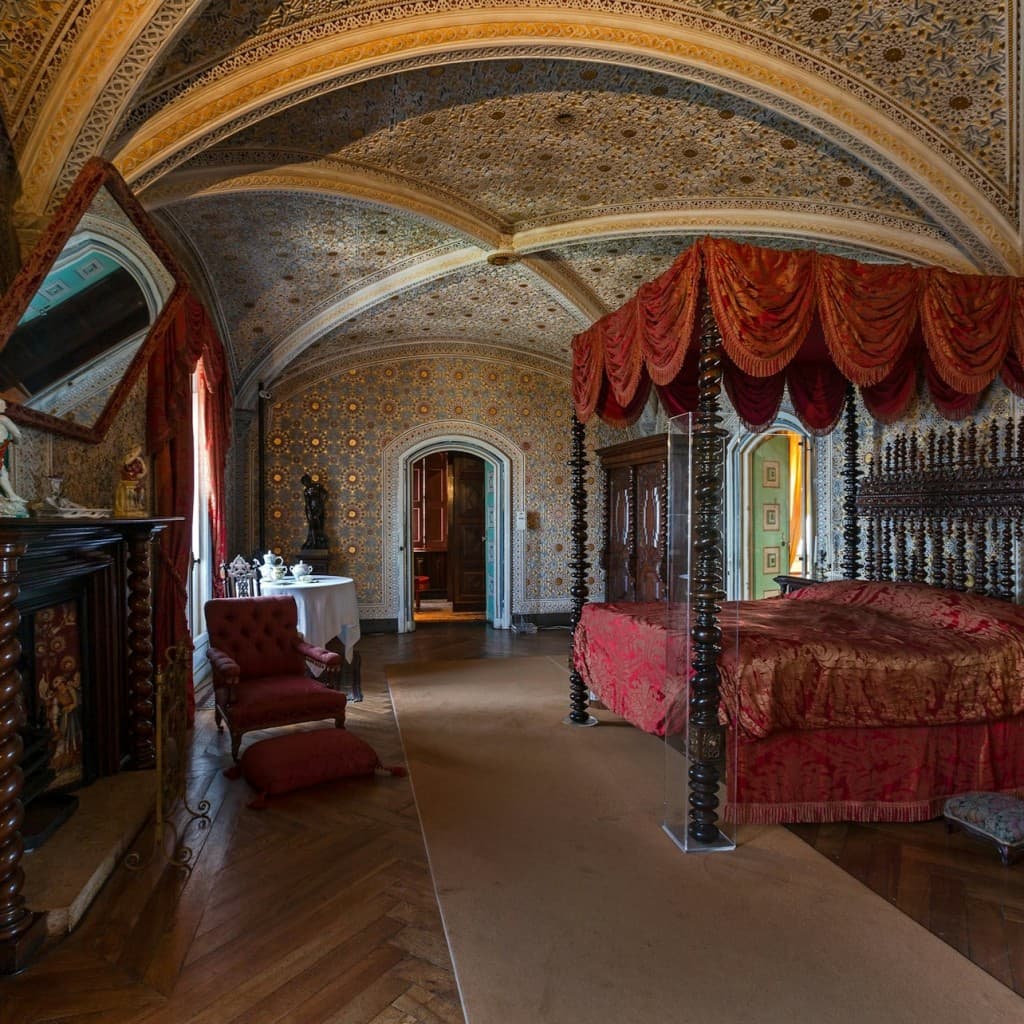
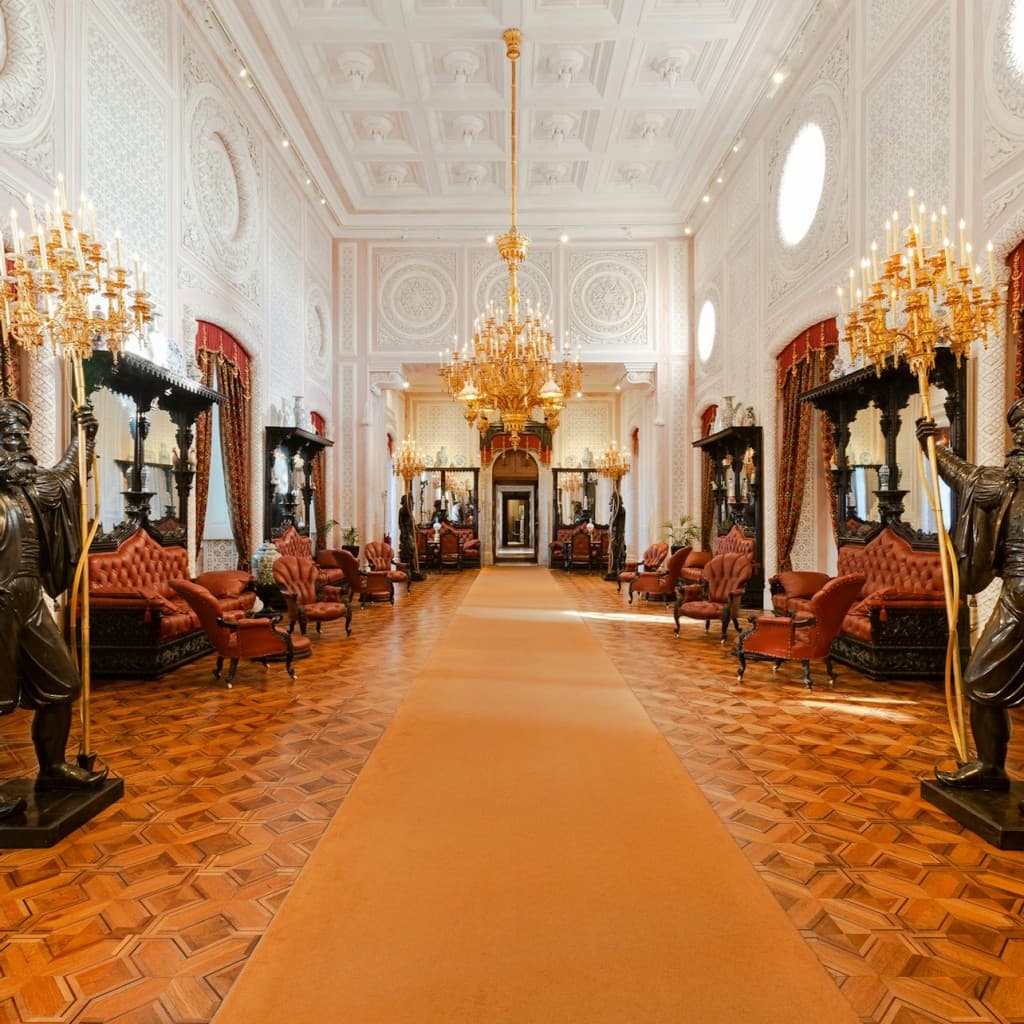
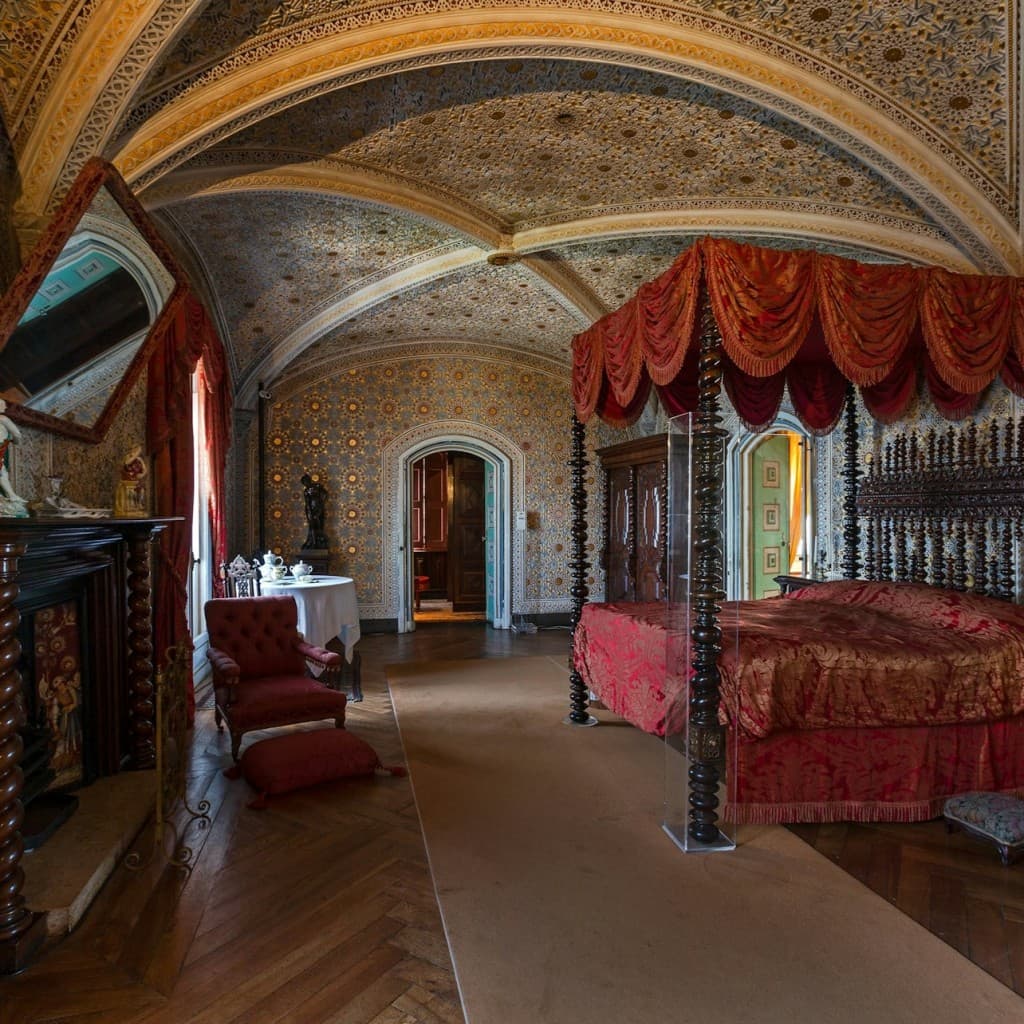
Inside Pena Palace, visitors can explore a series of richly preserved Pena Palace interiors that reflect the lifestyle of the Portuguese royal family in the 19th century. Many rooms still display original furnishings, decorative ceramics, and intricate wall designs that highlight the palace’s Romanticist character.
Highlights include the King’s and Queen’s Chambers, offering insight into royal daily life, as well as the elegant state rooms used for receptions and ceremonies. The Great Hall and dining room feature ornate ceilings, carved wood details, and decorative elements inspired by Manueline and Moorish styles.
Another standout is the palace chapel, where stained glass, carved stonework, and religious artwork create a serene atmosphere within the palace complex. Exploring these rooms allows visitors to experience the history and artistic richness that define the interior of Pena Palace.
Beyond the interiors, much of the magic of Pena Palace lies in its dramatic setting and surrounding landscape.
The colorful Pena Palace façades and terraces are among the most iconic viewpoints in Sintra. From these elevated walkways, visitors can enjoy sweeping views across the Sintra Mountains and, on clear days, even toward the Atlantic coastline. The famous Triton Terrace, with its mythological Triton statue, symbolizes the meeting of land and sea.
Surrounding the palace, Pena Park gardens stretch across more than 200 hectares of forested hills. These romantic landscapes include winding paths, hidden viewpoints, lakes, and exotic plants brought from around the world. Walking through Pena Park reveals small pavilions, scenic trails, and peaceful corners that make the palace experience even more immersive.
Before booking your Pena Palace tickets, keep the following in mind:
Pena Palace is undoubtedly worth visiting for its unique blend of history, architecture, and natural beauty. The palace's vibrant colors and whimsical design create a fairytale-like atmosphere that enchants visitors of all ages. The panoramic views from the palace are simply breathtaking, offering a glimpse of the surrounding Sintra Mountains and the Atlantic coast. Exploring the opulent state rooms and wandering through the lush gardens is an unforgettable experience. Whether you're a history buff, an art enthusiast, or simply seeking a magical escape, Pena Palace is sure to captivate your imagination and leave you with lasting memories.
You can easily book your Pena Palace tickets online through our website for the best deals and guaranteed entry.
Tickets for Pena Palace can be purchased either on-site or online through our website, where you can find verified ticket options and special offers.
Yes, buying Pena Palace tickets in advance through our website is highly recommended to avoid queues and ensure your entry.
Most visitors spend between 2 to 4 hours exploring Pena Palace and its grounds. Plan your visit accordingly when booking your tickets.
The best time to visit Pena Palace is during spring or early autumn and on weekdays, especially Tuesday to Thursday. Afternoon time slots are often slightly less crowded than the morning peak.
There is no specific dress code for visiting Pena Palace, but comfortable shoes are recommended due to the hilly terrain.
Yes, guided tours are available at Pena Palace. Check our website or inquire on-site for tour options and schedules.
Photography is generally allowed inside Pena Palace, but flash photography may be restricted in certain areas. Please respect any posted signs or instructions from staff.
The easiest way to reach Pena Palace from Lisbon is by train from Rossio Station to Sintra (about 40 minutes), followed by the 434 tourist bus, taxi, or tuk-tuk up to the palace. Guided day trips from Lisbon are also a very popular option.
Pena Palace can be reached from Sintra by taking the 434 tourist bus (Circuito da Pena), a taxi, or a tuk-tuk. Walking is also possible but involves a steep uphill climb through Pena Park.
Pena Palace sits high in the Sintra Mountains above the town of Sintra, about 30 km (19 miles) from Lisbon. The most common way to reach it is by train from Lisbon followed by local transport up the hill.
By train from Lisbon:
From Sintra to Pena Palace:
Once in Sintra, you have several options to reach the palace:
By rental car:
Driving is possible but not recommended. Sintra’s roads are narrow and winding, and parking near the palace is extremely limited.
By guided tour:
Many visitors choose guided day trips from Lisbon, which typically include transportation, palace entry, and stops at nearby highlights such as Sintra’s historic center or the coastal town of Cascais. This option removes the need to manage trains, buses, or queues independently.