Compare options
| Option | Type | Summary | Duration | From | Book |
|---|---|---|---|---|---|
| Temple of Heaven Tickets (Entry Tickets) | Tickets | Details on option page | Flexible | €9.26 | Book |
| Temple of Heaven Tickets (Entry Tickets + Audio Guide) | Tickets | Details on option page | Flexible | €10.37 | Book |
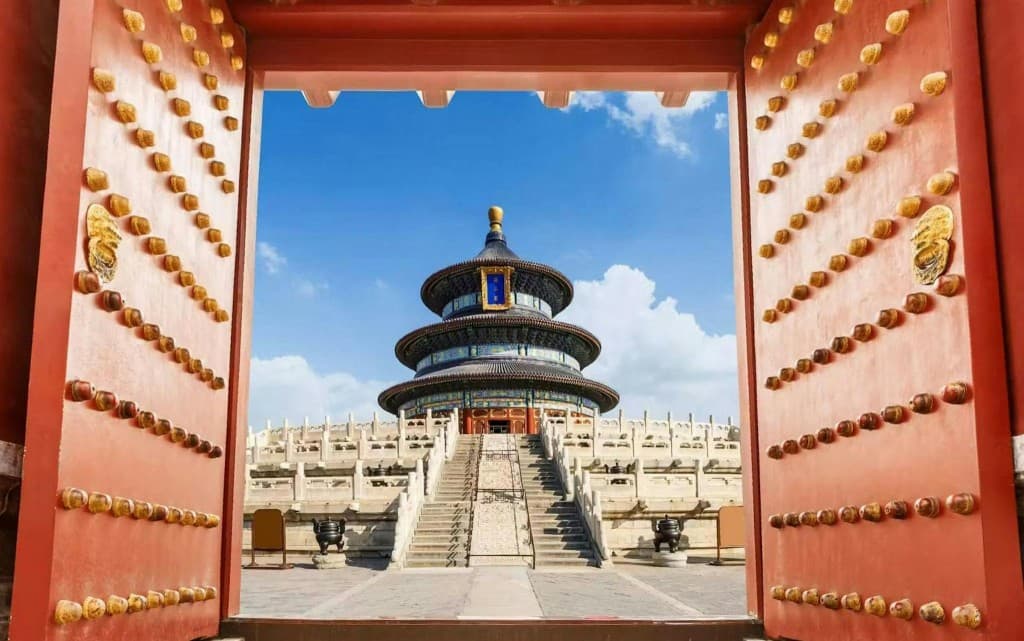
The Temple of Heaven, located in Beijing, is a sprawling complex of religious buildings symbolizing the connection between heaven and earth. Constructed during the Ming Dynasty, it served as the place where emperors of the Ming and Qing dynasties would perform annual ceremonies of prayer to Heaven for a good harvest. The temple's design and layout reflect deep cosmological beliefs, showcasing the importance of the emperor's role as an intermediary between the divine and the earthly realms. Today, the Temple of Heaven stands as a testament to China's rich imperial past and its enduring cultural heritage. Visitors can explore its magnificent structures, wander through its serene gardens, and learn about the ancient rituals performed here.
What to Expect
Highlights
About Temple of Heaven
The Temple of Heaven, or Tiantan, is one of the most significant historical sites in Beijing. Built from 1406 to 1420 during the reign of the Yongle Emperor of the Ming Dynasty, it was conceived as a sacred space where the emperor could communicate with Heaven. The temple complex covers an area of 2.72 square kilometers, featuring several key structures, including the Hall of Prayer for Good Harvest, the Imperial Vault of Heaven, and the Circular Mound Altar. These buildings are masterpieces of traditional Chinese architecture, characterized by intricate details, symbolic layouts, and vibrant colors. Throughout the Ming and Qing dynasties, emperors would visit the Temple of Heaven to offer sacrifices and pray for bountiful harvests, divine favor, and the well-being of the empire. The rituals performed here were elaborate and deeply rooted in Confucian and Taoist philosophies, reflecting the emperor's divine mandate to rule. The temple's design incorporates elements that symbolize the relationship between Heaven, Earth, and humanity, emphasizing harmony and balance. Today, the Temple of Heaven is a UNESCO World Heritage Site, attracting millions of visitors each year who come to admire its architectural grandeur and learn about its historical and cultural significance.
Why Book Online?
Booking tickets online for the Temple of Heaven offers several advantages. You can skip the ticket queues, especially during peak tourist seasons, saving valuable time. Online platforms often provide detailed information about the site, including maps and historical context, enhancing your visit. Booking in advance also ensures you can visit at your preferred time, avoiding potential disappointment if tickets sell out. Furthermore, online deals and discounts are frequently available, making your visit more affordable.
History
The Temple of Heaven's history dates back to the Ming Dynasty when it was constructed between 1406 and 1420 under the Yongle Emperor, who also oversaw the building of the Forbidden City. It was designed as a place for the emperor to commune with Heaven and offer sacrifices for good harvests and the well-being of the empire. The temple's construction reflected the cosmological beliefs of the time, emphasizing the connection between Heaven, Earth, and humanity. During the Qing Dynasty, the Temple of Heaven continued to be an important site for imperial rituals. Emperors would visit annually to perform elaborate ceremonies, reinforcing their divine mandate to rule. In 1918, the Temple of Heaven was opened to the public as a park, allowing ordinary citizens to appreciate its architectural beauty and historical significance. In 1998, it was designated as a UNESCO World Heritage Site, recognizing its universal cultural value and ensuring its preservation for future generations. Today, the Temple of Heaven stands as a symbol of China's rich imperial past and its enduring cultural heritage, attracting visitors from around the world.
Opening Hours
The Temple of Heaven is typically open from early morning to late afternoon. The park usually opens earlier than the main buildings. Hours may change depending on the season and special events, so checking the daily schedule is recommended before your visit.
Best Time to Visit
The ideal times to visit the Temple of Heaven are during the spring (April-May) and autumn (September-October). The weather is mild and comfortable, making it ideal for exploring the outdoor complex. Visiting during the early morning can also provide a more serene experience before the crowds arrive. Weekdays are generally less crowded than weekends.
What to See Inside
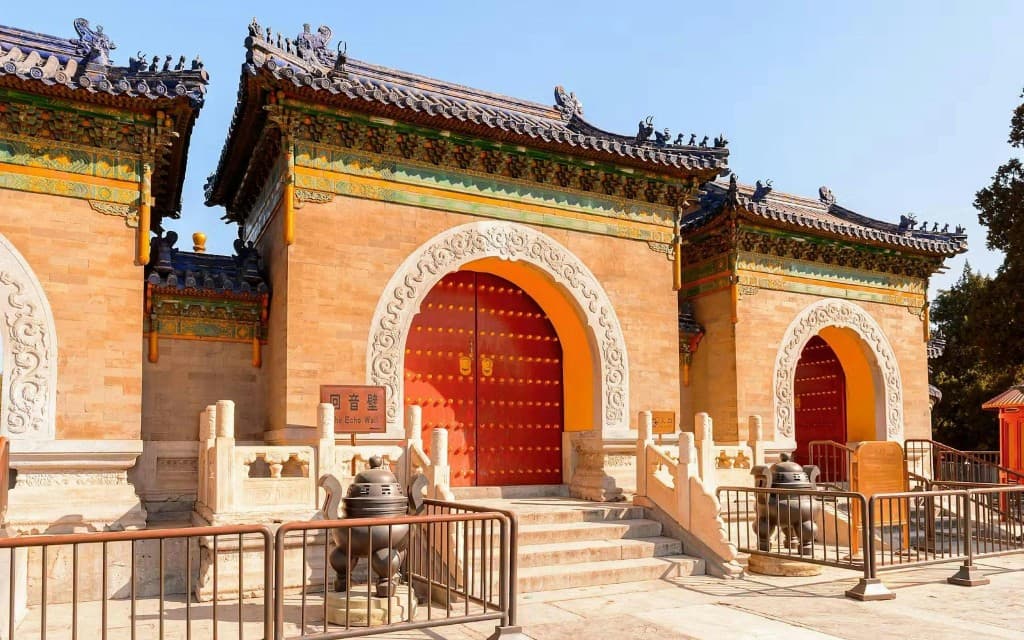
Inside the Temple of Heaven, you'll encounter a series of remarkable structures and symbolic sites. The Hall of Prayer for Good Harvest is a magnificent wooden structure built without nails, showcasing ancient Chinese carpentry skills. The Imperial Vault of Heaven, surrounded by the Echo Wall, is another architectural gem, known for its acoustic properties. The Circular Mound Altar is an open-air platform with carefully arranged stones, symbolizing the connection between Heaven and Earth. Wander through the vast park that surrounds these buildings, where you can observe locals practicing Tai Chi, playing traditional instruments, and engaging in other cultural activities. The Long Corridor, with its painted panels, offers a glimpse into Chinese mythology and history. Exploring the Temple of Heaven provides a comprehensive experience of China's imperial past and its enduring cultural traditions.
Things to Know
When visiting the Temple of Heaven, wearing comfortable shoes is recommended, as you'll be doing a lot of walking. Bring water and snacks, especially if you plan to spend several hours exploring the complex. Be respectful of the historical site and the local customs. Photography is generally allowed, but flash photography may be restricted in certain areas. Consider hiring a local guide to gain deeper insights into the temple's history and significance. Restrooms are available within the park, but it's a good idea to bring your own tissues.
Visitor Rules
Visitors to the Temple of Heaven are expected to respect the historical site and follow certain guidelines. Avoid touching or climbing on the ancient structures. Dispose of trash properly in designated bins. Be mindful of noise levels, especially inside the buildings. Smoking is generally prohibited within the temple complex. Follow the instructions of the staff and any posted signs. Respect the cultural practices of other visitors and locals.
Is It Worth Visiting?
The Temple of Heaven is definitely worth visiting for its stunning architecture, rich history, and cultural significance. It offers a unique glimpse into China's imperial past and the cosmological beliefs that shaped its civilization. The complex provides a serene escape from the bustling city, with its vast park and meticulously designed structures. Whether you're interested in history, architecture, or simply experiencing Chinese culture, the Temple of Heaven is a must-see destination in Beijing. Its UNESCO World Heritage status attests to its universal value and enduring appeal.
Frequently Asked Questions
The Temple of Heaven is a historical complex of religious buildings in Beijing, where emperors of the Ming and Qing dynasties performed annual ceremonies of prayer to Heaven for a good harvest.
The Temple of Heaven was built from 1406 to 1420 during the reign of the Yongle Emperor of the Ming Dynasty.
The main structures include the Hall of Prayer for Good Harvest, the Imperial Vault of Heaven, and the Circular Mound Altar.
It was designated a UNESCO World Heritage Site in 1998 due to its universal cultural value and historical significance.
Allow at least 3 to 4 hours to fully explore the Temple of Heaven complex.
The best times to visit are during the spring (April-May) and autumn (September-October) for pleasant weather.
Yes, there is an entrance fee to enter the Temple of Heaven Park and additional fees to access the main buildings.
You can take Line 5 to Tiantan Dongmen Station (天坛东门) or Line 8 to Tianqiao Station (天桥). Several bus routes also serve the area.
How to Get There
The Temple of Heaven is accessible by subway. Take Line 5 to Tiantan Dongmen Station (天坛东门) or Line 8 to Tianqiao Station (天桥). Several bus routes also serve the area. From the subway or bus stops, it's a short walk to the temple's entrance.