Entradas al Ágora romana con audioguía (Roman Agora: Entrance E-Ticket with Audio Tour)Entradas al Ágora romana con audioguía (Roman Agora: Entrance E-Ticket with Audio Tour) - 1Entradas al Ágora romana con audioguía (Roman Agora: Entrance E-Ticket with Audio Tour) - 2Entradas al Ágora romana con audioguía (Roman Agora: Entrance E-Ticket with Audio Tour) - 3

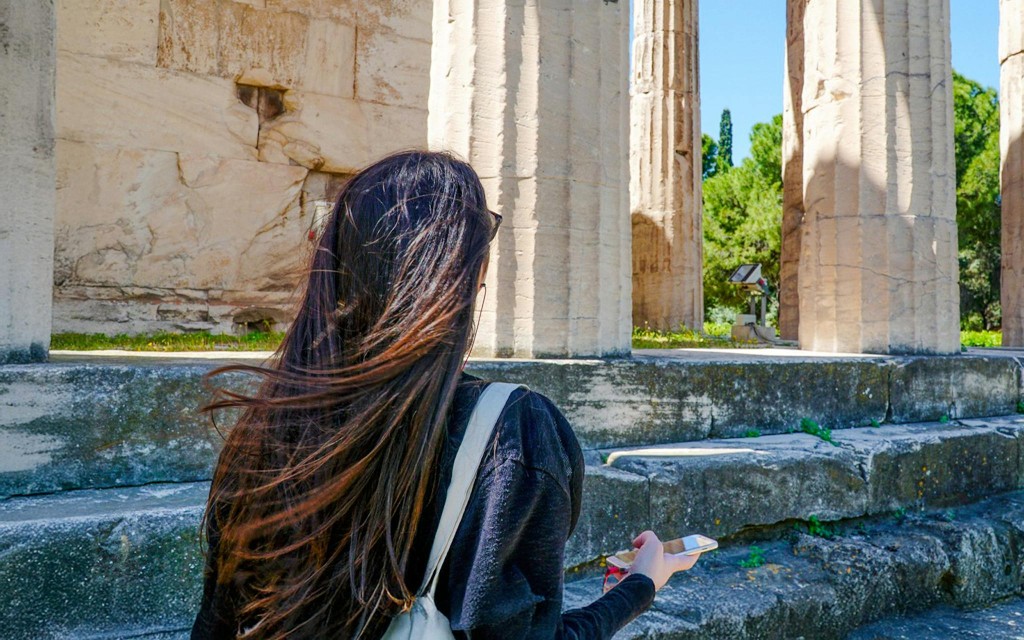
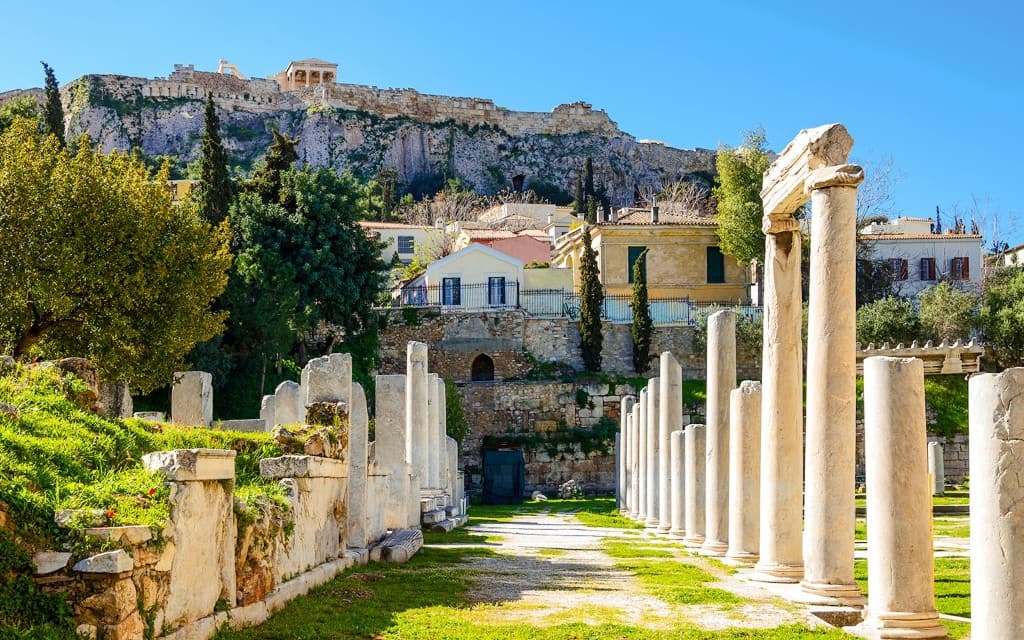
Discover breathtaking images of the Roman Agora, capturing its ancient grandeur and historical significance.

Step back in time at the Roman Agora, an ancient marketplace in the heart of Athens, Greece. Located north of the Acropolis, this archaeological site offers a fascinating glimpse into Roman life in the city. Unlike the earlier Ancient Agora, the Roman Agora served primarily as a commercial hub, featuring impressive structures like the iconic Tower of the Winds and the imposing Gate of Athena Archegetis. Visitors can explore the remnants of shops, public latrines, and administrative buildings, walking the same paths once trod by merchants, philosophers, and citizens. It stands as a testament to Athens' enduring history and its transformation under Roman rule, making it a key stop for anyone interested in classical antiquity and the evolution of urban life in ancient Greece.

Desde19.55
ADULT
1864 edad
19.55
Duración
1 hora
Punto de encuentro
Athens
Polignotou 3, Athina 105 55, Greece
Horario de apertura
The Roman Agora typically opens in the morning and closes in the late afternoon or early evening, with hours varying seasonally. It is usually open daily, but schedules may differ on public holidays.
Duración de la visita
A typical visit to the Roman Agora usually takes about 1 to 1.5 hours to fully explore the site.
Mejor momento para visitar
The best time to visit is during the spring or autumn months, or early in the morning to avoid the heat and larger crowds.
Dirección
The Roman Agora is centrally located in Athens, Greece, near the Ancient Agora and Monastiraki Square.
Código de vestimenta

There is no specific dress code required to visit the Roman Agora. As an outdoor archaeological site, comfortable and casual clothing is recommended. Practical footwear suitable for walking on uneven surfaces, such as ancient stones and dirt paths, is essential. During warmer months, light clothing, a hat, and sunglasses are advisable, while a light jacket might be useful in cooler seasons.

Resumen de la experiencia

Qué está incluido

  • Entrada al Ágora romana
  • Tour autoguiado de 45 minutos a 1 hora en tu smartphone (Android e iOS)
  • Audioguía disponible en inglés, español, alemán, francés, italiano y griego (según la opción seleccionada)
  • Contenido sin conexión (texto, audioguía y mapas)

Qué no está incluido

  • Traslados de ida y vuelta al hotel
  • Traslados
  • Guía en directo
  • Auriculares
  • Comida y bebida
  • Gastos personales

Tu experiencia

Explora el Ágora romana, el animado mercado de la Atenas del pasado, con una **audioguía multilingüe ** que da vida a las historias de comerciantes, viajeros y eruditos que antaño se reunían bajo su gran puerta de mármol y la emblemática Torre de los Vientos.

Cómo empezar

Recibirás tu entrada por correo electrónico, solo tienes que descargar la aplicación y la audioguía en tu smartphone antes de la visita. Con acceso sin conexión a la narración, los mapas y las imágenes, solo tienes que llegar a la entrada del Ágora romana, ponerte los auriculares y comenzar tu viaje a tu propio ritmo en los ritmos cotidianos de la antigua Atenas.

La gran puerta de Atenas

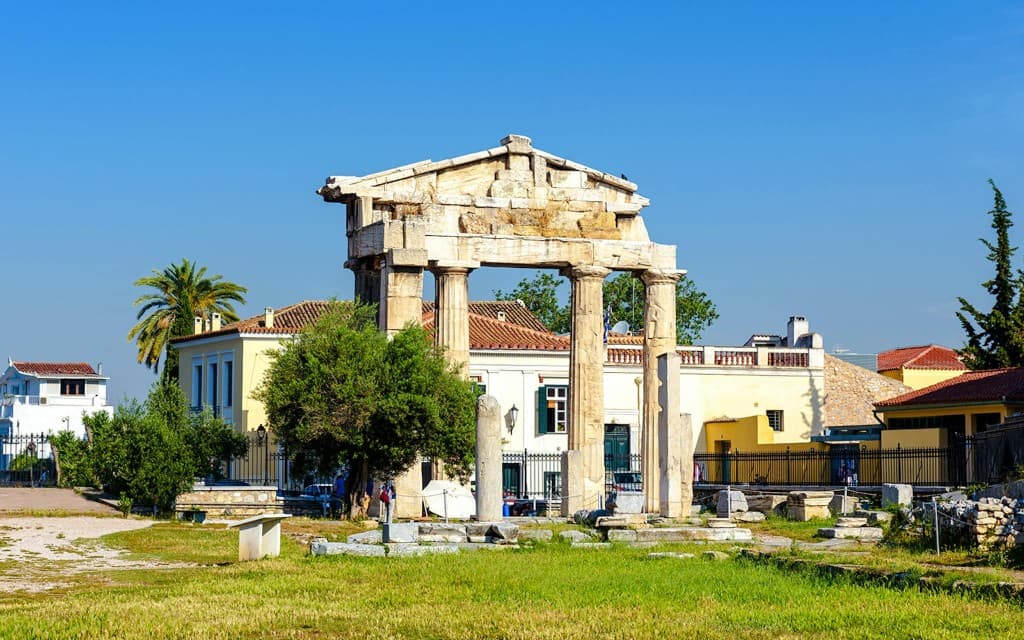
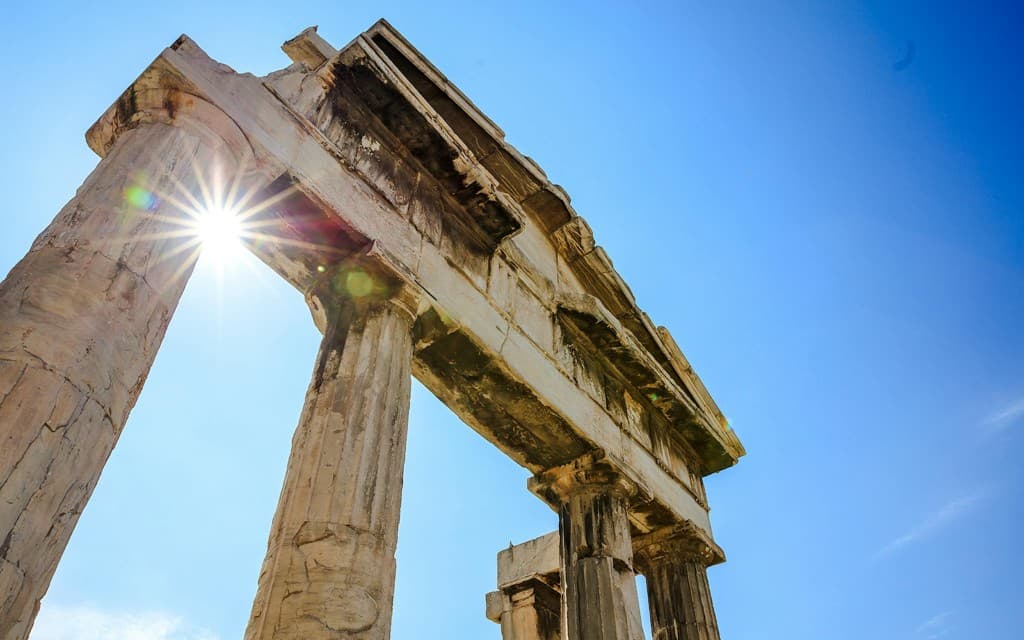
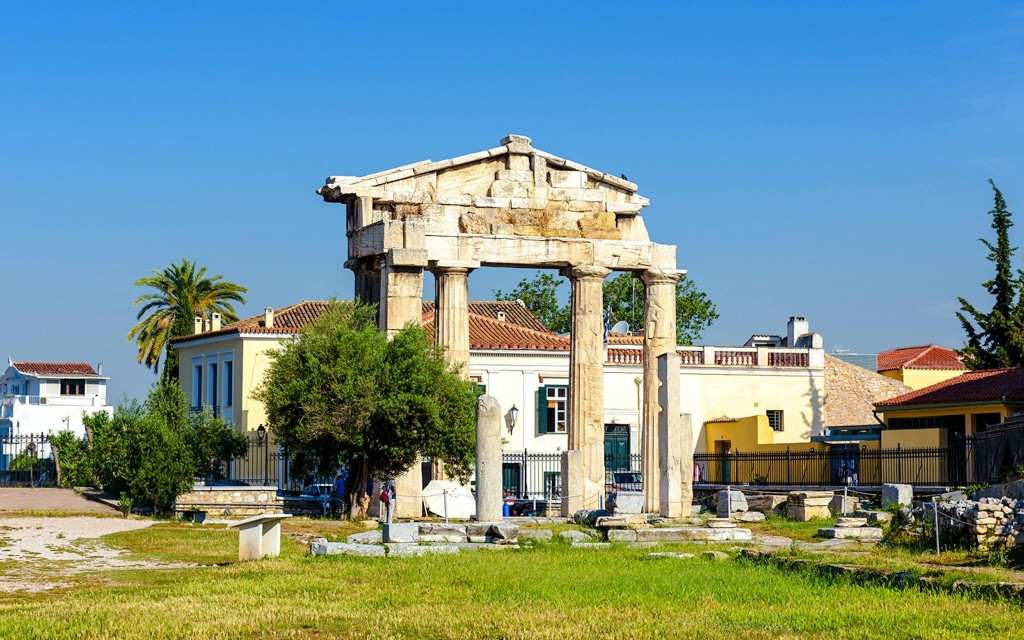
Comienza en la llamativa Puerta de Atenea Archegetis, una entrada de mármol regalada a la ciudad por Julio César y Augusto. La que fuera la puerta principal del mercado romano, sus altísimas columnas dóricas simbolizaban la prosperidad bajo el dominio romano. Mientras tu guía narra, imagina a mercaderes, filósofos y ciudadanos atravesando esta misma puerta, con sus voces resonando en el corazón del Ágora.

Cronometradores del mundo antiguo

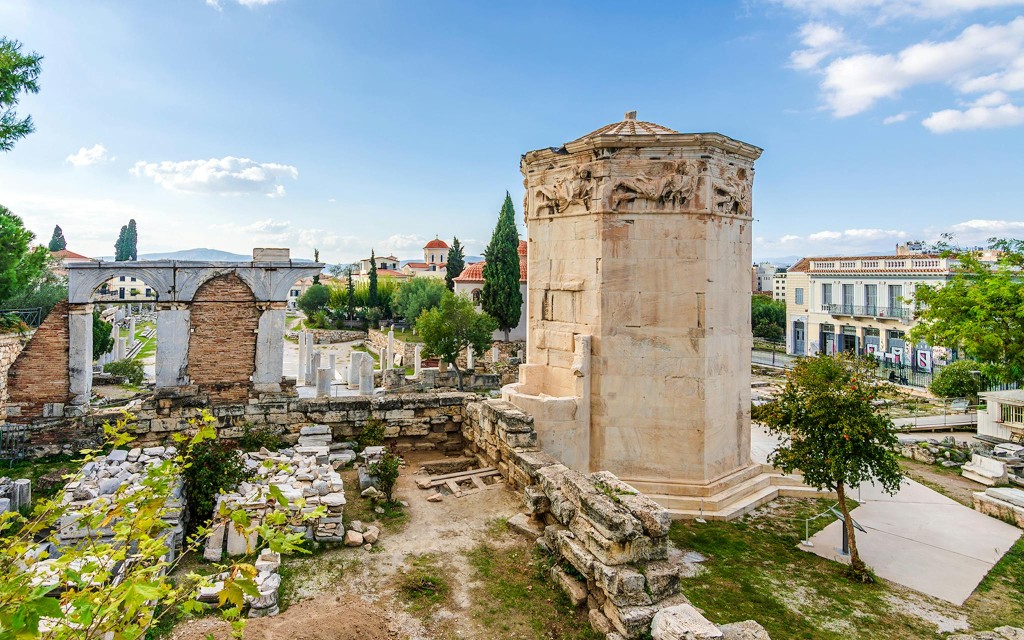
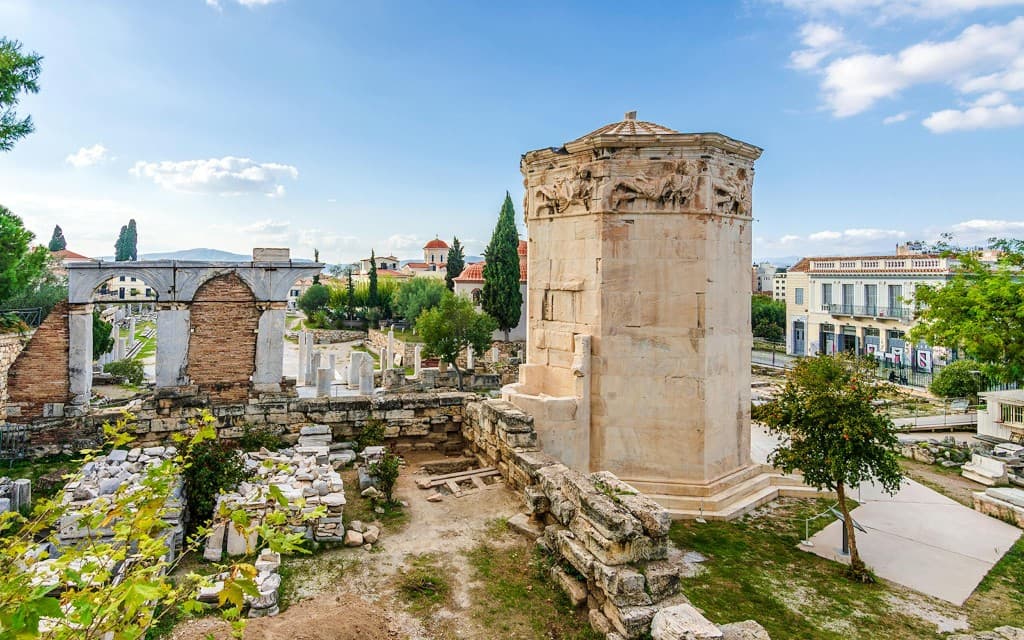
A continuación, dirígete a la torre octogonal Torre de los Vientos, uno de los primeros "relojes" de la antigüedad: una estructura que combinaba relojes de sol, un reloj de agua y relieves esculpidos de los ocho dioses del viento. La audioguía te explica cómo los atenienses miraban a la torre no solo para saber la hora del día, sino también la dirección, el tiempo y un sentido del orden cósmico, una mezcla primitiva de ciencia y mito.

Mercados, fuentes e historias cotidianas

Pasea por la casa de la fuente que abastecía de agua al bullicioso mercado y por las Vespasianae, letrinas públicas que revelan el enfoque práctico de la vida cívica de los romanos. Asómate a los restos de antiguas tiendas, donde se comerciaba con mercancías y cotilleos. A través de vívidas anécdotas, tu audioguía retrata un mercado que era tanto un centro social como un punto neurálgico del comercio.

Capas de historia y vistas de la Acrópolis

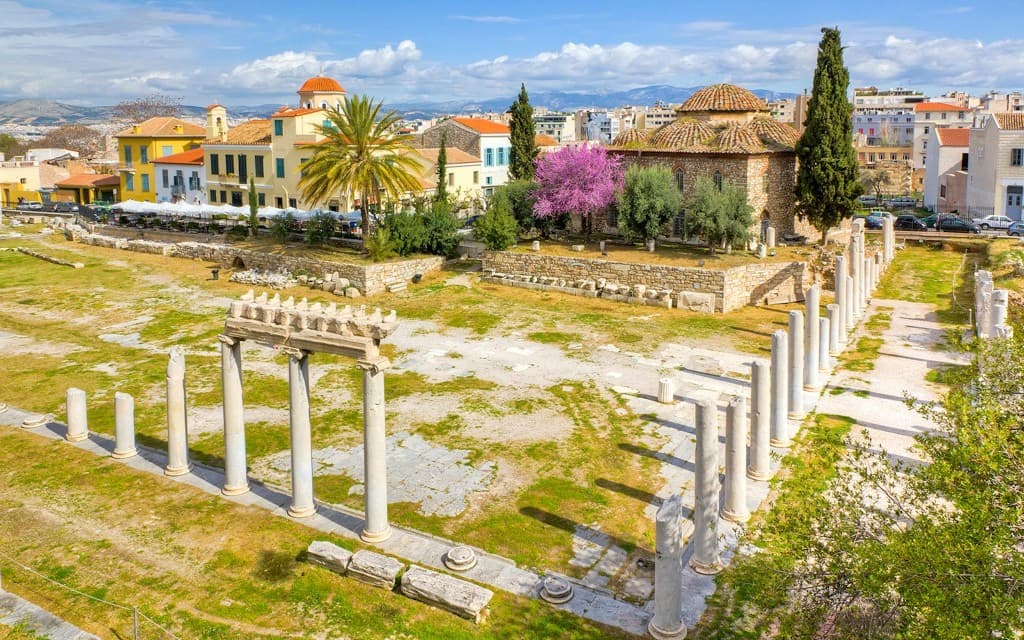
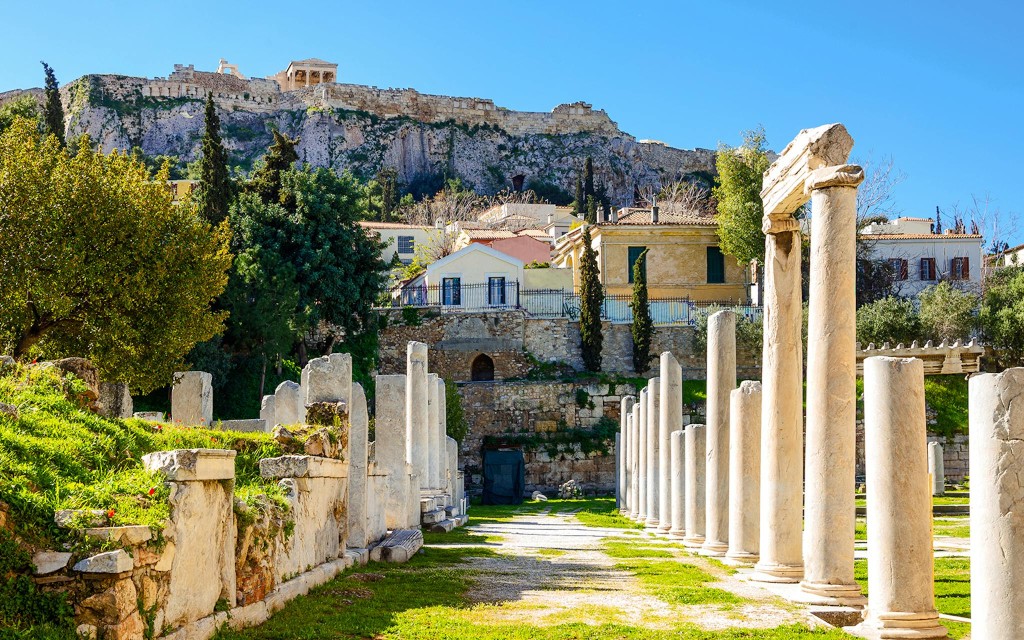
Tu visita termina en la Mezquita del Conquistador, del siglo XV, construida en época otomana sobre las ruinas del mercado romano. Antaño lugar de culto y posteriormente reconvertido en museo y almacén, refleja las muchas culturas que han dado forma a Atenas. Con la Acrópolis elevándose en lo alto, el lugar reúne los legados griego, romano, bizantino y otomano en un entorno extraordinario.
Know Before You Go

Qué saber antes de tu visita

Qué llevar

  • Lleva calzado cómodo y resistente; el antiguo pavimento del lugar y el terreno irregular pueden dificultar la marcha.

  • Lleva sombrero y crema solar para estar cómodo al sol.

  • Mantén tu smartphone completamente cargado para que dure todo el audio tour.

  • Utiliza tus propios auriculares para escuchar mejor durante el tour.

Lo que no está permitido

  • Se prohíbe el uso del flash y de los trípodes. Cualquier grabación o fotografía profesional debe ser aprobada previamente por el Ministerio.

  • Los drones no están permitidos sin una autorización especial.

  • No se admiten animales de compañía dentro del recinto, aunque los animales de servicio certificados son bienvenidos.

  • No toques, muevas ni retires piedras, fragmentos de cerámica u otros restos; estas antigüedades están salvaguardadas por la legislación griega.

Accesibilidad

  • El Ágora romana es parcialmente accesible en silla de ruedas, ofreciendo acceso a los visitantes con movilidad reducida a través de la entrada principal de la calle Dioskouron. Sin embargo, gran parte del recinto tiene terreno irregular y pavimento antiguo, por lo que el acceso al interior es limitado.

  • Una entrada alternativa en la calle Pelopida también permite el acceso al Horologion (Torre de los Vientos) a los usuarios de sillas de ruedas.

  • Las instalaciones del museo son totalmente accesibles, y los visitantes con discapacidad visual pueden utilizar la señalización en braille y los mapas táctiles.

Información adicional

  • Cada reserva es válida para un dispositivo; si vas a utilizar varios dispositivos, asegúrate de reservar por separado para cada uno de ellos.

  • Puedes entrar en el yacimiento arqueológico solo durante la franja horaria que hayas seleccionado. Tus entradas son válidas desde 15 minutos antes hasta 15 minutos después de la franja horaria elegida.

  • Llega con al menos 30 minutos de antelación para tener tiempo de pasar por seguridad y entrar. Nota: se permite la entrada hasta 20 minutos antes de la hora de cierre.

  • Después de hacer la reserva, recibirás un correo electrónico con instrucciones para acceder y descargar tu audio tour; asegúrate también de revisar tu carpeta de correo no deseado.

  • Necesitarás un smartphone Android (versión 5.0 o posterior) o un dispositivo iOS (versión 15.0 o posterior). La audioguía no es compatible con estos dispositivos: teléfonos Windows, iPhone 6/6 Plus o anteriores, iPod Touch de 6.ª generación o anteriores, iPad de 4.ª generación o anteriores, iPad Air de 1.ª generación ni iPad Mini de 3.ª generación o anteriores.

  • Asegúrate de que tu teléfono tiene de 100 a 150 MB de espacio de almacenamiento libre para descargar el audio tour.

  • Las rutas dentro del recinto pueden variar y pueden aplicarse algunas restricciones; sigue todas las indicaciones publicadas mientras estés en el recinto.

  • El horario de apertura varía según la temporada: de noviembre a marzo, el recinto está abierto de 8:00 a 15:00, mientras que de abril a agosto, está abierto de 8:00 a 19:30 y el horario de cierre se reduce gradualmente en septiembre y octubre; la última entrada es siempre 30 minutos antes del cierre.

Admisibilidad de la concesión

  • Los ciudadanos de la UE de hasta 25 años disfrutan de admisión gratuita todo el año con un documento de identidad o pasaporte válidos.

  • Los visitantes no comunitarios de entre 6 y 25 años tienen derecho a una admisión con descuento presentando un documento de identidad o pasaporte válidos.

  • Los niños menores de 5 años entran gratis.

Instructions

- Entry to the Roman Agora - 45-minute to 1-hour self-guided audio tour on your smartphone (Android and iOS), in English, Spanish, German, French, Italian, and Greek - Offline content (text, audio narration, and maps)

Qué Esperar

Upon entering the Roman Agora, expect to find yourself amidst the scattered yet significant ruins of a bustling ancient marketplace. The site is largely open-air, allowing for clear views of the remaining foundations, columns, and walls. You will wander through an expansive area, tracing the outlines of stoas and various administrative buildings. The impressive Gate of Athena Archegetis immediately draws attention upon entry, while the unique Tower of the Winds, with its intricate details, stands as a focal point. Expect a serene, contemplative atmosphere, allowing you to imagine the vibrancy of Roman-era Athens. While much requires imagination, the preserved elements offer concrete evidence of its historical grandeur and utility.

Acerca de Roman Agora of Athens: Visitor Information & Tickets

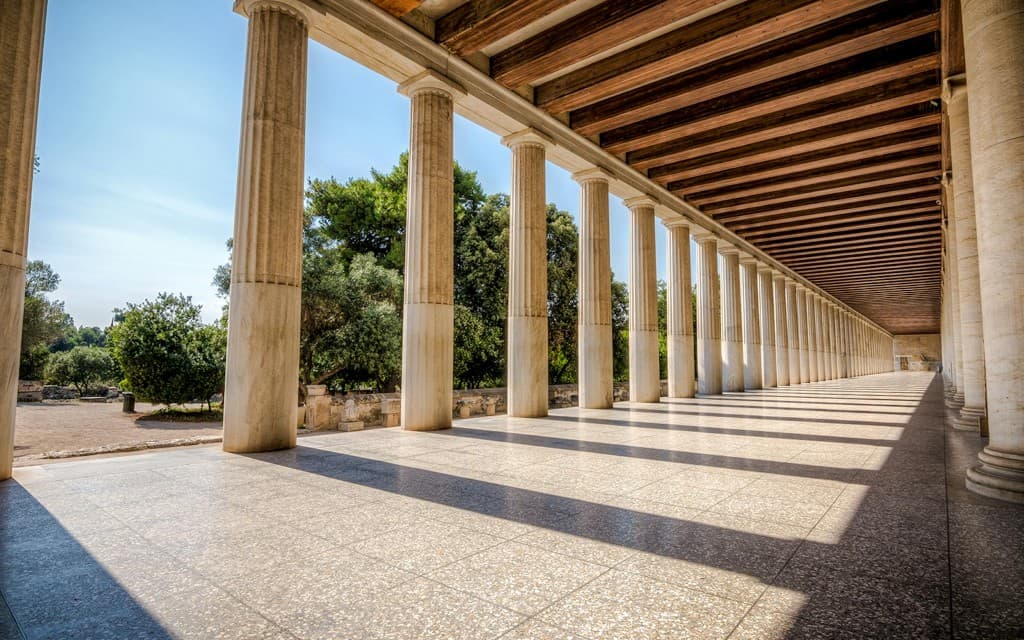
The Roman Agora, also known as the Roman Forum, was constructed between 19 and 11 BCE with funds provided by Julius Caesar and completed by Emperor Augustus. Its creation marked a shift in Athens' commercial center from the nearby Ancient Agora, becoming the new focal point for trade and daily life during the Roman period. The site is rectangular, featuring a large open courtyard surrounded by stoas and various public buildings. The most striking features are undoubtedly the Gate of Athena Archegetis on the west side, a monumental entrance built of Pentelic marble, and the Horologion of Andronikos Kyrrhestes, famously known as the Tower of the Winds, which served as a sophisticated timekeeping device and weather vane. Excavations have also revealed the remains of the Agoranomion (market superintendents' office) and a complex of public latrines. Over the centuries, the Roman Agora continued to be an important urban space, evolving through Byzantine, Ottoman, and modern eras, even hosting Athens' first mosque in the Ottoman period, the Fethiye Mosque, which stands on the site today. It offers a comprehensive perspective on Roman influence and the continuous layering of history in Athens.

Puntos Destacados

Adéntrate en el Ágora romana, el mercado más tardío de Atenas, construido con puertas de mármol financiadas por Julio César y Augusto.
Atraviesa la puerta de Atenea Archegetis e imagina a comerciantes, filósofos y ciudadanos fluyendo antaño a través de sus altísimas columnas.
Contempla la ingeniosa Torre de los Vientos, un reloj octogonal que combinaba relojes de sol, un reloj de agua y dioses del viento tallados: una de las primeras estaciones meteorológicas del mundo.
Con la audioguía, descubre historias de la vida cotidiana en las tiendas, la casa de la fuente y las letrinas públicas, donde el comercio y la conversación prosperaban bajo la dominación romana.
¿Sabías qué? El ágora romana seguía en uso durante el periodo otomano, cuando se construyó una mezquita sobre sus ruinas, dejando en el lugar una huella estratificada de historia.

¿Por qué reservar en línea?

Booking your tickets for the Roman Agora online offers several advantages, ensuring a smoother and more convenient visit. Online purchases allow you to secure your entry in advance, saving valuable time by avoiding potential queues at the ticket booths, especially during peak tourist seasons. Pre-purchasing tickets also helps in planning your itinerary, giving you peace of mind that your access to this historic site is guaranteed. It streamlines the entry process, letting you maximize your time exploring the ancient ruins rather than waiting. Furthermore, online platforms often provide clear information on ticket types and opening hours, aiding in a well-organized trip to this significant Athenian landmark.

Historia

The Roman Agora of Athens represents a significant chapter in the city's long history, marking a period of Roman influence and administrative control. Its construction began under Julius Caesar around 50-19 BCE and was completed by Emperor Augustus, solidifying its role as the new commercial and administrative center of Athens, replacing the older Ancient Agora. This rectangular enclosed complex featured a large paved courtyard, surrounded by colonnades that housed shops and public offices. The most celebrated structure, the Horologion of Andronikos Kyrrhestes, or Tower of the Winds, built earlier in the 1st century BCE, was incorporated into the new Agora complex, serving as a public clock. The monumental Gate of Athena Archegetis, erected by donations from Augustus and the Roman colony, served as the primary western entrance. Throughout its active life, the Roman Agora was a bustling hub, facilitating trade, public announcements, and social interaction. Even after the decline of Roman power, the site continued to be used and adapted; during the Byzantine era, houses and churches were built amidst the ruins, and later, under Ottoman rule, the Fethiye Mosque was constructed on the northern side, signifying its continuous importance and transformation through different historical periods.

Horario de apertura

Opening hours for the Roman Agora generally follow a seasonal schedule. During the summer months (April to October), the site typically opens from early morning, such as 8:00 AM, and closes later in the evening, often around 7:00 PM or 8:00 PM. In the winter months (November to March), closing times are usually earlier, around 3:00 PM or 5:00 PM. It is common for archaeological sites in Greece to be closed on specific public holidays, such as New Year's Day, Easter Sunday, and Christmas Day. It is always recommended to check the current operating schedule for the exact dates of your visit.

Mejor momento para visitar

To fully enjoy the Roman Agora and avoid the peak heat and crowds, the best times to visit are during the shoulder seasons of spring (April to early June) and autumn (September to October). During these months, the weather is pleasantly mild, making it ideal for exploring the outdoor ruins. If you visit during the summer, plan your visit for the early morning right after opening or in the late afternoon before closing. This will help you avoid the midday sun and the largest groups of tourists, allowing for a more serene and contemplative experience of this historic site.

Qué ver dentro

Within the Roman Agora, visitors can explore several key structures that define its historical importance. The most prominent is the Tower of the Winds, an octagonal marble structure that functioned as a horologion (timepiece) incorporating a sundial, water clock, and weather vane. Its detailed frieze depicting the eight wind deities is remarkably preserved. The monumental Gate of Athena Archegetis, a Doric propylon, stands proudly as the formal entrance to the Agora. Nearby, you can identify the foundations of various shops and stoas that once bustled with commercial activity. The Agoranomion, the building where market rules were enforced, also has visible remains. Additionally, the Fethiye Mosque, a significant Ottoman-era structure, is situated within the archaeological complex, representing a later layer of the site's rich history. Exploring these elements provides a comprehensive understanding of the Agora's diverse functions and its enduring legacy.

Cosas que saber

When planning your visit to the Roman Agora, it is advisable to wear comfortable walking shoes as you will be navigating uneven terrain and ancient paths. Bringing water, especially during warmer months, is recommended to stay hydrated. Sunscreen and a hat are also practical for protection against the sun, as the site offers limited shade. The Roman Agora is an open-air archaeological site, so prepare for varying weather conditions. Photography is generally allowed for personal use, but flash photography may be restricted in certain areas. While parts of the site are accessible, some areas with uneven ground or steps might pose challenges for visitors with mobility impairments.

Reglas para visitantes

Visitors to the Roman Agora are expected to adhere to standard archaeological site rules to preserve the historical integrity of the monument. Please do not climb on ancient structures, walls, or ruins. Littering is strictly prohibited; use designated bins for any waste. Respect the historical significance of the site by refraining from writing on or damaging any part of the ruins. Picnicking is not allowed. Supervise children closely to ensure their safety and the preservation of the site. Pets are typically not permitted within the archaeological area, with the exception of service animals.

¿Vale la pena visitarlo?

Visiting the Roman Agora is highly recommended for anyone interested in the layered history of Athens. It offers a tangible connection to the city's Roman period, showcasing how daily life and commerce evolved under Roman rule. The site features iconic structures like the Tower of the Winds and the Gate of Athena Archegetis, which are marvels of ancient engineering and architecture. Beyond the grand monuments, exploring the foundations of ancient shops and public spaces provides a deeper understanding of urban organization and social interaction in antiquity. It serves as an excellent complement to a visit to the Ancient Agora and the Acropolis, painting a fuller picture of Athens' illustrious past.

Preguntas frecuentes

What is the Roman Agora?

The Roman Agora is an ancient marketplace in Athens, Greece, built during the Roman period. It served as a commercial and administrative center, distinct from the older Ancient Agora.

What are the main attractions at the Roman Agora?

Key attractions include the Tower of the Winds (Horologion of Andronikos Kyrrhestes), the Gate of Athena Archegetis, and the remains of various shops and public buildings, including the Fethiye Mosque.

How long does it take to visit the Roman Agora?

Most visitors spend approximately 1 to 1.5 hours exploring the Roman Agora, allowing enough time to appreciate its main features.

Is the Roman Agora accessible for visitors with mobility issues?

While some parts of the site are relatively flat, the ground can be uneven with ancient stones and paths. Some areas may pose challenges for visitors with mobility impairments.

Are there guided tours available for the Roman Agora?

Individual guided tours might be offered by external operators, and information can often be found at the entrance or through tour companies. The site itself does not typically provide official guided tours.

Can I buy tickets at the entrance?

Yes, tickets can be purchased at the entrance booth. However, booking online in advance is often recommended to save time and ensure entry, especially during busy periods.

What is the history of the Tower of the Winds?

The Tower of the Winds is an octagonal marble monument from the 1st century BCE that functioned as a public clock, incorporating a sundial, water clock, and weather vane, making it one of the world's first meteorological stations.

Cómo llegar

The Roman Agora is easily accessible by public transport. The nearest metro station is Monastiraki (Lines 1 and 3), which is just a short walk away. Many central Athens bus routes also have stops within easy walking distance. From popular areas like Plaka or Syntagma Square, the site is comfortably reachable on foot.

Desde
19.55
por persona
ADULT
1864 edad
19.55
Consultar disponibilidad
Política de CancelaciónCancelación gratuita hasta 24 horas antes
Duración
1 hora
Punto de encuentro
Athens
Polignotou 3, Athina 105 55, Greece
Horario de apertura
The Roman Agora typically opens in the morning and closes in the late afternoon or early evening, with hours varying seasonally. It is usually open daily, but schedules may differ on public holidays.
Duración de la visita
A typical visit to the Roman Agora usually takes about 1 to 1.5 hours to fully explore the site.
Mejor momento para visitar
The best time to visit is during the spring or autumn months, or early in the morning to avoid the heat and larger crowds.
Dirección
The Roman Agora is centrally located in Athens, Greece, near the Ancient Agora and Monastiraki Square.
Código de vestimenta

There is no specific dress code required to visit the Roman Agora. As an outdoor archaeological site, comfortable and casual clothing is recommended. Practical footwear suitable for walking on uneven surfaces, such as ancient stones and dirt paths, is essential. During warmer months, light clothing, a hat, and sunglasses are advisable, while a light jacket might be useful in cooler seasons.