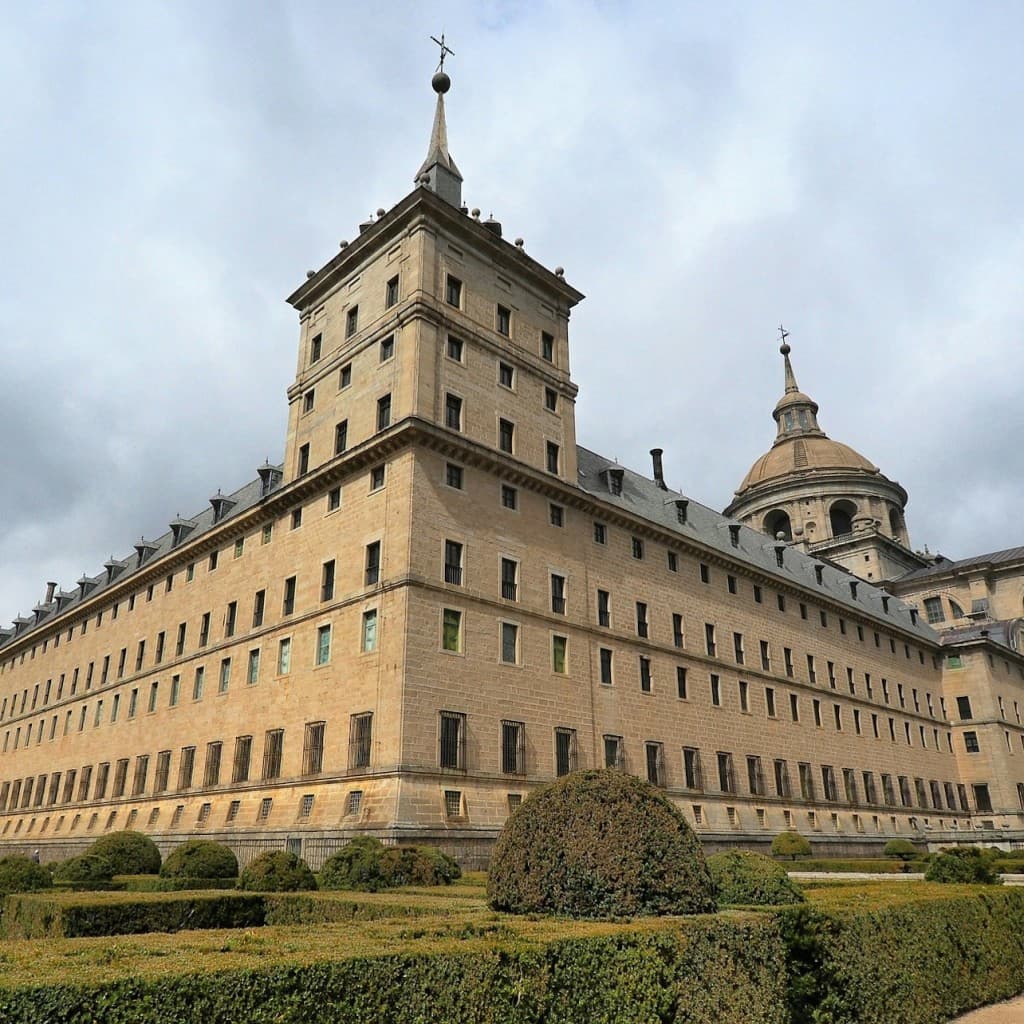
Royal Site of San Lorenzo de El Escorial: Entry Ticket + Guided Tour
Comparar opciones
| Opción | Tipo | Resumen | Duración | Desde | Reservar |
|---|---|---|---|---|---|
| Royal Site of San Lorenzo de El Escorial: Entry Ticket + Guided Tour | Entradas | El Real Monasterio de San Lorenzo de El Escorial está considerado por muchos como la "octava maravilla del mundo", tant... | Flexible | €43.10 | Reservar |
San Lorenzo de El Escorial, nestled in the foothills of the Sierra de Guadarrama near Madrid, Spain, is a UNESCO World Heritage site renowned for its historical and architectural significance. This impressive complex, conceived by King Philip II, embodies a unique blend of monastery, basilica, royal palace, library, museum, university, and hospital. The vast structure stands as a testament to Spain's Golden Age and offers visitors a captivating journey through its rich history and artistic treasures. Surrounded by serene gardens and the picturesque town of El Escorial, a visit here promises a day of cultural immersion and scenic beauty. Explore the royal chambers, admire the stunning artwork, and wander through the tranquil courtyards of this iconic landmark.
Qué Esperar
Puntos Destacados
Acerca de San Lorenzo Escorial
San Lorenzo de El Escorial is more than just a building; it's a symbol of Spanish power and religious devotion. King Philip II envisioned it as a center for intellectual and religious life, as well as a royal residence and a place to honor his father, Charles V. Construction began in 1563 and took over 20 years to complete, employing some of the most talented architects, artists, and craftsmen of the time. The result is a grand and imposing structure, reflecting the Herrerian architectural style characterized by its austerity and geometric precision. Today, visitors can explore the various sections of the complex, each offering a glimpse into its multifaceted history. From the opulent Royal Palace to the solemn Basilica and the vast library, El Escorial provides a comprehensive view of Spanish history, art, and culture. The surrounding gardens offer a peaceful retreat, complementing the architectural grandeur with natural beauty. The complex continues to be a significant cultural and historical landmark, drawing visitors from around the world to marvel at its splendor.
¿Por qué reservar en línea?
Booking tickets online for San Lorenzo de El Escorial ensures a seamless and stress-free visit. Secure your entry in advance, skip potential ticket lines, and plan your day with ease. Online platforms often provide additional information about the site, including guided tour options and visitor tips, allowing you to make the most of your experience. By booking ahead, you can avoid disappointment during peak season and enjoy a hassle-free exploration of this historical landmark.
Historia
The history of San Lorenzo de El Escorial is deeply intertwined with the reign of King Philip II, who envisioned the complex as a symbol of Spain's power and religious devotion. Construction began in 1563, following the victory at the Battle of St. Quentin, and was completed in 1584. The site was designed by architect Juan Bautista de Toledo and later Juan de Herrera, reflecting the austere and geometric Herrerian style. El Escorial served as a royal palace, monastery, basilica, library, and mausoleum, becoming the center of Philip II's vast empire. It played a significant role in Spanish politics, religion, and culture for centuries. The complex has witnessed numerous historical events, including royal weddings, state visits, and periods of both prosperity and turmoil. Today, San Lorenzo de El Escorial stands as a UNESCO World Heritage site, attracting visitors from around the world to explore its rich history and architectural grandeur.
Horario de apertura
The opening hours for San Lorenzo de El Escorial can vary depending on the time of year and specific areas within the complex. It's advisable to check the official website for the most up-to-date information before planning your visit. Typically, the site is open from Tuesday to Sunday, with varying hours for the Royal Palace, Basilica, and other sections. Keep in mind that certain areas may have restricted access or be closed on specific days, so it's best to confirm the schedule in advance.
Mejor momento para visitar
The ideal time to visit San Lorenzo de El Escorial is during the shoulder seasons of spring (April-May) and fall (September-October). The weather during these months is generally mild and comfortable, making it perfect for exploring the outdoor gardens and courtyards. Additionally, the crowds tend to be smaller compared to the peak summer months, allowing for a more relaxed and enjoyable experience. Visiting on a weekday can also help avoid larger crowds.
Qué ver dentro
Inside San Lorenzo de El Escorial, visitors can explore a wealth of historical and artistic treasures. The Royal Palace showcases the private apartments of Spanish monarchs, adorned with exquisite furniture, tapestries, and artwork. The Basilica, with its soaring dome and elaborate altarpieces, is a masterpiece of religious architecture. The Library houses a vast collection of ancient manuscripts, illuminated texts, and historical documents. The Habsburg and Bourbon pantheons contain the remains of Spanish royalty, while the art museum displays works by renowned masters such as El Greco, Titian, and Velázquez. The complex also includes monastic quarters, courtyards, and gardens, each offering a unique perspective on the site's rich history and cultural significance. Exploring the various sections of El Escorial provides a comprehensive understanding of Spain's Golden Age and its lasting legacy.
Cosas que saber
When visiting San Lorenzo de El Escorial, it's helpful to wear comfortable shoes, as you'll be doing a lot of walking. Photography may be restricted in certain areas, so pay attention to signage. Consider joining a guided tour to gain deeper insights into the site's history and significance. Be prepared for varying weather conditions, as the Sierra de Guadarrama can experience temperature changes. There are dining options available in the nearby town of El Escorial, offering a variety of local and international cuisine. Finally, remember to allow ample time to explore the entire complex, as there is much to see and discover.
Reglas para visitantes
To ensure a pleasant experience for all visitors, certain rules apply within San Lorenzo de El Escorial. Please respect the site's historical and religious significance by maintaining a respectful demeanor. Avoid loud noises or disruptive behavior. Do not touch or climb on any artifacts or structures. Follow the instructions of staff members and adhere to any posted guidelines. Food and drinks are generally not allowed inside the main buildings. By following these rules, you contribute to the preservation of this important cultural landmark.
¿Vale la pena visitarlo?
San Lorenzo de El Escorial is undoubtedly worth visiting for its historical, architectural, and cultural significance. The vast complex offers a unique glimpse into Spain's Golden Age, showcasing the opulence of the Royal Palace, the grandeur of the Basilica, and the intellectual wealth of the Library. The surrounding gardens provide a tranquil escape, while the nearby town of El Escorial offers a charming atmosphere. Whether you're interested in history, art, or architecture, El Escorial provides a captivating experience that will leave you with a deeper appreciation for Spain's rich heritage. It is a must-see destination for anyone visiting the Madrid region.
Preguntas frecuentes
It is a historical complex including a monastery, royal palace, basilica, library, and more, built by King Philip II of Spain.
It is located in the town of San Lorenzo de El Escorial, near Madrid, Spain.
You can take a direct train or bus from Madrid to San Lorenzo de El Escorial.
Opening hours vary depending on the season and specific areas within the complex. Check the official website for the most up-to-date information.
Entrance fees vary depending on age and ticket type. Check the official website for current pricing.
Photography may be restricted in certain areas. Pay attention to signage and follow the instructions of staff members.
Yes, guided tours are available in multiple languages. Check the official website for tour schedules and booking information.
Smart casual attire is recommended. Avoid overly revealing clothing.
Allow at least 3-4 hours to fully explore the complex.
Cómo llegar
To reach San Lorenzo de El Escorial from Madrid, take a direct train or bus from Madrid's city center. Once in San Lorenzo, the complex is easily accessible by foot from the town center.