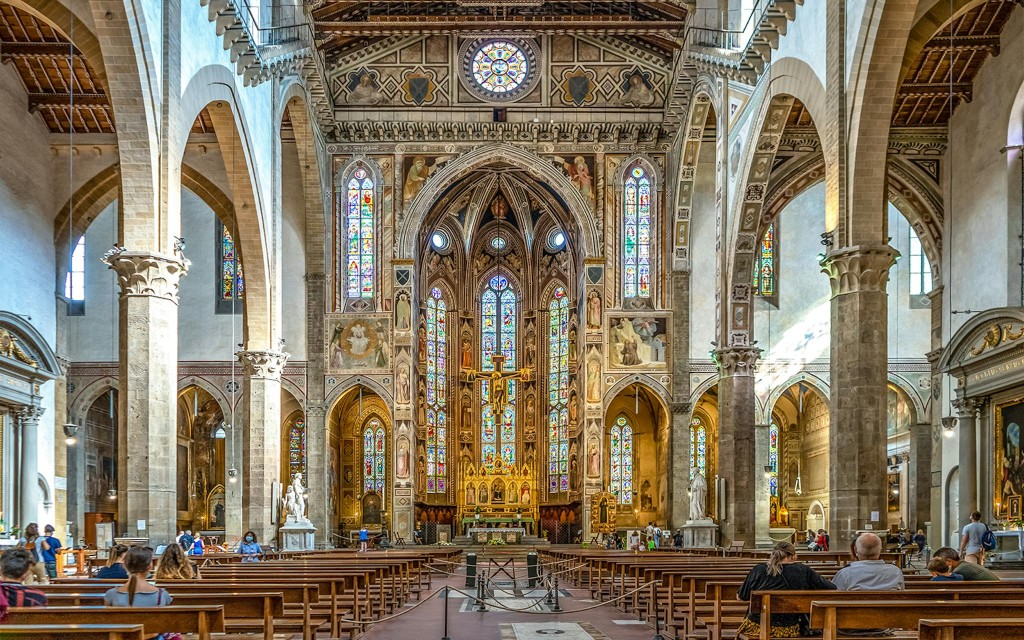
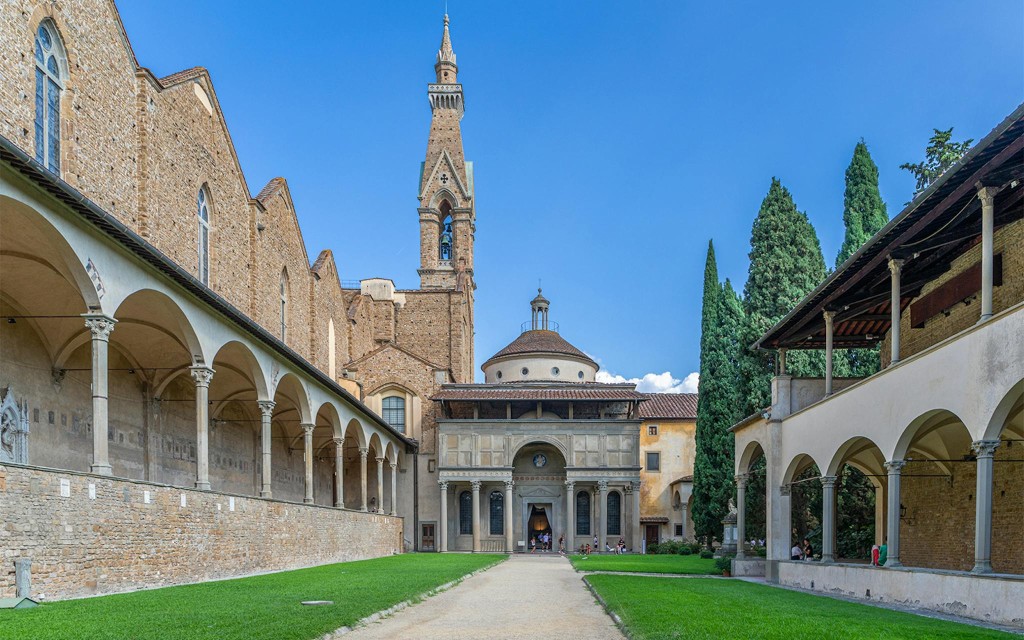
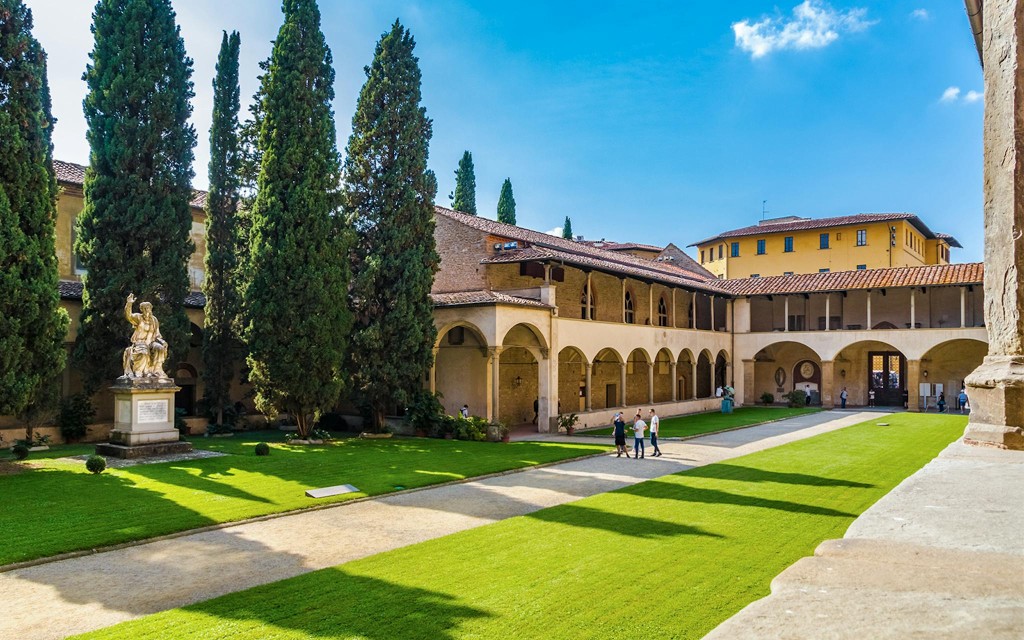
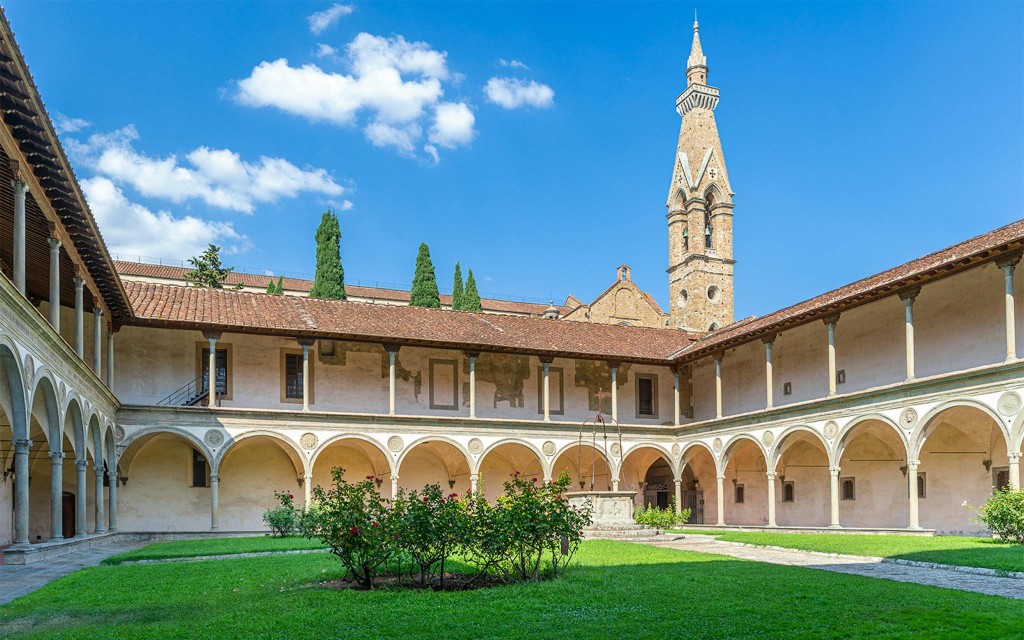
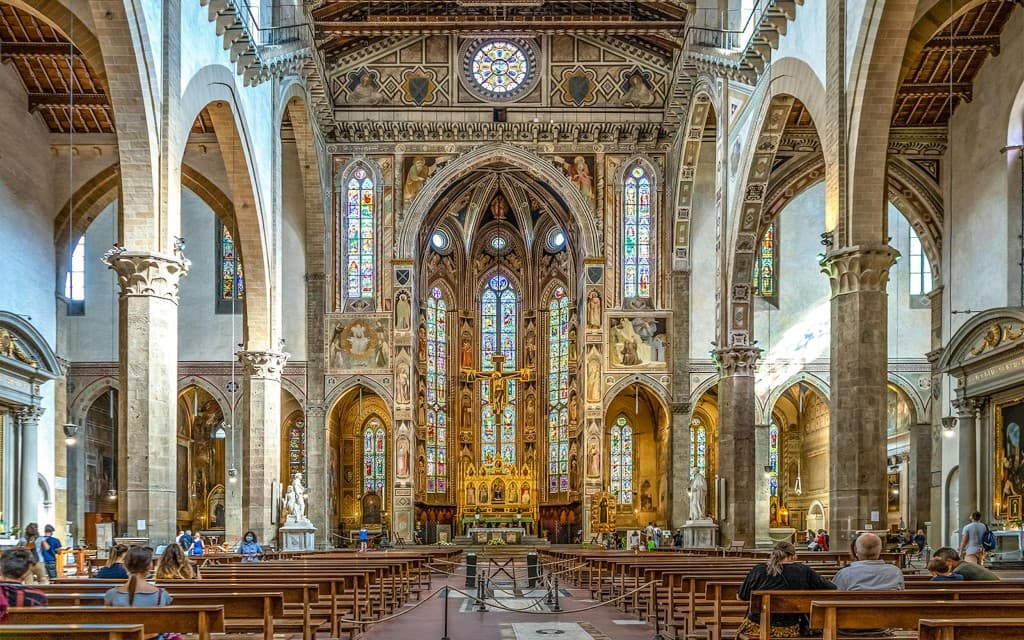
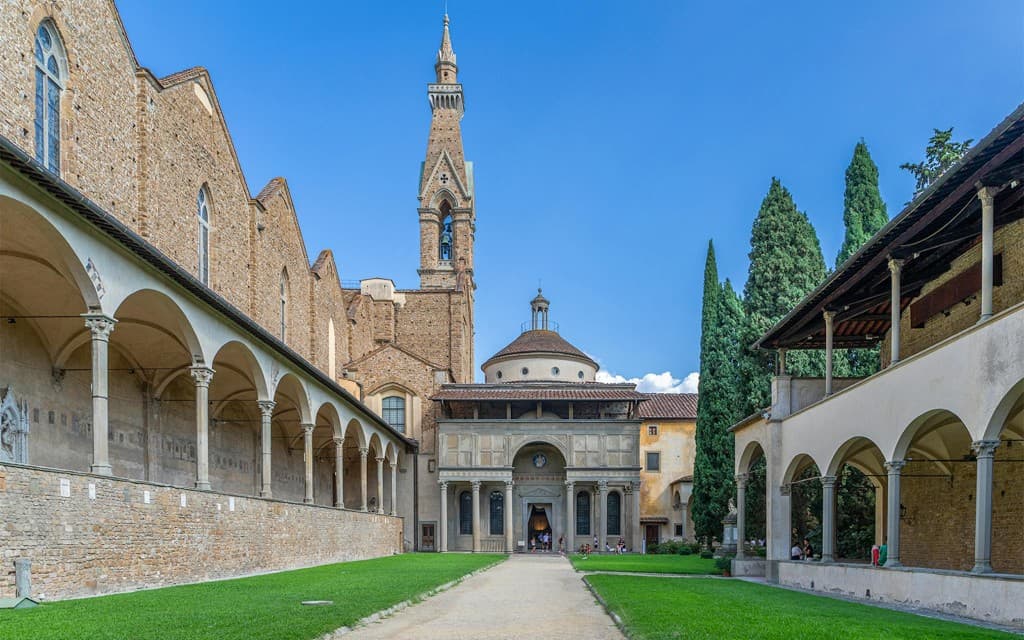
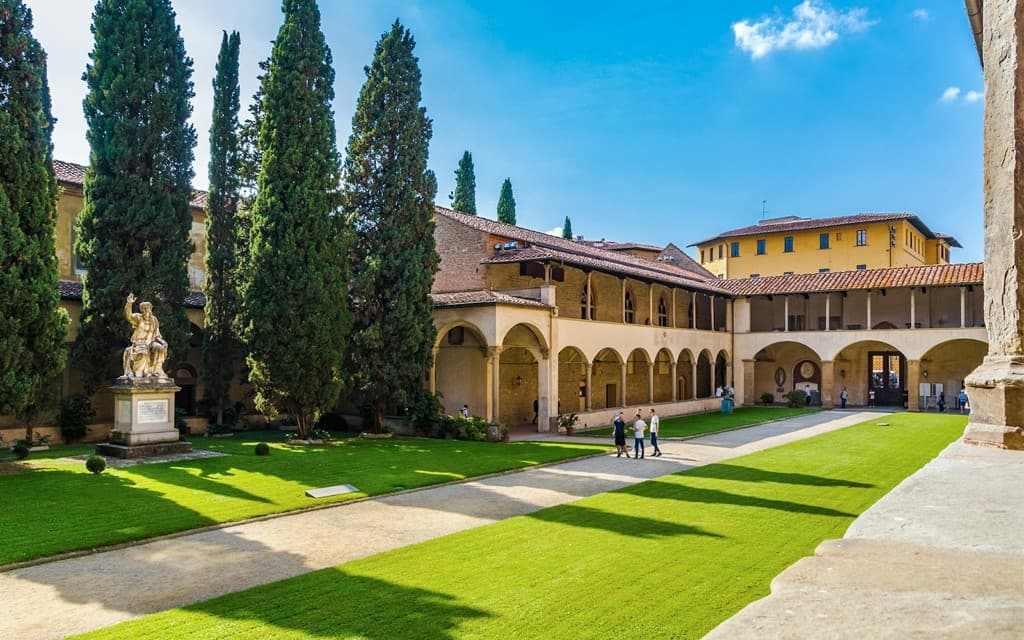
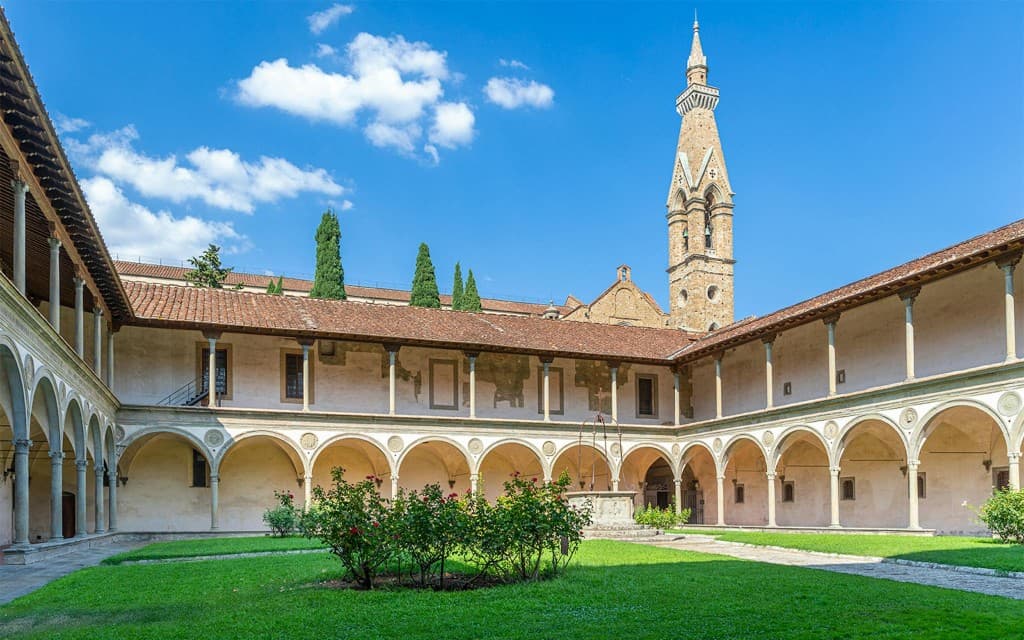
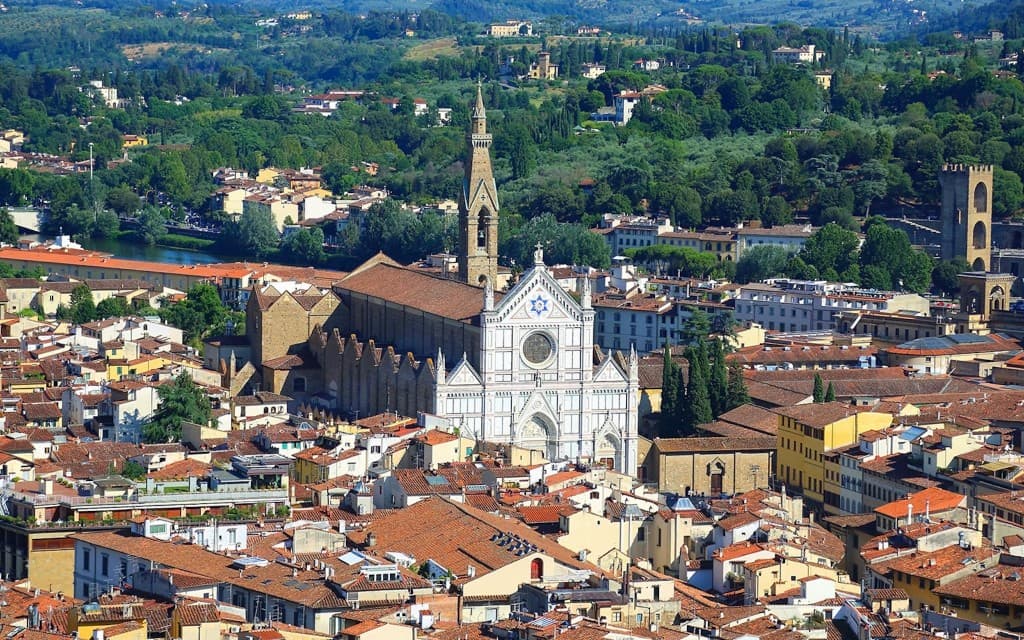
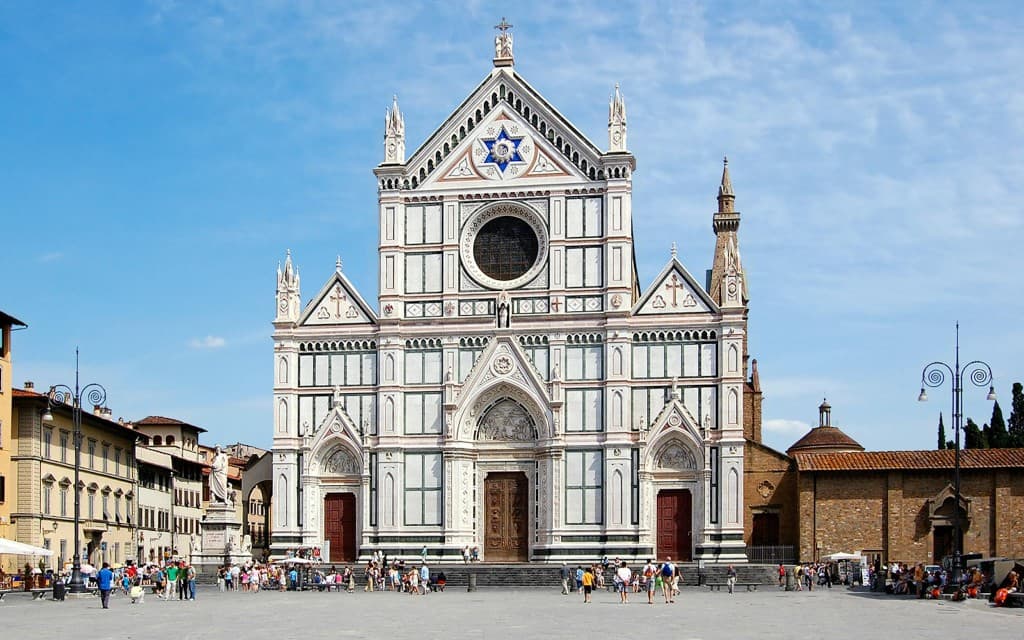
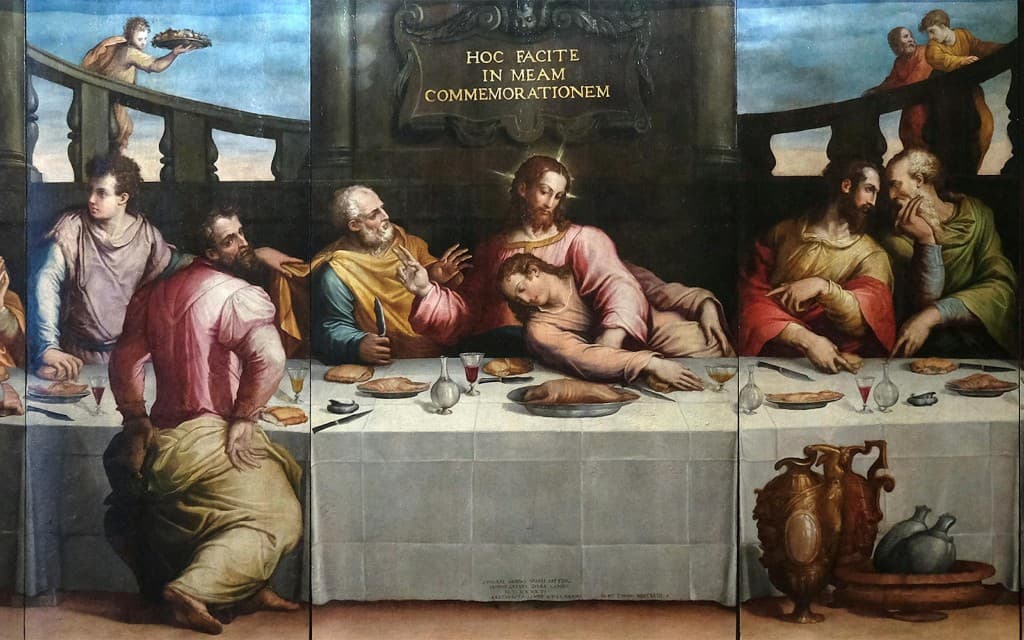
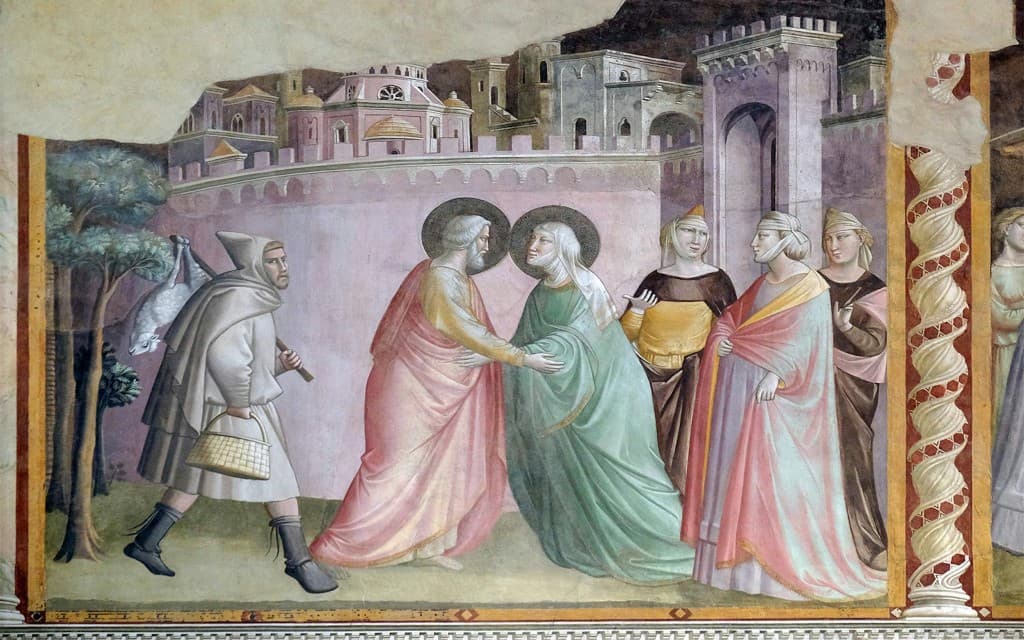
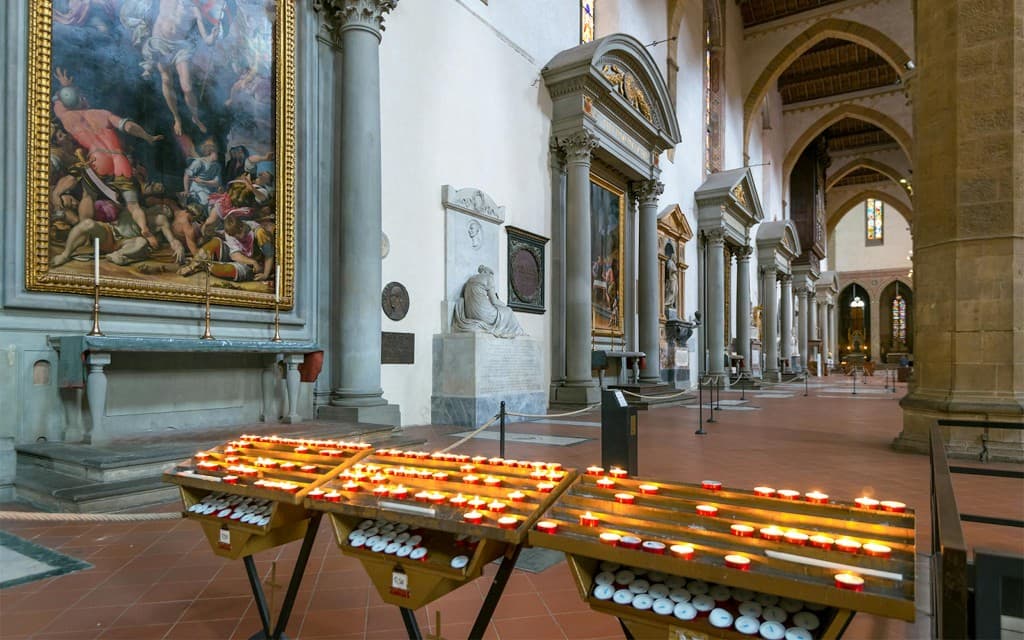
La Basilica di Santa Croce è una monumentale chiesa gotica situata in Piazza di Santa Croce, Firenze, Italia. La sua costruzione iniziò nel 1294, probabilmente su progetto di Arnolfo di Cambio, e servì come centro spirituale per l'ordine francescano. Nel corso dei secoli, si è evoluta in un pantheon per illustri italiani, guadagnandosi il suo soprannome. La facciata sorprendente della basilica, completata nel XIX secolo, è adornata con marmi policromi, dando un tono grandioso ai tesori al suo interno. All'interno, la vasta navata è fiancheggiata da numerose cappelle, ognuna un deposito di arte inestimabile. Gli affreschi di Giotto nelle Cappelle Bardi e Peruzzi sono particolarmente degni di nota, mostrando capolavori del primo Rinascimento. Oltre all'arte, il peso storico del luogo è palpabile, con le tombe di leggendari artisti, scienziati, scrittori e politici che creano una potente connessione con il passato d'Italia. I chiostri adiacenti e la Cappella Pazzi, un gioiello architettonico rinascimentale progettato da Filippo Brunelleschi, arricchiscono ulteriormente l'esperienza del visitatore, offrendo spazi sereni per la riflessione lontano dalla vivace città.