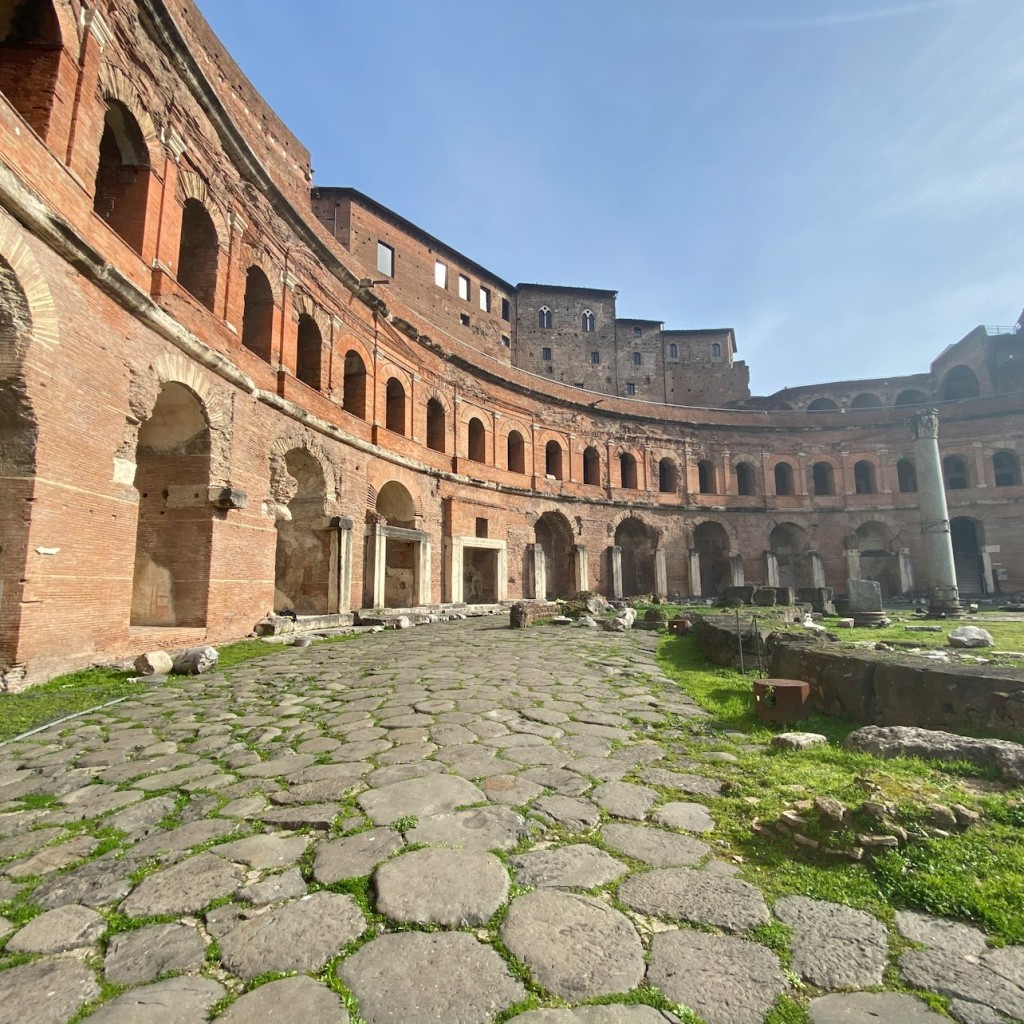
Trajan's Market: 行列スキップチケット + マルチメディアビデオTrajan's Market: 行列スキップチケット + マルチメディアビデオ - 1Trajan's Market: 行列スキップチケット + マルチメディアビデオ - 2Trajan's Market: 行列スキップチケット + マルチメディアビデオ - 3

Capture the timeless grandeur of Trajan's Market and the intricate details of its ancient architecture, alongside the captivating exhibits of the Museum of the Imperial Fora.

Explore Trajan's Market, a monumental complex in the heart of ancient Rome, widely recognized as one of the world's oldest surviving shopping centers. This remarkable masterpiece of ancient Roman engineering showcases the ingenuity and grandeur of Emperor Trajan's era. Today, it serves as a captivating archaeological site and home to the Museum of the Imperial Fora, offering visitors a unique opportunity to delve into the history of commerce, daily life, and urban development during the Roman Empire. Wander through its multi-level structures, impressive halls, and learn about its evolution from a bustling commercial hub to an administrative center and eventually a museum, preserving the rich legacy of Rome's imperial past.

出発地36.37
Adult
099 年齢
36.37
Youth
099 年齢
30.70
Child
099 年齢
0.00
集合場所
Rome
Touristation Piazza Venezia, Piazza d'Aracoeli, 16
営業時間
Trajan's Market and the Museum of the Imperial Fora are generally open daily, with specific hours that may vary seasonally. It is advisable to allow ample time for exploration.
見学時間
A typical visit to Trajan's Market and the Museum of the Imperial Fora usually takes between 1.5 to 2.5 hours to fully explore.
おすすめの訪問時間
The best time to visit Trajan's Market is during the cooler months or early mornings to avoid crowds and enjoy a comfortable experience.
住所
Located in Rome, Italy, Trajan's Market is situated adjacent to the Roman Forum and Colosseum, making it easily accessible in the historic city center.
服装規定

There is no strict dress code for visiting Trajan's Market, as it is an archaeological site and museum rather than a religious institution. However, comfortable and practical attire is recommended due to the amount of walking and stair climbing involved. During hot Roman summers, lightweight clothing is advisable, while in cooler months, layers are best. Comfortable walking shoes are a must.

体験の概要

含まれるもの

  • トラヤヌスの市場の行列スキップ入場券
  • フォリ・インペリアーリ美術館への行列スキップチケット
  • すべてのエキシビションへのアクセス
  • 古代ローマのマルチメディアビデオ
  • ダウンロード可能なローマ市内オーディオガイドアプリ
  • Touristation Aracoeli オフィスでのサポート

含まれないもの

  • トラヤヌス市場のオーディオガイド
  • ガイド付きツアー
  • 飲食物
ローマ帝国時代の商業の中心地であったローマのトラヤヌスの市場の遺跡群を探索してみましょう。 帝政ローマ時代のトラヤヌスの市場の様子を再現した25分間のビデオを見て、タイムスリップを始めましょう。その後、ご自身のペースで遺跡を探索してください。 街の交易や会合の場となっていた、以下のような様々なフォーラムをご覧ください。カエサルのフォーラム、アウグストゥスのフォーラム、ネルヴァのフォーラム、テンプルム・パシス。17世紀に作られた貯水池の跡もあり、この地域が何世紀にもわたって様々な役割を担ってきたことがわかります。 遺跡を見学した後は、インペリアル・フォーラム・ミュージアムで、古代文化の遺物やアンフォラのコレクションを鑑賞してみてはいかがでしょうか。

期待されること

Expect an immersive journey through time as you explore the well-preserved structures of Trajan's Market. You will ascend and descend various levels, discovering ancient shops, administrative offices, and paved streets that once buzzed with activity. The experience is enhanced by the Museum of the Imperial Fora, where artifacts, models, and informative displays bring the history of the surrounding imperial complexes to life. You'll gain a deeper appreciation for Roman urban planning and the daily lives of its citizens. The site blends indoor and outdoor elements, offering both sheltered museum spaces and open archaeological areas with stunning views. A multimedia video is often available to further contextualize your visit, providing a dynamic overview of the market's evolution.

概要 Trajan's Market: Ancient Roman Commerce & Architecture

Trajan's Market, known in Latin as Mercati di Traiano, stands as a testament to the architectural prowess of ancient Rome, designed by the master architect Apollodorus of Damascus. Constructed between 100-110 AD, it was an integral part of Trajan's Forum, conceived not merely as a marketplace but as a sophisticated administrative and commercial complex spanning multiple levels. Its innovative semi-circular façade, grand hall, and numerous tabernae (shops and offices) demonstrate advanced urban planning and engineering. Today, the complex houses the Museum of the Imperial Fora, dedicated to illustrating the history of the various Imperial Fora—Caesar's, Augustus's, Nerva's, and Trajan's—through an extensive collection of architectural fragments, sculptures, and reconstructions. Visitors can explore the intricate layout, appreciate the scale of the structure, and gain insights into the economic and social life of the Roman Empire, making it a compelling destination for history enthusiasts and curious travelers alike. The market's well-preserved state allows for an immersive journey back in time, revealing the daily hustle and bustle that once characterized this vibrant urban space.

ハイライト

Marvel at one of the world's oldest surviving shopping complexes and an engineering marvel.
Explore the Museum of the Imperial Fora housed within the ancient market structure.
Discover the multi-level commercial and administrative buildings, including the Great Hall.
Gain insights into ancient Roman daily life, commerce, and urban planning.
Admire the impressive architecture attributed to Apollodorus of Damascus.

オンライン予約のメリット

Booking your Trajan's Market tickets online offers significant advantages for a smoother and more enjoyable visit. By purchasing in advance, you can secure your entry on your preferred date and time, avoiding uncertainty upon arrival. Online bookings often provide the convenience of timed entry slots, which helps manage crowd flow and ensures a more pleasant exploration experience. Furthermore, many online tickets, such as skip-the-line options, can save you valuable time that might otherwise be spent queuing, allowing you more time to immerse yourself in the history and architecture of this ancient Roman marvel. Digital tickets are easy to access and keep track of, simplifying your travel plans.

歴史

Trajan's Market was constructed between 100-110 AD under the reign of Emperor Trajan, as part of his ambitious forum complex. Designed by Apollodorus of Damascus, it was a marvel of civil engineering, intended to serve multiple functions beyond a simple marketplace. It housed offices for administrative staff, shops (tabernae), and a large covered market hall. Its innovative multi-level design, built into the Quirinal Hill, also served as a retaining wall to protect the hill from the massive excavations required for Trajan's Forum. Over the centuries, the complex underwent various transformations. In the Middle Ages, parts of the market were incorporated into defensive structures, such as the Milizie Tower. Later, during the Renaissance, noble families adapted portions for their residences. It wasn't until the early 20th century that extensive archaeological work began, restoring the market to much of its former glory and revealing its intricate design. Today, it stands as a unique example of ancient Roman urban planning, illustrating the continuity of history through its various architectural layers and its current role as the Museum of the Imperial Fora.

営業時間

The opening hours for Trajan's Market and the Museum of the Imperial Fora typically run from morning to early evening. While generally open every day of the week, holiday schedules or seasonal changes may affect these times. It is common for cultural sites in Rome to close on specific public holidays or to have reduced hours during certain periods. Visitors planning their trip should be aware that the last entry is usually an hour before closing time. It's always best to allocate sufficient time before the stated closing hour to ensure a comprehensive visit.

おすすめの訪問時間

To fully appreciate Trajan's Market and avoid the busiest periods, consider visiting during the shoulder seasons of spring (April-May) or autumn (September-October). The weather during these months is generally pleasant, making outdoor exploration more comfortable. If visiting in summer, aim for early mornings right after opening or late afternoons to escape the midday heat and larger crowds. Weekday visits are typically less crowded than weekends. The museum's indoor sections provide a cool retreat during warmer days, while the outdoor areas offer spectacular views of the surrounding Roman Fora.

内部の見どころ

Inside Trajan's Market, visitors are treated to a layered experience encompassing both the ancient structure and its modern museum. You can explore the various levels of the market, including the semicircular Great Hemicycle with its rows of shops, the Via Biberatica, a perfectly preserved ancient Roman street, and the Great Hall, which likely served administrative functions. The highlight is the Museum of the Imperial Fora, which expertly utilizes the market's spaces to display artifacts. Here, you'll find architectural fragments, friezes, and decorative elements from the Imperial Fora, alongside detailed models and multimedia presentations that reconstruct the original appearance of these monumental public squares. Each section of the museum focuses on a specific forum, providing context and illustrating the grand vision of Rome's emperors. The multimedia video offers an enhanced understanding of the complex's history.

知っておくべきこと

Wear comfortable shoes as you'll be walking across uneven ancient surfaces and multiple levels. Consider purchasing a Rome Pass or a combined ticket if you plan to visit multiple archaeological sites to save on entry fees. Bring water, especially during warmer months, as much of the market is open-air. Restrooms are available on-site. The museum offers detailed explanations in multiple languages. Photography without flash is generally permitted. Allow at least 1.5 to 2 hours for a thorough visit to both the market and the Museum of the Imperial Fora.

訪問者のルール

Visitors are expected to respect the ancient site and its artifacts. Do not touch the exhibits or climb on ancient structures. Large bags and backpacks may need to be checked at the cloakroom. Food and drink are typically not allowed inside the museum sections, though water bottles are usually permitted. Smoking is prohibited throughout the complex. Please refrain from making excessive noise to ensure a pleasant experience for all visitors. Follow any instructions provided by staff for your safety and the preservation of the site.

訪れる価値はありますか?

Trajan's Market is undoubtedly worth visiting for its unparalleled insight into ancient Roman life and engineering. It's a rare opportunity to explore a remarkably preserved multi-level commercial complex from antiquity, offering a tangible connection to the daily hustle of a bygone era. Housing the Museum of the Imperial Fora, it provides crucial context for the surrounding forums, enriching your understanding of Rome's imperial past. For those fascinated by architecture, history, or the sheer ingenuity of the Romans, this site offers a deeply rewarding and educational experience that complements a visit to the nearby Colosseum and Roman Forum.

よくある質問

What is Trajan's Market?

Trajan's Market is an extensive complex of ancient Roman ruins in Rome, Italy, built by Emperor Trajan in the early 2nd century AD. It served as a multi-purpose commercial and administrative center, often considered one of the world's oldest shopping malls. Today, it houses the Museum of the Imperial Fora.

Where is Trajan's Market located?

It is located in the heart of Rome, on the Via dei Fori Imperiali, adjacent to the Roman Forum and directly opposite the Colosseum, making it a central and easily accessible historical site.

What can I see at the Museum of the Imperial Fora?

The Museum of the Imperial Fora, housed within Trajan's Market, displays artifacts, architectural fragments, models, and multimedia presentations that tell the story of the various Imperial Fora (Caesar's, Augustus's, Nerva's, and Trajan's), offering insight into their construction and daily functions.

How long does it take to visit Trajan's Market?

Most visitors spend between 1.5 to 2.5 hours exploring the multiple levels of Trajan's Market and the extensive exhibits within the Museum of the Imperial Fora.

Are there skip-the-line tickets available for Trajan's Market?

Yes, skip-the-line tickets are often available for purchase online. These tickets can help you save time by bypassing general admission queues, allowing for a more efficient entry.

Is Trajan's Market accessible for people with mobility issues?

Due to its ancient origins and multi-level structure with stairs and uneven surfaces, full accessibility might be challenging in all areas. However, some parts of the site and museum may offer accessible routes. It's advisable to check specific accessibility details beforehand.

What is the best way to get to Trajan's Market?

The most convenient way to reach Trajan's Market is by Rome Metro Line B to Colosseo station, followed by a short walk. Numerous bus lines also stop nearby along Via dei Fori Imperiali.

行き方

Trajan's Market is conveniently located in central Rome. You can reach it easily by public transport. The nearest Metro B line station is Colosseo, which is a short walk away. Several bus lines also stop in the vicinity, including those that serve Via dei Fori Imperiali. From the Colosseo metro station, simply walk along Via dei Fori Imperiali towards Piazza Venezia, and the market will be on your left.

出発地
36.37
1人あたり
Adult
099 年齢
36.37
Youth
099 年齢
30.70
Child
099 年齢
0.00
空き状況を確認
キャンセルポリシーこのオプションには無料キャンセルは含まれていません。
集合場所
Rome
Touristation Piazza Venezia, Piazza d'Aracoeli, 16
営業時間
Trajan's Market and the Museum of the Imperial Fora are generally open daily, with specific hours that may vary seasonally. It is advisable to allow ample time for exploration.
見学時間
A typical visit to Trajan's Market and the Museum of the Imperial Fora usually takes between 1.5 to 2.5 hours to fully explore.
おすすめの訪問時間
The best time to visit Trajan's Market is during the cooler months or early mornings to avoid crowds and enjoy a comfortable experience.
住所
Located in Rome, Italy, Trajan's Market is situated adjacent to the Roman Forum and Colosseum, making it easily accessible in the historic city center.
服装規定

There is no strict dress code for visiting Trajan's Market, as it is an archaeological site and museum rather than a religious institution. However, comfortable and practical attire is recommended due to the amount of walking and stair climbing involved. During hot Roman summers, lightweight clothing is advisable, while in cooler months, layers are best. Comfortable walking shoes are a must.

出発地
36.37
空き状況を確認