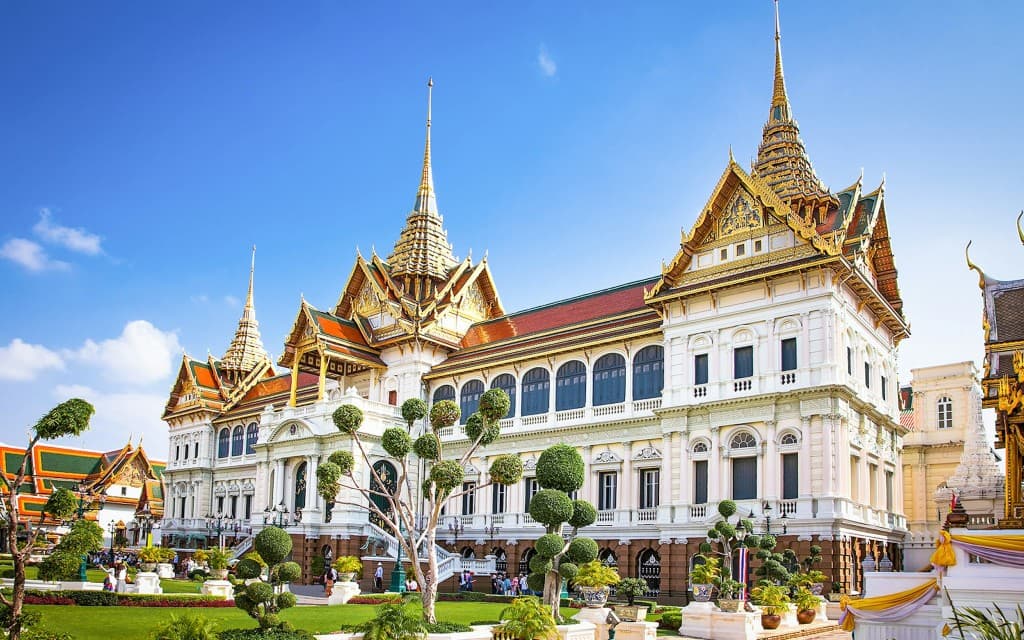
Grand Palace Bangkok Entry Ticket
Step into Bangkok’s Grand Palace to admire golden temples, intricate halls, and the sacred Emerald Buddha, a masterpiece of Thai heritage.
Porównaj opcje
| Opcja | Typ | Podsumowanie | Czas trwania | Od | Zarezerwuj |
|---|---|---|---|---|---|
| Grand Palace Bangkok Entry Ticket | Bilety | Step into Bangkok’s Grand Palace to admire golden temples, intricate halls, and the sacred Emerald Buddha, a masterpiec... | Elastycznie | €21.90 | Zarezerwuj |
The Grand Palace is a sprawling complex of royal residences, temples, and museums in the heart of Bangkok, Thailand. Built in 1782, it served as the official residence of the Kings of Siam (and later Thailand) for 150 years. Today, it remains one of Bangkok's most popular tourist attractions, offering visitors a glimpse into the kingdom's rich history, art, and culture. The palace complex is a dazzling display of Thai architecture, with intricate details, vibrant colors, and towering spires. Within its walls, you'll find the Temple of the Emerald Buddha (Wat Phra Kaew), considered the most sacred Buddhist temple in Thailand.
Czego się spodziewać
Atrakcje
O Bangkok Grand Palace
The Grand Palace is more than just a beautiful building; it is a symbol of Thailand's history, culture, and monarchy. Construction of the palace began in 1782 during the reign of King Rama I, the founder of the Chakri dynasty, and it has been expanded and renovated by successive monarchs. For 150 years, it served as the royal residence, the seat of government, and the spiritual heart of the kingdom. Today, while the royal family no longer resides in the Grand Palace, it is still used for official ceremonies and state functions. The palace complex is divided into several sections, each with its own unique architectural style and purpose. The Outer Court contains government offices and public buildings, while the Middle Court houses the royal residences and halls used for state occasions. The Inner Court was traditionally reserved for the king and his consorts. The Temple of the Emerald Buddha (Wat Phra Kaew), located within the palace grounds, is a highlight for many visitors.
Dlaczego warto rezerwować online?
Booking your Grand Palace entry ticket online offers several advantages. You can often skip the long ticket queues, especially during peak season, saving you valuable time. Online platforms frequently provide additional information about the palace, its history, and highlights, enhancing your visit. You can also compare prices from different vendors and secure your entry in advance, ensuring a hassle-free experience.
Historia
The history of the Grand Palace dates back to 1782 when King Rama I decided to establish a new capital on the eastern bank of the Chao Phraya River. The palace was built to serve as the royal residence, the center of government, and the spiritual heart of the kingdom. Over the centuries, successive monarchs added new buildings and structures to the complex, reflecting their individual tastes and the architectural styles of their time. The Temple of the Emerald Buddha (Wat Phra Kaew) was added to the palace grounds in 1784 and has since become the most sacred Buddhist temple in Thailand. The Grand Palace has witnessed countless royal ceremonies, state visits, and historical events. Although the royal family no longer resides within its walls, the palace remains a symbol of Thailand's rich heritage and a testament to the enduring power of the monarchy. Major renovations and restorations have been carried out over the years to preserve the palace's architectural splendor.
Godziny otwarcia
The Grand Palace is generally open daily, but hours can fluctuate due to royal ceremonies and state functions. It's advisable to check the official website or reliable sources for the most up-to-date opening hours before planning your visit. Typically, the palace is open from 8:30 AM to 3:30 PM.
Najlepszy czas na wizytę
The ideal time to visit the Grand Palace is early in the morning, as soon as it opens, or late in the afternoon. These times offer cooler temperatures and fewer crowds, allowing you to explore the complex more comfortably. Weekdays are generally less crowded than weekends. Arriving early also gives you the best light for photography.
Co warto zobaczyć w środku
Within the walls of the Grand Palace, visitors can explore a variety of magnificent structures and sacred sites. The Temple of the Emerald Buddha (Wat Phra Kaew) is the most famous, housing a revered Buddha image carved from a single block of jade. The Chakri Maha Prasat Hall, with its blend of Thai and European architectural styles, is an impressive royal reception hall. The Dusit Maha Prasat Hall, a traditional Thai-style building, was once used for royal cremations. The State Apartments, including the Phra Thinang Boromphiman Residence, offer a glimpse into the lives of past monarchs. Don't miss the intricate murals, sculptures, and decorative elements that adorn every corner of the palace complex.
Warto wiedzieć
When visiting the Grand Palace, remember to dress respectfully. Shoulders and knees must be covered. Photography is permitted in most areas, but it is prohibited inside the Temple of the Emerald Buddha. Stay hydrated, especially during the hotter months, and wear comfortable shoes, as you'll be doing a lot of walking. Be aware of scams and touts around the entrance; purchase your tickets from official vendors only.
Zasady dla zwiedzających
Visitors to the Grand Palace are expected to adhere to certain rules and regulations. These are in place to preserve the sanctity of the site and to ensure a respectful experience for all. Please be mindful of these guidelines during your visit. Avoid loud or disruptive behavior.
Czy warto odwiedzić?
The Grand Palace is undoubtedly worth visiting. It offers a unique opportunity to immerse yourself in Thailand's rich history, culture, and artistry. The stunning architecture, intricate details, and sacred sites within the complex are truly awe-inspiring. While it can get crowded, the experience of witnessing this iconic landmark is unforgettable. It's a must-see for anyone visiting Bangkok, providing a deeper understanding of the kingdom's heritage.
Najczęściej zadawane pytania
The Grand Palace is a complex of buildings in Bangkok, Thailand, that served as the official residence of the Kings of Siam (and later Thailand) from 1782 to 1925. Today, it is a major tourist attraction.
The Grand Palace is located in the Phra Nakhon District, in the heart of Bangkok's Old City (Rattanakosin).
Visitors must dress respectfully. Shoulders and knees must be covered. Sleeveless shirts, shorts, and revealing clothing are not allowed.
Allow at least 2 to 3 hours to explore the Grand Palace and its various attractions.
Photography is permitted in most areas, but it is prohibited inside the Temple of the Emerald Buddha.
Yes, there is a strict dress code. Visitors must dress respectfully, covering their shoulders and knees. If you are not appropriately dressed, you may be denied entry, though rentals are often available nearby.
Yes, guided tours are available at the Grand Palace. These can provide valuable insights into the history and significance of the complex.
Yes, purchasing tickets online is possible and often recommended to avoid queues.
Jak dotrzeć
The Grand Palace is accessible by taxi, tuk-tuk, or public transportation. The nearest BTS Skytrain station is Saphan Taksin, from which you can take a Chao Phraya Express Boat to Tha Chang pier (N9). From there, it's a short walk to the palace entrance.