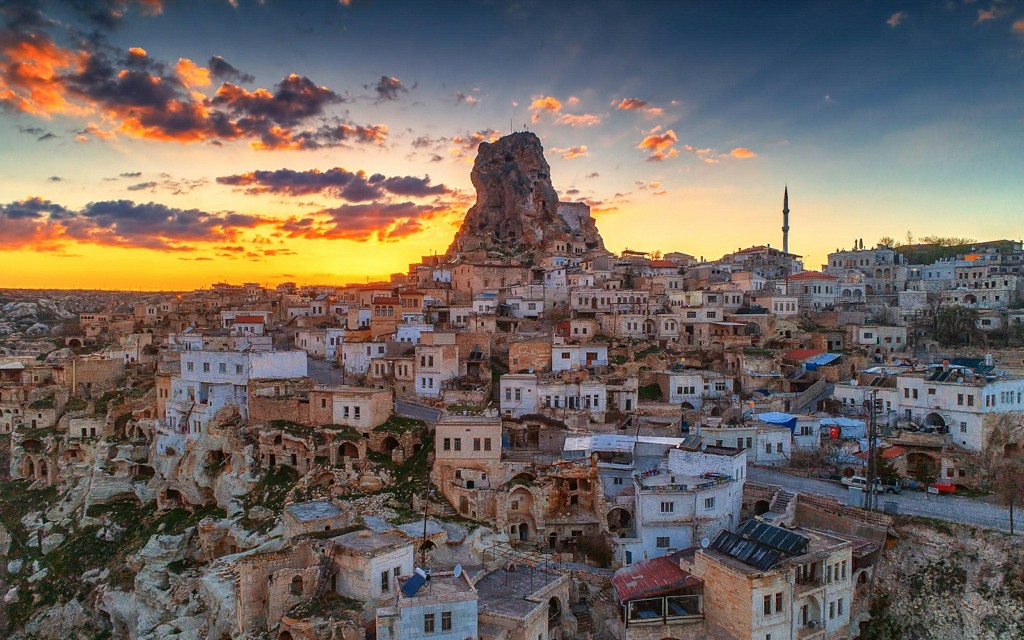
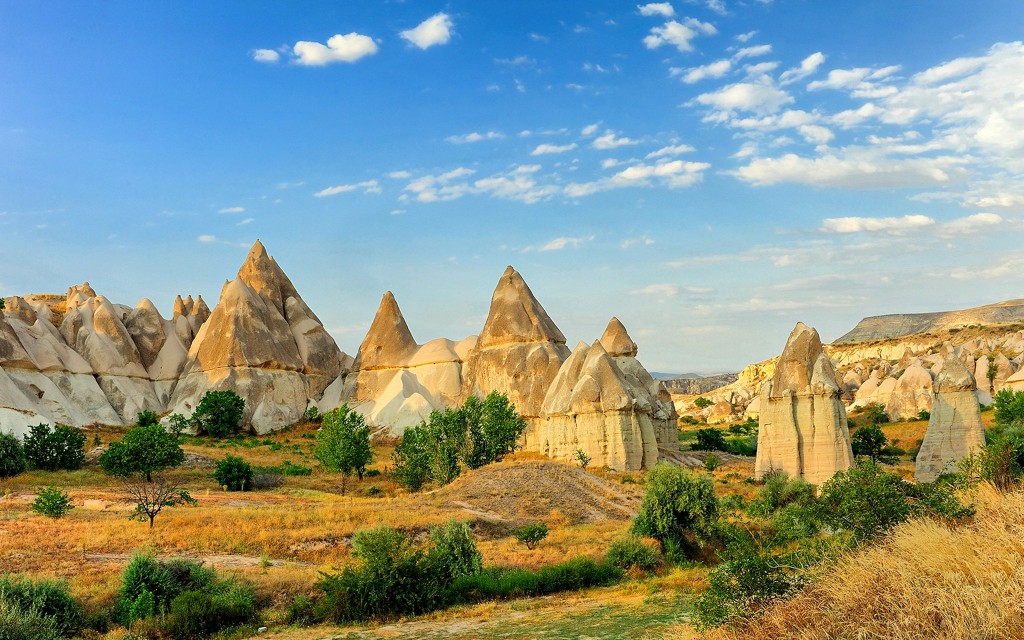
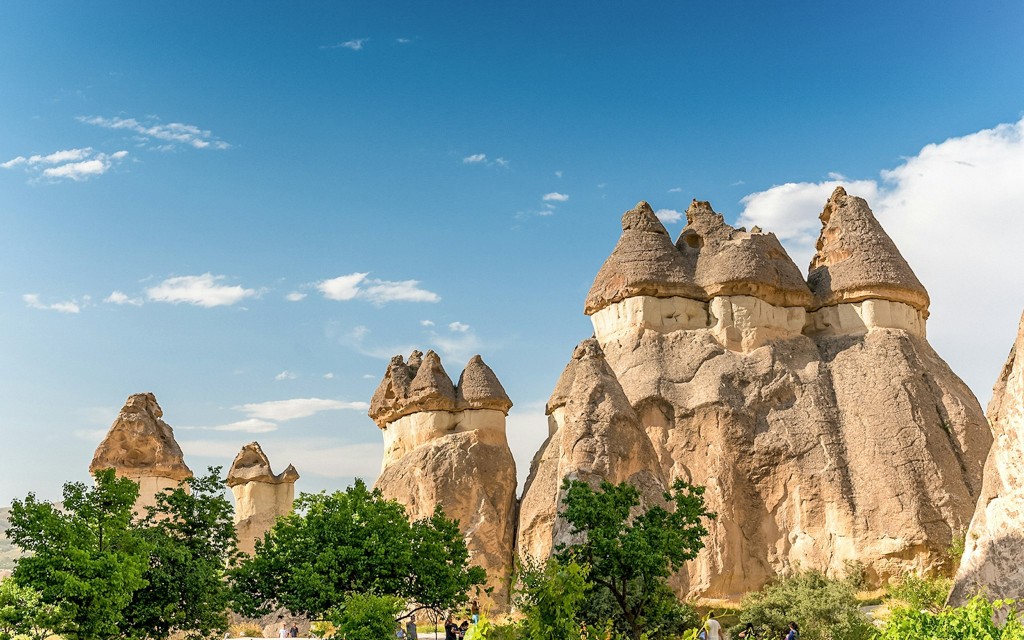
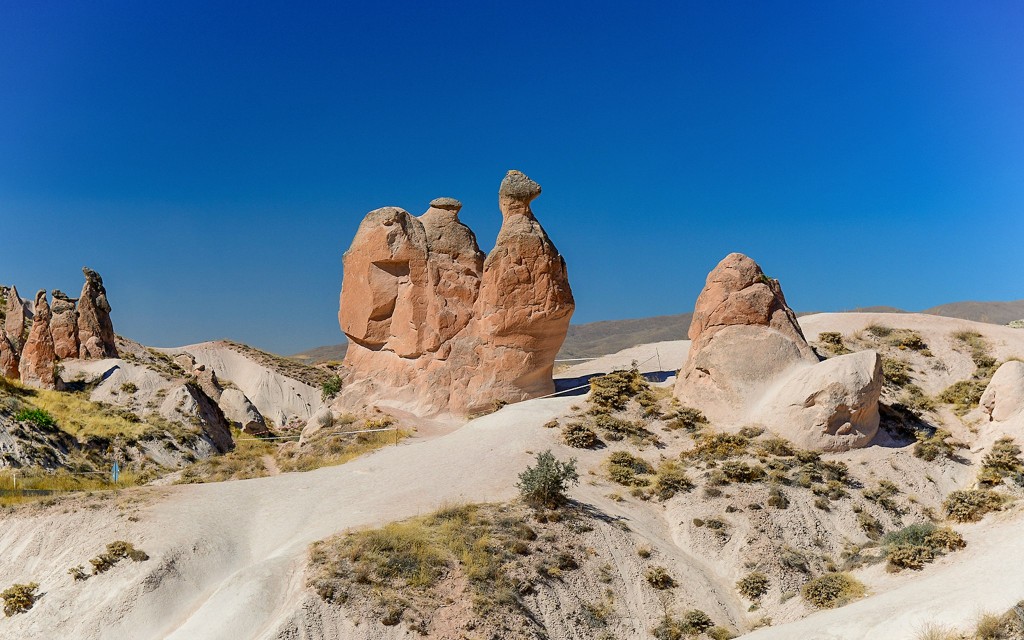
Cappadocia's extraordinary landscape is the result of millions of years of volcanic activity, followed by erosion from wind and water, which carved the soft volcanic tuff into the famous fairy chimneys and unique rock formations. Human history in Cappadocia dates back to the Hittites, around 1800-1200 BCE, but it gained prominence as a significant center for early Christians. During the Roman and Byzantine eras, persecuted Christians found refuge in the region, carving intricate cave dwellings, churches, and entire underground cities into the soft rock. These settlements, like Derinkuyu and Kaymaklı, served as places of worship, living, and defense against invaders. Over centuries, various empires, including the Seljuks and Ottomans, controlled the region, each leaving their cultural mark. Today, Cappadocia continues to fascinate visitors with its blend of natural wonder and a deeply layered human history, reflecting resilience and ingenuity.