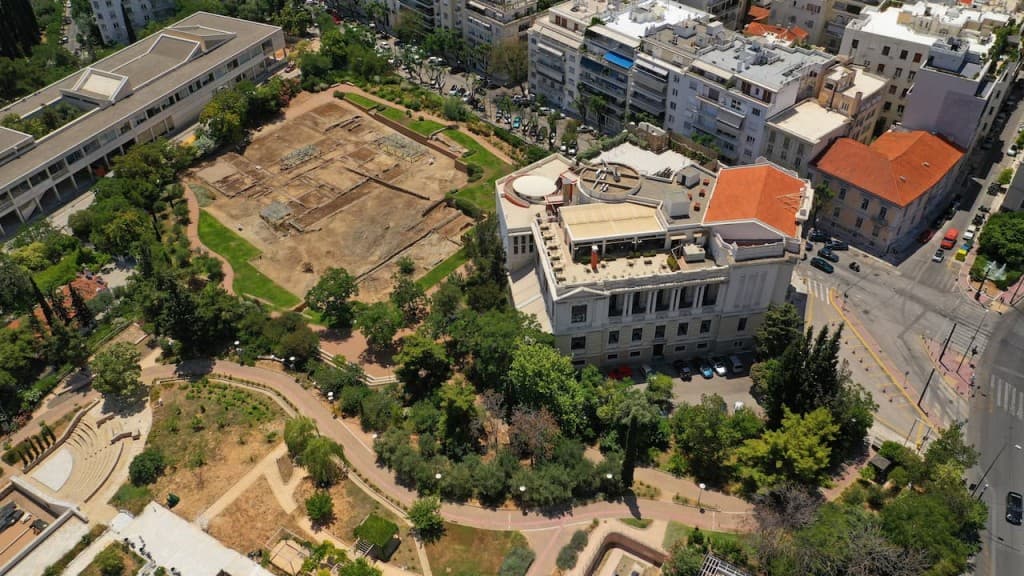
Aristotle's Lyceum The Archaeological Site Entry Ticket
Visit Aristotle’s Lyceum with an entry ticket—stroll around the excavated ruins of his ancient school and gymnasium, see remnants of baths and lecture courts, and stand where the great philosopher taught for 12 years .
Comparar opções
| Opção | Tipo | Resumo | Duração | A partir de | Reservar |
|---|---|---|---|---|---|
| Aristotle's Lyceum The Archaeological Site Entry Ticket | Bilhetes | Visit Aristotle’s Lyceum with an entry ticket—stroll around the excavated ruins of his ancient school and gymnasium, se... | Flexível | €8.00 | Reservar |
Explore the historic grounds of Aristotle's Lyceum, an extraordinary archaeological site in the heart of Athens. Founded by the legendary philosopher Aristotle in 335 BC, the Lyceum served as the esteemed home of the Peripatetic School, a pivotal institution where philosophy, science, and education flourished. This ancient center of learning profoundly influenced Western thought and intellectual development. Visitors today can wander through the excavated ruins, gaining insight into the daily life and profound academic pursuits that once took place within these hallowed grounds. Discover the birthplace of rational inquiry and a cornerstone of ancient Greek intellectual life during your visit to this significant Athenian landmark.
O Que Esperar
Destaques
Sobre Aristotle's Lyceum The Archaeological Site
Aristotle's Lyceum, also known as the Peripatetic School, was one of the most influential academic institutions of the ancient world. Established by Aristotle himself, it stood as a beacon of knowledge from 335 BC until 86 BC. Unlike Plato's Academy, the Lyceum had a more scientific and empirical focus, emphasizing observation, classification, and logical reasoning. The term 'Peripatetic' is derived from the Greek word 'peripatos,' meaning 'to walk about,' reflecting Aristotle's practice of lecturing while strolling through the Lyceum's covered walkways and gardens. The school attracted scholars from across the Hellenic world, who engaged in disciplines ranging from botany and zoology to ethics, politics, and metaphysics. Rediscovered in 1996 during the construction of the Museum of Modern Art, the site has been meticulously excavated and preserved. Today, it offers a tranquil escape within the bustling city, allowing visitors to connect with the origins of Western intellectual traditions and envision the philosophers walking and discussing profound ideas.
Porquê reservar online?
Booking your Aristotle's Lyceum entry ticket online offers a convenient and efficient way to plan your visit. By securing your admission in advance, you can save valuable time upon arrival, bypassing potential ticket queues and ensuring a smooth entry into the archaeological site. Online booking provides instant confirmation and peace of mind, allowing you to focus on immersing yourself in the rich history and intellectual legacy of this ancient school. It's an easy way to guarantee your access and make the most of your time exploring one of Athens' most significant historical treasures.
História
Aristotle's Lyceum was founded by the philosopher Aristotle in 335 BC, shortly after his return to Athens from Macedon. It was established within a public gymnasium dedicated to Apollo Lyceus, from which the school derived its name. Unlike Plato's Academy, where the emphasis was largely on mathematics and abstract philosophy, the Lyceum focused on empirical research, systematic observation, and the classification of knowledge. Aristotle's students, known as the Peripatetics, literally 'walked about' (peripatos) while engaging in philosophical discussions, often in the shaded porticos or gardens. The Lyceum housed an extensive library and a museum, making it a prominent research institution of its time. After Aristotle's death, the school was led by his successor Theophrastus. The Lyceum continued to thrive for centuries until its destruction by the Roman general Sulla in 86 BC. For many years, its exact location remained a mystery, until it was dramatically rediscovered in 1996 during excavations for the Museum of Modern Art in Athens, revealing the extensive ruins that visitors can explore today.
Horário de funcionamento
The opening hours for Aristotle's Lyceum Archaeological Site are subject to seasonal changes and public holidays. During the peak summer season, the site typically operates with extended hours, while shorter hours may apply during the winter months. It is generally open daily, but closures can occur on specific national holidays such as New Year's Day, Easter Sunday, and Christmas Day. Visitors should allocate time for potential queueing during busy periods, especially on weekends or public holidays.
Melhor altura para visitar
To experience Aristotle's Lyceum most comfortably and with fewer crowds, consider visiting during the shoulder seasons of spring (April-May) or autumn (September-October). The weather during these months is generally mild and pleasant, ideal for exploring an outdoor archaeological site. Within the day, arriving either shortly after opening in the morning or later in the afternoon helps avoid the busiest periods and the intense midday sun, particularly during the hot Athenian summer. Early mornings also offer a more serene atmosphere, perfect for contemplating the historical significance of the site.
O que ver dentro
Upon entering Aristotle's Lyceum Archaeological Site, visitors will find themselves amidst the excavated foundations and remains of the ancient school. The layout reveals various structures that comprised the Lyceum, including portions of the ancient gymnasium, palaestra (wrestling school), and stoae (covered walkways). You can observe the visible foundations of buildings where students and philosophers once gathered for lectures and discussions. Interpretive signboards positioned throughout the site provide detailed information about the purpose and history of each area, bringing the ancient structures to life. Walking paths guide you through the archaeological park, allowing for a reflective experience as you imagine Aristotle and his students engaging in their renowned 'peripatetic' lessons.
Coisas importantes a saber
When visiting Aristotle's Lyceum, wear comfortable walking shoes as you will be exploring an outdoor archaeological site with uneven terrain. The site is largely uncovered, so bring sun protection such as a hat, sunglasses, and sunscreen, especially during warmer months. It is also advisable to carry a bottle of water, particularly on hot days. While the site is generally accessible, some areas may have ancient pathways that are less suitable for wheelchairs or strollers. Informative placards are available throughout the site in multiple languages, providing historical context and details about the ruins. Allow sufficient time to wander leisurely and absorb the atmosphere of this significant historical place.
Regras para visitantes
Visitors to Aristotle's Lyceum are expected to adhere to standard archaeological site regulations to preserve its integrity. This includes refraining from touching or climbing on the ancient ruins and monuments. Littering is strictly prohibited, and visitors are asked to dispose of waste in designated bins. Photography for personal use is generally permitted, but the use of tripods or professional equipment may require special permission. Food and drink consumption is usually restricted to specific areas, and smoking is not allowed within the archaeological zones. Please respect the peaceful nature of the site and fellow visitors by keeping noise levels down.
Vale a pena visitar?
Aristotle's Lyceum is undoubtedly worth visiting for anyone with an interest in philosophy, ancient history, or the origins of Western education. It offers a unique opportunity to walk in the footsteps of one of history's greatest thinkers and explore the very ground where profound intellectual advancements took place. The site, while not as grand as some other ancient ruins, provides a deeply contemplative experience amidst a serene archaeological park. It's a chance to connect directly with the legacy of Aristotle and gain a tangible sense of the intellectual atmosphere that defined the Peripatetic School, making it a compelling addition to any Athenian itinerary.
Perguntas frequentes
Aristotle's Lyceum is located in central Athens, Greece, close to Syntagma Square and the National Garden.
The Lyceum covered a wide range of subjects, including philosophy, ethics, politics, physics, biology, rhetoric, and logic, with a strong emphasis on empirical research.
Most visitors spend approximately 1 to 2 hours exploring the archaeological site, reading the informational displays, and soaking in the atmosphere.
The site has some accessible pathways, but as an archaeological site, some areas may have uneven terrain. It is generally considered partially accessible.
Yes, photography for personal use is generally allowed throughout the archaeological site.
While the site itself does not always offer direct official guided tours, you can often find independent guides or audio guides that can enhance your visit with detailed historical context.
Yes, there is an entry fee to access the archaeological site. Tickets can often be purchased online or at the site entrance.
Como chegar
Aristotle's Lyceum is conveniently located in central Athens and is easily accessible by public transport. You can reach the site by taking the Athens Metro to Syntagma Station (Lines 2 and 3) or Evangelismos Station (Line 3), both of which are within a comfortable walking distance of approximately 10-15 minutes. Numerous bus and trolleybus lines also have stops in the vicinity. Walking from major city landmarks like Syntagma Square or the National Garden is also a pleasant option.