

O que está incluído
- Pickup and drop-off from 4 central stops in Athens
- Roundtrip transportation in an air-conditioned minibus
- English speaking driver and escort in the bus
- Virtual Reality device & Audioguide
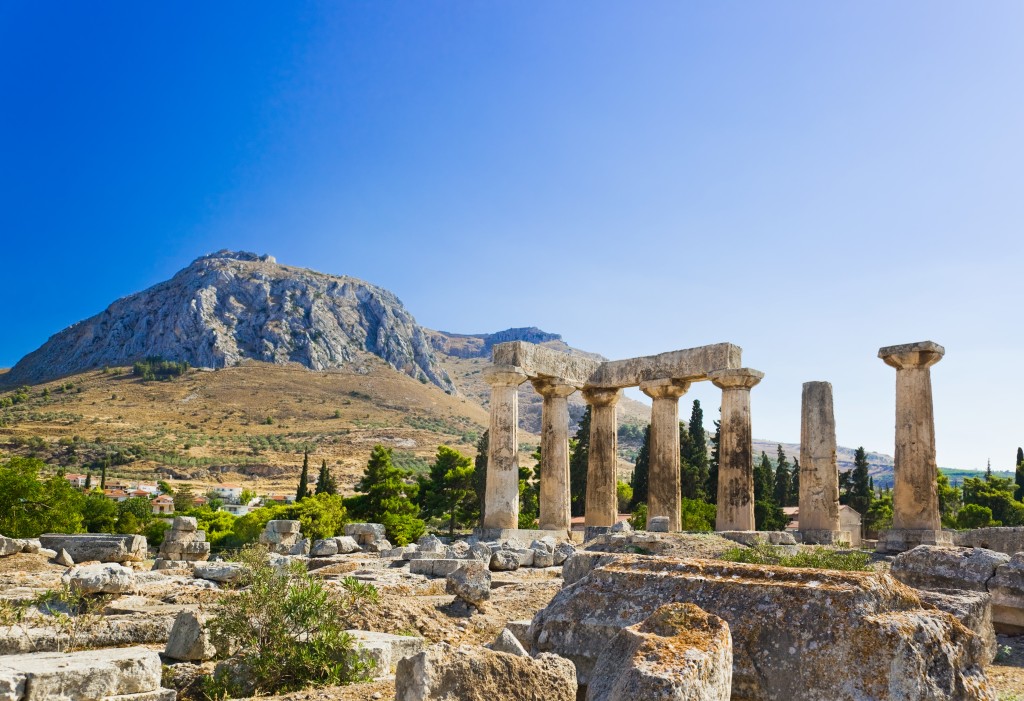
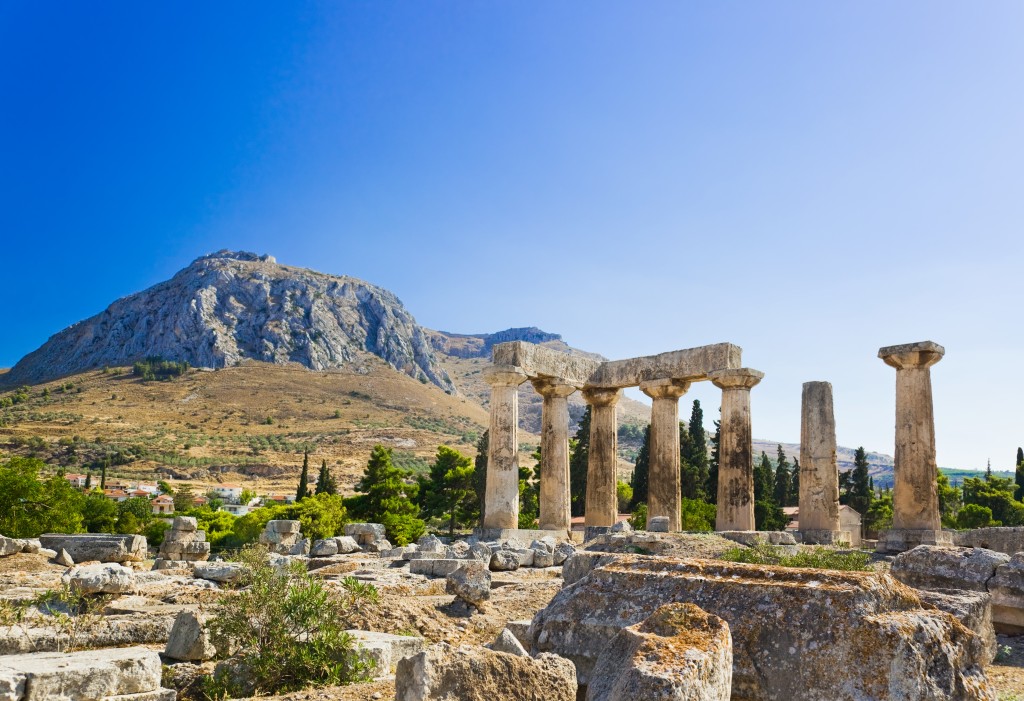
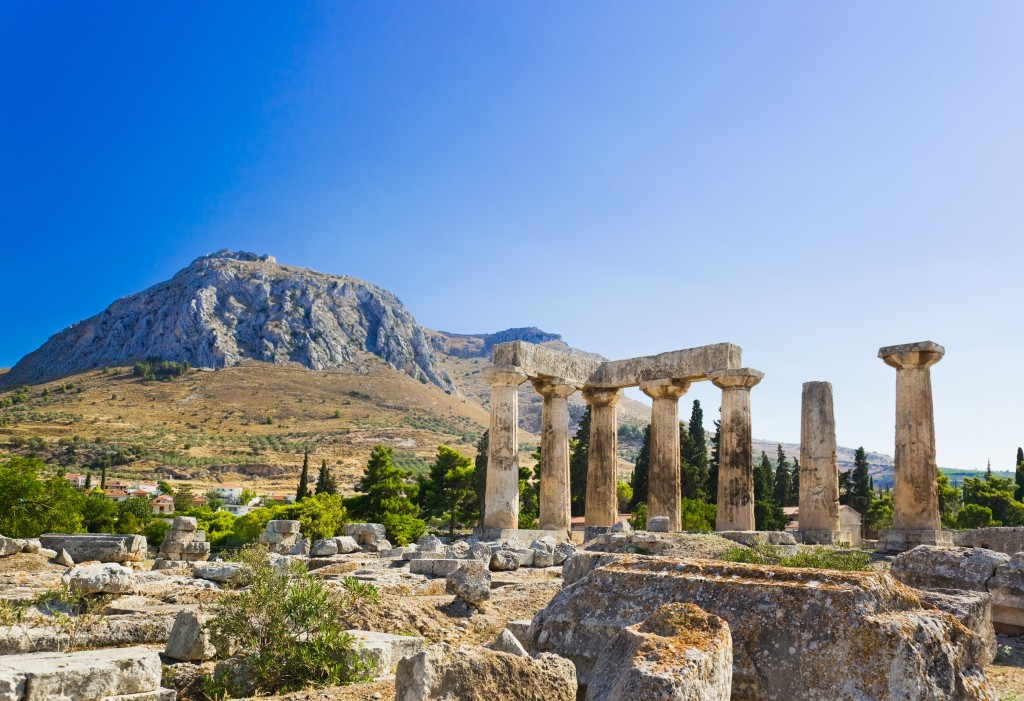
Discover the timeless beauty and grandeur of Ancient Corinth through a collection of captivating images, showcasing its iconic ruins and archaeological treasures.
Step back in time at Ancient Corinth, one of Greece's most significant archaeological sites. This powerful city of the ancient world offers a remarkable journey through history, mythology, and early Christianity. Visitors can explore remarkably preserved ruins, including the iconic Temple of Apollo, the expansive Roman Agora, ancient fountains, and various public buildings. The site beautifully reveals the city's rich Greek and Roman heritage, showcasing centuries of human civilization and influence. Located conveniently from Athens, Ancient Corinth is an essential destination for anyone interested in delving into Greece's profound past and understanding its pivotal role in antiquity.
There is no strict dress code for visiting Ancient Corinth. However, as it is an outdoor archaeological site, comfortable and practical clothing is recommended. During warmer months, light clothing, a hat, and sunglasses are advisable. Modest attire is generally appreciated, especially when entering the museum or any religious structures, though it is not formally required.
Ancient Corinth was a prominent city-state in the Peloponnese, holding a crucial strategic position controlling the land route between mainland Greece and the Peloponnese, as well as sea routes through its two ports, Lechaion and Kenchreai. Its wealth stemmed from trade and its control over the Isthmian Games. The archaeological site reveals layers of history, from its early Greek foundations to its extensive Roman reconstruction after its destruction in 146 BC and subsequent refoundation by Julius Caesar in 44 BC. As a Roman colony, it became the capital of the Roman province of Achaia. The city also holds significant importance in early Christian history, having been visited by the Apostle Paul, who lived and preached here, and to whom he addressed his Epistles to the Corinthians. Today, the site offers a comprehensive glimpse into daily life, religious practices, and political structures of both the ancient Greek and Roman eras, making it an invaluable historical and cultural treasure.
Booking your Ancient Corinth visit online offers convenience and can enhance your experience. Pre-booking often means quicker entry, helping you save time at the gate, especially during peak seasons. Many online tickets include access to the Archaeological Museum, providing a comprehensive understanding of the site's history. Furthermore, booking in advance allows you to secure spots on popular guided tours, such as a private guided tour from Athens or a full-day tour combining Ancient Corinth with other notable destinations like Nafplion. Some options even include roundtrip transportation or unique features like VR audio guides, offering a deeper and more immersive exploration without the hassle of on-site arrangements.
The history of Ancient Corinth dates back to the Neolithic period, but it truly flourished as a major Greek city-state from the 8th to the 4th centuries BC. Strategically located on the Isthmus, it controlled vital trade routes and developed into a wealthy commercial and maritime power. Corinth founded colonies such as Syracuse and Corcyra, and hosted the prestigious Isthmian Games. Its prosperity was interrupted in 146 BC when it was utterly destroyed by the Roman general Lucius Mummius, serving as a warning to other Greek cities resisting Roman rule. A century later, in 44 BC, Julius Caesar refounded Corinth as a Roman colony, populating it with freedmen. Under Roman rule, it quickly regained its prominence, becoming the capital of the Roman province of Achaia and a cosmopolitan hub. During this period, the Apostle Paul lived and preached in Corinth around 51-52 AD, establishing one of the earliest Christian communities. The city continued to thrive through the Byzantine era, though its significance gradually waned following repeated invasions and earthquakes. Today, its ruins eloquently tell the story of a city that was a beacon of trade, culture, and religious significance for millennia.
The archaeological site and museum of Ancient Corinth generally operate on seasonal schedules. During the summer months, hours typically extend longer, often from early morning to late afternoon. In the winter, hours are usually shorter. It is common for the site to close on specific public holidays. Visitors should anticipate variations and plan accordingly, as specific times can change.
The ideal time to visit Ancient Corinth is during the shoulder seasons of spring (April to May) and autumn (September to October). During these months, the weather is pleasantly mild, making it comfortable to explore the outdoor ruins without the intense heat of summer. There are also generally fewer crowds compared to the peak summer tourist season, allowing for a more serene and immersive experience. Early mornings are also recommended regardless of the season, as the light is excellent for photography and the site is usually quieter.
Within the sprawling archaeological site of Ancient Corinth, visitors can explore a wealth of ancient structures. The most striking landmark is the Temple of Apollo, its towering Doric columns dominating the landscape. Below, the Roman Agora unfolds, an expansive public space lined with the remains of shops, temples, and administrative buildings. You can trace the path of the Lechaion Road, a paved street leading from the port to the city center. Key features include the Bema, a prominent speaker's platform; the Peirene Fountain, an ancient water source; and the Odeon and Theatre, where performances and public gatherings once took place. The site also includes the Glauke Fountain and various Roman bathhouses, offering insight into daily life. Do not miss the on-site Archaeological Museum, which displays a rich collection of artifacts unearthed from the excavations, including pottery, sculptures, mosaics, and Roman portraits, bringing the ancient city to life.
Wear comfortable walking shoes, as you will be traversing uneven terrain and climbing steps across the archaeological site. Bring water, especially during warmer months, as shade can be limited. The site includes a well-curated museum, so allocate time for both the outdoor ruins and the indoor exhibits to get a full appreciation. Photography is generally permitted for personal use, but flash photography may be restricted in certain museum areas. Facilities like restrooms are available on-site. Consider a guided tour or an audio guide to fully understand the historical context of the various structures.
To preserve the ancient site, visitors are asked to adhere to certain rules. Do not touch or climb on ancient monuments. Stay on designated paths to protect fragile archaeological remains. Littering is strictly prohibited; please use the provided bins. Smoking is not allowed within the archaeological area or museum. Large bags or backpacks may need to be stored in lockers at the museum entrance. Respectful behavior is expected at all times to ensure an enjoyable experience for all.
Ancient Corinth is undeniably worth visiting for its profound historical significance and remarkable archaeological remains. It offers a unique opportunity to walk through a city that was once a major economic and cultural powerhouse of both ancient Greece and the Roman Empire. The site's connection to early Christianity through the Apostle Paul adds another compelling layer of interest. From the majestic Temple of Apollo to the bustling Roman Agora and the informative museum, it provides a comprehensive and engaging journey through millennia of human civilization. It's an essential stop for history buffs, classical scholars, and anyone eager to grasp the vast tapestry of Greek heritage.
Yes, Ancient Corinth can be an educational and engaging site for children, especially those interested in history and mythology. The open spaces allow for exploration, but supervision is advised due to uneven terrain.
Yes, restrooms are available for visitors at the archaeological site, usually near the entrance and the museum.
Due to the nature of an ancient archaeological site with uneven ground, stairs, and gravel paths, full wheelchair accessibility can be challenging. Some areas may be accessible, but assistance might be needed in others.
You can bring water and small snacks. However, picnicking is generally not permitted within the archaeological area, and littering is strictly prohibited. There might be a small cafe or vendors nearby.
Yes, there is usually a designated parking area available for visitors near the entrance of the archaeological site.
Ancient Corinth is approximately 80 kilometers (50 miles) southwest of Athens, typically an hour to an hour and a half drive.
Yes, various guided tours are available, both on-site and as part of larger day trips from Athens. Booking these in advance is recommended.
Ancient Corinth is easily accessible from Athens. The most direct way is by car, taking approximately 1 hour to 1 hour and 15 minutes via the A8 motorway. Alternatively, you can take a KTEL bus from Athens' Kifissos Bus Station to the modern city of Corinth, which takes about 1.5 hours. From there, local buses or a short taxi ride can take you the remaining few kilometers to the ancient site. Many organized tours also provide convenient roundtrip transportation from Athens.
There is no strict dress code for visiting Ancient Corinth. However, as it is an outdoor archaeological site, comfortable and practical clothing is recommended. During warmer months, light clothing, a hat, and sunglasses are advisable. Modest attire is generally appreciated, especially when entering the museum or any religious structures, though it is not formally required.