Ingressos para a Ágora Romana, com audioguia (Roman Agora: Entrance E-Ticket with Audio Tour)Ingressos para a Ágora Romana, com audioguia (Roman Agora: Entrance E-Ticket with Audio Tour) - 1Ingressos para a Ágora Romana, com audioguia (Roman Agora: Entrance E-Ticket with Audio Tour) - 2Ingressos para a Ágora Romana, com audioguia (Roman Agora: Entrance E-Ticket with Audio Tour) - 3

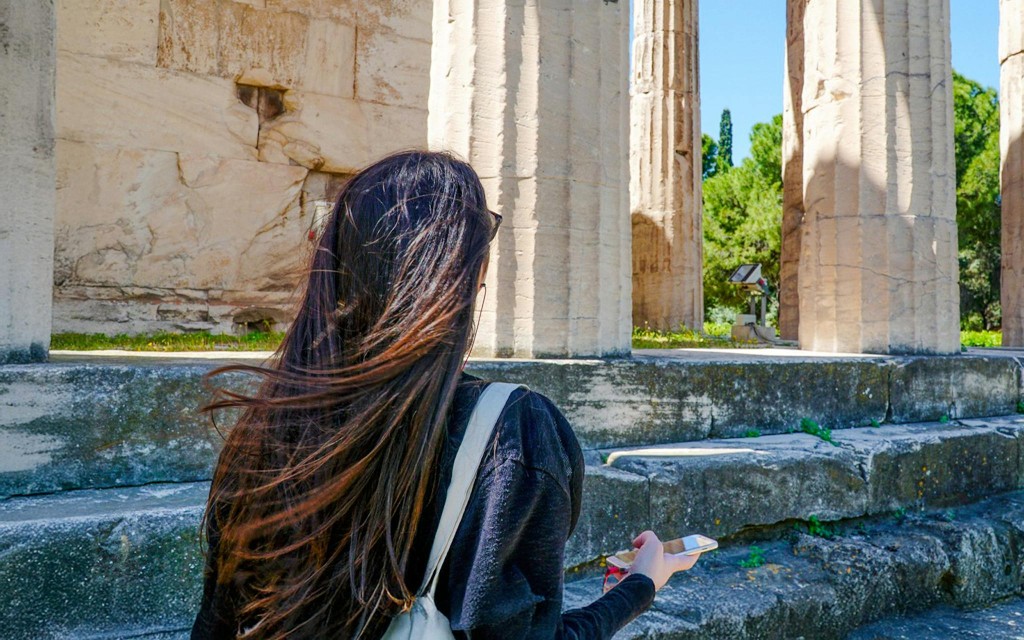
Discover breathtaking images of the Roman Agora, capturing its ancient grandeur and historical significance.

Step back in time at the Roman Agora, an ancient marketplace in the heart of Athens, Greece. Located north of the Acropolis, this archaeological site offers a fascinating glimpse into Roman life in the city. Unlike the earlier Ancient Agora, the Roman Agora served primarily as a commercial hub, featuring impressive structures like the iconic Tower of the Winds and the imposing Gate of Athena Archegetis. Visitors can explore the remnants of shops, public latrines, and administrative buildings, walking the same paths once trod by merchants, philosophers, and citizens. It stands as a testament to Athens' enduring history and its transformation under Roman rule, making it a key stop for anyone interested in classical antiquity and the evolution of urban life in ancient Greece.

A partir de19.55
ADULT
1864 idade
19.55
Duração
1 hora
Ponto de encontro
Athens
Polignotou 3, Athina 105 55, Greece
Horário de funcionamento
The Roman Agora typically opens in the morning and closes in the late afternoon or early evening, with hours varying seasonally. It is usually open daily, but schedules may differ on public holidays.
Duração da visita
A typical visit to the Roman Agora usually takes about 1 to 1.5 hours to fully explore the site.
Melhor altura para visitar
The best time to visit is during the spring or autumn months, or early in the morning to avoid the heat and larger crowds.
Endereço
The Roman Agora is centrally located in Athens, Greece, near the Ancient Agora and Monastiraki Square.
Código de vestimenta

There is no specific dress code required to visit the Roman Agora. As an outdoor archaeological site, comfortable and casual clothing is recommended. Practical footwear suitable for walking on uneven surfaces, such as ancient stones and dirt paths, is essential. During warmer months, light clothing, a hat, and sunglasses are advisable, while a light jacket might be useful in cooler seasons.

Resumo da experiência

O que está incluído

  • Entrada para a Ágora Romana
  • Tour autoguiado em áudio de 45 minutos a 1 hora em seu smartphone (Android e iOS)
  • Audioguia disponível em inglês, espanhol, alemão, francês, italiano e grego (com base na opção selecionada)
  • Conteúdo off-line (texto, narração de áudio e mapas)

O que não está incluído

  • Traslados de ida e volta do hotel
  • Traslados
  • Guia presencial
  • Fones de ouvido
  • Alimentos e bebidas
  • Despesas pessoais

Sua experiência

Explore a Ágora Romana, o animado mercado de Atenas do passado, com um audioguia multilíngue que traz à vida histórias dos comerciantes, viajantes e estudiosos que outrora se reuniam sob seu grande portão de mármore e a icônica Torre dos Ventos.

Primeiros passos

Você receberá seu ingresso por e-mail. Basta fazer o download do aplicativo e do audioguia no seu smartphone antes da visita. Com acesso off-line à narração, aos mapas e às imagens, você pode simplesmente chegar à entrada da Ágora Romana, colocar os fones de ouvido e começar sua jornada no seu ritmo na vida cotidiana da antiga Atenas.

O grande portão de Athena

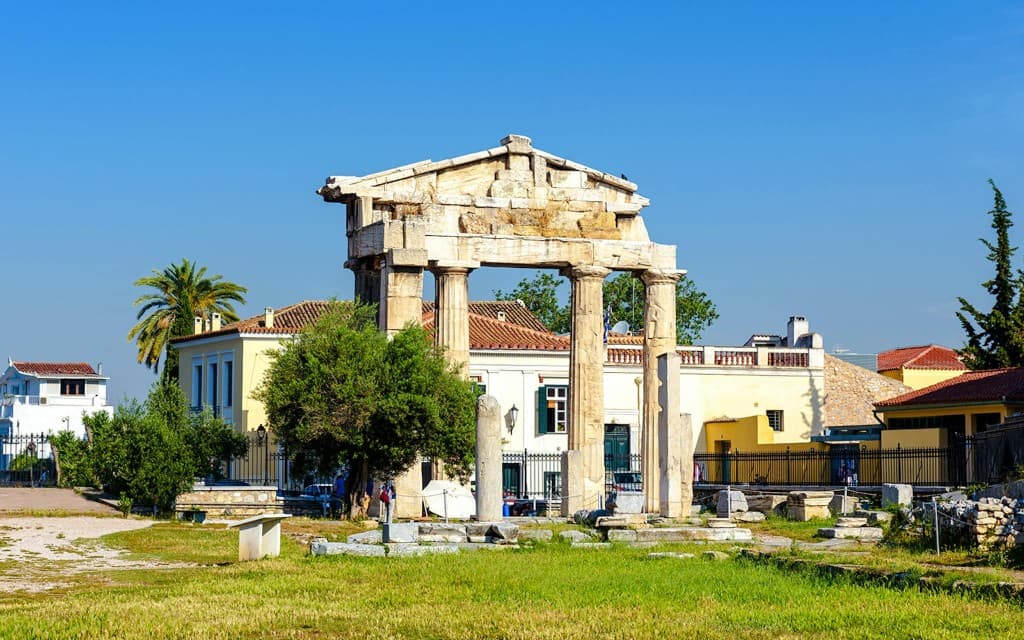
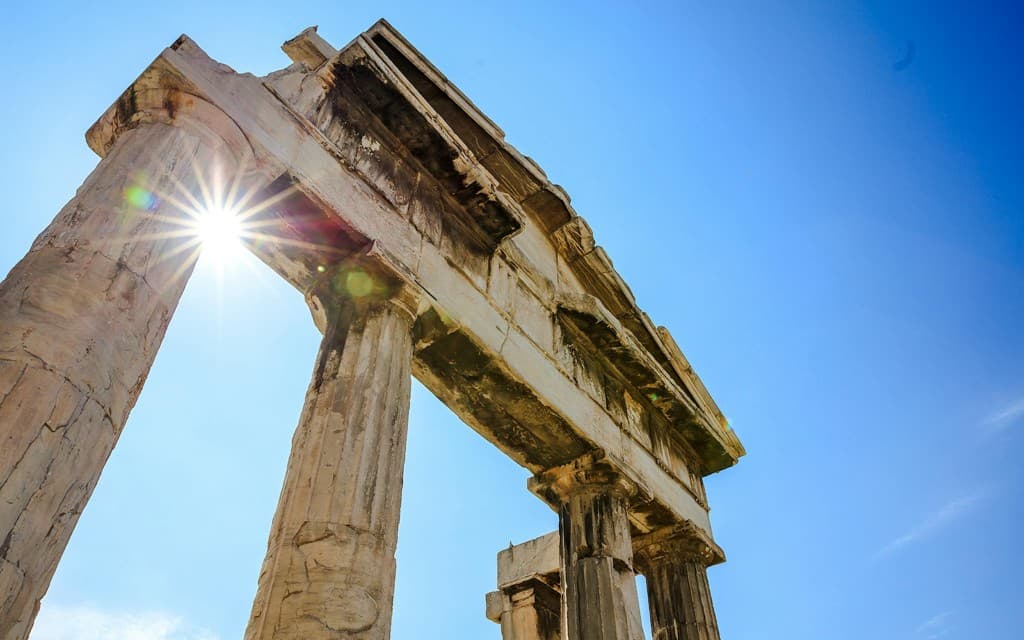
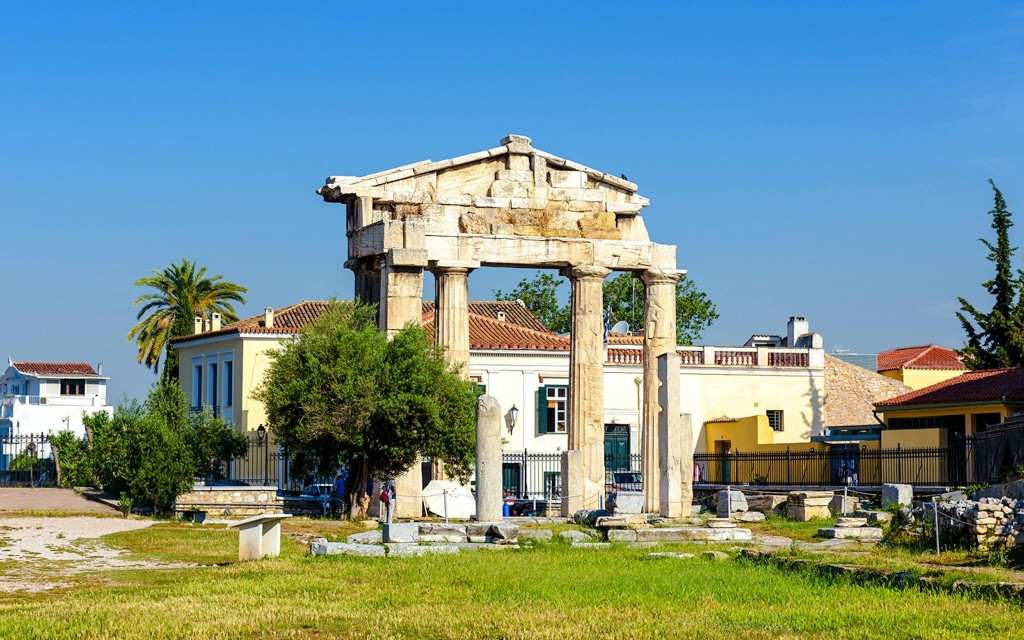
Comece pelo impressionante portão de Athena Archegetis, uma entrada de mármore dada de presente à cidade por Júlio César e Augusto. Outrora o principal portão do mercado romano, suas imponentes colunas dóricas simbolizavam a prosperidade sob o domínio romano. Enquanto sua narração se desenrola, imagine comerciantes, filósofos e cidadãos passando por esse mesmo portão, com suas vozes ecoando pelo coração da Ágora.

Vestígios do mundo antigo

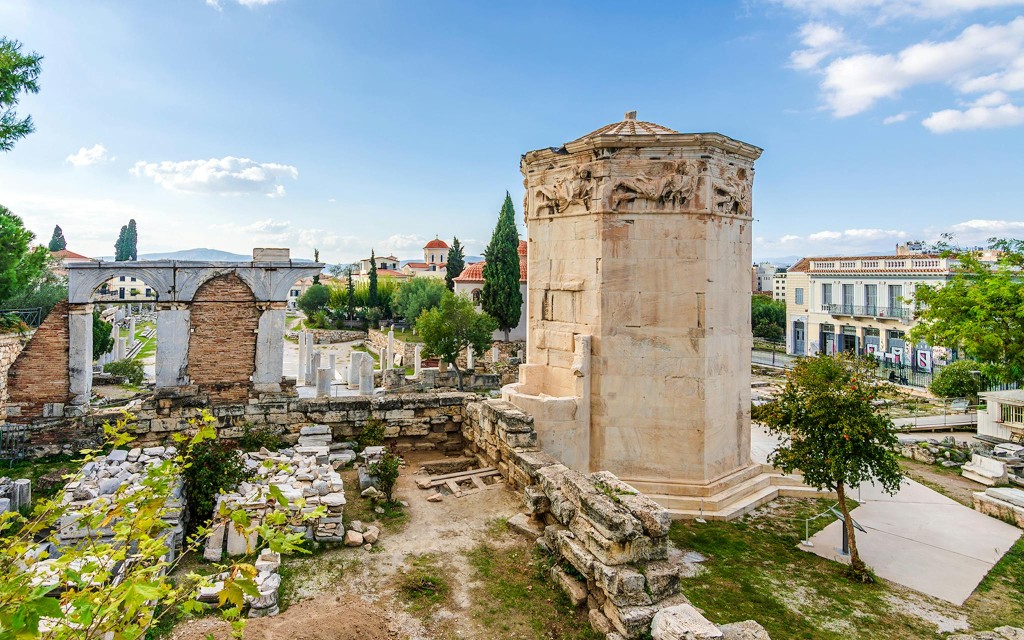
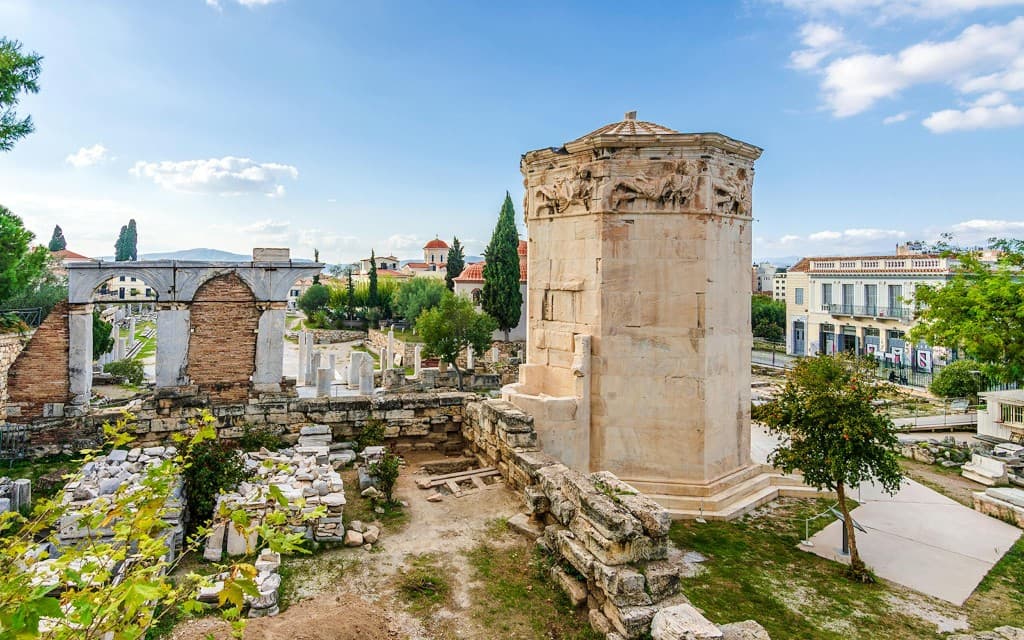
Em seguida, vá até a octogonal Torre dos Ventos, um dos primeiros "relógios" da antiguidade - uma estrutura que combinava relógios de sol, um relógio de água e relevos esculpidos dos oito deuses dos ventos. Seu audioguia explica como os atenienses olhavam para a torre, não apenas para saber a hora do dia, mas também para saber a direção, o clima e ter um senso de ordem cósmica, uma mistura antiga de ciência e mito.

Mercados, fontes e histórias do cotidiano

Passeie pela casa da fonte que fornecia água para o movimentado mercado e pelo Vespasianae, latrinas públicas que revelam a abordagem prática dos romanos à vida cívica. Você poderá ver os restos de lojas antigas, onde eram comercializados produtos e fofocas. Por meio de histórias vívidas, o tour em áudio mostra a você a imagem de um mercado que era tanto um centro social quanto um centro comercial.

Camadas de história e vistas da Acrópole

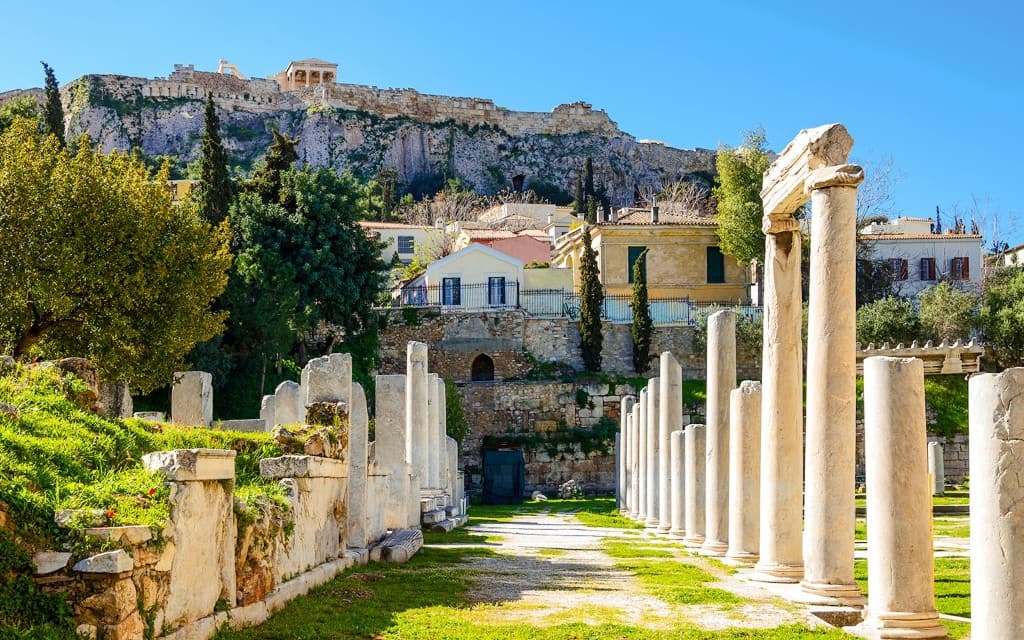
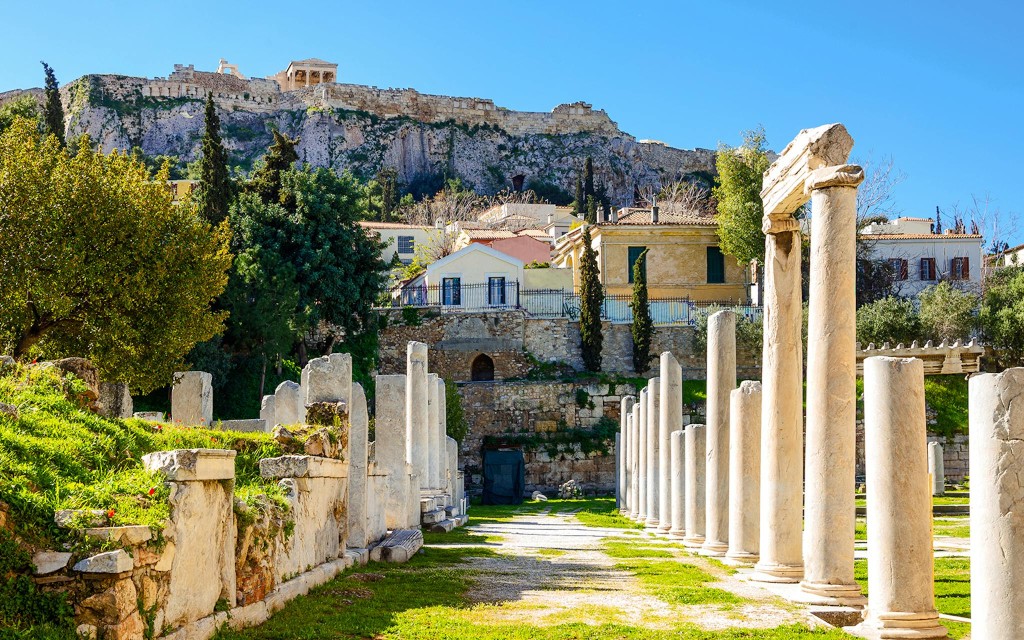
Sua visita termina na Mesquita do Conquistador, construída no século XV durante a era otomana, sobre as ruínas do mercado romano. Outrora um local de culto e mais tarde reaproveitado como museu e depósito, ele reflete as muitas culturas que moldaram Atenas. Com a Acrópole erguendo-se acima, o local reúne legados gregos, romanos, bizantinos e otomanos em um cenário notável.
Know Before You Go

Saiba antes de ir

O que levar

  • Use sapatos resistentes e confortáveis. A pavimentação antiga do local e o terreno irregular podem dificultar a caminhada.

  • Leve um chapéu e protetor solar para enfrenta o sol.

  • Mantenha seu smartphone totalmente carregado para que ele funcione pela duração do tour de áudio.

  • Use seus próprios fones de ouvido, para que ter a melhor experiência auditiva durante o tour.

Não é permitido

  • Fotografia com flash e tripés são proibidos. Qualquer filmagem ou fotografia profissional deve ser aprovada com antecedência pelo Ministério.

  • Os drones não são permitidos sem autorização especial.

  • Animais de estimação não são permitidos, mas animais de serviço certificados são bem-vindos.

  • Não toque, mova ou retire pedras, fragmentos de cerâmica ou outros vestígios; essas antiguidades são protegidas pela lei grega.

Acessibilidade

  • A Ágora Romana é parcialmente acessível para cadeirantes, oferecendo acesso para visitantes com mobilidade reduzida pela entrada principal na Rua Dioskouron. No entanto, grande parte do local tem terreno irregular e pavimentação antiga, então o acesso na parte interna é limitado.

  • Uma entrada alternativa na Rua Pelopida também permite o acesso ao Horologion (Torre dos Ventos) para cadeirantes.

  • O museu no local é totalmente acessível, e os visitantes com deficiências visuais podem usar a sinalização em Braille e os mapas táteis.

Informações adicionais

  • Cada reserva é válida para um dispositivo; se você for usar vários dispositivos, certifique-se de reservar separadamente para cada um.

  • Você pode entrar no sítio arqueológico somente durante o horário selecionado. Seus ingressos são válidos de 15 minutos antes até 15 minutos depois do horário que você escolheu.

  • Chegue com pelo menos 30 minutos de antecedência para passar pela segurança e entrar. Observação: a entrada é permitida até 20 minutos antes do horário de fechamento.

  • Após a reserva, você receberá um e-mail com instruções para acessar e fazer o download do tour em áudio. Verifique também a caixa de spam.

  • Você precisará de um smartphone Android (versão 5.0 ou posterior) ou iOS (versão 15.0 ou posterior). O audioguia não é compatível com Windows Phone, iPhone 6/6 Plus ou anterior, iPod Touch 6ª geração ou anterior, iPad 4ª geração ou anterior, iPad Air 1ª geração, iPad Mini 3ª geração ou anterior.

  • Certifique-se de que seu telefone tenha 100 a 150 MB de espaço de armazenamento livre para fazer o download do tour de áudio.

  • As rotas dentro do local podem variar e algumas restrições podem ser aplicadas. Siga todas as orientações exibidas enquanto estiver no local.

  • O horário de funcionamento varia de acordo com a época do ano: de novembro a março, o local fica aberto das 8h às 15h, enquanto de abril a agosto, fica aberto das 8h às 19h30, com horários de fechamento gradualmente reduzidos em setembro e outubro; a última entrada é sempre 30 minutos antes do fechamento.

Elegibilidade para descontos

  • Os cidadãos da UE com até 25 anos de idade têm entrada gratuita durante todo o ano com um documento de identidade ou passaporte válido.

  • Visitantes de fora da UE com idade entre 6 e 25 anos têm direito a desconto na entrada com um documento de identidade ou passaporte válido.

  • Crianças com menos de 5 anos de idade entram gratuitamente.

Instructions

- Entry to the Roman Agora - 45-minute to 1-hour self-guided audio tour on your smartphone (Android and iOS), in English, Spanish, German, French, Italian, and Greek - Offline content (text, audio narration, and maps)

O Que Esperar

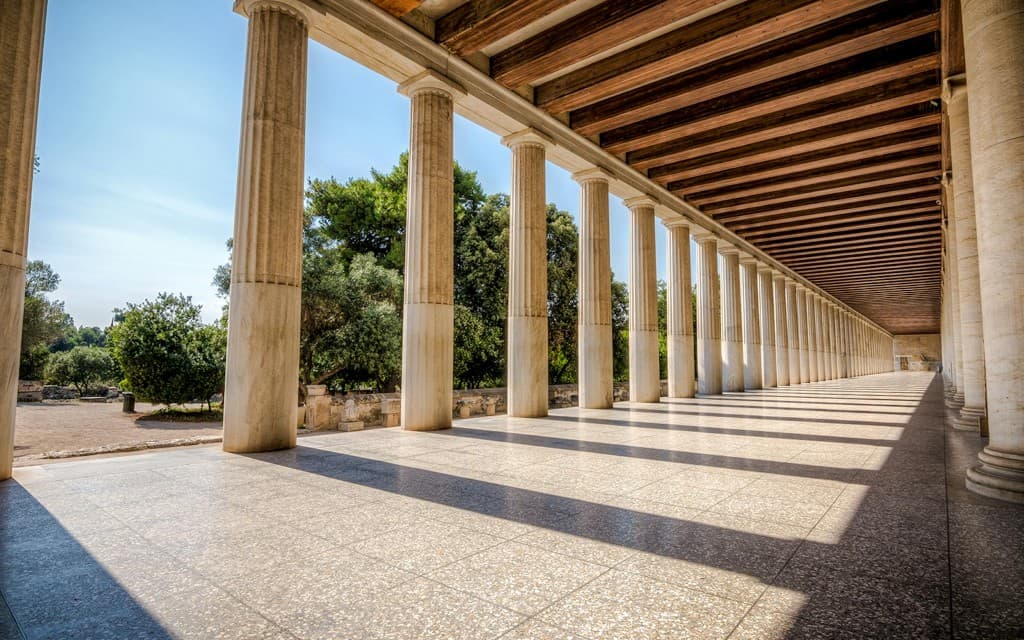
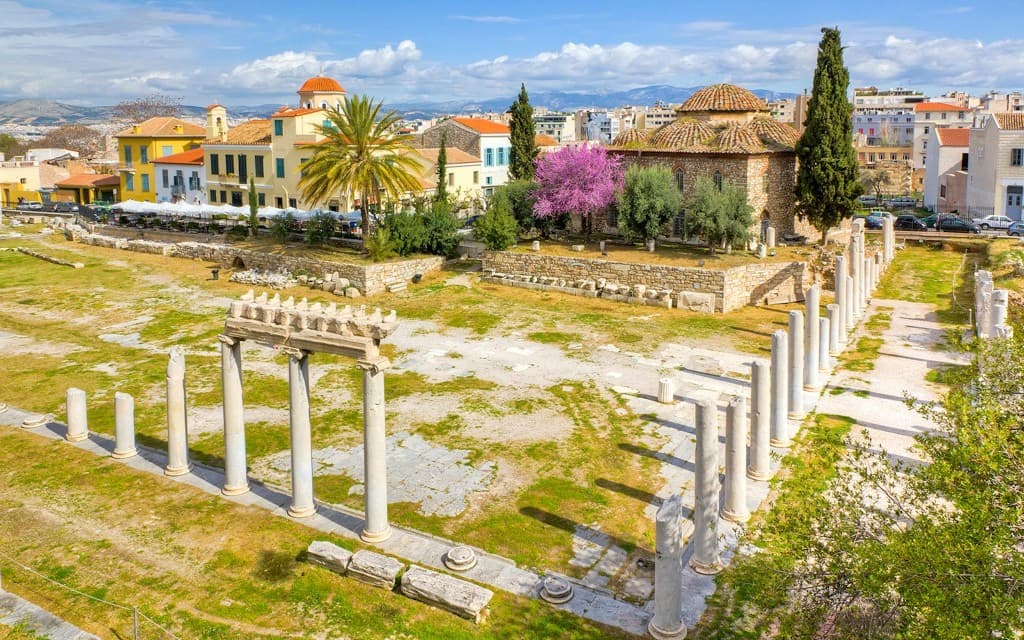
Upon entering the Roman Agora, expect to find yourself amidst the scattered yet significant ruins of a bustling ancient marketplace. The site is largely open-air, allowing for clear views of the remaining foundations, columns, and walls. You will wander through an expansive area, tracing the outlines of stoas and various administrative buildings. The impressive Gate of Athena Archegetis immediately draws attention upon entry, while the unique Tower of the Winds, with its intricate details, stands as a focal point. Expect a serene, contemplative atmosphere, allowing you to imagine the vibrancy of Roman-era Athens. While much requires imagination, the preserved elements offer concrete evidence of its historical grandeur and utility.

Sobre Roman Agora of Athens: Visitor Information & Tickets

The Roman Agora, also known as the Roman Forum, was constructed between 19 and 11 BCE with funds provided by Julius Caesar and completed by Emperor Augustus. Its creation marked a shift in Athens' commercial center from the nearby Ancient Agora, becoming the new focal point for trade and daily life during the Roman period. The site is rectangular, featuring a large open courtyard surrounded by stoas and various public buildings. The most striking features are undoubtedly the Gate of Athena Archegetis on the west side, a monumental entrance built of Pentelic marble, and the Horologion of Andronikos Kyrrhestes, famously known as the Tower of the Winds, which served as a sophisticated timekeeping device and weather vane. Excavations have also revealed the remains of the Agoranomion (market superintendents' office) and a complex of public latrines. Over the centuries, the Roman Agora continued to be an important urban space, evolving through Byzantine, Ottoman, and modern eras, even hosting Athens' first mosque in the Ottoman period, the Fethiye Mosque, which stands on the site today. It offers a comprehensive perspective on Roman influence and the continuous layering of history in Athens.

Destaques

Entre na Ágora romana, o último mercado de Atenas, construído com portões de mármore dados como presente por Júlio César.
Cruze o Portão de Athena Archegetis e imagine os comerciantes, filósofos e cidadãos que, antigamente, passavam por suas colunas imponentes.
Veja a engenhosa Torre dos Ventos, um relógio octogonal que combinava relógios de sol, um relógio de água e deuses do vento esculpidos
uma das primeiras estações meteorológicas do mundo.
Com o audioguia, você descobrirá histórias da vida cotidiana nas lojas, na casa da fonte e nas latrinas públicas, onde o comércio e a conversação prosperavam sob o domínio romano.
Você sabia? A Ágora Romana ainda estava em uso durante o período otomano, quando uma mesquita foi construída sobre suas ruínas, deixando uma marca de camadas de história no local.

Porquê reservar online?

Booking your tickets for the Roman Agora online offers several advantages, ensuring a smoother and more convenient visit. Online purchases allow you to secure your entry in advance, saving valuable time by avoiding potential queues at the ticket booths, especially during peak tourist seasons. Pre-purchasing tickets also helps in planning your itinerary, giving you peace of mind that your access to this historic site is guaranteed. It streamlines the entry process, letting you maximize your time exploring the ancient ruins rather than waiting. Furthermore, online platforms often provide clear information on ticket types and opening hours, aiding in a well-organized trip to this significant Athenian landmark.

História

The Roman Agora of Athens represents a significant chapter in the city's long history, marking a period of Roman influence and administrative control. Its construction began under Julius Caesar around 50-19 BCE and was completed by Emperor Augustus, solidifying its role as the new commercial and administrative center of Athens, replacing the older Ancient Agora. This rectangular enclosed complex featured a large paved courtyard, surrounded by colonnades that housed shops and public offices. The most celebrated structure, the Horologion of Andronikos Kyrrhestes, or Tower of the Winds, built earlier in the 1st century BCE, was incorporated into the new Agora complex, serving as a public clock. The monumental Gate of Athena Archegetis, erected by donations from Augustus and the Roman colony, served as the primary western entrance. Throughout its active life, the Roman Agora was a bustling hub, facilitating trade, public announcements, and social interaction. Even after the decline of Roman power, the site continued to be used and adapted; during the Byzantine era, houses and churches were built amidst the ruins, and later, under Ottoman rule, the Fethiye Mosque was constructed on the northern side, signifying its continuous importance and transformation through different historical periods.

Horário de funcionamento

Opening hours for the Roman Agora generally follow a seasonal schedule. During the summer months (April to October), the site typically opens from early morning, such as 8:00 AM, and closes later in the evening, often around 7:00 PM or 8:00 PM. In the winter months (November to March), closing times are usually earlier, around 3:00 PM or 5:00 PM. It is common for archaeological sites in Greece to be closed on specific public holidays, such as New Year's Day, Easter Sunday, and Christmas Day. It is always recommended to check the current operating schedule for the exact dates of your visit.

Melhor altura para visitar

To fully enjoy the Roman Agora and avoid the peak heat and crowds, the best times to visit are during the shoulder seasons of spring (April to early June) and autumn (September to October). During these months, the weather is pleasantly mild, making it ideal for exploring the outdoor ruins. If you visit during the summer, plan your visit for the early morning right after opening or in the late afternoon before closing. This will help you avoid the midday sun and the largest groups of tourists, allowing for a more serene and contemplative experience of this historic site.

O que ver dentro

Within the Roman Agora, visitors can explore several key structures that define its historical importance. The most prominent is the Tower of the Winds, an octagonal marble structure that functioned as a horologion (timepiece) incorporating a sundial, water clock, and weather vane. Its detailed frieze depicting the eight wind deities is remarkably preserved. The monumental Gate of Athena Archegetis, a Doric propylon, stands proudly as the formal entrance to the Agora. Nearby, you can identify the foundations of various shops and stoas that once bustled with commercial activity. The Agoranomion, the building where market rules were enforced, also has visible remains. Additionally, the Fethiye Mosque, a significant Ottoman-era structure, is situated within the archaeological complex, representing a later layer of the site's rich history. Exploring these elements provides a comprehensive understanding of the Agora's diverse functions and its enduring legacy.

Coisas importantes a saber

When planning your visit to the Roman Agora, it is advisable to wear comfortable walking shoes as you will be navigating uneven terrain and ancient paths. Bringing water, especially during warmer months, is recommended to stay hydrated. Sunscreen and a hat are also practical for protection against the sun, as the site offers limited shade. The Roman Agora is an open-air archaeological site, so prepare for varying weather conditions. Photography is generally allowed for personal use, but flash photography may be restricted in certain areas. While parts of the site are accessible, some areas with uneven ground or steps might pose challenges for visitors with mobility impairments.

Regras para visitantes

Visitors to the Roman Agora are expected to adhere to standard archaeological site rules to preserve the historical integrity of the monument. Please do not climb on ancient structures, walls, or ruins. Littering is strictly prohibited; use designated bins for any waste. Respect the historical significance of the site by refraining from writing on or damaging any part of the ruins. Picnicking is not allowed. Supervise children closely to ensure their safety and the preservation of the site. Pets are typically not permitted within the archaeological area, with the exception of service animals.

Vale a pena visitar?

Visiting the Roman Agora is highly recommended for anyone interested in the layered history of Athens. It offers a tangible connection to the city's Roman period, showcasing how daily life and commerce evolved under Roman rule. The site features iconic structures like the Tower of the Winds and the Gate of Athena Archegetis, which are marvels of ancient engineering and architecture. Beyond the grand monuments, exploring the foundations of ancient shops and public spaces provides a deeper understanding of urban organization and social interaction in antiquity. It serves as an excellent complement to a visit to the Ancient Agora and the Acropolis, painting a fuller picture of Athens' illustrious past.

Perguntas frequentes

What is the Roman Agora?

The Roman Agora is an ancient marketplace in Athens, Greece, built during the Roman period. It served as a commercial and administrative center, distinct from the older Ancient Agora.

What are the main attractions at the Roman Agora?

Key attractions include the Tower of the Winds (Horologion of Andronikos Kyrrhestes), the Gate of Athena Archegetis, and the remains of various shops and public buildings, including the Fethiye Mosque.

How long does it take to visit the Roman Agora?

Most visitors spend approximately 1 to 1.5 hours exploring the Roman Agora, allowing enough time to appreciate its main features.

Is the Roman Agora accessible for visitors with mobility issues?

While some parts of the site are relatively flat, the ground can be uneven with ancient stones and paths. Some areas may pose challenges for visitors with mobility impairments.

Are there guided tours available for the Roman Agora?

Individual guided tours might be offered by external operators, and information can often be found at the entrance or through tour companies. The site itself does not typically provide official guided tours.

Can I buy tickets at the entrance?

Yes, tickets can be purchased at the entrance booth. However, booking online in advance is often recommended to save time and ensure entry, especially during busy periods.

What is the history of the Tower of the Winds?

The Tower of the Winds is an octagonal marble monument from the 1st century BCE that functioned as a public clock, incorporating a sundial, water clock, and weather vane, making it one of the world's first meteorological stations.

Como chegar

The Roman Agora is easily accessible by public transport. The nearest metro station is Monastiraki (Lines 1 and 3), which is just a short walk away. Many central Athens bus routes also have stops within easy walking distance. From popular areas like Plaka or Syntagma Square, the site is comfortably reachable on foot.

A partir de
19.55
por pessoa
ADULT
1864 idade
19.55
Verificar disponibilidade
Política de CancelamentoCancelamento gratuito até 24 horas antes
Duração
1 hora
Ponto de encontro
Athens
Polignotou 3, Athina 105 55, Greece
Horário de funcionamento
The Roman Agora typically opens in the morning and closes in the late afternoon or early evening, with hours varying seasonally. It is usually open daily, but schedules may differ on public holidays.
Duração da visita
A typical visit to the Roman Agora usually takes about 1 to 1.5 hours to fully explore the site.
Melhor altura para visitar
The best time to visit is during the spring or autumn months, or early in the morning to avoid the heat and larger crowds.
Endereço
The Roman Agora is centrally located in Athens, Greece, near the Ancient Agora and Monastiraki Square.
Código de vestimenta

There is no specific dress code required to visit the Roman Agora. As an outdoor archaeological site, comfortable and casual clothing is recommended. Practical footwear suitable for walking on uneven surfaces, such as ancient stones and dirt paths, is essential. During warmer months, light clothing, a hat, and sunglasses are advisable, while a light jacket might be useful in cooler seasons.

A partir de
19.55
Verificar disponibilidade