

O que está incluído
- Entrada para a Escola Portuguesa de Arte Equestre
- Entrada para as sessões de treinamento
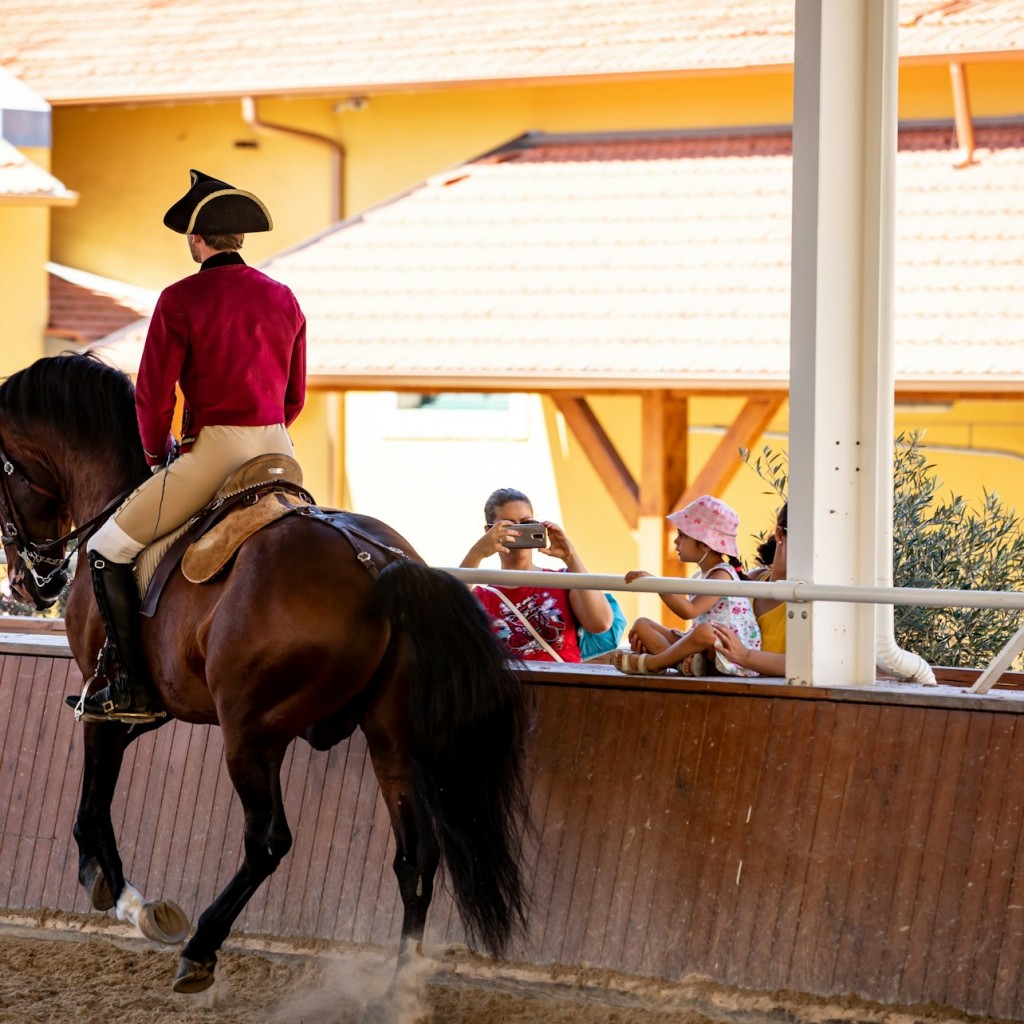
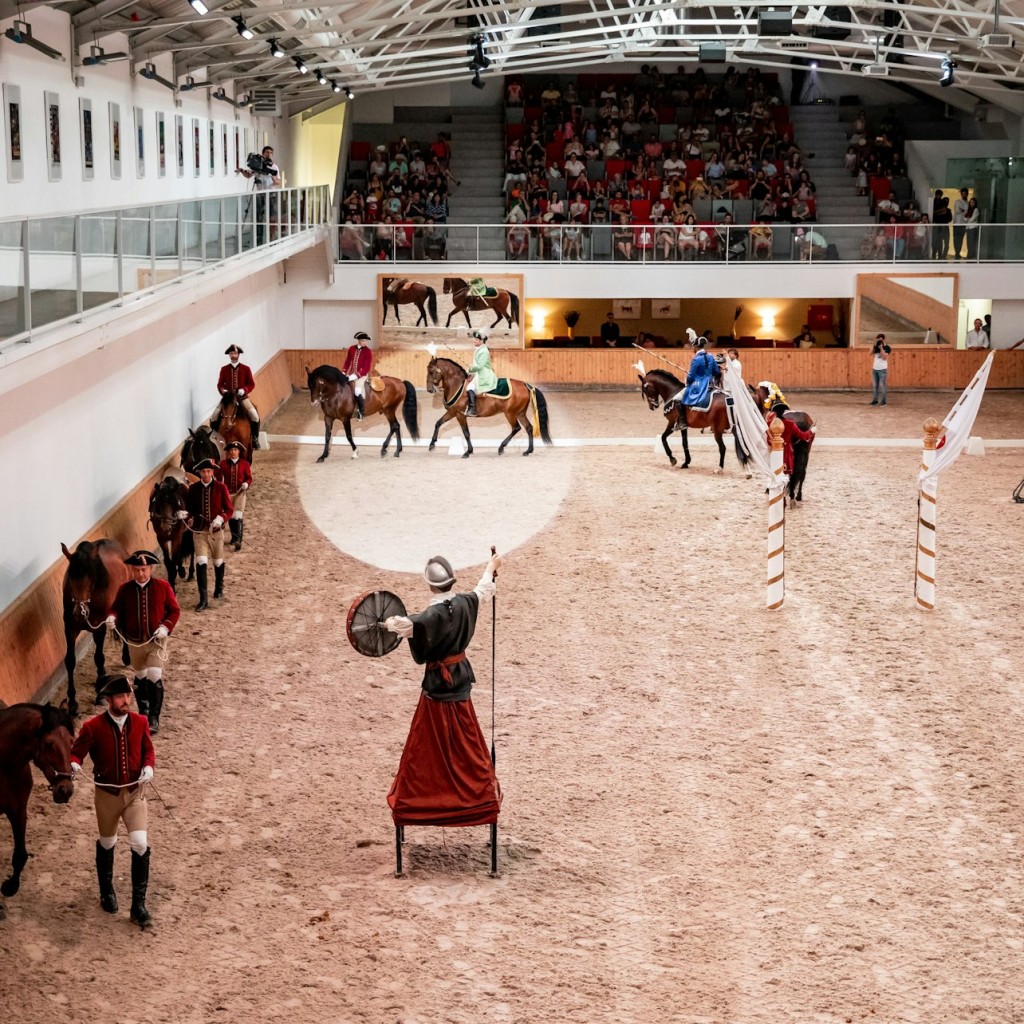
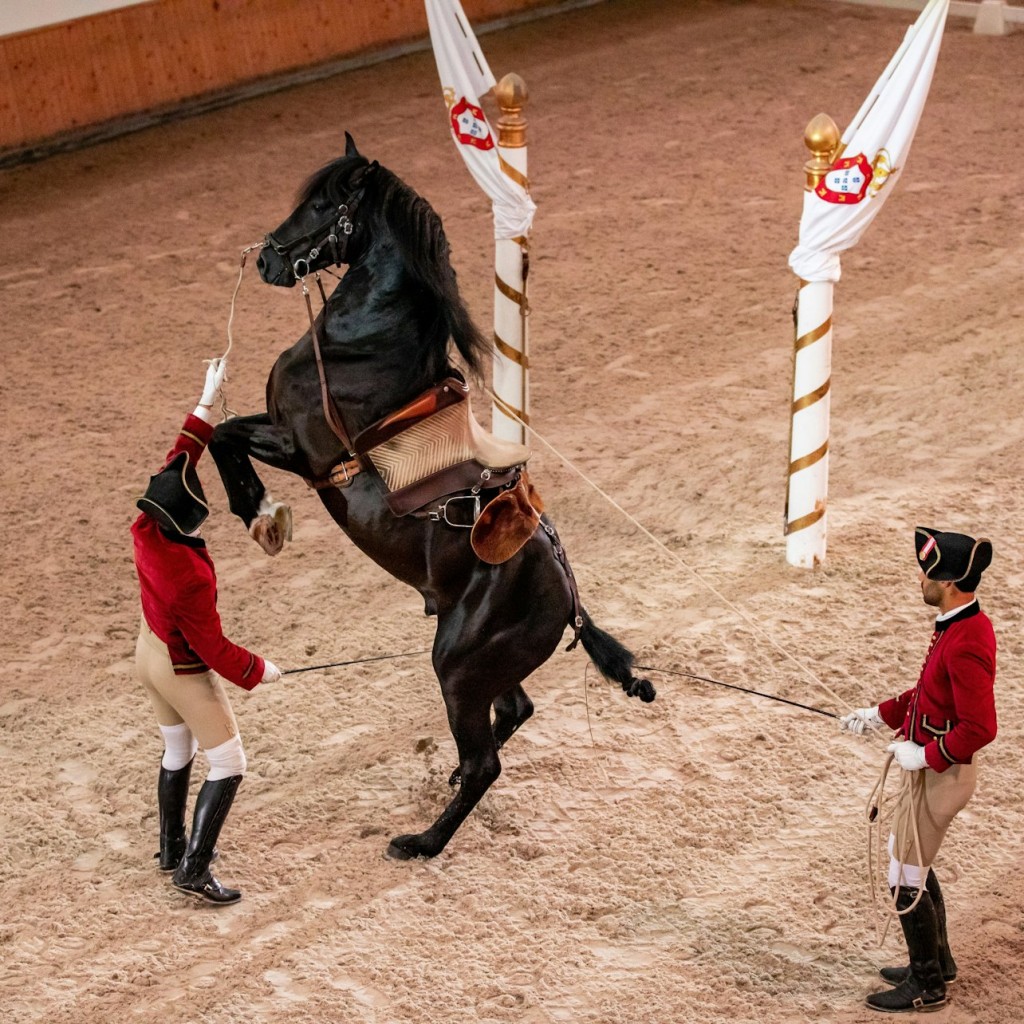
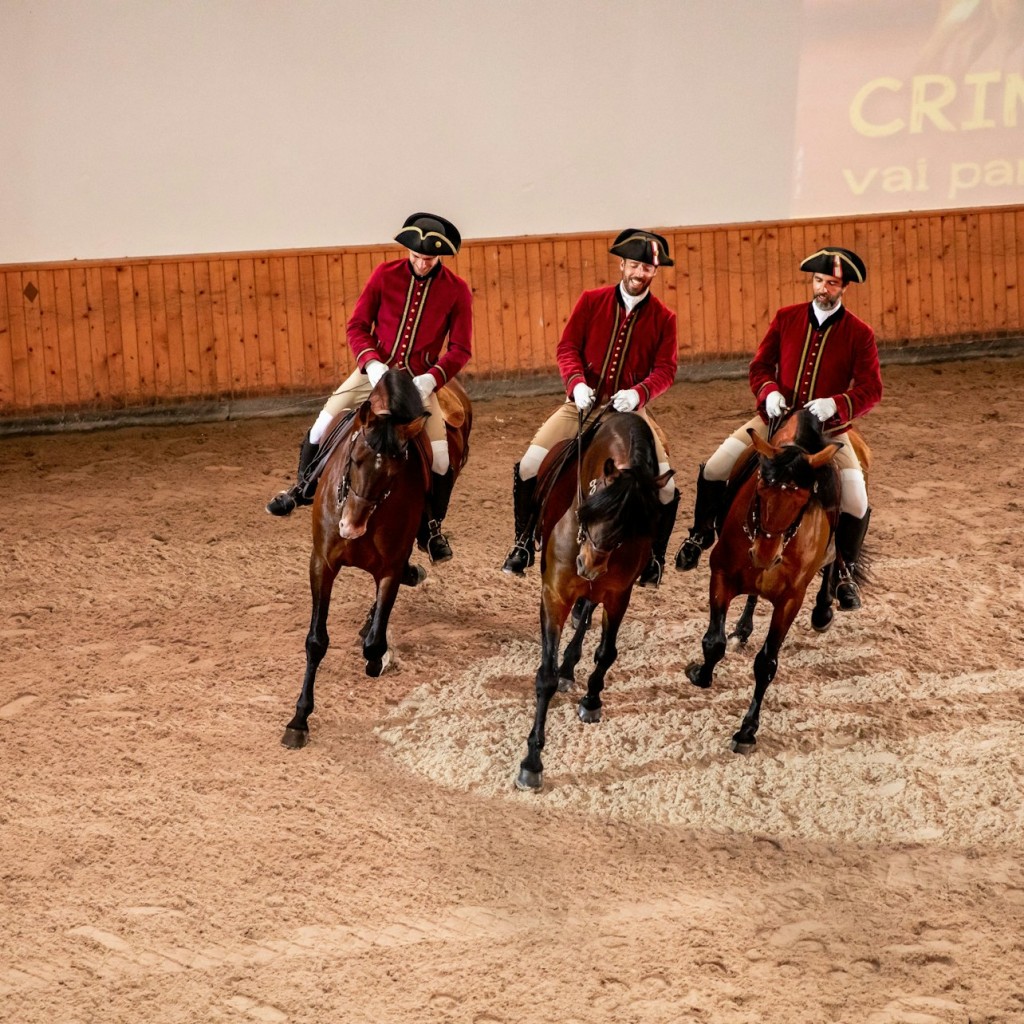
Explore a visual journey into the world of classical Portuguese horsemanship, showcasing the grace of Lusitano horses and the skill of their riders during spectacular performances and training sessions.
The Portuguese School of Equestrian Art (Escola Portuguesa de Arte Equestre) offers a captivating journey into the world of classical Portuguese horsemanship. Housed in an environment rich with history and tradition, visitors can witness the elegance and skill of both magnificent Lusitano horses and their accomplished riders. This unique institution is dedicated to preserving and showcasing the ancient art of classical dressage, rooted in the royal traditions of Portugal. It provides an exclusive opportunity to observe intricate movements, historic riding techniques, and beautifully choreographed performances that highlight the extraordinary bond between horse and rider, offering a truly unforgettable cultural experience.
There is no formal dress code for visitors to the Portuguese School of Equestrian Art. However, smart casual attire is generally recommended, reflecting the elegant nature of the venue and performance. Comfortable shoes are advisable, especially if you plan to explore the surrounding areas or if there's some walking involved to reach your seating.
The Portuguese School of Equestrian Art stands as a testament to Portugal's deep-rooted equestrian heritage. Located in a setting that echoes its royal past, the school is dedicated to the study, preservation, and dissemination of classical Portuguese riding, an art form perfected over centuries. Its primary stars are the noble Lusitano horses, renowned for their intelligence, agility, and elegant build, making them ideal partners for the demanding art of haute école. Visitors are invited to admire these magnificent animals during training sessions or grand performances where riders, dressed in 18th-century court attire, execute sophisticated classical dressage movements. These displays are not merely shows but living exhibitions of a profound cultural legacy, illustrating historic riding techniques that were once part of the Portuguese court's daily life and military training. The school provides a rare window into the artistry, discipline, and tradition that define Portuguese horsemanship, offering insights into a practice that combines athleticism with artistic expression and a deep respect for the animal.
Booking your tickets online for the Portuguese School of Equestrian Art offers several practical advantages. It ensures your entry to specific performances or training sessions, especially during peak seasons when tickets can sell out quickly. Online booking provides convenience, allowing you to secure your visit in advance from anywhere, at any time. It helps avoid potential queues at the entrance, saving valuable time during your trip. Furthermore, online platforms often provide clear information on available dates, times, and ticket categories, helping you plan your visit efficiently and making your overall experience smoother and more enjoyable.
The history of the Portuguese School of Equestrian Art is deeply intertwined with Portugal's royal past and the tradition of classical horsemanship. Its origins can be traced back to the royal equestrian academies of the 18th century, particularly under the patronage of King João V. These academies were established to train both horses and riders in the art of haute école, serving the needs of the royal court for parades, military displays, and sophisticated leisure. The Lusitano horse, native to the Iberian Peninsula, became the breed of choice due to its agility, temperament, and beauty, ideally suited for classical dressage. While the original royal academies faded with the end of the monarchy, the desire to preserve this unique heritage led to the establishment of the modern Portuguese School of Equestrian Art in 1979. This institution revived and continues the ancient traditions, techniques, and artistry, ensuring that the legacy of Portuguese classical riding endures and is shared with the world, perpetuating a living monument to equestrian history.
The opening hours for the Portuguese School of Equestrian Art are not uniform and are primarily dependent on the schedule of their performances and public training sessions. These events are generally held on select days of the week, often with different timings for morning training and afternoon or evening galas. The schedule can also vary by season, with more frequent events during peak tourist periods. It is recommended to consult the current calendar to determine specific operating days and times for your planned visit, as the venue does not have standard daily opening hours for general public entry outside of scheduled events.
To fully experience the grandeur of the Portuguese School of Equestrian Art, attending a scheduled performance is highly recommended. These events, typically held in the afternoons or evenings on specific days, showcase the riders and Lusitano horses in their full splendor, complete with historical costumes and intricate choreography. If you prefer a more behind-the-scenes look and wish to observe the rigorous training process, attending a morning training session can be an insightful alternative. Weekdays might offer slightly smaller crowds than weekends, but popularity often depends on the specific event. Visiting during shoulder seasons (spring or autumn) can also provide pleasant weather and potentially fewer visitors.
Inside the Portuguese School of Equestrian Art, visitors can immerse themselves in the refined world of classical horsemanship. The main attraction is undoubtedly the opportunity to watch the highly skilled riders and their majestic Lusitano horses perform. Depending on the type of ticket, you might observe morning training sessions, which offer a glimpse into the daily discipline and preparation required for such intricate movements. Alternatively, you can attend a full performance, where riders in historical costumes execute complex dressage figures and traditional exercises, often set to music. The stables, when accessible, provide a chance to see the Lusitano horses up close and appreciate their beauty and powerful presence. The entire setting, typically in a historically significant venue, contributes to the atmosphere, transporting visitors back to the golden age of Portuguese equestrian art.
When planning your visit, it is advisable to book tickets in advance, especially for popular performances, to secure your preferred date and time. Arrive a little early to find your seats and soak in the atmosphere. Photography is generally permitted, but flash photography is often prohibited to avoid startling the horses; always check specific rules upon entry. The seating can vary, so consider comfort. While performances are captivating for all ages, very young children might find extended sessions challenging. There are typically facilities such as restrooms available. Most venues are equipped for accessibility, but it's wise to inquire beforehand if you have specific needs. Respect the tranquility of the animals and the solemnity of the performance during your visit.
Visitors are expected to observe a few key rules to ensure a pleasant and respectful experience for all. Silence is requested during performances and training sessions to avoid disturbing the horses and riders. Flash photography is strictly prohibited. Touching the horses without permission is not allowed. Children must be supervised at all times. Food and drink may be restricted to designated areas, if permitted at all inside performance spaces. Running or loud conversations are discouraged. Please follow the instructions of the staff and security personnel at all times.
Visiting the Portuguese School of Equestrian Art is an enriching experience for anyone interested in culture, history, and the majestic world of horses. It offers a unique opportunity to witness the pinnacle of classical Portuguese horsemanship, a tradition steeped in centuries of royal heritage. The performances are a stunning display of artistry, discipline, and the profound connection between rider and the magnificent Lusitano horses. It's more than just a show; it's a living museum of an ancient art form that is both visually spectacular and culturally significant. For an authentic and elegant glimpse into Portugal's equestrian soul, it is undoubtedly a worthwhile destination.
It is an institution dedicated to preserving and showcasing classical Portuguese horsemanship, featuring magnificent Lusitano horses and skilled riders in performances and training sessions.
It is typically located within a historical complex in Lisbon, often near significant national palaces or cultural landmarks.
The school exclusively features the elegant and powerful Lusitano horse breed, known for its intelligence, agility, and suitability for classical dressage.
Yes, depending on the schedule and ticket availability, you can choose to attend either a morning training session for a behind-the-scenes look or a full public performance.
While there are generally no strict age restrictions, very young children might find longer performances challenging. Parental discretion is advised.
Photography is usually permitted, but flash photography is strictly prohibited to avoid disturbing the horses. Always adhere to the specific rules posted at the venue.
A visit, including either a performance or a training session, typically lasts between 1 to 2 hours.
The Portuguese School of Equestrian Art is generally accessible via public transport in Lisbon. Visitors can typically reach the vicinity by metro, disembarking at a nearby station and then walking a short distance. Various bus routes also serve the area, providing convenient connections from different parts of the city. Taxis and ride-sharing services offer direct transport to the entrance.
There is no formal dress code for visitors to the Portuguese School of Equestrian Art. However, smart casual attire is generally recommended, reflecting the elegant nature of the venue and performance. Comfortable shoes are advisable, especially if you plan to explore the surrounding areas or if there's some walking involved to reach your seating.