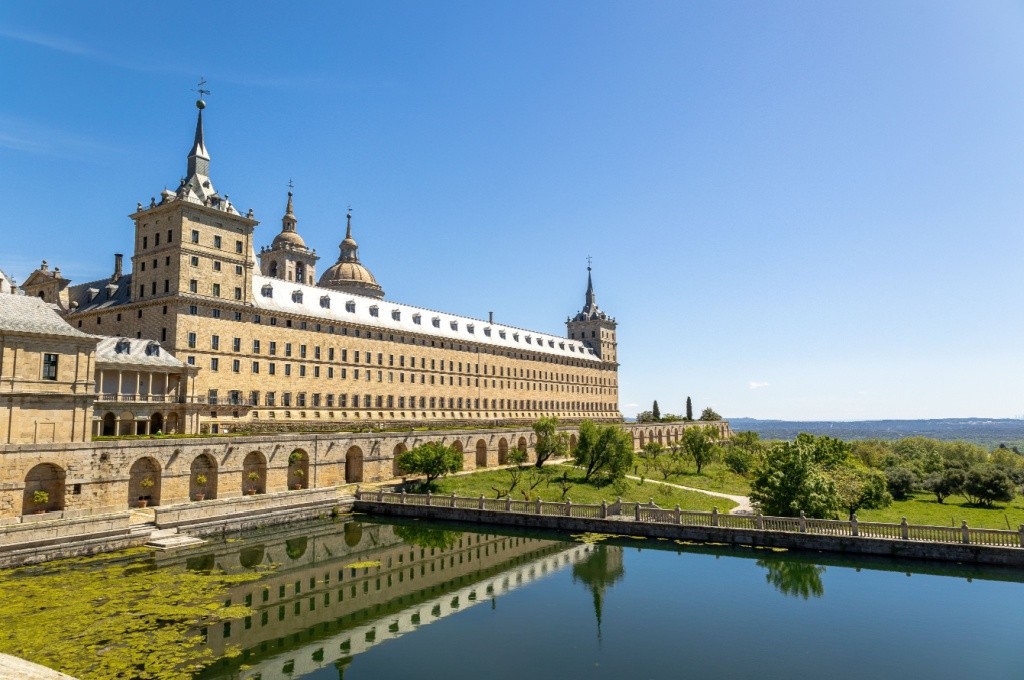
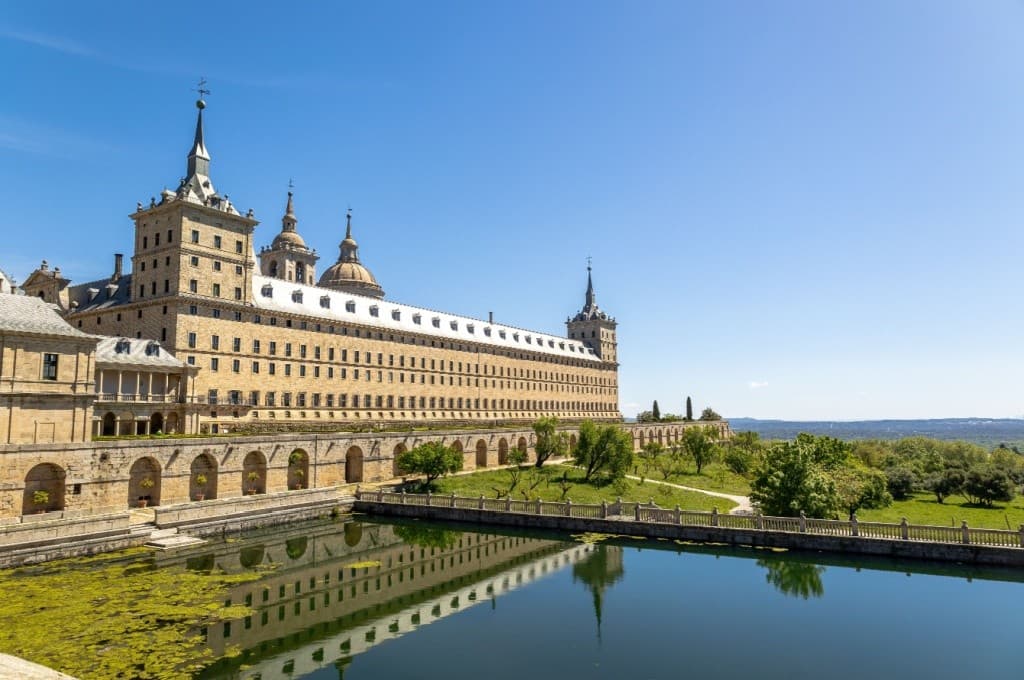
The history of San Lorenzo de El Escorial is deeply intertwined with the reign of King Philip II, who envisioned the complex as a symbol of Spain's power and religious devotion. Construction began in 1563, following the victory at the Battle of St. Quentin, and was completed in 1584. The site was designed by architect Juan Bautista de Toledo and later Juan de Herrera, reflecting the austere and geometric Herrerian style. El Escorial served as a royal palace, monastery, basilica, library, and mausoleum, becoming the center of Philip II's vast empire. It played a significant role in Spanish politics, religion, and culture for centuries. The complex has witnessed numerous historical events, including royal weddings, state visits, and periods of both prosperity and turmoil. Today, San Lorenzo de El Escorial stands as a UNESCO World Heritage site, attracting visitors from around the world to explore its rich history and architectural grandeur.