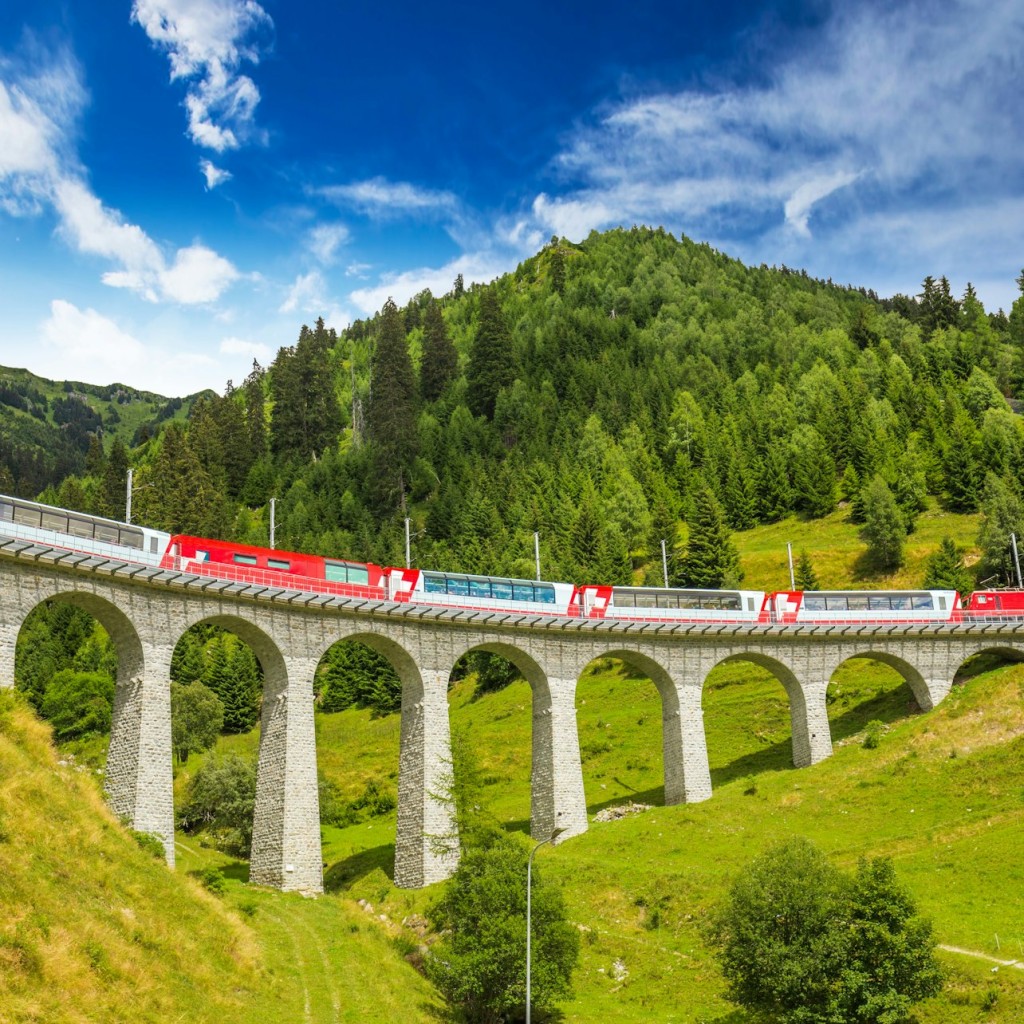
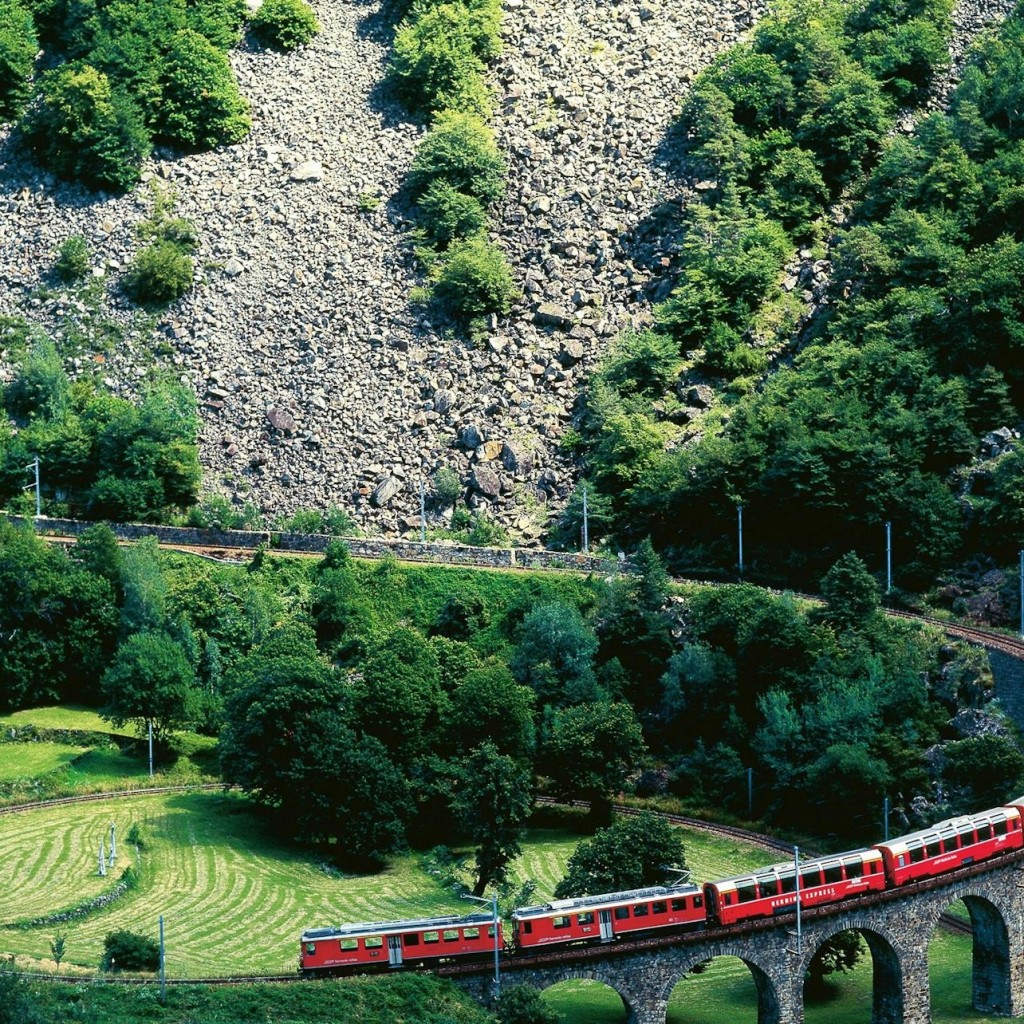
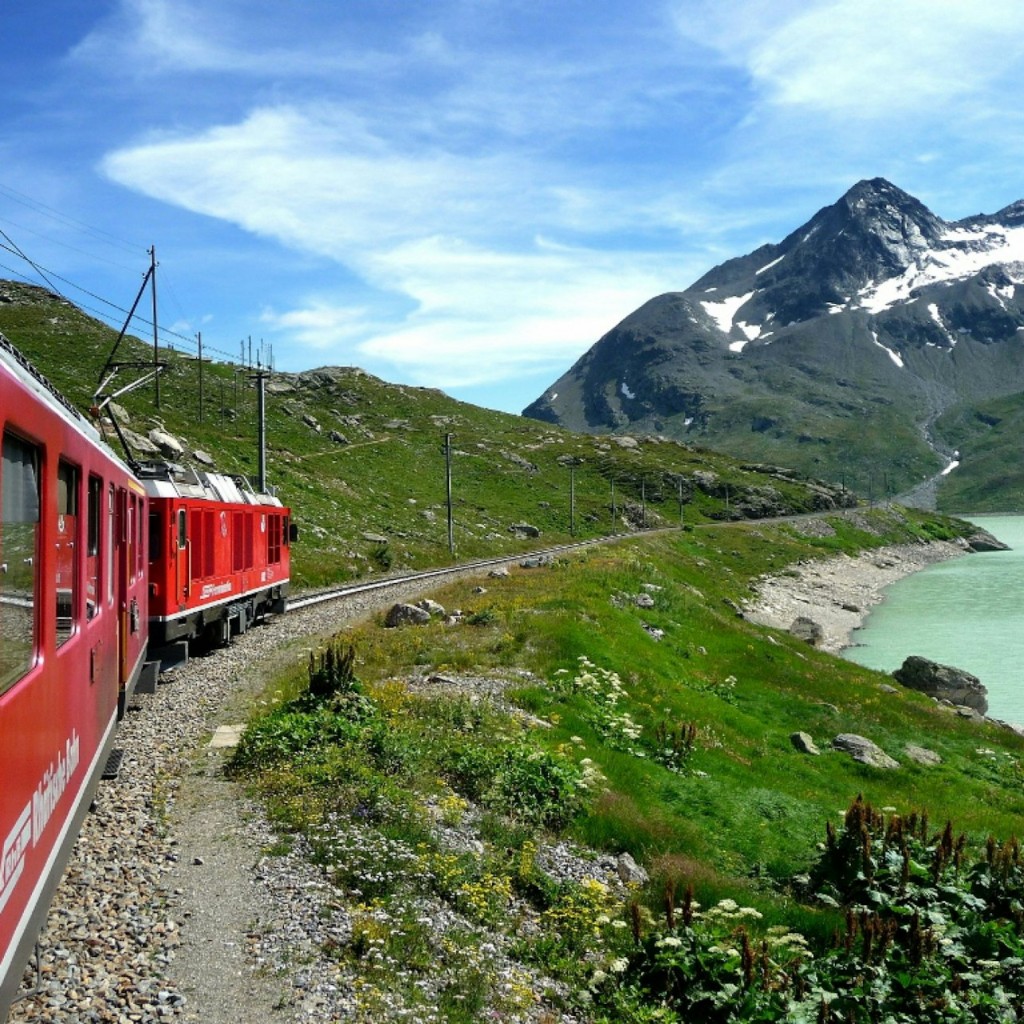
A Ferrovia Bernina, parte da rede Ferroviária Rética, é um testemunho da proeza da engenharia do início do século XX. A construção começou em 1908 e a linha foi inaugurada em 1910, ligando St. Moritz a Tirano através do Passo Bernina. Foi projetada não apenas para transporte prático, mas também com o turismo em mente, oferecendo acesso às deslumbrantes regiões alpinas. O que torna a Ferrovia Bernina particularmente única é a sua inclinação – é uma das ferrovias de aderência mais íngremes do mundo, o que significa que opera sem a necessidade de um sistema de cremalheira, dependendo unicamente do atrito entre as rodas e os trilhos. Em 2008, a Linha Bernina, juntamente com a Linha Albula, foi inscrita como Património Mundial da UNESCO, reconhecida pela sua integração harmoniosa na paisagem e pela sua engenharia inovadora. Hoje, o Bernina Express continua a ser uma ligação crucial e uma rota cénica muito apreciada, preservando a sua infraestrutura histórica enquanto proporciona uma experiência de viagem moderna e confortável através de um dos ambientes naturais mais inspiradores da Europa.