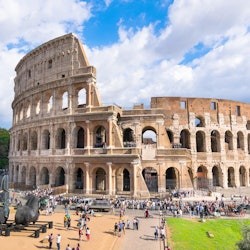
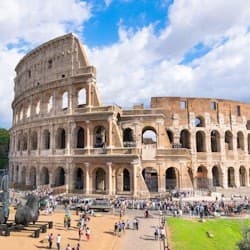
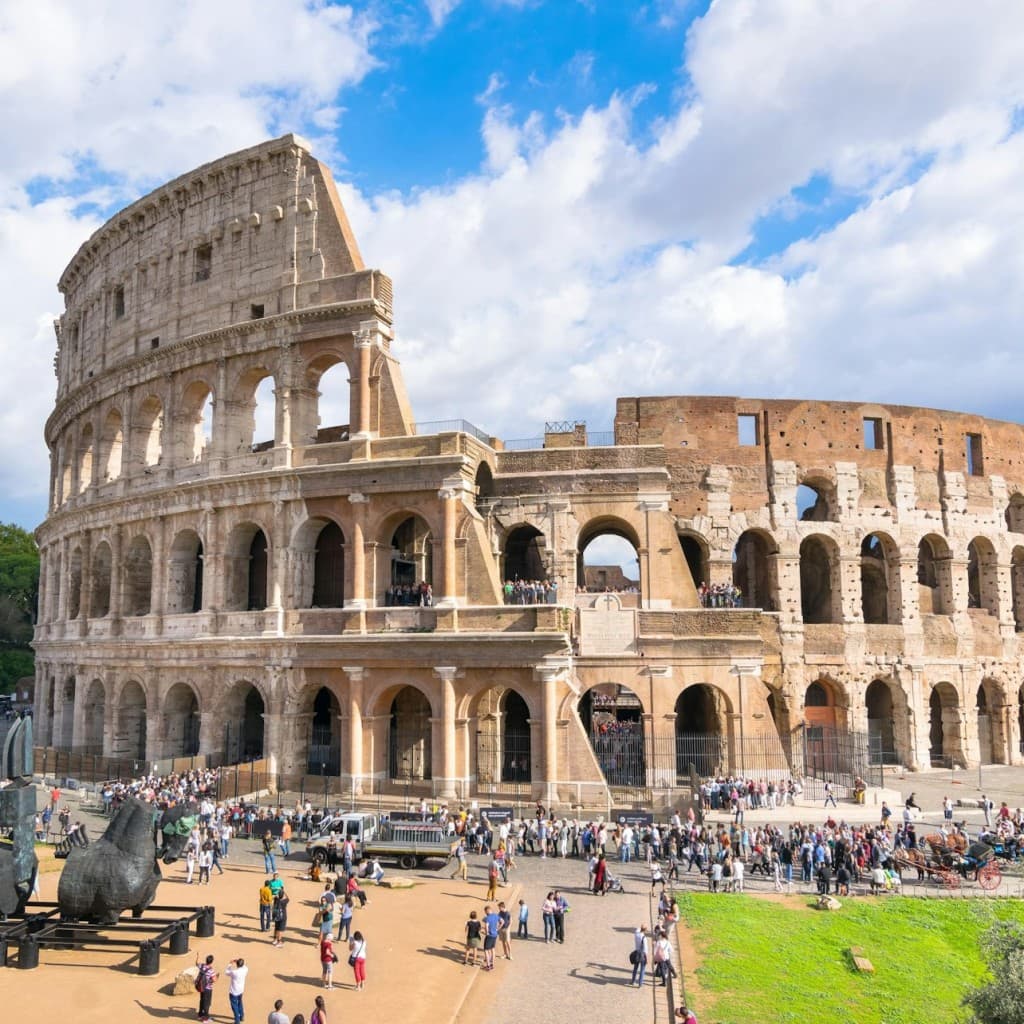
The Colosseum in Rome, originally known as the Flavian Amphitheater, was commissioned by Emperor Vespasian around 70-72 AD after the reign of Emperor Nero. Construction was completed by his son, Emperor Titus, in 80 AD. The amphitheater was built on the site of Nero's former palace, the Domus Aurea, as a gift to the Roman people. The Roman Colosseum was used for gladiatorial contests, public executions, animal hunts, and mock sea battles. The inaugural games, held by Emperor Titus in 80 AD, lasted for 100 days and featured thousands of gladiators and animals.
Over the centuries, the Colosseum underwent several renovations and modifications, including the addition of an underground complex (hypogeum) and a system of retractable awnings (velarium) to provide shade for spectators. Gladiatorial contests were banned in the 5th century AD, and the Colosseum was later used for other purposes, such as housing, workshops, and a Christian shrine. Earthquakes and stone-robbing also contributed to the Colosseum's decline. In modern times, restoration efforts have helped to preserve this iconic landmark for future generations.