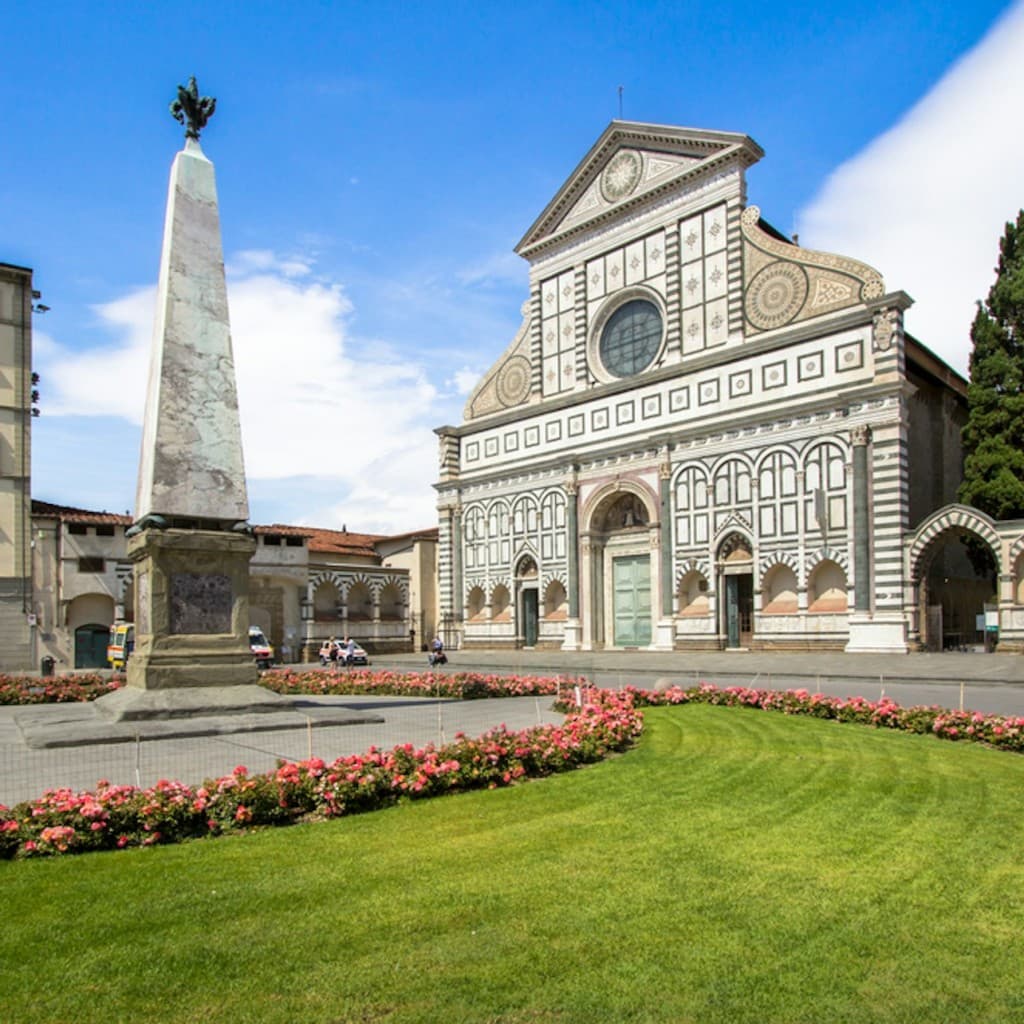
Santa Maria Novella + Audio Guide
Comparar opções
| Opção | Tipo | Resumo | Duração | A partir de | Reservar |
|---|---|---|---|---|---|
| Santa Maria Novella + Audio Guide | Bilhetes | Sem filas na Basílica de Santa Maria Novella, o ponto alto do complexo monástico de Florença. Uma vez lá dentro, aprend... | Flexível | €14.50 | Reservar |
Descubra a Basílica de Santa Maria Novella, uma igreja monumental em Florença que se destaca como um exemplo deslumbrante da arquitetura gótica e do início da Renascença. Situada perto da principal estação de comboios da cidade, é um marco significativo, renomada pelos seus tesouros artísticos e históricos. Como uma das igrejas mais importantes de Florença, abriga obras-primas de alguns dos maiores artistas do Renascimento, incluindo Masaccio, Ghirlandaio e Brunelleschi. Uma visita aqui oferece uma viagem por séculos de arte, fé e história florentina, tornando-a uma paragem essencial para quem explora o coração cultural da Toscana.
O Que Esperar
Destaques
Sobre Santa Maria Novella
A Basílica de Santa Maria Novella é um testemunho deslumbrante da proeza artística de Florença, apresentando uma mistura requintada de grandiosidade gótica e inovação do início da Renascença. A sua icónica fachada, desenhada por Leon Battista Alberti, é uma obra-prima de harmonia e proporção renascentista, uma das primeiras do seu género. No interior, os visitantes são recebidos por uma vasta nave e capelas adornadas com algumas das obras mais cruciais da arte ocidental. Desde o inovador fresco de Masaccio 'A Santíssima Trindade' até ao magnífico ciclo de frescos de Ghirlandaio na Capela Tornabuoni, a igreja serve como um museu vivo. Para além da igreja principal, o complexo inclui vários claustros belos, como o Chiostro Verde (Claustro Verde) com os frescos de Paolo Uccello e a Capela Espanhola, que alberga frescos que retratam o triunfo da ordem dominicana. Não é meramente uma igreja; é uma profunda experiência cultural que reflete o fervor intelectual e artístico de Florença durante a sua idade de ouro.
Porquê reservar online?
Reservar seus bilhetes para Santa Maria Novella online oferece uma maneira conveniente de planejar sua visita e garantir uma experiência tranquila. Ao garantir sua entrada com antecedência, você pode economizar tempo na chegada, evitando possíveis filas na bilheteria, especialmente durante as temporadas turísticas de pico. A reserva online geralmente oferece confirmação instantânea e permite que você escolha horários de entrada específicos, ajudando-o a organizar melhor seu roteiro em Florença. Considere opções que incluam um guia de áudio para enriquecer sua exploração do vasto significado artístico e histórico da basílica.
História
A história de Santa Maria Novella começou no século XIII, quando frades dominicanos se estabeleceram em Florença e fundaram uma igreja no local. A construção da basílica atual começou em 1279, seguindo os projetos de dois frades dominicanos, Fra Sisto Fiorentino e Fra Ristoro da Campi. A igreja foi em grande parte concluída em meados do século XIV no estilo gótico. No entanto, sua icônica fachada de mármore, uma marca da arquitetura renascentista, foi projetada por Leon Battista Alberti e concluída entre 1456 e 1470, encomendada pela família Rucellai. Ao longo dos séculos, a igreja tornou-se um repositório de importantes obras de arte, atraindo encomendas de ricas famílias florentinas. Desempenhou um papel crucial na vida artística e religiosa de Florença, servindo como um centro para o aprendizado e a arte dominicana, evoluindo continuamente através de vários períodos de restauração e embelezamento.
Horário de funcionamento
O horário de funcionamento de Santa Maria Novella pode variar, frequentemente diferindo entre dias de semana, fins de semana e estações específicas. Tipicamente, a basílica abre de manhã e fecha no final da tarde ou início da noite. Aos domingos e feriados religiosos, os horários podem ser mais curtos, muitas vezes restritos à tarde. É aconselhável notar que a última entrada é geralmente cerca de 45 minutos antes do fechamento. Sempre verifique os horários específicos para o dia da sua visita planejada.
Melhor altura para visitar
Para desfrutar de Santa Maria Novella com menos multidões, considere visitar durante as estações de transição (primavera ou outono) em vez dos meses de pico do verão. Durante o dia, a manhã logo após a abertura ou o final da tarde, algumas horas antes do fechamento, são geralmente os horários mais tranquilos. Os dias de semana tendem a ser menos movimentados do que os fins de semana. Esses horários permitem uma apreciação mais pacífica das obras de arte e da arquitetura, melhorando sua experiência geral.
O que ver dentro
Dentro de Santa Maria Novella, a vasta escala e a beleza são imediatamente aparentes. Comece pela nave principal, onde 'A Santíssima Trindade' de Masaccio cativa com seu uso revolucionário da perspectiva. Prossiga para a Capela Tornabuoni para admirar o extenso ciclo de afrescos de Domenico Ghirlandaio, que oferece um retrato vívido da vida florentina e narrativas religiosas. Não perca o 'Crucifixo' de Filippo Brunelleschi, uma obra de profundo realismo anatômico e profundidade emocional. Explore a Capela Strozzi com seus afrescos dinâmicos de Filippino Lippi e a Capela Gondi, que abriga o outro 'Crucifixo' de Brunelleschi. Aventure-se no Claustro Verde, adornado com afrescos de Paolo Uccello, e, finalmente, na Capela Espanhola, que apresenta elaborados afrescos alegóricos celebrando os ensinamentos dominicanos.
Coisas importantes a saber
Ao planear a sua visita a Santa Maria Novella, lembre-se de usar sapatos confortáveis, pois irá caminhar bastante pela igreja e pelos claustros. Um audioguia pode melhorar muito a sua compreensão da complexa história e significado artístico das inúmeras obras-primas. Considere comprar os seus bilhetes online com antecedência para poupar tempo. Reserve tempo suficiente, aproximadamente 1,5 a 2 horas, para explorar todas as áreas. Esteja atento aos detalhes, pois cada canto da basílica possui importância histórica ou artística.
Regras para visitantes
Os visitantes devem observar as regras e cortesias comuns dentro da basílica, pois é um local de culto ativo. Isso inclui manter um silêncio respeitoso e geralmente abster-se de conversas altas. Bolsas grandes ou mochilas podem precisar ser guardadas em áreas designadas, ou a sua entrada pode ser restrita por motivos de segurança. A fotografia com flash é geralmente proibida para proteger as obras de arte delicadas e para manter uma atmosfera serena para outros visitantes e fiéis.
Vale a pena visitar?
Santa Maria Novella é inegavelmente imperdível para qualquer pessoa interessada em arte, história ou arquitetura. Oferece uma oportunidade única de testemunhar a evolução da arte florentina desde a era gótica até o início do Renascimento dentro de um único e magnífico complexo. A basílica abriga obras seminais que literalmente mudaram o curso da história da arte, tornando-a um local crucial para a compreensão do Renascimento. Seus elegantes claustros proporcionam uma fuga tranquila, e a beleza pura do interior e exterior da igreja é uma experiência em si, solidificando seu status como uma das joias culturais de Florença.
Perguntas frequentes
Santa Maria Novella está localizada em Florença, Itália, diretamente em frente à estação de trem principal, Firenze Santa Maria Novella.
Os destaques incluem a fachada de Leon Battista Alberti, 'A Santíssima Trindade' de Masaccio, os afrescos de Ghirlandaio na Capela Tornabuoni, o 'Crucifixo' de Brunelleschi e os belos claustros como o Claustro Verde e a Capela Espanhola.
A maioria dos visitantes passa aproximadamente 1,5 a 2 horas explorando a basílica e suas várias capelas e claustros.
Sim, como local religioso, os visitantes são solicitados a se vestir modestamente, cobrindo ombros e joelhos. Chapéus devem ser removidos dentro da igreja.
A fotografia é geralmente permitida para uso pessoal, mas a fotografia com flash é geralmente proibida para proteger as obras de arte e manter uma atmosfera respeitosa.
Sim, guias de áudio estão geralmente disponíveis para aluguel ou incluídos com certos tipos de ingresso, fornecendo informações detalhadas sobre a arte e a história da basílica.
Para evitar grandes multidões, é melhor visitar logo pela manhã, pouco depois da abertura, ou no final da tarde, antes do horário de fechamento.
Como chegar
Santa Maria Novella está convenientemente localizada diretamente em frente à principal estação de trem de Florença, Firenze Santa Maria Novella. É facilmente acessível a pé da maioria das acomodações no centro de Florença. Para quem usa transporte público, inúmeras linhas de ônibus param perto da praça da estação, Piazza della Stazione, tornando-a uma caminhada simples de apenas alguns minutos até a entrada da basílica.