

Что включено
- Eintritt in die Akropolis und Parthenon zum gewählten Datum und Zeitfenster
- Eintritt in das Akropolismuseum
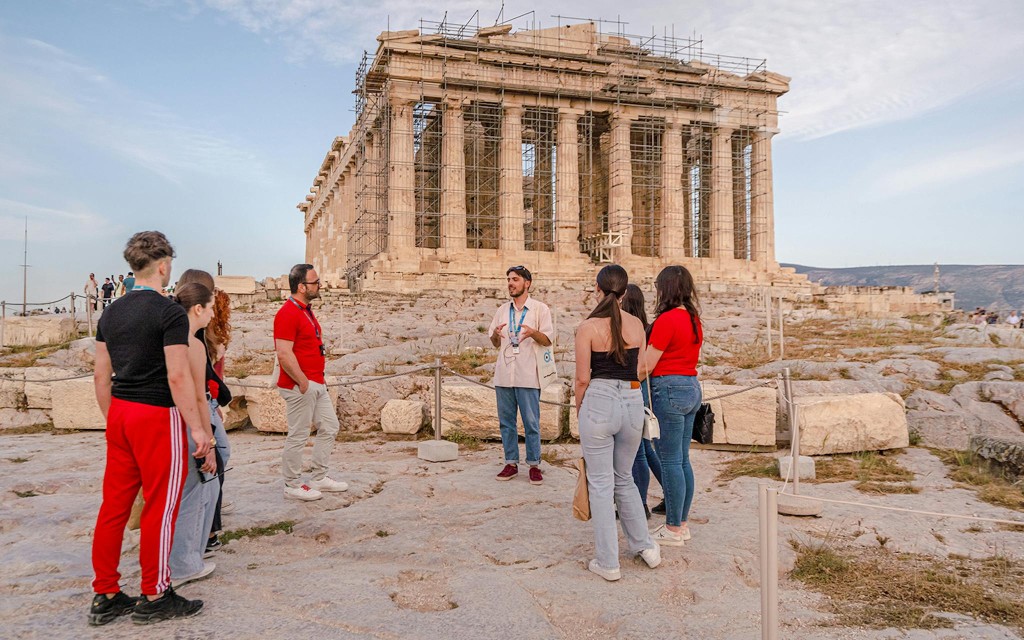
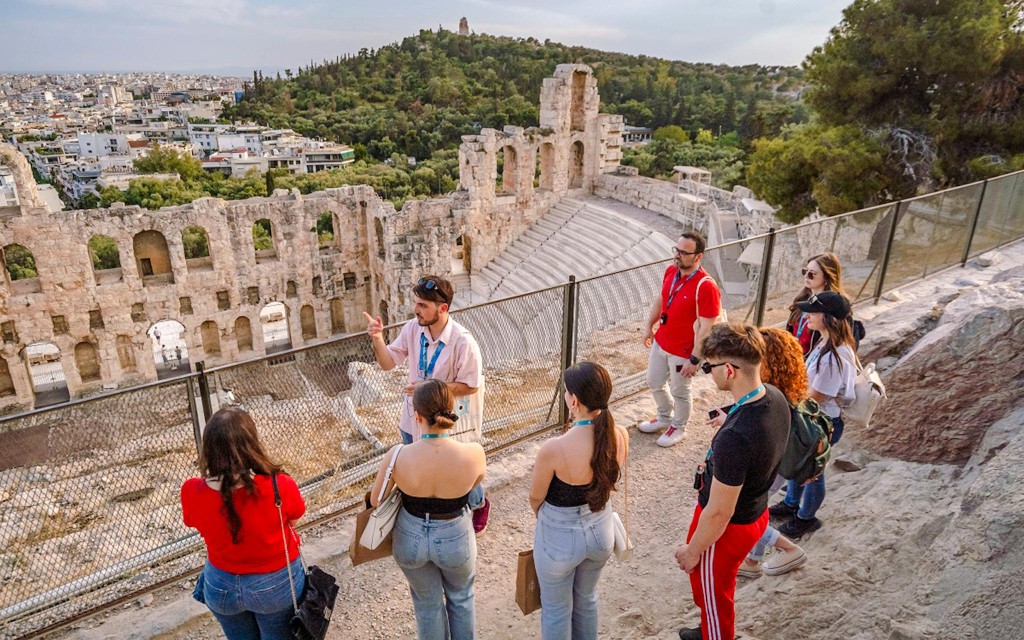
- 2-stündiger Rundgang durch die Akropolis
- 1,5-stündiger Rundgang durch das Akropolismuseum
- Fachkundiger Reiseleiter (Englisch)
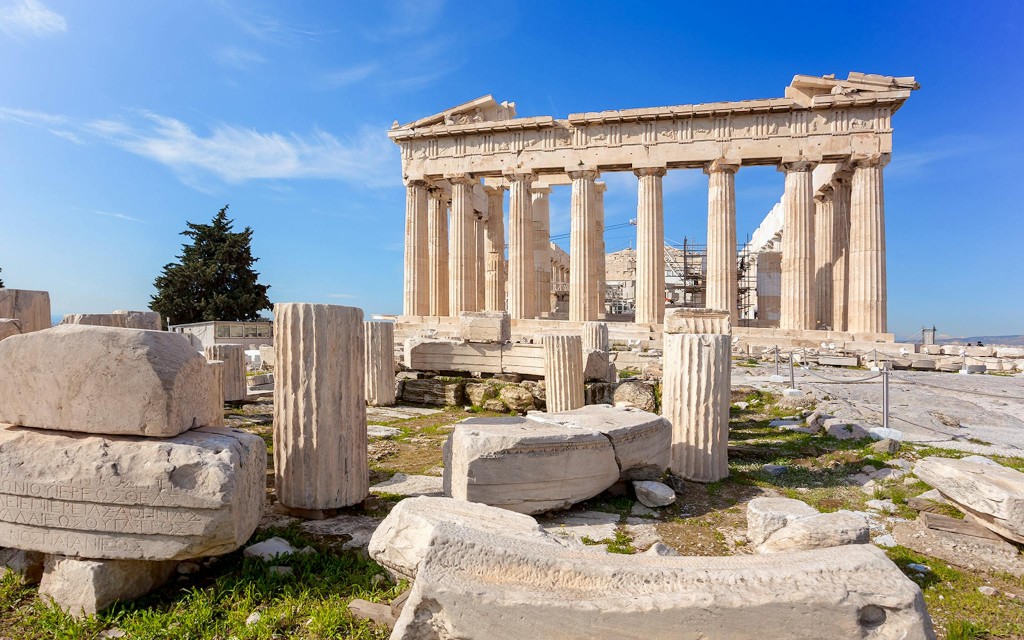
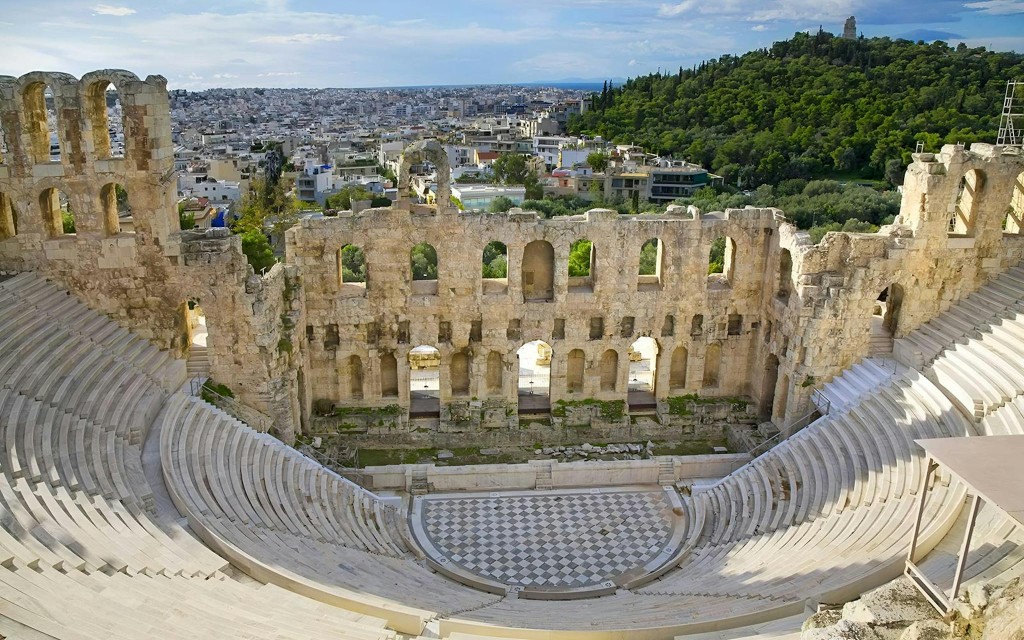
Discover captivating images of the Acropolis and Parthenon, showcasing the grandeur of ancient Greek architecture and the breathtaking views from this historic landmark.
Explore the magnificent Acropolis of Athens, a UNESCO World Heritage Site and the enduring symbol of Classical Greece. Perched high above the bustling city, this ancient citadel invites visitors to step back in time and witness the architectural marvels that defined a civilization. At its heart stands the Parthenon, the majestic temple dedicated to the goddess Athena, embodying the peak of Doric order. A visit here offers a profound journey through history, art, and philosophy, providing unparalleled panoramic views of Athens and the Aegean beyond. Discover the legends and stories embedded in every stone of this historic site.
There is no strict dress code for visiting the Acropolis, as it is an outdoor archaeological site. However, comfortable and practical attire is highly recommended. Given the uneven terrain, many stairs, and potential for hot weather, wear comfortable walking shoes with good grip. Light, breathable clothing is advisable during summer. In cooler months, layered clothing is appropriate. A hat and sunglasses are also recommended for sun protection year-round.
Akropolismuseum
Führen Sie einen gültigen Lichtbildausweis oder Studentenausweis mit sich, um von den ermäßigten Eintrittspreisen zu profitieren, sofern verfügbar.
Laden Sie Ihre Audiotour im Voraus herunter, um WLAN- oder Datenprobleme im Museum zu vermeiden.
Bringen Sie Ihre eigenen Kopfhörer mit, um ein noch besseres und intensiveres Hörerlebnis zu erhalten.
Halten Sie etwas Bargeld oder eine Bankkarte bereit, wenn Sie im Souvenirladen stöbern oder im Café einkehren möchten.
Tragen Sie bequeme, geschlossene Schuhe, damit Sie sich in den Museumssälen und den nahegelegenen archäologischen Bereichen gut zurechtfinden.
Ein leichter Pullover oder Schal kann sehr nützlich sein, da sich die klimatisierten Galerien im Vergleich zur Hitze im Freien kühl anfühlen können.
Akropolis
Halten Sie Ihr gedrucktes oder digitales Ticket bereit, damit Sie an den Eingangstoren schnell Zugang haben.
Benutzen Sie Ihre eigenen Kopfhörer für ein besseres, spannenderes Audioguide-Erlebnis.
Nehmen Sie etwas Geld oder eine Karte mit, um nach Ihrem Besuch kleine Einkäufe an den örtlichen Kiosken zu tätigen.
Tragen Sie festes Schuhwerk, das für unebene Marmorstufen und felsigen Untergrund geeignet ist.
Schützen Sie sich vor der Sonne mit einem breitkrempigen Hut, einer Sonnenbrille und Sonnenschutzmittel.
Nehmen Sie eine wiederverwendbare Wasserflasche mit, um ausreichend Flüssigkeit zu sich zu nehmen, da es nur wenige schattige Plätze gibt und die Sommerhitze sehr stark sein kann.
Akropolismuseum
Blitzlichtaufnahmen, Stative und professionelle Filmausrüstung sind nicht gestattet. Fotos ohne Blitzlicht sind in den meisten Räumen außer der Archaischen Galerie zulässig.
Übergroße Taschen, Koffer oder sperrige Gegenstände müssen in der Garderobe im Erdgeschoss abgegeben werden.
Essen und Getränke sind im Innenbereich nicht erlaubt, ausgenommen reines Trinkwasser.
Haustiere sind im Museum nicht erlaubt, außer für zertifizierte Servicetiere.
Akropolis
Drohnen, Stative und professionelle Kameras sind ohne besondere Genehmigung nicht erlaubt.
Große Taschen, Rucksäcke oder Koffer dürfen nicht ins Haus gebracht werden und sollten an einem anderen Ort aufbewahrt werden.
Tiere sind nicht erlaubt, außer ausgebildete Blindenhunde mit Zertifikat.
Rauchen und Kaugummi kauen sind auf dem Gelände verboten.
Akropolismuseum
Das Akropolismuseum ist vollständig für Rollstuhlfahrer zugänglich und bietet spezielle Rampen an allen Eingängen und einen Aufzug zu jeder Etage.
Barrierefreie Toiletten sind im gesamten Gebäude vorhanden.
Rollstühle können Sie kostenlos beim Besucherservice oder am Informationsschalter ausleihen.
Blindenhunde sind im Museum willkommen, und am Informationsschalter sind Braille-Reiseführer in griechischer und englischer Sprache erhältlich, um Besuchern mit Sehbehinderungen zu helfen.
Akropolis
Die Akropolis bietet eingeschränkte Zugänglichkeit für Besucher mit Mobilitätseinschränkungen. In der Nähe des Eingangs am Südhang gibt es einen Aufzug, der jedoch von der Website verwaltet wird und dessen Verfügbarkeit variieren kann. Rufen Sie am Tag vor Ihrem Besuch unter +30 210 3214172 oder +30 210 9238470 an, um sich zu vergewissern, dass das Gerät in Betrieb ist.
Planen Sie Unterstützung ein, da das Gelände meist uneben ist und es nur wenige befestigte Wege gibt. Sowohl Sie als auch Ihre Begleitperson haben gegen Vorlage eines gültigen Dokuments freien Eintritt.
Rollstuhlgerechte Toiletten gibt es in der Nähe des Akropolismuseums und der Haupteingänge der Stätte.
Überall auf dem Gelände finden Sie Rastplätze und Bänke, aber die schattigen Bereiche sind begrenzt.
Mit einer maximalen Teilnehmerzahl von 22 Personen bleiben die Kombitouren persönlich und einnehmend. Mit den kostenlosen Kopfhörern für Gruppen ab 8 Personen können Sie mühelos folgen.
Um ein angenehmes Erlebnis zu gewährleisten, können die Reiseleiter die Reihenfolge der besuchten Orte anpassen.
Akropolismuseum
Um den größten Andrang zu vermeiden, sollten Sie zur Öffnungszeit des Museums kommen, **09:00 **, oder am späten Nachmittag gehen, gegen 14:00 bis 15:00 Uhr, insbesondere in den Sommermonaten von Juni bis August.
Alle Besucher müssen am Eingang eine schnelle Sicherheitskontrolle durchlaufen. Rechnen Sie mit einer Wartezeit von 5 bis 10 Minuten am Eingang. In den Hochsommermonaten von Juni bis August kann die Wartezeit bis zu 15 Minuten betragen.
Sie können das Akropolismuseum durch einen separaten Eingang betreten, der direkt zu den Ausstellungsbereichen führt. Scannen Sie dann Ihr Ticket an den Validierungsautomaten im Erdgeschoss.
Das Akropolismuseum bietet freien Eintritt am 6. März (Melina Mercouri Tag), 25. März (Nationalfeiertag), 18. Mai (Internationaler Museumstag) und 28. Oktober (Nationalfeiertag).
Akropolis
Die Akropolis und der Parthenon verfügen über einen zeitlich festgelegten Eintritt, bei dem die Besucher ein Datum und ein Zeitfenster im Voraus buchen müssen. Kommen Sie 30 Minuten früher für ein problemloses Erlebnis – Sie können bis zu 15 Minuten vor oder nach dem von Ihnen gewählten Zeitfenster eintreten.
Die Sicherheitskontrolle an der Akropolis ist obligatorisch. Rechnen Sie mit einer durchschnittlichen Wartezeit von 20 bis 30 Minuten, wobei sich die Einlasszeiten in den Hochsommermonaten von Juni bis August auf 1 bis 2 Stunden verlängern.
Benutzen Sie den Südeingang in der Nähe des Dionysostheaters für einen schnelleren Zugang; er ist in der Regel weniger überfüllt als der Haupteingang und nur einen kurzen Spaziergang von der U-Bahn und dem Museum entfernt.
Gehen Sie zu Beginn Ihres Besuchs direkt zum Parthenon und machen Sie sich dann auf den Weg zum Tempel der Athena Nike, zum Erechtheion und zu anderen Bereichen. Auf diese Weise können Sie Engpässe vermeiden und später ruhigere Bereiche genießen.
Sie können die archäologische Stätte Akropolis am 6. März (Melina Mercouri Tag), am 18. April (Internationaler Tag der Denkmäler), am 18. Mai (Internationaler Museumstag), am letzten Septemberwochenende (Europäische Tage des Denkmals), am 28. Oktober (Nationalfeiertag) und an jedem ersten und dritten Sonntag von November bis März kostenlos besuchen.
Akropolismuseum
EU-Bürger unter 25 Jahren haben mit einem gültigen Personalausweis oder Reisepass freien Eintritt.
Kinder bis zu 5 Jahren haben mit einem Altersnachweis freien Eintritt.
Nicht-EU-Besucher im Alter von 6 bis 25 Jahren erhalten einen ermäßigten Eintritt, wenn sie einen Reisepass zeigen, der ihr Alter und ihre Staatsangehörigkeit bestätigt.
Senioren über 65 aus EU-Ländern erhalten mit einem Personalausweis oder Reisepass ermäßigte Tickets.
Menschen mit Behinderungen und eine Begleitperson (ab einem Behinderungsgrad von 80 %) erhalten mit einem offiziellen Nachweis freien Eintritt.
Akropolis
EU-Bürger bis 25 Jahre erhalten bei Vorlage eines Personalausweises oder Reisepasses freien Eintritt.
Nicht-EU-Bürger bis zu einem Alter von 25 Jahren haben mit einem gültigen Personalausweis oder Reisepass ebenfalls Anspruch auf freien Eintritt.
Kinder unter 6 Jahren, unabhängig von ihrer Nationalität, erhalten mit einem Altersnachweis freien Eintritt.
Einwohner der EU ab 65 Jahren erhalten bei Vorlage eines gültigen Ausweises einen ermäßigten Eintritt.
Besucher mit einem Behinderungsgrad von 67 % oder mehr haben zusammen mit einer Begleitperson weltweit freien Eintritt mit einem gültigen Dokument.
Griechische Staatsangehörige, die arbeitslos sind, können mit einer gültigen Arbeitslosenkarte und ihrem Personalausweis Vergünstigungen erhalten.
Familien in Griechenland mit mehreren Kindern können gegen Vorlage einer Familienbescheinigung und eines Ausweises Ermäßigungen erhalten; bei Kindern mit Behinderungen ist außerdem ein Behindertenausweis des nationalen Zentrums erforderlich.
The Acropolis of Athens is a prominent ancient citadel located on a rocky outcrop above the city of Athens, Greece. It served as a natural fortress, a religious center, and a symbol of the city's power and prosperity throughout its long history. The most famous and significant monument on the Acropolis is the Parthenon, a former temple dedicated to the goddess Athena, whom the people of Athens considered their patron. Built in the 5th century BC, during the golden age of Pericles, the Parthenon is an enduring symbol of ancient Greece, its democracy, and its cultural brilliance. Beyond the Parthenon, the Acropolis complex includes other significant structures such as the Propylaea, the monumental gateway to the sanctuary; the Erechtheion, an elegant temple known for its Porch of the Caryatids; and the Temple of Athena Nike, a smaller temple celebrating victory. Together, these structures showcase the pinnacle of ancient Greek architectural and artistic achievement. The site also offers breathtaking vistas of Athens, stretching from the Saronic Gulf to the surrounding mountains, making it a must-visit destination for anyone interested in history, architecture, and stunning landscapes.
Booking your Acropolis and Parthenon tickets online offers several advantages, including the convenience of securing your entry in advance and often providing skip-the-line access. This allows you to bypass potentially long queues, especially during peak seasons, saving valuable time. Online booking also provides flexibility with various ticket options, such as combined tickets with audio guides or guided tours, allowing for a more enriched and efficient visit tailored to your preferences. It ensures your entry on your preferred date and time, streamlining your travel experience.
The history of the Acropolis dates back to the Neolithic period, with evidence of early settlements around 4000 BC. In the Mycenaean era (1600-1100 BC), it became a fortified citadel. However, its golden age truly began in the 5th century BC, following the Persian Wars. Under the leadership of Pericles, an ambitious building program transformed the Acropolis into the monumental complex we largely see today. The Parthenon, built between 447 and 432 BC, was the most significant project, designed by architects Ictinus and Callicrates, with sculptural decoration by Phidias. Subsequent structures like the Propylaea, Erechtheion, and Temple of Athena Nike further enhanced its grandeur. Throughout Roman, Byzantine, Frankish, and Ottoman periods, the Acropolis served various purposes, from a Christian church to a mosque, and later a Turkish garrison. Many of its sculptures and architectural elements were removed or damaged over centuries. In the 19th century, with the establishment of the modern Greek state, efforts began to restore and protect the Acropolis, leading to ongoing archaeological work and conservation projects that continue to this day, preserving its status as a universal symbol of classical spirit and civilization.
The Acropolis typically opens daily, though specific hours are subject to seasonal changes. During the summer months (April to October), it generally opens earlier, often around 8:00 AM, and closes later, sometimes around 7:00 PM or 8:00 PM. In winter months (November to March), opening hours are usually shorter, from around 8:30 AM to 5:00 PM. It is closed on certain public holidays, including January 1st, March 25th, May 1st, Easter Sunday, and December 25th and 26th. It is advisable to plan your visit according to the current season.
To fully enjoy your visit to the Acropolis and avoid the largest crowds, consider arriving either immediately after opening in the early morning or in the late afternoon, approximately two hours before closing. This strategy also helps in mitigating the intense heat of the Athenian sun, particularly during the summer. Spring (April-May) and autumn (September-October) offer pleasant weather conditions, making them ideal seasons for exploration. Weekdays generally see fewer visitors than weekends. Visiting during these times allows for a more comfortable and less rushed experience, offering better photo opportunities of the Parthenon and other monuments.
Within the Acropolis complex, visitors will encounter several iconic ancient Greek structures. The centerpiece is undoubtedly the Parthenon, the grand Doric temple dedicated to Athena Parthenos, celebrated for its architectural precision and sculptural decoration. The Propylaea serves as the monumental entrance, a complex structure of gateways and columns. To the north stands the Erechtheion, an intricate temple featuring the famous Porch of the Caryatids, where six maiden figures support the roof. Nearby, the small but elegant Temple of Athena Nike guards the entrance. Visitors can also see the remains of the Odeon of Herodes Atticus and the Theatre of Dionysus on the southern slopes, offering glimpses into ancient performance arts. Each structure tells a part of Athens' rich history and mythology.
Wear comfortable walking shoes, as the site involves significant walking on uneven surfaces and slopes. Bring water, especially during warmer months, as shade is limited on the Acropolis. Sunscreen, a hat, and sunglasses are also highly recommended. There are limited facilities on the Acropolis itself, so it's wise to use restrooms and purchase refreshments before ascending. Consider purchasing skip-the-line tickets or guided tours online to save time and enhance your understanding of the monuments. Photography is permitted for personal use, but drones are generally prohibited without special permission.
Visitors are expected to treat the archaeological site with respect. Do not touch or lean on the ancient monuments. Climbing on structures is strictly forbidden. Large bags and backpacks may need to be checked at the entrance. Food and drinks, other than water, are generally not permitted near the monuments. Smoking is prohibited throughout the site. Keep noise levels to a minimum to ensure a peaceful experience for all visitors. Follow all instructions given by site staff for your safety and the preservation of the heritage site.
The Acropolis and Parthenon are undoubtedly worth visiting as they represent the pinnacle of ancient Greek civilization and a cornerstone of Western culture. As a UNESCO World Heritage Site, it offers an unparalleled opportunity to walk among millennia-old structures, understand the roots of democracy and philosophy, and witness architectural genius firsthand. The breathtaking panoramic views of Athens alone make the ascent worthwhile. For anyone with an interest in history, art, or simply experiencing one of the world's most iconic landmarks, the Acropolis provides an unforgettable and deeply enriching experience that transcends time.
The Acropolis of Athens is an ancient citadel located on a rocky outcrop above the city of Athens, Greece. It is a UNESCO World Heritage Site, home to several historically significant buildings, most notably the Parthenon.
The Parthenon is a former temple on the Athenian Acropolis, Greece, dedicated to the goddess Athena, whom the people of Athens considered their patron. It is a symbol of ancient Greece and one of the world's greatest cultural monuments.
It is highly recommended to book your Acropolis tickets in advance, especially during peak season, to secure your entry and potentially benefit from skip-the-line access, saving you time.
The most convenient way to reach the Acropolis is by metro. The 'Acropolis' station on the red line is a short walk from the entrance. 'Monastiraki' station (blue and green lines) is also nearby.
A typical visit to the Acropolis, including time to explore the main monuments like the Parthenon, Propylaea, and Erechtheion, usually takes about 2 to 3 hours.
Restrooms and basic facilities are available near the entrance of the Acropolis, but limited directly within the monument area. It's advisable to use them before ascending.
While some areas of the Acropolis are challenging due to uneven terrain and steps, there is an elevator available for visitors with severe mobility issues. It is usually accessed from the north slope and requires prior arrangement.
The Acropolis is easily accessible by public transport. The nearest metro station is Acropolis (red line), which is a short walk from the site's main entrance. Alternatively, Monastiraki station (blue and green lines) is also within walking distance, offering a scenic route through the historic Plaka district. Various bus and trolleybus lines also serve the area around the Acropolis. Taxis are widely available and can drop visitors near the main entrance points.
There is no strict dress code for visiting the Acropolis, as it is an outdoor archaeological site. However, comfortable and practical attire is highly recommended. Given the uneven terrain, many stairs, and potential for hot weather, wear comfortable walking shoes with good grip. Light, breathable clothing is advisable during summer. In cooler months, layered clothing is appropriate. A hat and sunglasses are also recommended for sun protection year-round.