Römische Agora Eintrittsticket mit Audioguide (Roman Agora: Entrance E-Ticket with Audio Tour)Römische Agora Eintrittsticket mit Audioguide (Roman Agora: Entrance E-Ticket with Audio Tour) - 1Römische Agora Eintrittsticket mit Audioguide (Roman Agora: Entrance E-Ticket with Audio Tour) - 2Römische Agora Eintrittsticket mit Audioguide (Roman Agora: Entrance E-Ticket with Audio Tour) - 3

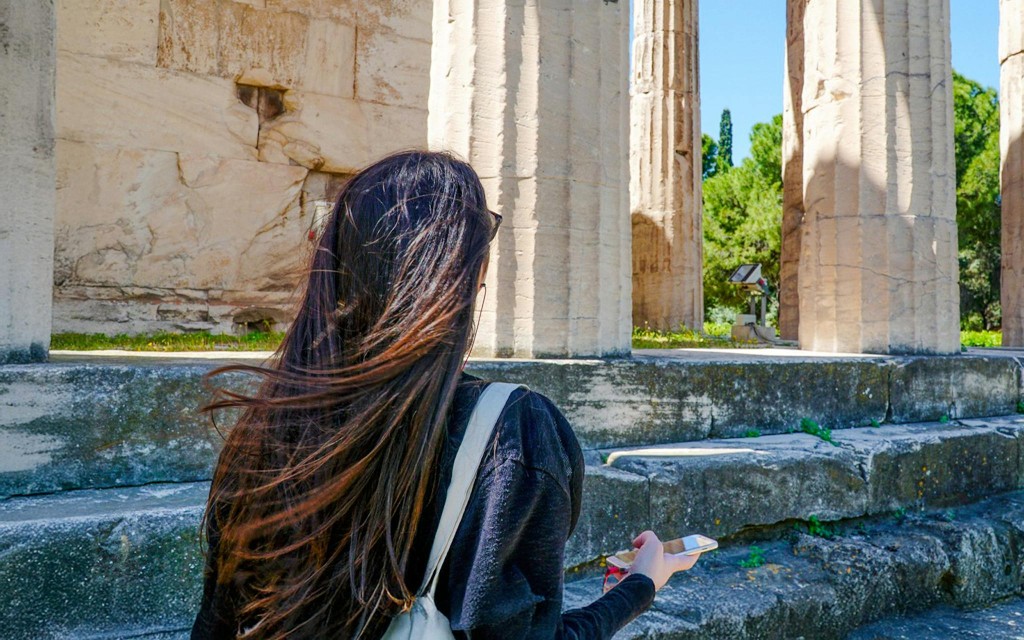
Discover breathtaking images of the Roman Agora, capturing its ancient grandeur and historical significance.

Step back in time at the Roman Agora, an ancient marketplace in the heart of Athens, Greece. Located north of the Acropolis, this archaeological site offers a fascinating glimpse into Roman life in the city. Unlike the earlier Ancient Agora, the Roman Agora served primarily as a commercial hub, featuring impressive structures like the iconic Tower of the Winds and the imposing Gate of Athena Archegetis. Visitors can explore the remnants of shops, public latrines, and administrative buildings, walking the same paths once trod by merchants, philosophers, and citizens. It stands as a testament to Athens' enduring history and its transformation under Roman rule, making it a key stop for anyone interested in classical antiquity and the evolution of urban life in ancient Greece.

Başlangıç19.55
ADULT
1864 yaş
19.55
Süre
1 saat
Buluşma Noktası
Athens
Polignotou 3, Athina 105 55, Greece
Açılış Saatleri
The Roman Agora typically opens in the morning and closes in the late afternoon or early evening, with hours varying seasonally. It is usually open daily, but schedules may differ on public holidays.
Ziyaret Süresi
A typical visit to the Roman Agora usually takes about 1 to 1.5 hours to fully explore the site.
Ziyaret İçin En İyi Zaman
The best time to visit is during the spring or autumn months, or early in the morning to avoid the heat and larger crowds.
Adres
The Roman Agora is centrally located in Athens, Greece, near the Ancient Agora and Monastiraki Square.
Kıyafet Yönetmeliği

There is no specific dress code required to visit the Roman Agora. As an outdoor archaeological site, comfortable and casual clothing is recommended. Practical footwear suitable for walking on uneven surfaces, such as ancient stones and dirt paths, is essential. During warmer months, light clothing, a hat, and sunglasses are advisable, while a light jacket might be useful in cooler seasons.

Deneyim özeti

Neler Dahil

  • Eintritt in die römische Agora
  • 45-minütige bis 1-stündige selbstgeführte Audiotour auf Ihrem Smartphone (Android und iOS)
  • Audioguide verfügbar auf Deutsch, Englisch, Spanisch, Französisch, Italienisch und Griechisch (je nach gewählter Option)
  • Offline-Inhalte (Text, Audiokommentar und Karten)

Hariç Olanlar

  • Hoteltransfer
  • Transfers
  • Reiseleiter
  • Kopfhörer
  • Essen und Getränke
  • Individuelle Ausgaben

Ihr Erlebnis

Erkunden Sie die römische Agora, den lebhaften Marktplatz von Athen in der Vergangenheit, mit einem mehrsprachigen Audioguide, der die Geschichten von Händlern, Reisenden und Gelehrten, die sich einst unter dem großen Marmortor und dem ikonischen Turm der Winde versammelten, zum Leben erweckt.

Erste Schritte

Sie erhalten Ihr Ticket per E-Mail – laden Sie einfach die App und den Audioguide vor Ihrem Besuch auf Ihr Smartphone. Mit dem Offline-Zugang zu Erzählungen, Karten und Bildern können Sie einfach am Eingang der römischen Agora ankommen, Ihre Kopfhörer aufsetzen und Ihre selbstbestimmte Reise in den täglichen Rhythmus des antiken Athens beginnen.

Athenas großes Gateway

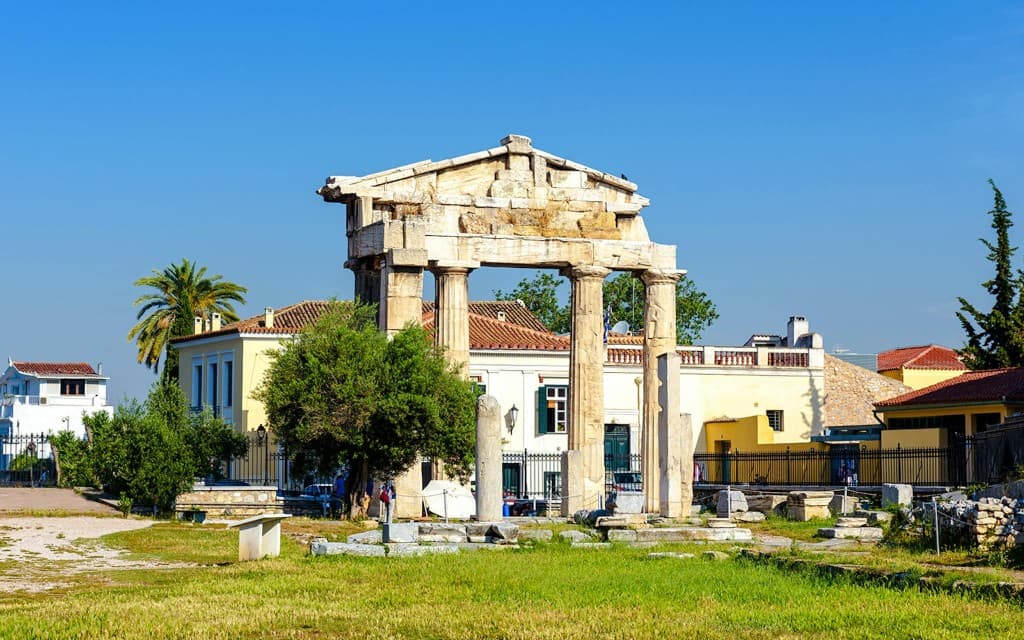
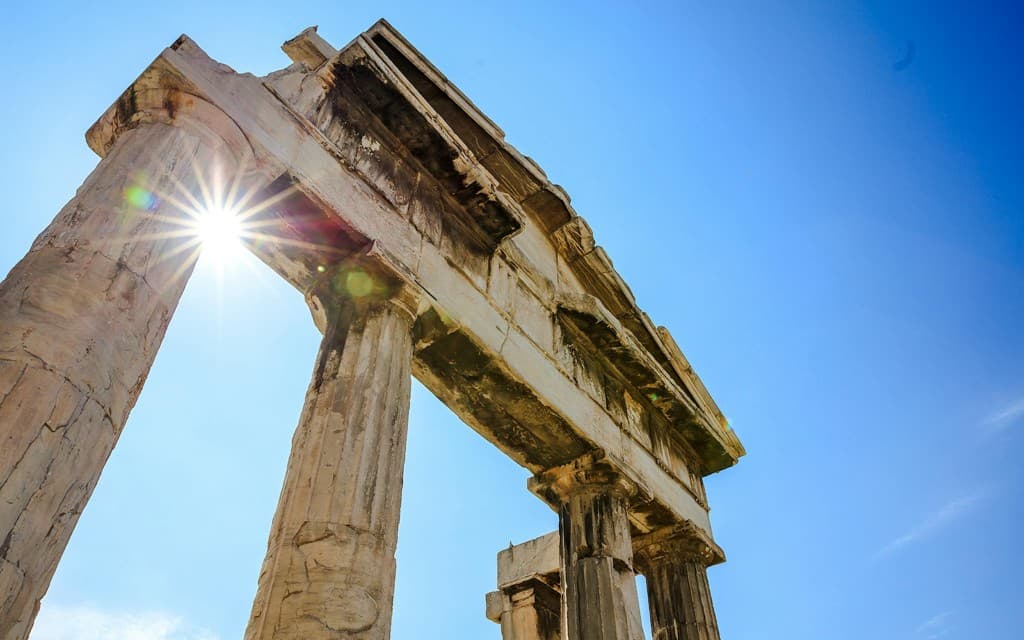
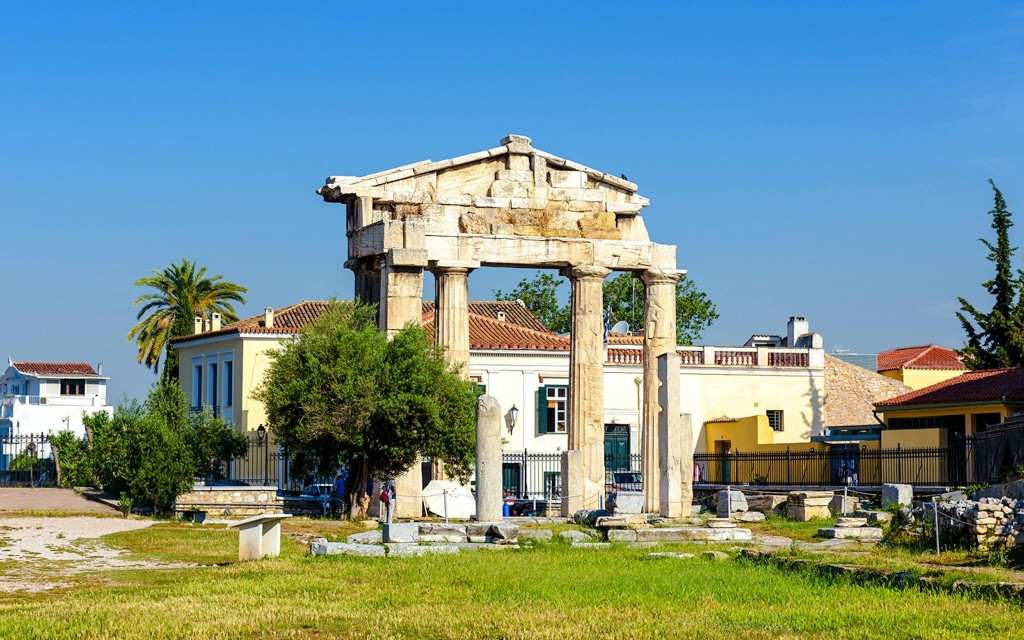
Beginnen Sie am beeindruckenden Tor der Athena Archegetis, einem Marmoreingang, der der Stadt von Julius Cäsar und Augustus geschenkt wurde. Einst das Haupttor zum römischen Marktplatz, symbolisierten seine hoch aufragenden dorischen Säulen den Wohlstand unter römischer Herrschaft. Während Ihr Reiseleiter erzählt, stellen Sie sich vor, wie Händler, Philosophen und Bürger durch genau dieses Tor strömen und ihre Stimmen durch das Herz der Agora tragen.

Die Zeitwächter der Antike

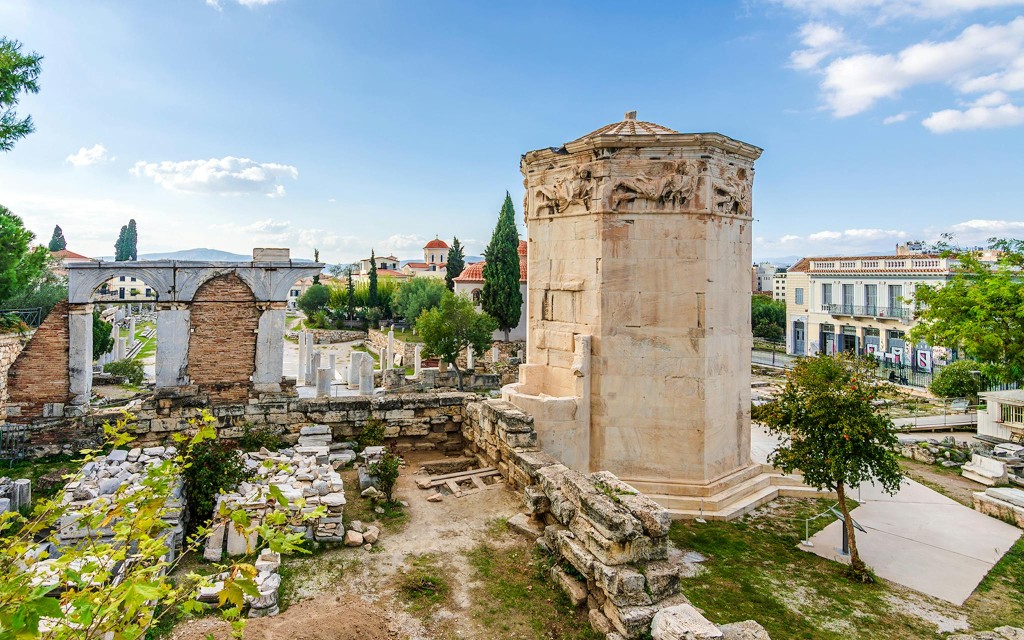
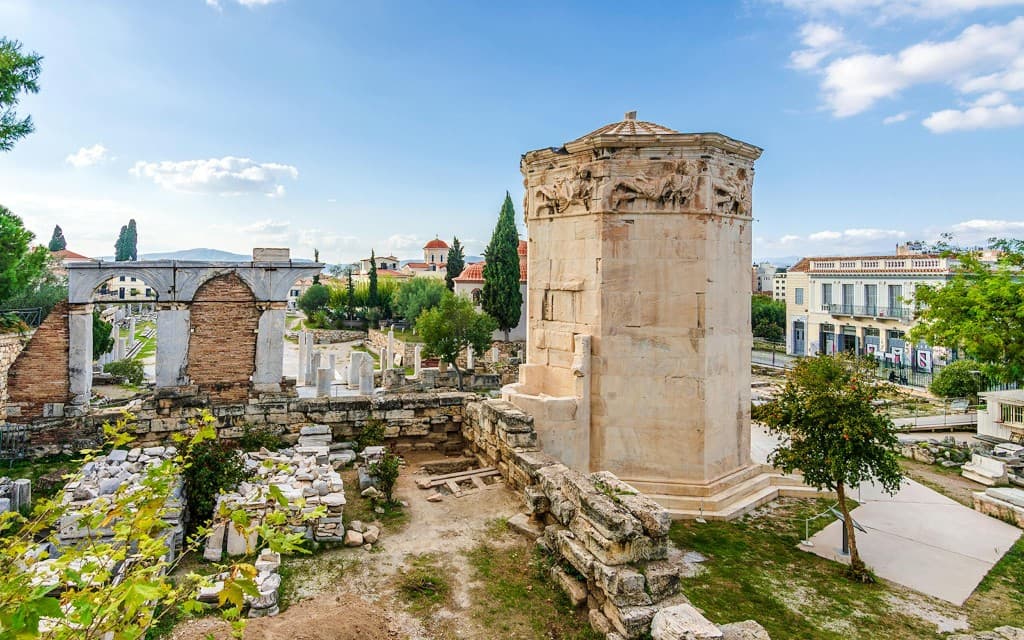
Als Nächstes besuchen Sie den achteckigen Turm der Winde, eine der ersten „Uhren“ der Antike – ein Bauwerk, das Sonnenuhren, eine Wasseruhr und gemeißelte Reliefs der acht Windgötter kombiniert. Ihr Audioguide erklärt, wie die Athener den Turm nicht nur für die Tageszeit, sondern auch für die Richtung, das Wetter und den Sinn für die kosmische Ordnung heranzogen – eine frühe Mischung aus Wissenschaft und Mythos.

Märkte, Springbrunnen und Alltagsgeschichten

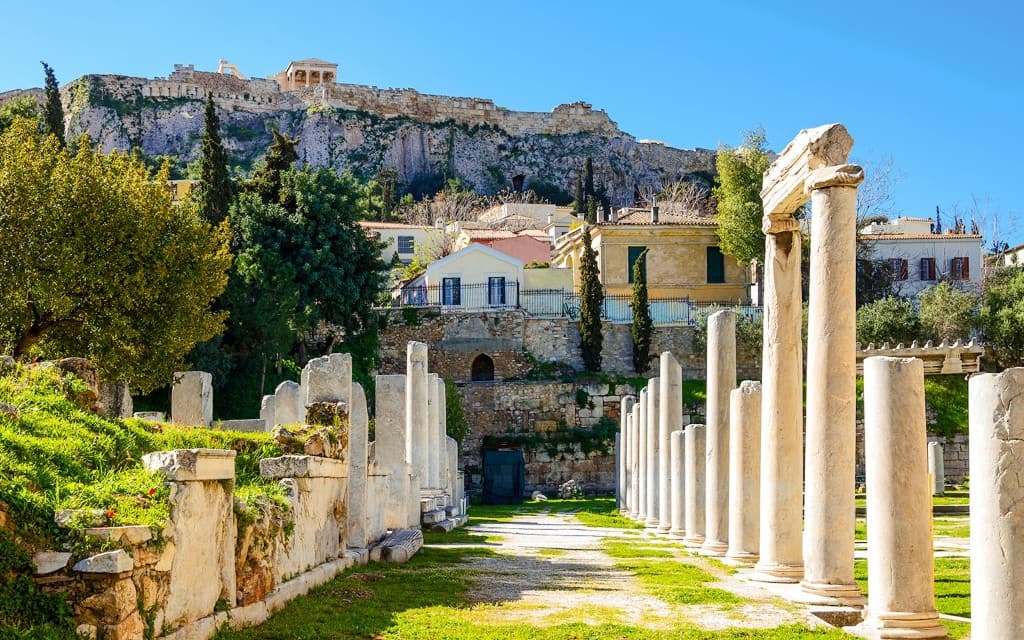
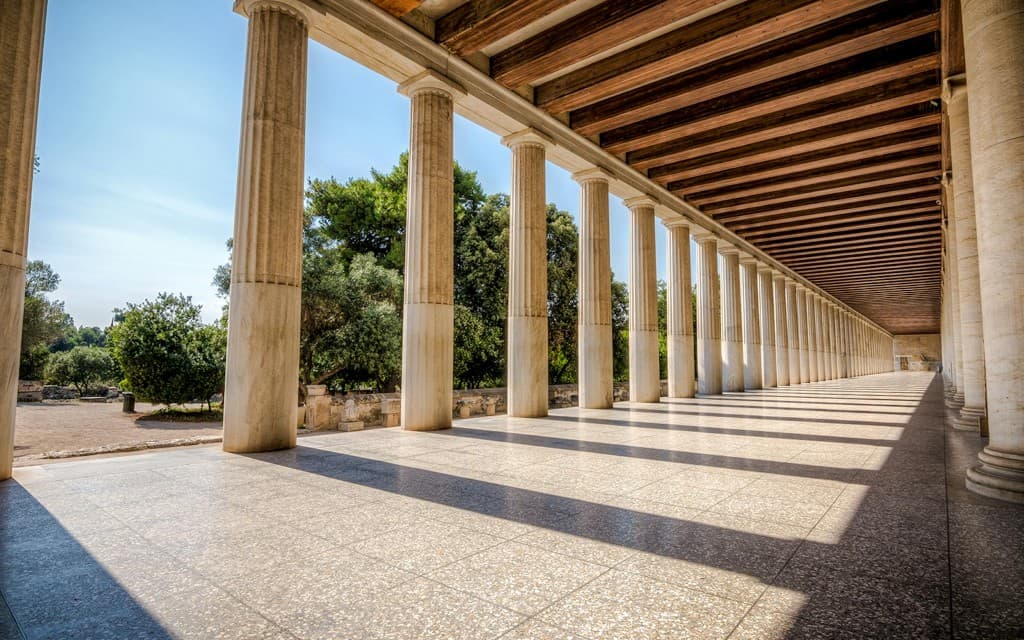
Schlendern Sie an dem Brunnenhaus vorbei, das den belebten Markt mit Wasser versorgte, und an den Vespasianae, den öffentlichen Latrinen, die den praktischen Ansatz der Römer für das bürgerliche Leben verdeutlichen. Werfen Sie einen Blick in die Überreste der alten Läden, in denen Waren und Klatsch gehandelt wurden. Anhand lebendiger Anekdoten zeichnet Ihre Audio Tour ein Bild von einem Marktplatz, der sowohl ein soziales Zentrum als auch ein kommerzielles Zentrum war.

Schichten der Geschichte und Ansichten der Akropolis

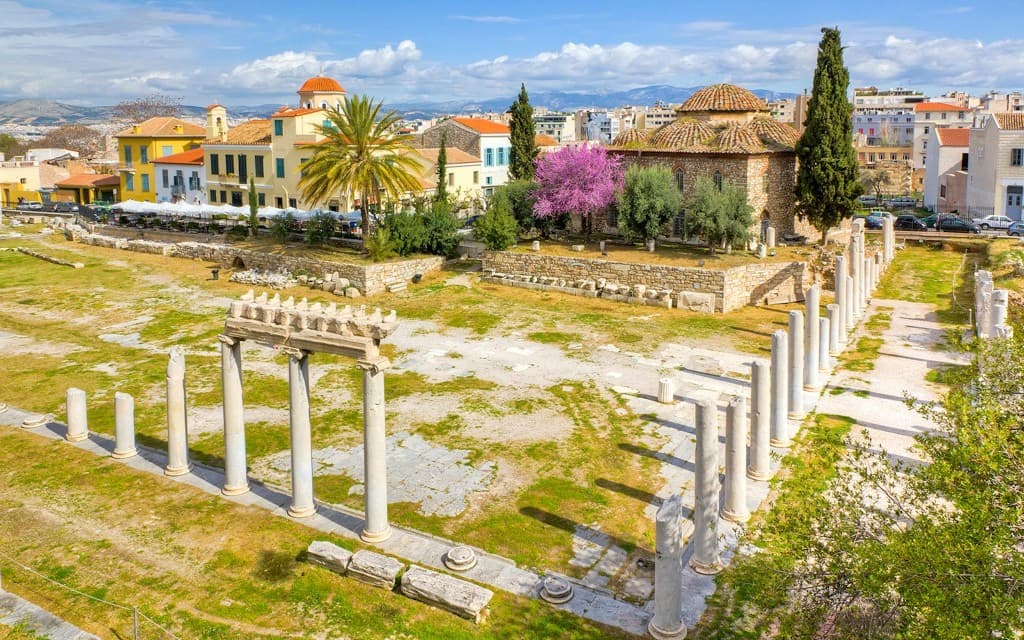
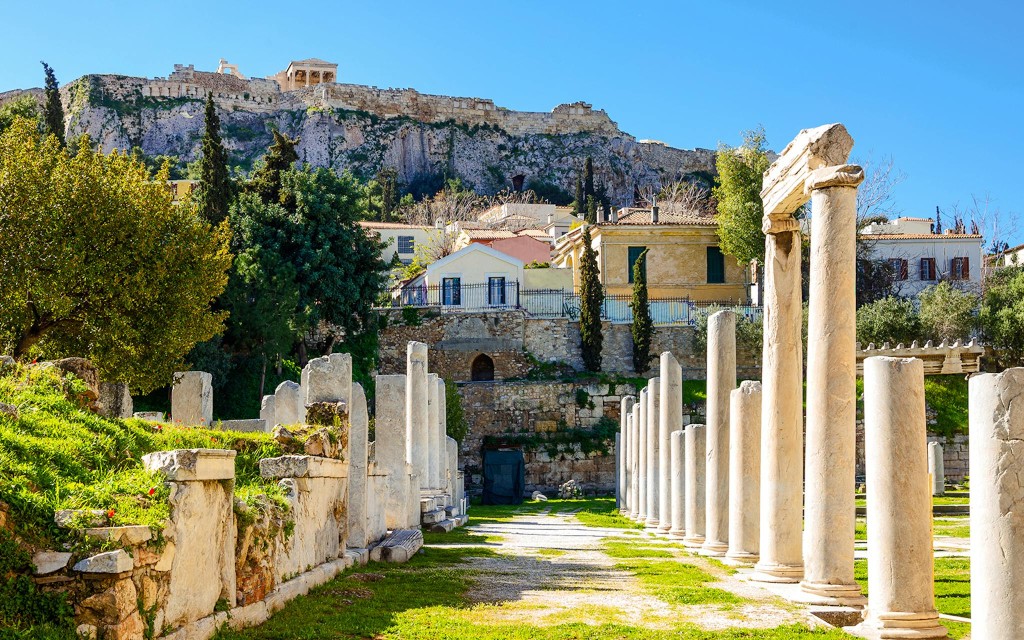
Ihr Besuch endet an der Moschee des Eroberers aus dem 15. Jahrhundert, die während der osmanischen Ära auf den Ruinen des römischen Marktplatzes errichtet wurde. Einst ein Ort der Anbetung und später als Museum und Lagerhalle umfunktioniert, spiegelt es die vielen Kulturen wider, die Athen geprägt haben. Die Akropolis erhebt sich über dem Ort und vereint griechisches, römisches, byzantinisches und osmanisches Erbe in einer bemerkenswerten Umgebung.
Gitmeden Önce Bilin

Wissenswertes

Bitte mitbringen

  • Tragen Sie festes, bequemes Schuhwerk. Die alte Pflasterung und der unebene Boden können das Gehen erschweren.

  • Bringen Sie einen Hut und Sonnencreme mit, um sich in der Sonne wohl zu fühlen.

  • Laden Sie Ihr Smartphone vollständig auf, damit es für die Dauer der Audio Tour ausreicht.

  • Verwenden Sie Ihre eigenen Kopfhörer für das beste Hörerlebnis während der Tour.

Beschränkungen

  • Blitzlichtaufnahmen und Stative sind verboten. Professionelles Filmen oder Fotografieren muss im Voraus vom Ministerium genehmigt werden.

  • Drohnen sind ohne besondere Genehmigung nicht erlaubt.

  • Haustiere sind auf dem Gelände nicht erlaubt, obwohl zertifizierte Servicetiere willkommen sind.

  • Bitte berühren, bewegen oder entfernen Sie keine Steine, Keramikfragmente oder andere Überreste; diese Antiquitäten sind nach griechischem Recht geschützt.

Barrierefreiheit

  • Die römische Agora ist teilweise rollstuhlgerecht und bietet Besuchern mit eingeschränkter Mobilität Zugang durch den Haupteingang an der Dioskouron-Straße. Ein großer Teil des Geländes ist jedoch uneben und mit altem Pflaster versehen, so dass der Zugang zum Inneren nur eingeschränkt möglich ist.

  • Ein alternativer Eingang in der Pelopida-Straße ermöglicht auch Rollstuhlfahrern den Zugang zum Horologion (Turm der Winde).

  • Das Museum ist vollständig zugänglich, und Besucher mit Sehbehinderungen können die Beschilderung in Braille-Schrift und taktile Karten nutzen.

Zusätzliche Informationen

  • Jede Buchung ist gültig für ein Gerät; wenn Sie mehrere Geräte benutzen, müssen Sie für jedes Gerät separat buchen.

  • Sie können die archäologische Stätte nur während des von Ihnen gewählten Zeitfensters betreten. Ihre Tickets sind von 15 Minuten vor bis 15 Minuten nach dem von Ihnen gewählten Termin gültig.

  • Kommen Sie mindestens 30 Minuten früher an, um Zeit für die Sicherheit und den Eintritt zu haben. Beachten Sie, dass der Eintritt bis zu 20 Minuten vor Schließung erlaubt ist.

  • Nach der Buchung erhalten Sie eine E-Mail mit Anweisungen, wie Sie auf Ihre Audiotour zugreifen und sie herunterladen können; überprüfen Sie auch Ihren Spam-Ordner.

  • Sie benötigen ein Android-Smartphone (Version 5.0 oder höher) oder ein iOS-Gerät (Version 15.0 oder höher). Die Audio Tour ist nicht kompatibel mit Windows Phones, iPhone 6/6 Plus oder früher, iPod Touch 6. Generation oder früher, iPad 4. Generation oder früher, iPad Air 1. Generation oder iPad Mini 3. Generation oder früher.

  • Vergewissern Sie sich, dass Ihr Handy 100 bis 150 MB freien Speicherplatz hat, um die Audio Tour herunterzuladen.

  • Die Routen innerhalb des Geländes können variieren und es können Einschränkungen gelten – bitte beachten Sie alle Hinweise vor Ort.

  • Die Öffnungszeiten variieren saisonal: von November bis März ist die Stätte von 08:00 bis 15:00 Uhr geöffnet, von April bis August von 08:00 bis 19:30 Uhr, wobei die Schließzeiten im September und Oktober allmählich reduziert werden; letzter Einlass ist immer 30 Minuten vor Schließung.

Förderungswürdigkeit von Konzessionen

  • EU-Bürger bis 25 Jahre haben das ganze Jahr über freien Eintritt mit einem gültigen Personalausweis oder Reisepass.

  • Besucher aus Nicht-EU-Ländern im Alter von 6 bis 25 Jahren erhalten mit einem gültigen Personalausweis oder Reisepass ermäßigten Eintritt.

  • Kinder unter 5 Jahren haben freien Eintritt.

Talimatlar

- Entry to the Roman Agora - 45-minute to 1-hour self-guided audio tour on your smartphone (Android and iOS), in English, Spanish, German, French, Italian, and Greek - Offline content (text, audio narration, and maps)

Ne Beklemeli

Upon entering the Roman Agora, expect to find yourself amidst the scattered yet significant ruins of a bustling ancient marketplace. The site is largely open-air, allowing for clear views of the remaining foundations, columns, and walls. You will wander through an expansive area, tracing the outlines of stoas and various administrative buildings. The impressive Gate of Athena Archegetis immediately draws attention upon entry, while the unique Tower of the Winds, with its intricate details, stands as a focal point. Expect a serene, contemplative atmosphere, allowing you to imagine the vibrancy of Roman-era Athens. While much requires imagination, the preserved elements offer concrete evidence of its historical grandeur and utility.

Hakkında Roman Agora of Athens: Visitor Information & Tickets

The Roman Agora, also known as the Roman Forum, was constructed between 19 and 11 BCE with funds provided by Julius Caesar and completed by Emperor Augustus. Its creation marked a shift in Athens' commercial center from the nearby Ancient Agora, becoming the new focal point for trade and daily life during the Roman period. The site is rectangular, featuring a large open courtyard surrounded by stoas and various public buildings. The most striking features are undoubtedly the Gate of Athena Archegetis on the west side, a monumental entrance built of Pentelic marble, and the Horologion of Andronikos Kyrrhestes, famously known as the Tower of the Winds, which served as a sophisticated timekeeping device and weather vane. Excavations have also revealed the remains of the Agoranomion (market superintendents' office) and a complex of public latrines. Over the centuries, the Roman Agora continued to be an important urban space, evolving through Byzantine, Ottoman, and modern eras, even hosting Athens' first mosque in the Ottoman period, the Fethiye Mosque, which stands on the site today. It offers a comprehensive perspective on Roman influence and the continuous layering of history in Athens.

Öne Çıkanlar

Betreten Sie die römische Agora, den späteren Marktplatz von Athen, mit Marmortoren, die von Julius Cäsar und Augustus finanziert wurden.
Gehen Sie durch das Tor der Athena Archegetis und stellen Sie sich vor, wie Händler, Philosophen und Bürger einst durch die hoch aufragenden Säulen strömten.
Sehen Sie sich den genialen Turm der Winde an, eine achteckige Uhr, die Sonnenuhren, eine Wasseruhr und geschnitzte Windgötter kombiniert – eine der frühesten Wetterstationen der Welt.
Entdecken Sie mit dem Audioguide Geschichten aus dem täglichen Leben in den Geschäften, dem Brunnenhaus und den öffentlichen Latrinen, wo der Handel und die Unterhaltung unter römischer Herrschaft florierten.
Schon gewusst? Die römische Agora wurde noch während der osmanischen Zeit genutzt, als auf ihren Ruinen eine Moschee errichtet wurde, die einen vielschichtigen Abdruck der Geschichte an diesem Ort hinterließ.

Neden Online Rezervasyon Yapmalısınız?

Booking your tickets for the Roman Agora online offers several advantages, ensuring a smoother and more convenient visit. Online purchases allow you to secure your entry in advance, saving valuable time by avoiding potential queues at the ticket booths, especially during peak tourist seasons. Pre-purchasing tickets also helps in planning your itinerary, giving you peace of mind that your access to this historic site is guaranteed. It streamlines the entry process, letting you maximize your time exploring the ancient ruins rather than waiting. Furthermore, online platforms often provide clear information on ticket types and opening hours, aiding in a well-organized trip to this significant Athenian landmark.

Tarih

The Roman Agora of Athens represents a significant chapter in the city's long history, marking a period of Roman influence and administrative control. Its construction began under Julius Caesar around 50-19 BCE and was completed by Emperor Augustus, solidifying its role as the new commercial and administrative center of Athens, replacing the older Ancient Agora. This rectangular enclosed complex featured a large paved courtyard, surrounded by colonnades that housed shops and public offices. The most celebrated structure, the Horologion of Andronikos Kyrrhestes, or Tower of the Winds, built earlier in the 1st century BCE, was incorporated into the new Agora complex, serving as a public clock. The monumental Gate of Athena Archegetis, erected by donations from Augustus and the Roman colony, served as the primary western entrance. Throughout its active life, the Roman Agora was a bustling hub, facilitating trade, public announcements, and social interaction. Even after the decline of Roman power, the site continued to be used and adapted; during the Byzantine era, houses and churches were built amidst the ruins, and later, under Ottoman rule, the Fethiye Mosque was constructed on the northern side, signifying its continuous importance and transformation through different historical periods.

Açılış Saatleri

Opening hours for the Roman Agora generally follow a seasonal schedule. During the summer months (April to October), the site typically opens from early morning, such as 8:00 AM, and closes later in the evening, often around 7:00 PM or 8:00 PM. In the winter months (November to March), closing times are usually earlier, around 3:00 PM or 5:00 PM. It is common for archaeological sites in Greece to be closed on specific public holidays, such as New Year's Day, Easter Sunday, and Christmas Day. It is always recommended to check the current operating schedule for the exact dates of your visit.

Ziyaret İçin En İyi Zaman

To fully enjoy the Roman Agora and avoid the peak heat and crowds, the best times to visit are during the shoulder seasons of spring (April to early June) and autumn (September to October). During these months, the weather is pleasantly mild, making it ideal for exploring the outdoor ruins. If you visit during the summer, plan your visit for the early morning right after opening or in the late afternoon before closing. This will help you avoid the midday sun and the largest groups of tourists, allowing for a more serene and contemplative experience of this historic site.

İçeride Ne Görülür

Within the Roman Agora, visitors can explore several key structures that define its historical importance. The most prominent is the Tower of the Winds, an octagonal marble structure that functioned as a horologion (timepiece) incorporating a sundial, water clock, and weather vane. Its detailed frieze depicting the eight wind deities is remarkably preserved. The monumental Gate of Athena Archegetis, a Doric propylon, stands proudly as the formal entrance to the Agora. Nearby, you can identify the foundations of various shops and stoas that once bustled with commercial activity. The Agoranomion, the building where market rules were enforced, also has visible remains. Additionally, the Fethiye Mosque, a significant Ottoman-era structure, is situated within the archaeological complex, representing a later layer of the site's rich history. Exploring these elements provides a comprehensive understanding of the Agora's diverse functions and its enduring legacy.

Bilinmesi Gerekenler

When planning your visit to the Roman Agora, it is advisable to wear comfortable walking shoes as you will be navigating uneven terrain and ancient paths. Bringing water, especially during warmer months, is recommended to stay hydrated. Sunscreen and a hat are also practical for protection against the sun, as the site offers limited shade. The Roman Agora is an open-air archaeological site, so prepare for varying weather conditions. Photography is generally allowed for personal use, but flash photography may be restricted in certain areas. While parts of the site are accessible, some areas with uneven ground or steps might pose challenges for visitors with mobility impairments.

Ziyaretçi Kuralları

Visitors to the Roman Agora are expected to adhere to standard archaeological site rules to preserve the historical integrity of the monument. Please do not climb on ancient structures, walls, or ruins. Littering is strictly prohibited; use designated bins for any waste. Respect the historical significance of the site by refraining from writing on or damaging any part of the ruins. Picnicking is not allowed. Supervise children closely to ensure their safety and the preservation of the site. Pets are typically not permitted within the archaeological area, with the exception of service animals.

Ziyaret Etmeye Değer mi?

Visiting the Roman Agora is highly recommended for anyone interested in the layered history of Athens. It offers a tangible connection to the city's Roman period, showcasing how daily life and commerce evolved under Roman rule. The site features iconic structures like the Tower of the Winds and the Gate of Athena Archegetis, which are marvels of ancient engineering and architecture. Beyond the grand monuments, exploring the foundations of ancient shops and public spaces provides a deeper understanding of urban organization and social interaction in antiquity. It serves as an excellent complement to a visit to the Ancient Agora and the Acropolis, painting a fuller picture of Athens' illustrious past.

Sıkça Sorulan Sorular

What is the Roman Agora?

The Roman Agora is an ancient marketplace in Athens, Greece, built during the Roman period. It served as a commercial and administrative center, distinct from the older Ancient Agora.

What are the main attractions at the Roman Agora?

Key attractions include the Tower of the Winds (Horologion of Andronikos Kyrrhestes), the Gate of Athena Archegetis, and the remains of various shops and public buildings, including the Fethiye Mosque.

How long does it take to visit the Roman Agora?

Most visitors spend approximately 1 to 1.5 hours exploring the Roman Agora, allowing enough time to appreciate its main features.

Is the Roman Agora accessible for visitors with mobility issues?

While some parts of the site are relatively flat, the ground can be uneven with ancient stones and paths. Some areas may pose challenges for visitors with mobility impairments.

Are there guided tours available for the Roman Agora?

Individual guided tours might be offered by external operators, and information can often be found at the entrance or through tour companies. The site itself does not typically provide official guided tours.

Can I buy tickets at the entrance?

Yes, tickets can be purchased at the entrance booth. However, booking online in advance is often recommended to save time and ensure entry, especially during busy periods.

What is the history of the Tower of the Winds?

The Tower of the Winds is an octagonal marble monument from the 1st century BCE that functioned as a public clock, incorporating a sundial, water clock, and weather vane, making it one of the world's first meteorological stations.

Nasıl Gidilir

The Roman Agora is easily accessible by public transport. The nearest metro station is Monastiraki (Lines 1 and 3), which is just a short walk away. Many central Athens bus routes also have stops within easy walking distance. From popular areas like Plaka or Syntagma Square, the site is comfortably reachable on foot.

Başlangıç
19.55
kişi başı
ADULT
1864 yaş
19.55
Müsaitliği Kontrol Et
İptal Politikası24 saate kadar ücretsiz iptal
Süre
1 saat
Buluşma Noktası
Athens
Polignotou 3, Athina 105 55, Greece
Açılış Saatleri
The Roman Agora typically opens in the morning and closes in the late afternoon or early evening, with hours varying seasonally. It is usually open daily, but schedules may differ on public holidays.
Ziyaret Süresi
A typical visit to the Roman Agora usually takes about 1 to 1.5 hours to fully explore the site.
Ziyaret İçin En İyi Zaman
The best time to visit is during the spring or autumn months, or early in the morning to avoid the heat and larger crowds.
Adres
The Roman Agora is centrally located in Athens, Greece, near the Ancient Agora and Monastiraki Square.
Kıyafet Yönetmeliği

There is no specific dress code required to visit the Roman Agora. As an outdoor archaeological site, comfortable and casual clothing is recommended. Practical footwear suitable for walking on uneven surfaces, such as ancient stones and dirt paths, is essential. During warmer months, light clothing, a hat, and sunglasses are advisable, while a light jacket might be useful in cooler seasons.

Başlangıç
19.55
Müsaitliği Kontrol Et