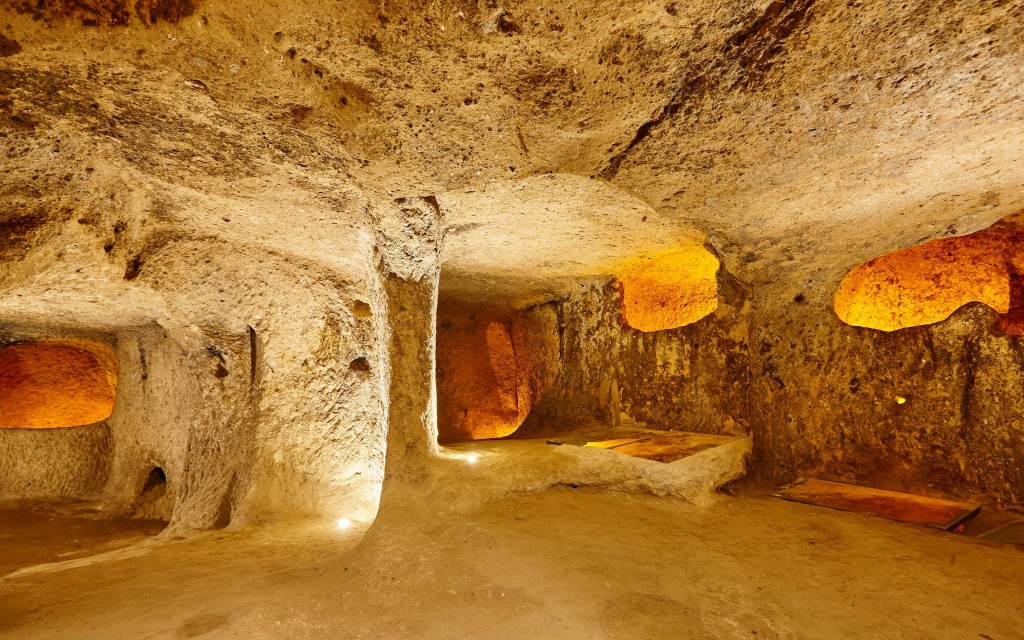
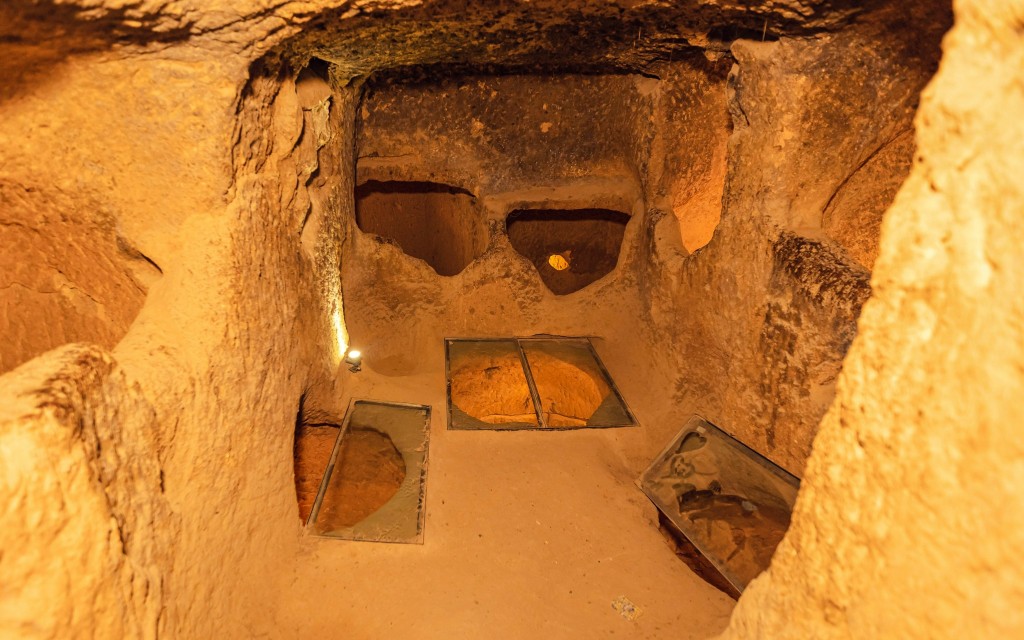
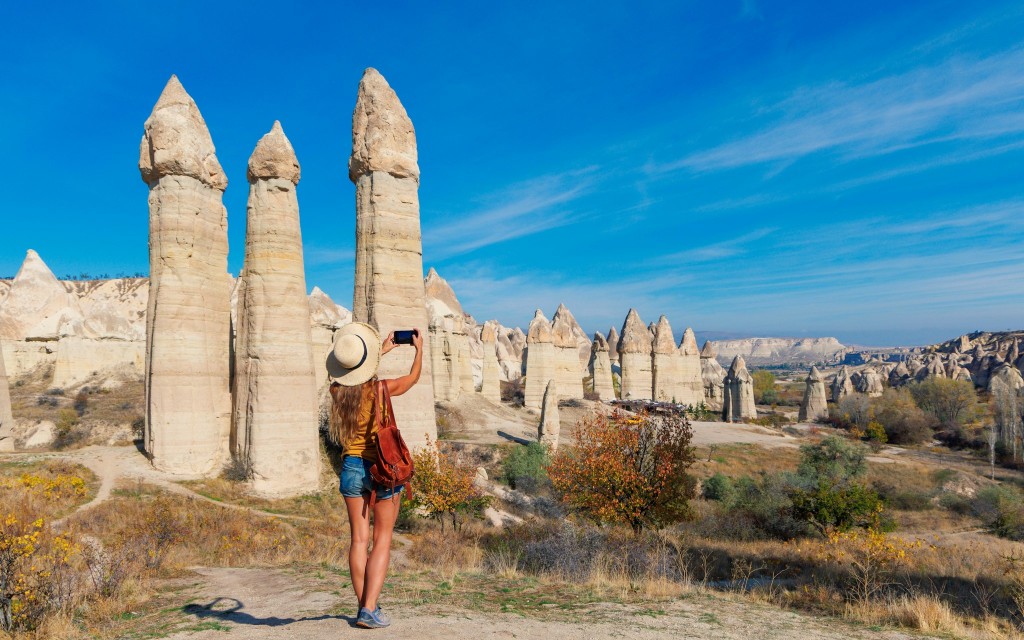
Cappadocia's history is a rich tapestry woven with threads of ancient civilizations, early Christianity, and remarkable geological events. Formed by volcanic eruptions millions of years ago, the soft tufa rock was sculpted by wind and water into the iconic fairy chimneys and valleys we see today. Humans have inhabited this unique landscape for millennia, carving homes, churches, and entire underground cities into the rock. The underground cities, a cornerstone of the Blue Tour, date back to the Hittites but were significantly expanded by early Christians fleeing Roman persecution. These intricate subterranean complexes, sometimes reaching eight or more levels deep, served as refuges, complete with ventilation shafts, kitchens, stables, and chapels, demonstrating an ingenious adaptation to their environment and a fierce determination to preserve their faith. Throughout its history, Cappadocia has been a crossroads of empires, influenced by Assyrians, Persians, Romans, Byzantines, Seljuks, and Ottomans, each leaving their mark on the region's cultural and architectural heritage. The rock-cut churches, many adorned with exquisite frescoes, are testaments to Byzantine artistic and religious fervor. The Blue Tour delves into these layers of history, bringing to life the struggles, innovations, and spiritual devotion of the people who shaped this extraordinary land.