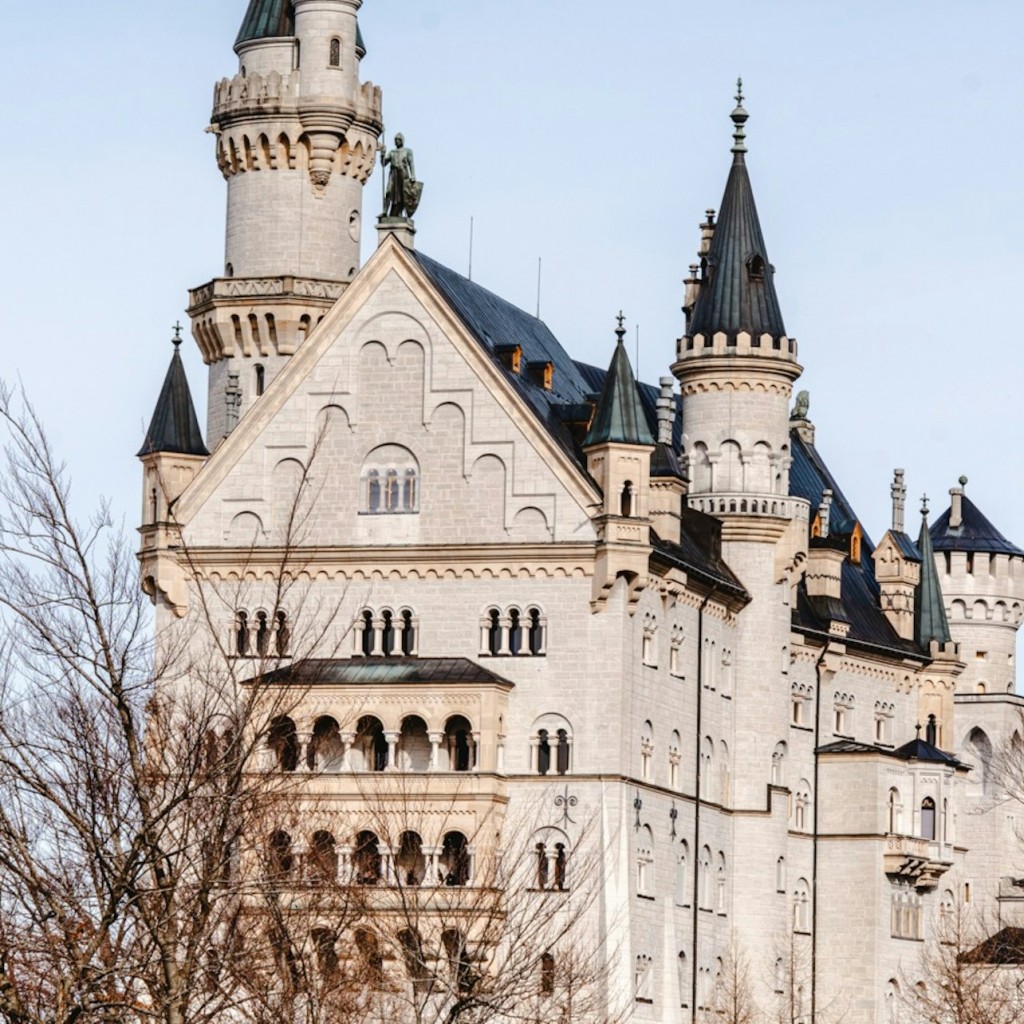
Neuschwanstein Castle, conceived by King Ludwig II of Bavaria, embodies the romantic ideals of the 19th century. Ludwig, a passionate admirer of Richard Wagner's operas and medieval legends, envisioned Neuschwanstein as a personal retreat and a stage for his artistic fantasies. Construction began in 1869 and continued until Ludwig's death in 1886, although the castle was never fully completed. The architecture of Neuschwanstein is a blend of Romanesque, Gothic, and Byzantine styles, creating a unique and enchanting appearance. Inside, the castle is adorned with lavish decorations, including intricate murals depicting scenes from Wagner's operas and medieval tales. Despite its grandeur, Neuschwanstein was designed as a private sanctuary for the king, reflecting his desire to escape the realities of his royal duties. Today, Neuschwanstein Castle stands as one of Germany's most iconic landmarks, attracting millions of visitors each year who come to experience its fairytale charm and immerse themselves in the legacy of King Ludwig II.