Billets d'entrée à l'Agora romaine avec audioguide (Roman Agora: Entrance E-Ticket with Audio Tour)Billets d'entrée à l'Agora romaine avec audioguide (Roman Agora: Entrance E-Ticket with Audio Tour) - 1Billets d'entrée à l'Agora romaine avec audioguide (Roman Agora: Entrance E-Ticket with Audio Tour) - 2Billets d'entrée à l'Agora romaine avec audioguide (Roman Agora: Entrance E-Ticket with Audio Tour) - 3

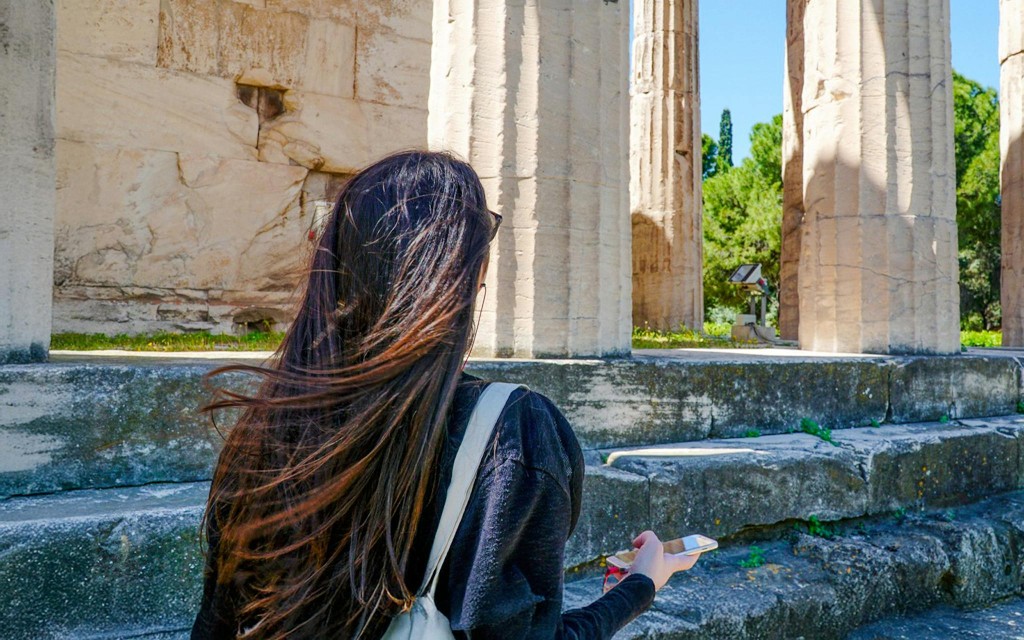
Discover breathtaking images of the Roman Agora, capturing its ancient grandeur and historical significance.

Step back in time at the Roman Agora, an ancient marketplace in the heart of Athens, Greece. Located north of the Acropolis, this archaeological site offers a fascinating glimpse into Roman life in the city. Unlike the earlier Ancient Agora, the Roman Agora served primarily as a commercial hub, featuring impressive structures like the iconic Tower of the Winds and the imposing Gate of Athena Archegetis. Visitors can explore the remnants of shops, public latrines, and administrative buildings, walking the same paths once trod by merchants, philosophers, and citizens. It stands as a testament to Athens' enduring history and its transformation under Roman rule, making it a key stop for anyone interested in classical antiquity and the evolution of urban life in ancient Greece.

À partir de19.55
ADULT
1864 âge
19.55
Durée
1 heure
Point de rencontre
Athens
Polignotou 3, Athina 105 55, Greece
Heures d'ouverture
The Roman Agora typically opens in the morning and closes in the late afternoon or early evening, with hours varying seasonally. It is usually open daily, but schedules may differ on public holidays.
Durée de la visite
A typical visit to the Roman Agora usually takes about 1 to 1.5 hours to fully explore the site.
Meilleur moment pour visiter
The best time to visit is during the spring or autumn months, or early in the morning to avoid the heat and larger crowds.
Adresse
The Roman Agora is centrally located in Athens, Greece, near the Ancient Agora and Monastiraki Square.
Code vestimentaire

There is no specific dress code required to visit the Roman Agora. As an outdoor archaeological site, comfortable and casual clothing is recommended. Practical footwear suitable for walking on uneven surfaces, such as ancient stones and dirt paths, is essential. During warmer months, light clothing, a hat, and sunglasses are advisable, while a light jacket might be useful in cooler seasons.

Aperçu de l'expérience

Ce qui est inclus

  • Entrée de l'Agora romaine
  • Visite audioguide de 45 minutes à 1 heure sur votre smartphone (Android et iOS).
  • Audioguide disponible en français, anglais, espagnol, allemand, italien et grec (en fonction de l'option choisie)
  • Contenu hors ligne (texte, narration audio et plans)

Ce qui n'est pas inclus

  • Prise en charge et retour à l'hôtel
  • Navettes
  • Guide en personne
  • Écouteurs
  • Nourriture et boissons
  • Dépenses personnelles

Votre expérience

Explorez l'Agora romaine, le marché animé d'Athènes d'autrefois, grâce à un audioguide multilingue qui fait revivre les histoires des commerçants, des voyageurs et des érudits qui se réunissaient autrefois sous la grande porte de marbre et l'emblématique Tour des Vents.

Pour commencer

Vous recevrez votre billet par e-mail, il vous suffit de télécharger l'application et l'audioguide sur votre smartphone avant votre visite. Grâce à l'accès hors ligne à la narration, aux cartes et aux images, il vous suffit d'arriver à l'entrée de l'Agora romaine, de mettre vos écouteurs et de commencer votre voyage à votre rythme dans les rythmes quotidiens de l'Athènes antique.

La grande porte d'Athéna

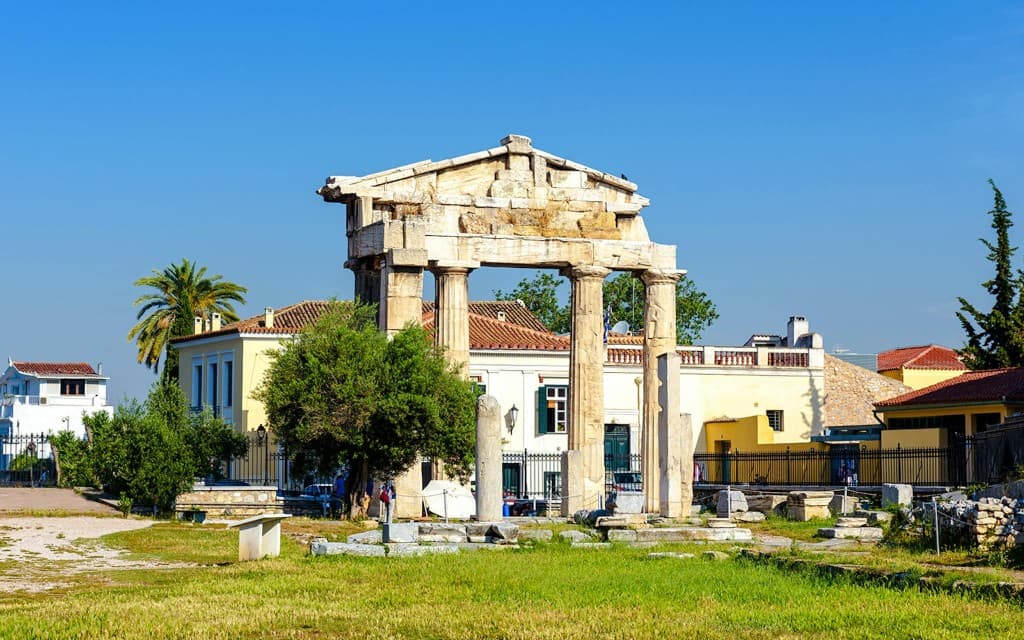
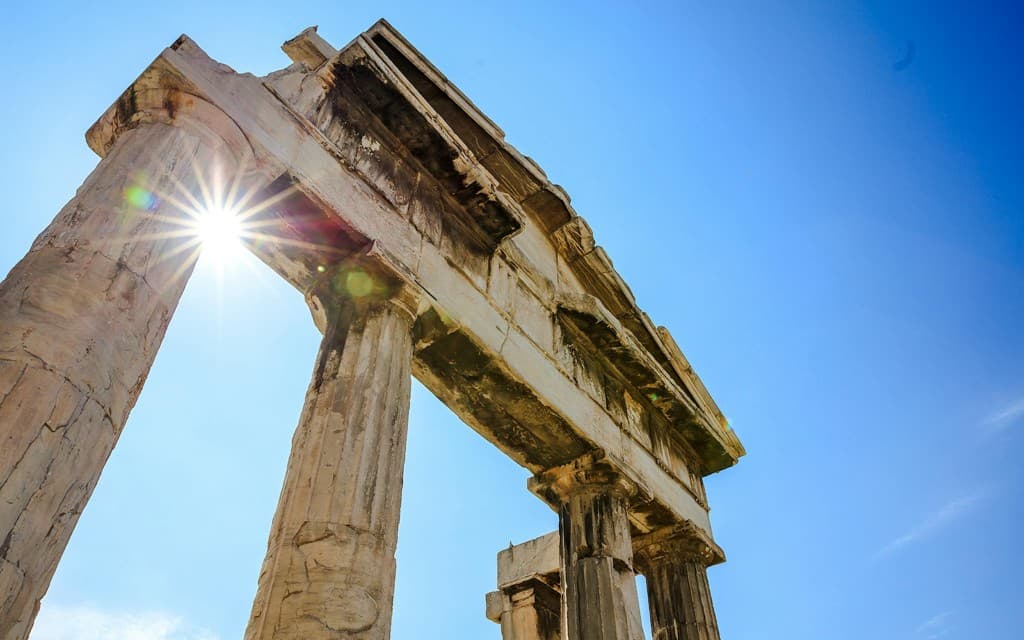
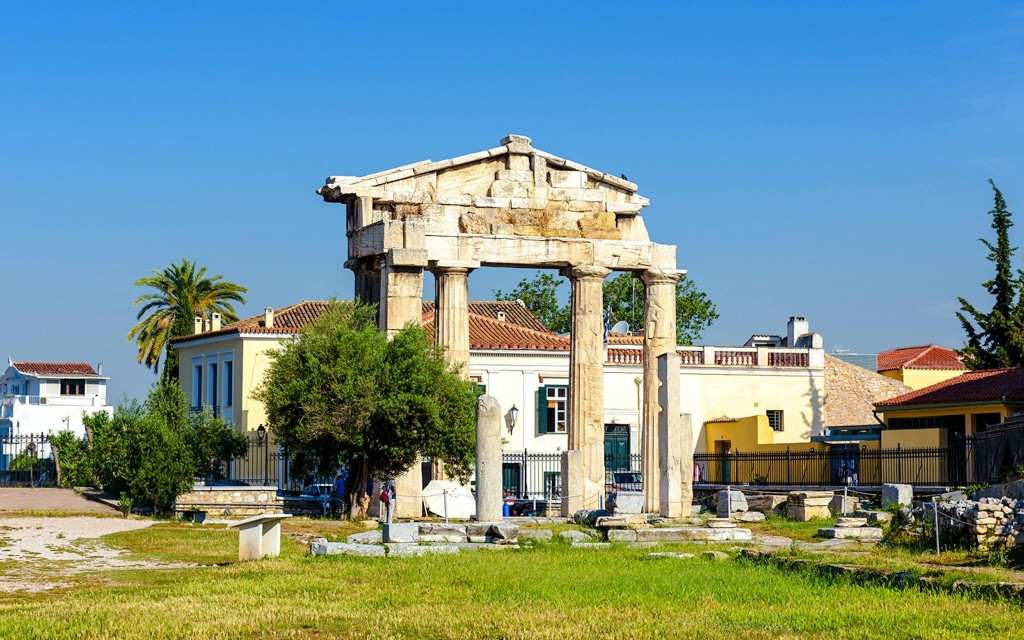
Commencez par l'impressionnante porte d'Athéna Archegetis, une entrée en marbre offerte à la ville par Jules César et Auguste. Autrefois, la porte principale donnait sur la place du marché romain, ses imposantes colonnes doriques symbolisaient la prospérité sous la domination romaine. Pendant que votre guide vous raconte l'histoire, imaginez les marchands, les philosophes et les citoyens franchissant cette même porte, leurs voix se propageant au cœur de l'Agora.

Les chronométreurs du monde antique

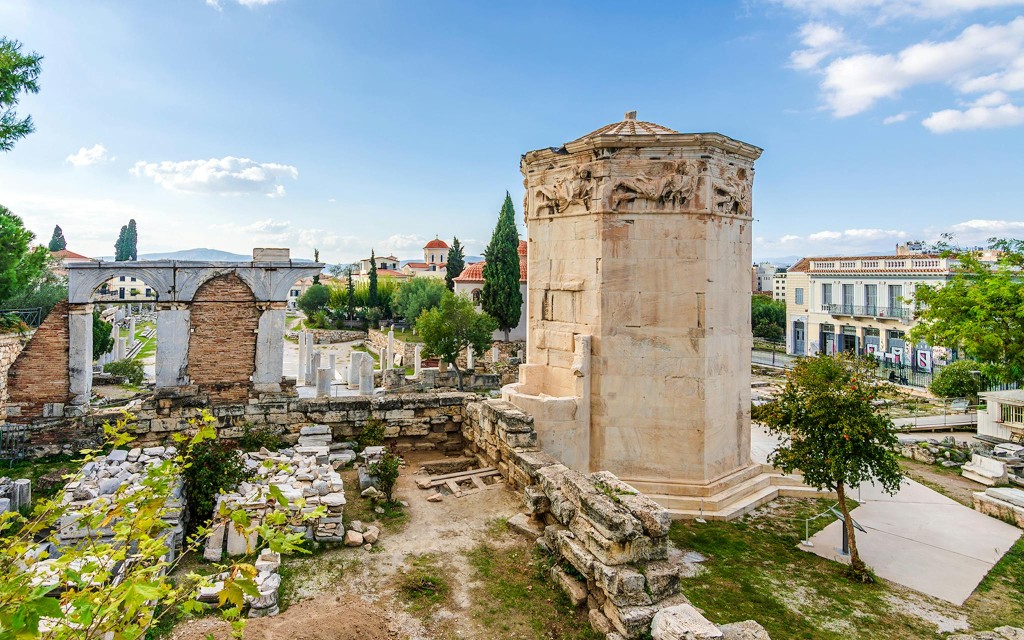
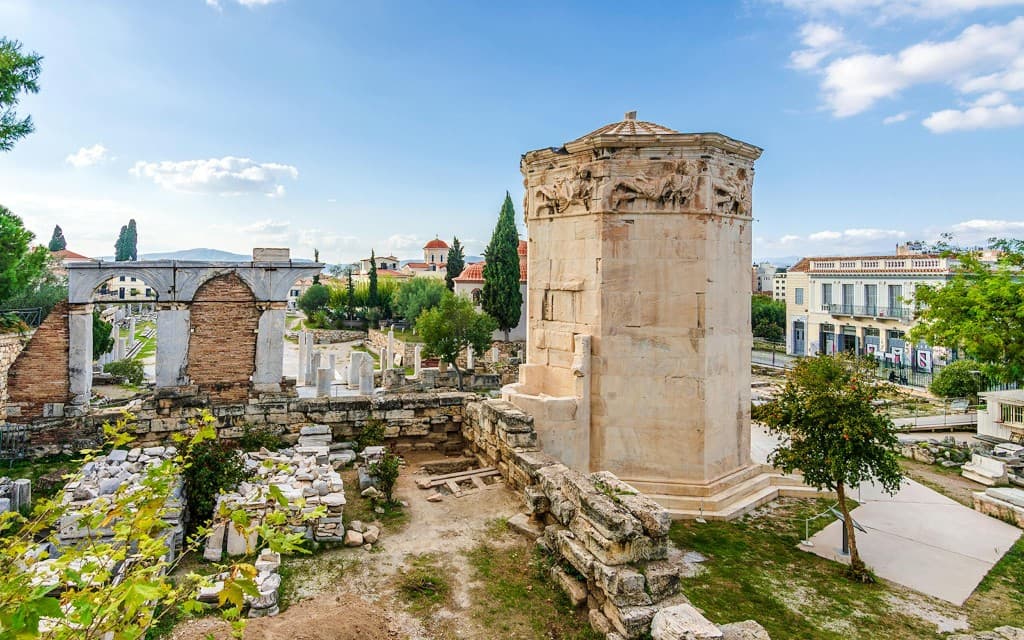
Ensuite, rendez-vous à la Tour des Vents, de forme octogonale, l'une des premières "horloges" de l'Antiquité - une structure qui combine des cadrans solaires, une horloge à eau et des reliefs sculptés des huit dieux des vents. Votre audioguide vous explique comment les Athéniens se tournaient vers la tour non seulement pour connaître l'heure, mais aussi pour s'orienter, connaître le temps qu'il fait et avoir une idée de l'ordre cosmique, un mélange précoce de science et de mythe.

Marchés, fontaines et histoires de tous les jours

Passez devant la fontaine qui alimentait en eau le marché animé et les Vespasianae, latrines publiques qui révèlent l'approche pratique des Romains à l'égard de la vie civique. Jetez un coup d'œil dans les vestiges d'anciennes boutiques, où l'on échangeait des marchandises et des ragots. À travers des anecdotes vivantes, votre visite audio brosse le tableau d'une place de marché qui était autant un centre social qu'un centre commercial.

Des couches d'histoire et des vues sur l'Acropole

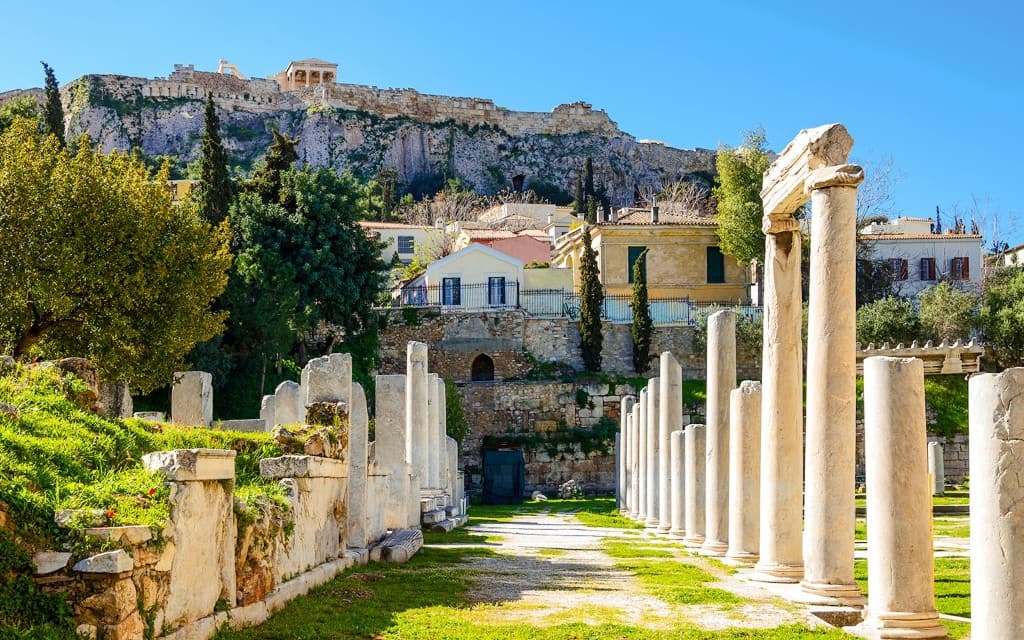
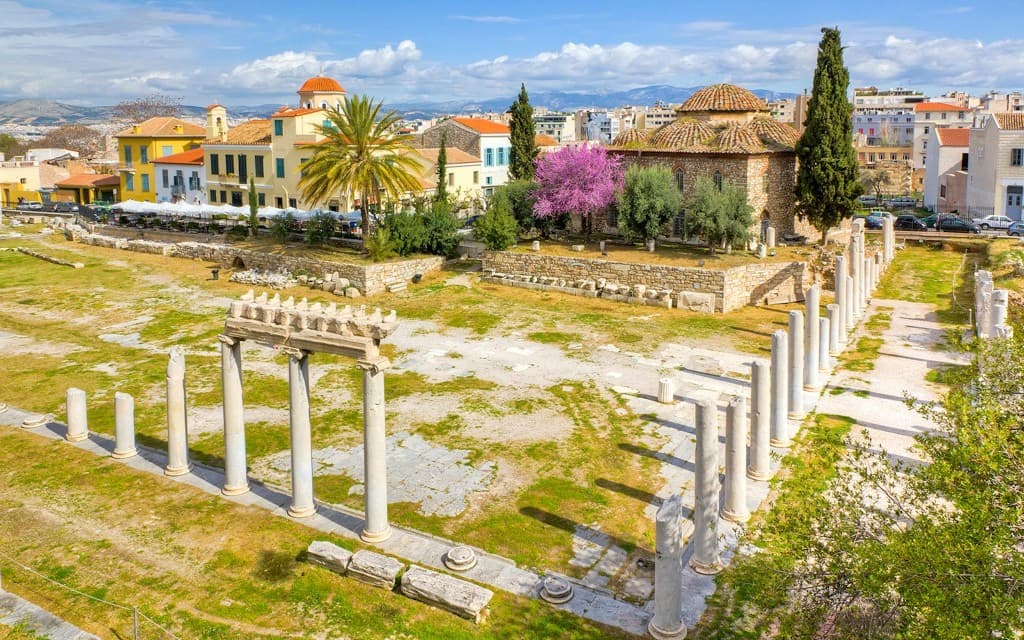
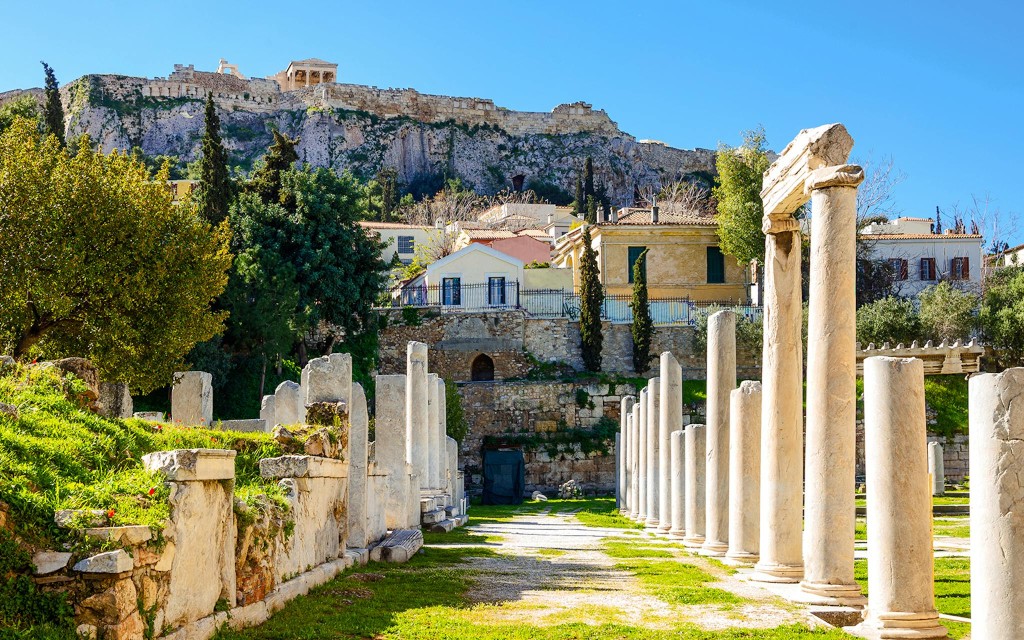
Votre visite se termine par la mosquée du Conquérant, construite à l'époque ottomane sur les ruines de la place du marché romain. Ancien lieu de culte, puis transformé en musée et en entrepôt, il reflète les nombreuses cultures qui ont façonné Athènes. Surplombé par l'Acropole, le site rassemble les héritages grec, romain, byzantin et ottoman dans un cadre remarquable.
Know Before You Go

À savoir avant votre visite

Ce qu'il faut apporter

  • Portez des chaussures solides et confortables ; le pavage ancien du site et le sol irrégulier peuvent rendre la marche difficile.

  • Apportez un chapeau et de la crème solaire pour rester à l'aise au soleil.

  • Gardez votre smartphone complètement chargé pour qu'il dure pendant toute la durée de la visite audio.

  • Utilisez vos propres écouteurs pour une meilleure expérience d'écoute pendant la visite.

Ce qui n'est pas autorisé

  • Les trépieds et les photos avec flash sont interdits. Tout tournage ou photographie professionnelle doit être approuvé à l'avance par le ministère.

  • Les drones sont interdits sans autorisation spéciale.

  • Les animaux domestiques ne sont pas autorisés à l'intérieur du site, mais les animaux d'assistance certifiés sont les bienvenus.

  • Ne touchez pas, ne déplacez pas et n'enlevez pas les pierres, les fragments de poterie ou d'autres vestiges ; ces antiquités sont protégées par la loi grecque.

Accessibilité

  • L'Agora romaine est partiellement accessible aux personnes en fauteuil roulant, offrant un accès aux visiteurs à mobilité réduite par l'entrée principale de la rue Dioskouron. Cependant, une grande partie du site présente un terrain accidenté et un pavage ancien, de sorte que l'accès à l'intérieur est limité.

  • Une autre entrée sur la rue Pelopida permet également aux personnes en fauteuil roulant d'accéder à l'Horologion (Tour des vents).

  • Le musée est entièrement accessible et les visiteurs malvoyants peuvent utiliser les panneaux en braille et les cartes tactiles.

Informations complémentaires

  • Chaque réservation est valable pour un seul appareil; si vous utilisez plusieurs appareils, assurez-vous de réserver séparément pour chacun d'entre eux.

  • Vous ne pouvez entrer sur le site archéologique que pendant le créneau horaire que vous avez choisi. Votre billet est valable de 15 minutes avant à 15 minutes après le créneau choisi.

  • Arrivez à au moins 30 minutes à l'avance pour avoir le temps d'effectuer les formalités de sécurité et d'entrée. Remarque : l'entrée horodatée est autorisée jusqu'à 20 minutes avant l'heure de fermeture.

  • Après votre réservation, vous recevrez un e-mail contenant les instructions pour accéder à votre visite audio et la télécharger ; vérifiez également votre dossier de courrier indésirable.

  • Vous aurez besoin d'un smartphone Android (version 5.0 ou ultérieure) ou d'un appareil iOS (version 15.0 ou ultérieure). La visite audio n'est pas compatible avec les téléphones Windows, l'iPhone 6/6 Plus ou antérieur, l'iPod Touch 6e génération ou antérieur, l'iPad 4e génération ou antérieur, l'iPad Air 1re génération ou l'iPad Mini 3e génération ou antérieur.

  • Assurez-vous que votre téléphone dispose de 100 à 150 Mo d'espace de stockage libre pour télécharger la visite audio.

  • Les itinéraires à l'intérieur du site peuvent varier et certaines contraintes peuvent s'appliquer. Veuillez suivre toutes les indications affichées lorsque vous êtes sur le site.

  • Les horaires d'ouverture varient selon les saisons : de novembre à mars, le site est ouvert de 8h à 15h, tandis que d'avril à août, il est ouvert de 8h à 19h30, avec des horaires de fermeture progressivement réduits en septembre et octobre ; la dernière entrée est toujours 30 minutes avant la fermeture.

Droit d'entrée

  • Les citoyen·nes de l'UE de moins de 25 ans bénéficient d'une admission gratuite toute l'année avec une carte d'identité ou un passeport en cours de validité.

  • Les ressortissant·es non européen·nes de 6 à 25 ans peuvent bénéficier d'une admission à tarif réduit sur présentation d'une carte d'identité ou d'un passeport en cours de validité.

  • L'entrée est gratuite pour les enfants de moins de 5 ans.

Instructions

- Entry to the Roman Agora - 45-minute to 1-hour self-guided audio tour on your smartphone (Android and iOS), in English, Spanish, German, French, Italian, and Greek - Offline content (text, audio narration, and maps)

À quoi s'attendre

Upon entering the Roman Agora, expect to find yourself amidst the scattered yet significant ruins of a bustling ancient marketplace. The site is largely open-air, allowing for clear views of the remaining foundations, columns, and walls. You will wander through an expansive area, tracing the outlines of stoas and various administrative buildings. The impressive Gate of Athena Archegetis immediately draws attention upon entry, while the unique Tower of the Winds, with its intricate details, stands as a focal point. Expect a serene, contemplative atmosphere, allowing you to imagine the vibrancy of Roman-era Athens. While much requires imagination, the preserved elements offer concrete evidence of its historical grandeur and utility.

À propos Roman Agora of Athens: Visitor Information & Tickets

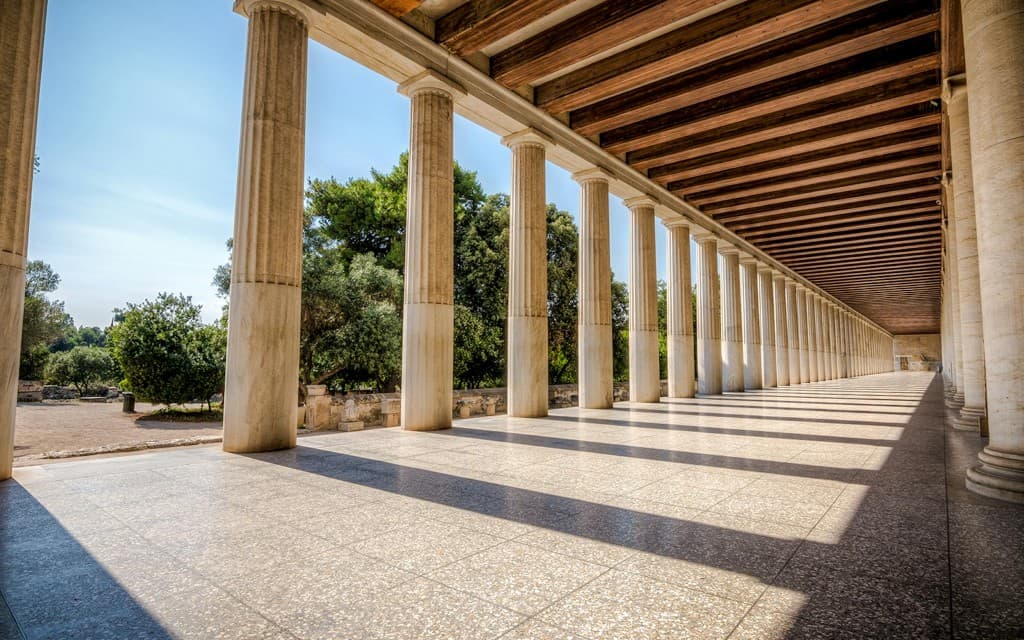
The Roman Agora, also known as the Roman Forum, was constructed between 19 and 11 BCE with funds provided by Julius Caesar and completed by Emperor Augustus. Its creation marked a shift in Athens' commercial center from the nearby Ancient Agora, becoming the new focal point for trade and daily life during the Roman period. The site is rectangular, featuring a large open courtyard surrounded by stoas and various public buildings. The most striking features are undoubtedly the Gate of Athena Archegetis on the west side, a monumental entrance built of Pentelic marble, and the Horologion of Andronikos Kyrrhestes, famously known as the Tower of the Winds, which served as a sophisticated timekeeping device and weather vane. Excavations have also revealed the remains of the Agoranomion (market superintendents' office) and a complex of public latrines. Over the centuries, the Roman Agora continued to be an important urban space, evolving through Byzantine, Ottoman, and modern eras, even hosting Athens' first mosque in the Ottoman period, the Fethiye Mosque, which stands on the site today. It offers a comprehensive perspective on Roman influence and the continuous layering of history in Athens.

Points forts

Entrez dans l'Agora romaine, la dernière place du marché d'Athènes, construite avec des portes en marbre financées par Jules César et Auguste.
Passez la porte d'Athéna Archegetis et imaginez les marchands, les philosophes et les citoyens qui circulaient autrefois entre ses colonnes imposantes.
Découvrez l'ingénieuse Tour des vents, une horloge octogonale qui combine des cadrans solaires, une horloge à eau et des dieux du vent sculptés, l'une des premières stations météorologiques au monde.
Grâce à l'audioguide, découvrez des histoires de la vie quotidienne dans les boutiques, la fontaine et les latrines publiques, où le commerce et la conversation prospéraient sous la domination romaine.
Le saviez-vous ? L'agora romaine était encore utilisée pendant la période ottomane, lorsqu'une mosquée a été construite sur ses ruines, laissant une empreinte historique sur le site.

Pourquoi réserver en ligne ?

Booking your tickets for the Roman Agora online offers several advantages, ensuring a smoother and more convenient visit. Online purchases allow you to secure your entry in advance, saving valuable time by avoiding potential queues at the ticket booths, especially during peak tourist seasons. Pre-purchasing tickets also helps in planning your itinerary, giving you peace of mind that your access to this historic site is guaranteed. It streamlines the entry process, letting you maximize your time exploring the ancient ruins rather than waiting. Furthermore, online platforms often provide clear information on ticket types and opening hours, aiding in a well-organized trip to this significant Athenian landmark.

Histoire

The Roman Agora of Athens represents a significant chapter in the city's long history, marking a period of Roman influence and administrative control. Its construction began under Julius Caesar around 50-19 BCE and was completed by Emperor Augustus, solidifying its role as the new commercial and administrative center of Athens, replacing the older Ancient Agora. This rectangular enclosed complex featured a large paved courtyard, surrounded by colonnades that housed shops and public offices. The most celebrated structure, the Horologion of Andronikos Kyrrhestes, or Tower of the Winds, built earlier in the 1st century BCE, was incorporated into the new Agora complex, serving as a public clock. The monumental Gate of Athena Archegetis, erected by donations from Augustus and the Roman colony, served as the primary western entrance. Throughout its active life, the Roman Agora was a bustling hub, facilitating trade, public announcements, and social interaction. Even after the decline of Roman power, the site continued to be used and adapted; during the Byzantine era, houses and churches were built amidst the ruins, and later, under Ottoman rule, the Fethiye Mosque was constructed on the northern side, signifying its continuous importance and transformation through different historical periods.

Heures d'ouverture

Opening hours for the Roman Agora generally follow a seasonal schedule. During the summer months (April to October), the site typically opens from early morning, such as 8:00 AM, and closes later in the evening, often around 7:00 PM or 8:00 PM. In the winter months (November to March), closing times are usually earlier, around 3:00 PM or 5:00 PM. It is common for archaeological sites in Greece to be closed on specific public holidays, such as New Year's Day, Easter Sunday, and Christmas Day. It is always recommended to check the current operating schedule for the exact dates of your visit.

Meilleur moment pour visiter

To fully enjoy the Roman Agora and avoid the peak heat and crowds, the best times to visit are during the shoulder seasons of spring (April to early June) and autumn (September to October). During these months, the weather is pleasantly mild, making it ideal for exploring the outdoor ruins. If you visit during the summer, plan your visit for the early morning right after opening or in the late afternoon before closing. This will help you avoid the midday sun and the largest groups of tourists, allowing for a more serene and contemplative experience of this historic site.

Que voir à l'intérieur

Within the Roman Agora, visitors can explore several key structures that define its historical importance. The most prominent is the Tower of the Winds, an octagonal marble structure that functioned as a horologion (timepiece) incorporating a sundial, water clock, and weather vane. Its detailed frieze depicting the eight wind deities is remarkably preserved. The monumental Gate of Athena Archegetis, a Doric propylon, stands proudly as the formal entrance to the Agora. Nearby, you can identify the foundations of various shops and stoas that once bustled with commercial activity. The Agoranomion, the building where market rules were enforced, also has visible remains. Additionally, the Fethiye Mosque, a significant Ottoman-era structure, is situated within the archaeological complex, representing a later layer of the site's rich history. Exploring these elements provides a comprehensive understanding of the Agora's diverse functions and its enduring legacy.

Choses à savoir

When planning your visit to the Roman Agora, it is advisable to wear comfortable walking shoes as you will be navigating uneven terrain and ancient paths. Bringing water, especially during warmer months, is recommended to stay hydrated. Sunscreen and a hat are also practical for protection against the sun, as the site offers limited shade. The Roman Agora is an open-air archaeological site, so prepare for varying weather conditions. Photography is generally allowed for personal use, but flash photography may be restricted in certain areas. While parts of the site are accessible, some areas with uneven ground or steps might pose challenges for visitors with mobility impairments.

Règles pour les visiteurs

Visitors to the Roman Agora are expected to adhere to standard archaeological site rules to preserve the historical integrity of the monument. Please do not climb on ancient structures, walls, or ruins. Littering is strictly prohibited; use designated bins for any waste. Respect the historical significance of the site by refraining from writing on or damaging any part of the ruins. Picnicking is not allowed. Supervise children closely to ensure their safety and the preservation of the site. Pets are typically not permitted within the archaeological area, with the exception of service animals.

Est-ce que ça vaut le coup de visiter ?

Visiting the Roman Agora is highly recommended for anyone interested in the layered history of Athens. It offers a tangible connection to the city's Roman period, showcasing how daily life and commerce evolved under Roman rule. The site features iconic structures like the Tower of the Winds and the Gate of Athena Archegetis, which are marvels of ancient engineering and architecture. Beyond the grand monuments, exploring the foundations of ancient shops and public spaces provides a deeper understanding of urban organization and social interaction in antiquity. It serves as an excellent complement to a visit to the Ancient Agora and the Acropolis, painting a fuller picture of Athens' illustrious past.

Foire aux questions

What is the Roman Agora?

The Roman Agora is an ancient marketplace in Athens, Greece, built during the Roman period. It served as a commercial and administrative center, distinct from the older Ancient Agora.

What are the main attractions at the Roman Agora?

Key attractions include the Tower of the Winds (Horologion of Andronikos Kyrrhestes), the Gate of Athena Archegetis, and the remains of various shops and public buildings, including the Fethiye Mosque.

How long does it take to visit the Roman Agora?

Most visitors spend approximately 1 to 1.5 hours exploring the Roman Agora, allowing enough time to appreciate its main features.

Is the Roman Agora accessible for visitors with mobility issues?

While some parts of the site are relatively flat, the ground can be uneven with ancient stones and paths. Some areas may pose challenges for visitors with mobility impairments.

Are there guided tours available for the Roman Agora?

Individual guided tours might be offered by external operators, and information can often be found at the entrance or through tour companies. The site itself does not typically provide official guided tours.

Can I buy tickets at the entrance?

Yes, tickets can be purchased at the entrance booth. However, booking online in advance is often recommended to save time and ensure entry, especially during busy periods.

What is the history of the Tower of the Winds?

The Tower of the Winds is an octagonal marble monument from the 1st century BCE that functioned as a public clock, incorporating a sundial, water clock, and weather vane, making it one of the world's first meteorological stations.

Comment s'y rendre

The Roman Agora is easily accessible by public transport. The nearest metro station is Monastiraki (Lines 1 and 3), which is just a short walk away. Many central Athens bus routes also have stops within easy walking distance. From popular areas like Plaka or Syntagma Square, the site is comfortably reachable on foot.

À partir de
19.55
par personne
ADULT
1864 âge
19.55
Vérifier la disponibilité
Politique d'annulationAnnulation gratuite jusqu'à 24 heures avant
Durée
1 heure
Point de rencontre
Athens
Polignotou 3, Athina 105 55, Greece
Heures d'ouverture
The Roman Agora typically opens in the morning and closes in the late afternoon or early evening, with hours varying seasonally. It is usually open daily, but schedules may differ on public holidays.
Durée de la visite
A typical visit to the Roman Agora usually takes about 1 to 1.5 hours to fully explore the site.
Meilleur moment pour visiter
The best time to visit is during the spring or autumn months, or early in the morning to avoid the heat and larger crowds.
Adresse
The Roman Agora is centrally located in Athens, Greece, near the Ancient Agora and Monastiraki Square.
Code vestimentaire

There is no specific dress code required to visit the Roman Agora. As an outdoor archaeological site, comfortable and casual clothing is recommended. Practical footwear suitable for walking on uneven surfaces, such as ancient stones and dirt paths, is essential. During warmer months, light clothing, a hat, and sunglasses are advisable, while a light jacket might be useful in cooler seasons.

À partir de
19.55
Vérifier la disponibilité