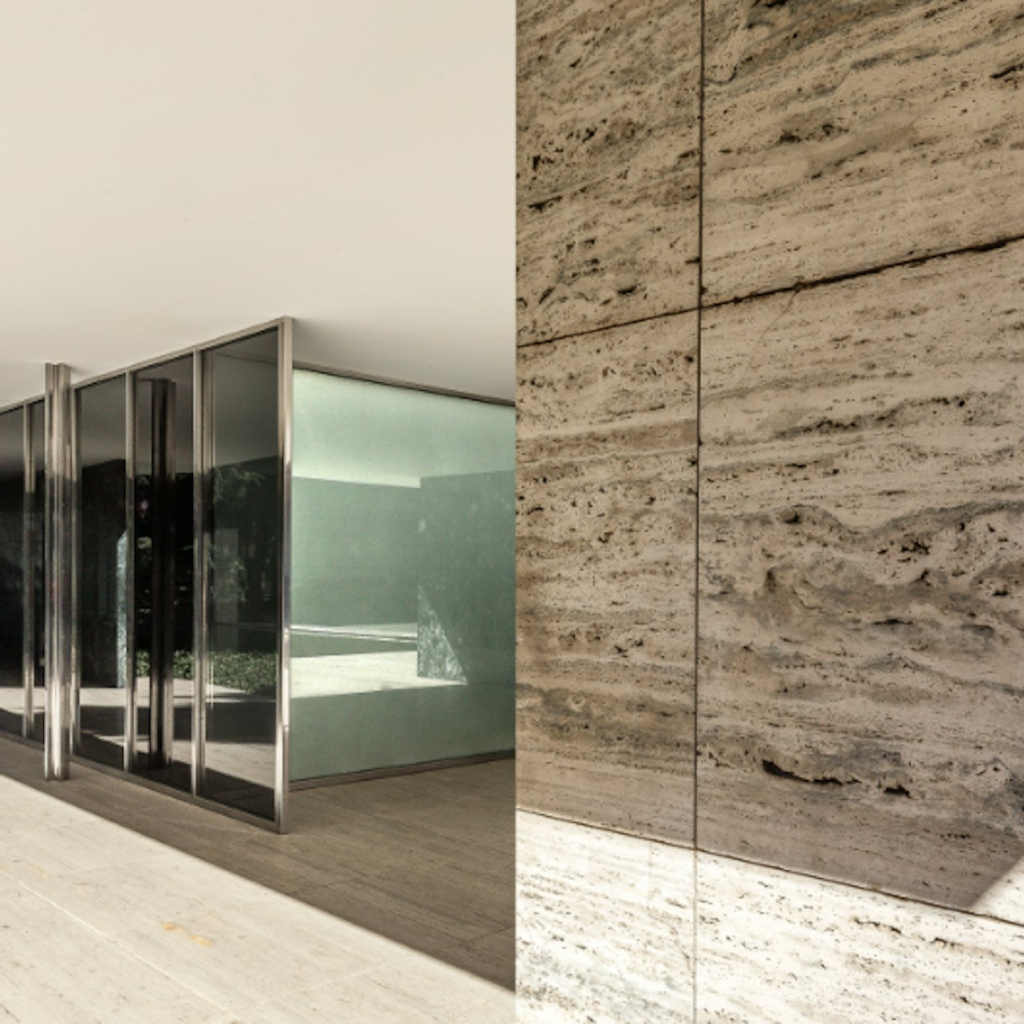
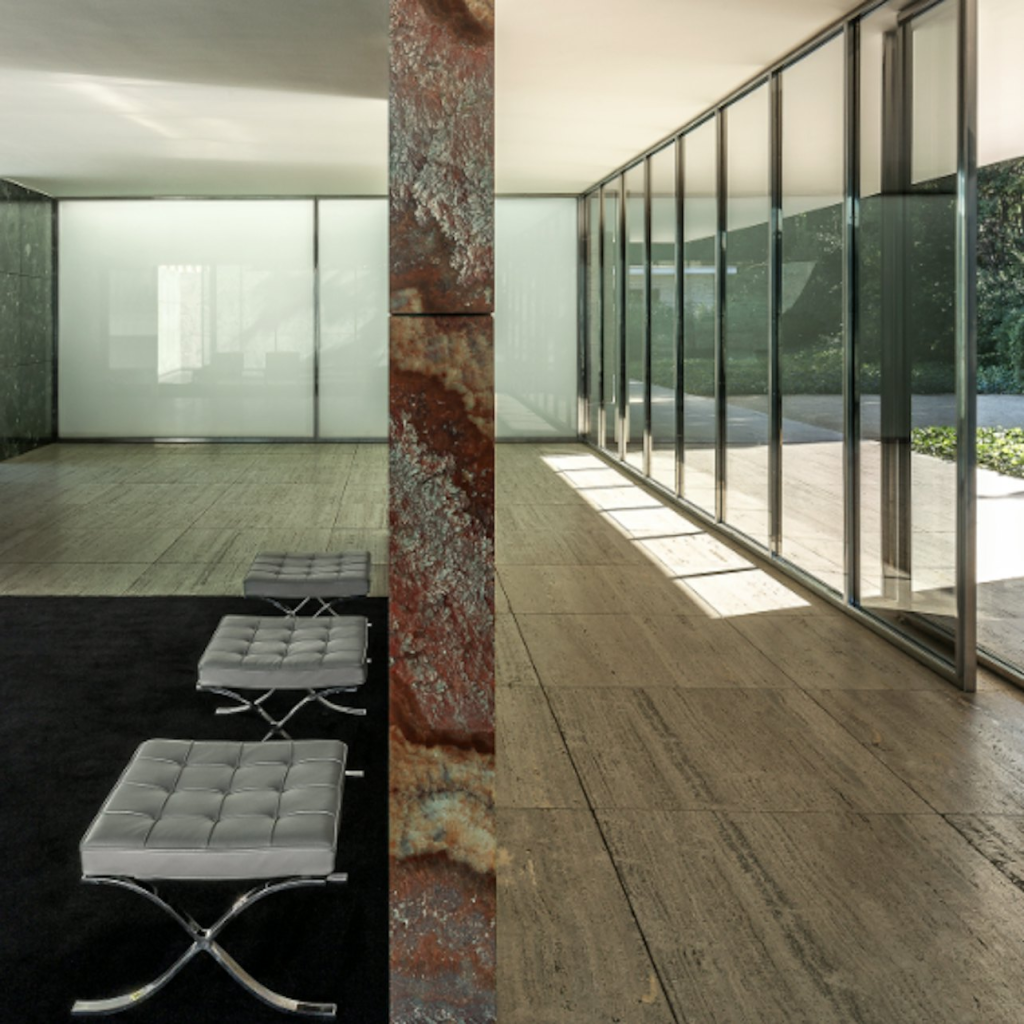
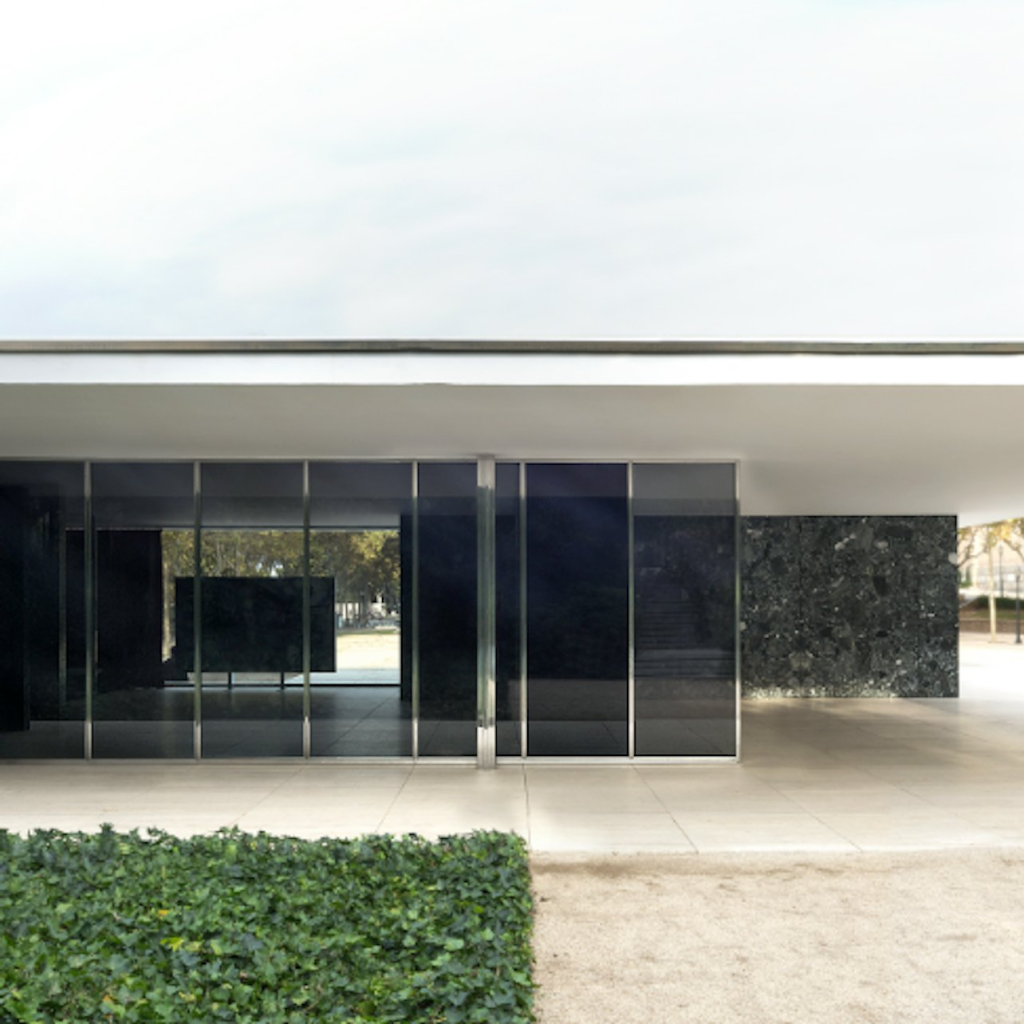
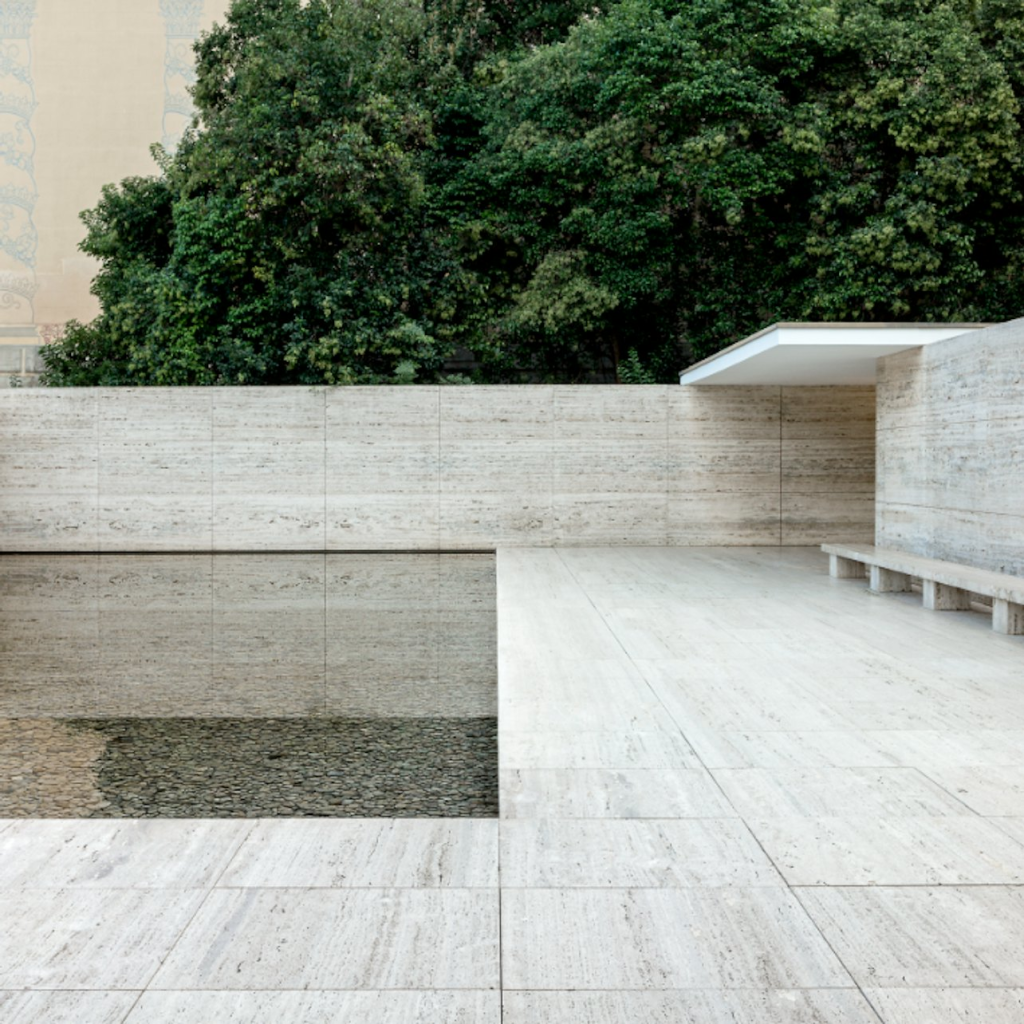
L'Allemagne a chargé Ludwig Mies van der Rohe et Lilly Reich de créer un espace pour représenter la nation lors de l'exposition universelle de 1929 qui a eu lieu à Barcelone. Une fois l'événement terminé, le Pavillon fut démonté, mais jamais oublié. Il est d'ailleurs devenu une référence qui a énormément influencé des générations d'architectes et d'artistes, et a posé les bases de l'architecture moderne.
La pureté extrême de ses formes, sa sobriété, l'interaction linéaire entre les intérieurs et les extérieurs, les contrastes précis de la palette de matériaux choisis et venus des Alpes, de Tivoli, de l'Atlas et de Tinos, combinés pour créer un équilibre parfait dans ce bijou de l'architecture moderne. Sa reconstruction en 1986 nous permet d'en profiter pleinement aujourd'hui !
À propos Mies van der Rohe Pavilion
Germany commissioned Ludwig Mies van der Rohe and Lilly Reich to create a space to represent the nation at the 1929 Barcelona International Exposition. Once the event was over, the Pavilion was dismantled but never forgotten – rather, it was turned into a benchmark that has not only been deeply influential for generations of architects and artists, but laid the foundations of modern architecture.
Points forts
Enjoy a calm visit to one of the most beautiful spaces in the city
See the precise contrasts in the palette of materials combined to form a perfect balance in this jewel of modern architecture
Escape Barcelona's hustle and bustle, and admire one of the 20th century's most influential and beautiful works of architecture