
Ce qui est inclus
- Skip the Ticket Line Entry Ticket to Palace of the Grand Master of the Knights of Rhodes (Adult)
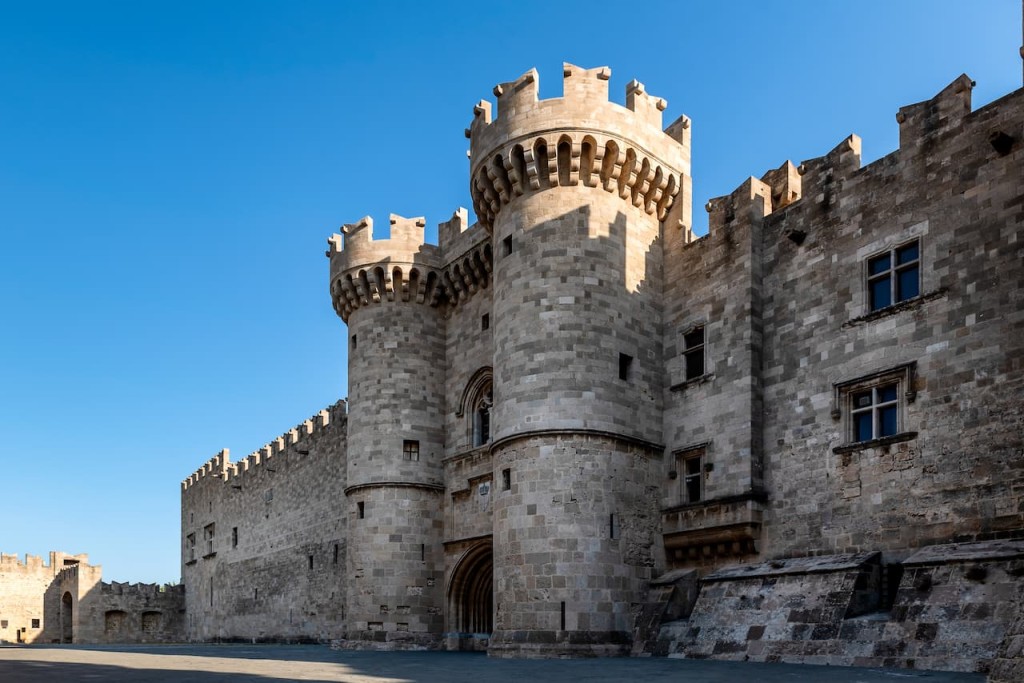
Capture the grandeur and intricate details of the Palace of the Grand Master through these captivating images, offering a glimpse into its storied past and magnificent architecture.
Step back in time at the magnificent Palace of the Grand Master of the Knights of Rhodes, a UNESCO World Heritage site and one of the most prominent monuments on the island. Located at the highest point of the Medieval City of Rhodes, this imposing fortress served as both a palace and a defensive stronghold for the Knights Hospitaller. Its grandeur and historical significance offer a captivating journey through centuries of rule by the Knights, Ottomans, and Italians. Visitors can explore its meticulously restored halls, admire ancient mosaics, and immerse themselves in the rich tapestry of Mediterranean history.
Casual and comfortable attire is appropriate for visiting the Palace of the Grand Master. As it is a historical site and not a place of worship, there are no strict dress code requirements beyond general public decency. Comfortable walking shoes are highly recommended due to the extensive walking and stairs involved in exploring the various sections of the palace and its grounds.
After placing your order, you'll receive a confirmation email with your ticket(s). Please be sure to check your spam folder as well.
PLAN YOUR VISIT HOURS:
Daily Opening Hours:
Monday to Sunday: 10:00 AM to 6:00 PM (Last admission at 5:00 PM)
Important Note: Security checks are mandatory for all visitors and may require a short wait.
Visit the Palace of the Grand Master of the Knights of Rhodes with an entry ticket—wander grand medieval halls, admire exquisite floor mosaics, and explore the former residence of the Knights Hospitaller inside a UNESCO-listed Gothic castle.
A majestic fortress-palace that stands as a testament to the medieval grandeur of Rhodes, offering visitors a glimpse into the island's rich history.
Upon entering the palace, visitors are greeted by the grandeur of its Gothic architecture and expansive courtyards. The interior houses a rich collection of artifacts, including ancient mosaics, sculptures, and period furniture. The exhibitions provide insights into the history of Rhodes, the Knights Hospitaller, and the island's cultural evolution. The palace's strategic location offers panoramic views of the medieval city and the surrounding areas
The supplier will promptly send you an email with your entry ticket as soon as your reservation is confirmed.
It is not possible to skip the security lines. There could be a line at the entrance and is mandatory for all visitors.
Some areas may have limited accessibility. Please check the museum’s policies in advance if needed.
Photography is allowed in most areas but may be restricted in certain exhibits.
Follow all on-site health and safety guidelines.
Wear comfortable shoes, as the visit may involve walking and stairs.
Keep your ticket with you throughout your visit.
It is not possible to skip the security lines. There may be a line at the entrance, and security checks are mandatory for all visitors.
You will receive your e-ticket in the booking confirmation email (see more under HOW IT WORKS). The e-ticket needs to be presented at the museum.
No animals are allowed.
No live guide or meeting point is provided.
Receive Your Ticket
After booking, you’ll receive your entry ticket via email. Please check your spam folder/junk box as well.
Go Directly to the Entrance
Show your digital ticket at the entrance of each site. No need to queue for purchasing—just scan and enter.
Follow Site Rules
Respect each monument’s visiting hours, photography policies, and safety guidelines.
It is not possible to skip the security lines. There may be a line at the entrance, and security checks are mandatory for all visitors.
The Palace of the Grand Master of the Knights of Rhodes stands as a testament to the island's strategic importance and the powerful order that once governed it. Originally built in the 14th century by the Knights Hospitaller as their administrative center, fortress, and residence for the Grand Master, it was a symbol of their military and political might. After suffering significant damage from an earthquake in the 19th century, the palace was extensively reconstructed by the Italians in the 1930s, under the guidance of architect Vittorio Mesturino, to serve as a holiday residence for Benito Mussolini and King Victor Emmanuel III. This restoration incorporated elements from other historical sites, including ancient Roman mosaics from Kos, adding to its unique character. Today, the palace functions as a museum, showcasing artifacts from the early Christian and Byzantine periods, medieval furniture, and exhibitions that narrate the history of Rhodes and the Knights. Its massive walls, impressive courtyards, and grand interiors make it a captivating destination for history enthusiasts and casual visitors alike, offering deep insights into the island's multifaceted past.
Booking your entry tickets to the Palace of the Grand Master of the Knights of Rhodes online offers numerous benefits, ensuring a smoother and more convenient visit. By purchasing your tickets in advance, you can often bypass long queues at the entrance, especially during peak tourist seasons, saving valuable time. Online booking also guarantees your entry, allowing you to plan your itinerary with confidence. It provides a hassle-free experience, letting you focus on immersing yourself in the rich history and grandeur of this iconic landmark without worrying about ticket availability on the day of your visit.
The history of the Palace of the Grand Master is deeply intertwined with that of Rhodes itself. Constructed in the 14th century by the Knights Hospitaller of Saint John, it served as the Grand Master's residence, the administrative hub, and a formidable fortress against invaders. Its strategic location at the highest point of the city made it crucial for defense. After the Knights' departure in 1522, following a prolonged siege by the Ottoman Empire, the palace was used as a prison and barracks. A devastating gunpowder explosion in 1856, caused by a lightning strike in a nearby church, severely damaged the structure. However, the palace experienced a dramatic rebirth in the 1930s when Italy, then occupying the Dodecanese islands, undertook an extensive and controversial reconstruction project. The Italian authorities, particularly under Benito Mussolini, rebuilt the palace to serve as a holiday residence for himself and King Victor Emmanuel III. This reconstruction aimed to recreate its medieval grandeur, albeit with some additions and architectural interpretations, including the incorporation of ancient Roman mosaics from Kos. After the Dodecanese islands were united with Greece in 1948, the palace was transformed into a museum, showcasing the island's rich history and diverse cultural heritage.
The Palace of the Grand Master is typically open daily, though specific hours can vary by season. During peak tourist season, usually from April to October, it generally opens in the morning and remains open until late afternoon or early evening. In the off-season, hours might be slightly shorter, and there could be occasional closures on public holidays. It is always recommended to plan your visit with general daytime availability in mind, as opening times are designed to accommodate visitors throughout the day.
To experience the Palace of the Grand Master with fewer crowds and more comfortable temperatures, consider visiting during the shoulder seasons of spring (April-May) or autumn (September-October). The weather is pleasant, making exploration more enjoyable. If your visit falls within the bustling summer months, aim to arrive early in the morning right after opening or later in the afternoon before closing. Weekdays are generally less busy than weekends, offering a more serene atmosphere to appreciate the intricate details and historical significance of this magnificent site.
Inside the Palace of the Grand Master, visitors are greeted by a sprawling complex filled with historical treasures. The central courtyard, adorned with statues, provides a grand introduction before leading into various chambers. Explore the meticulously recreated State Rooms, including the Grand Master's private chambers, the impressive Council Chamber, and the Ballroom, all furnished with medieval pieces and adorned with intricate decorations. A significant highlight is the collection of ancient Roman mosaics, brought from Kos, which beautifully pave many of the palace's floors. Exhibitions showcase artifacts from different historical periods, including early Christian and Byzantine eras, alongside displays detailing the life and activities of the Knights Hospitaller. Don't miss the chance to walk along parts of the ramparts for spectacular views over the Old Town.
When visiting the Palace of the Grand Master, wearing comfortable walking shoes is highly advisable, as you will be exploring extensive courtyards and multiple levels. Allow at least 2-3 hours for a comprehensive visit to fully appreciate the exhibits and architecture. Photography is generally permitted, but flash photography might be restricted in certain areas. There are restrooms available on-site, and often a gift shop where you can purchase souvenirs and books about the palace's history. Consider carrying a water bottle, especially during warmer months, to stay hydrated while exploring this impressive historical landmark.
Visitors to the Palace of the Grand Master are expected to adhere to certain guidelines to preserve the historical integrity of the site and ensure a pleasant experience for all. Please refrain from touching artifacts or leaning on historical structures. Large bags and backpacks may need to be checked at the entrance. Food and drinks are generally not permitted inside the exhibition areas. Always follow the instructions of museum staff and respect designated areas. Maintaining a moderate noise level is also appreciated, contributing to a respectful environment.
The Palace of the Grand Master of the Knights of Rhodes is unequivocally worth visiting for anyone traveling to Rhodes. It offers a profound immersion into the island's medieval past, showcasing remarkable architecture, powerful fortifications, and a fascinating collection of historical artifacts. Its unique blend of Crusader history, Ottoman influence, and Italian restoration makes it a historically rich site unlike any other. Beyond its visual splendor, the palace provides a tangible connection to the legendary Knights Hospitaller and their enduring legacy. It stands as a beacon of Rhodes' heritage, making it an essential stop for history buffs, culture enthusiasts, and anyone seeking to understand the island's captivating story.
It is a medieval palace and fortress located in the Old Town of Rhodes, Greece, originally built by the Knights Hospitaller in the 14th century. It served as their administrative center, residence, and defensive stronghold.
While the ground floor and main courtyard may be accessible, many areas of the historic palace, especially upper floors and certain exhibition rooms, involve stairs and uneven surfaces, limiting full wheelchair accessibility.
Yes, guided tours are often available, either through independent tour operators or sometimes directly from the palace. Audio guides may also be an option for a self-paced informational experience.
Yes, tickets can typically be purchased directly at the entrance of the palace. However, buying online in advance is often recommended to save time and avoid potential queues, especially during peak season.
Photography without flash is generally permitted in most areas of the palace for personal use. Restrictions on flash photography and video recording may apply in specific exhibition halls to protect artifacts.
Key attractions include the Grand Master's State Rooms, the Council Chamber, the Ballroom, the central courtyard, and the impressive collection of ancient Roman mosaics brought from Kos. Various historical artifacts and exhibitions are also on display.
Yes, restrooms are available for visitors within the palace complex. There is also typically a gift shop where you can purchase souvenirs and books related to the palace and its history.
The Palace of the Grand Master is situated within the heart of the walled Medieval City of Rhodes, a UNESCO World Heritage site. Access to the Old Town is primarily on foot, as cars are generally restricted. If arriving by public transport or taxi, you will be dropped off at one of the gates surrounding the Old Town (e.g., Gate d'Amboise or Marine Gate). From there, follow the well-marked signs or simply navigate through the charming medieval streets, typically a 10-15 minute walk to the palace, which is centrally located.
Casual and comfortable attire is appropriate for visiting the Palace of the Grand Master. As it is a historical site and not a place of worship, there are no strict dress code requirements beyond general public decency. Comfortable walking shoes are highly recommended due to the extensive walking and stairs involved in exploring the various sections of the palace and its grounds.