Whirling Dervish Ceremony in Cappadocia
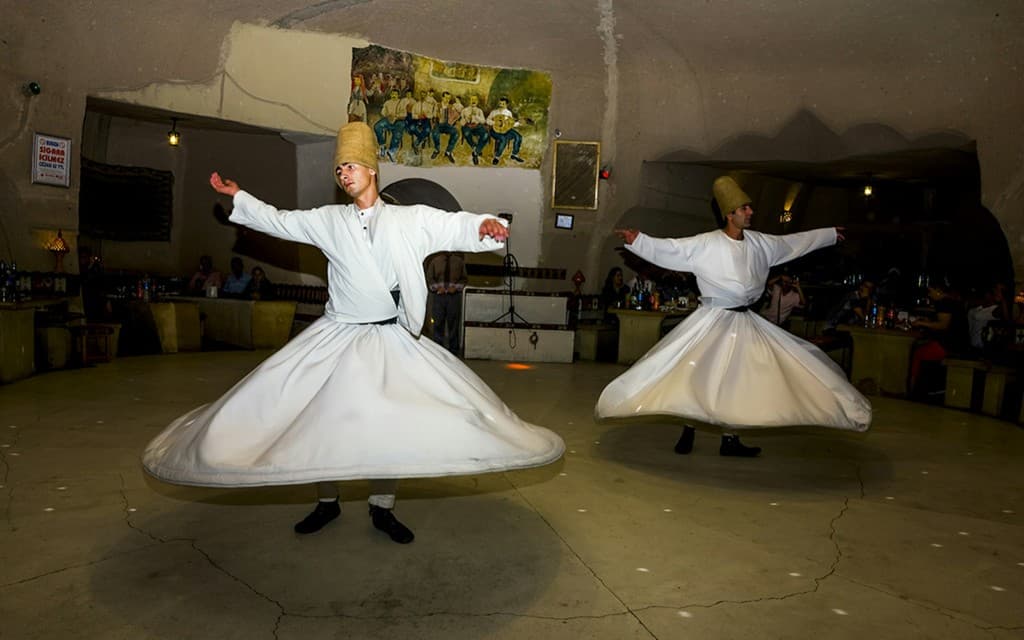
Tickets to Whirling Dervish Show in Cappadocia (All Year)
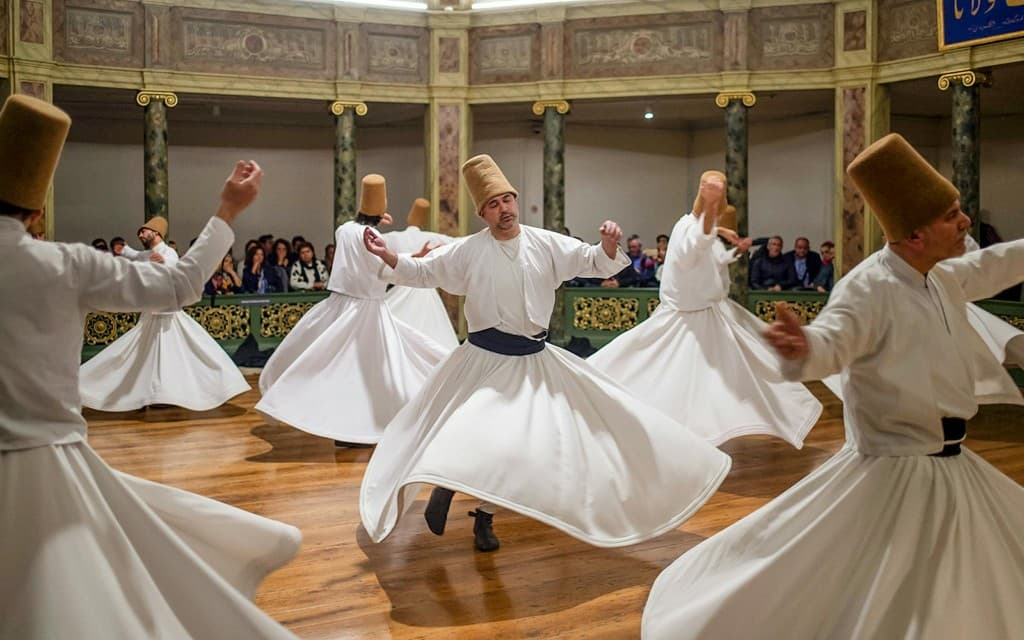
Cappadocia Whirling Dervishes: Journey into Mystical Traditions Tickets (Dervish Show in Cappadocia)
Comparer les options
| Option | Type | Résumé | Durée | À partir de | Réserver |
|---|---|---|---|---|---|
| Cappadocia Whirling Dervishes: Journey into Mystical Traditions Tickets (Dervish Show in Cappadocia) | Event | Découvrez le côté spirituel de la Turquie lors d'un spectacle envoûtant de derviches tourneurs dans un site historique,... | 1 heure | €42.34 | Réserver |
| Tickets to Whirling Dervish Show in Cappadocia (All Year) | Attractions | Vivez pleinement l'expérience de la cérémonie du derviche tourneur qui se déroule devant vous dans un caravansérail. Dé... | 1 heure | €51.97 | Réserver |
Immerse yourself in the profound spiritual beauty of the Whirling Dervish ceremony, a unique cultural experience deeply rooted in Sufi tradition. Held in the enchanting landscape of Cappadocia, this mesmerizing performance offers a window into Turkey's rich spiritual heritage. Witness the graceful ritual of the Mevlevi Order, where music, prayer, and symbolic movement converge to create an atmosphere of reverence and contemplation. The Sema, as the ceremony is known, is more than just a show; it is a spiritual journey symbolizing man's ascent to God, a tradition preserved and presented with utmost authenticity, providing visitors with a truly unforgettable encounter with Anatolian mysticism.
À quoi s'attendre
Points forts
À propos Whirling Dervish Show in Cappadocia
The Whirling Dervish ceremony, or Sema, is a spiritual ritual performed by the Mevlevi Order, followers of the 13th-century Persian poet, Islamic scholar, and theologian Rumi, who settled in Konya, Turkey. This deeply symbolic ritual is a form of dhikr, a remembrance of God, where dervishes (semazen) aim to reach a state of perfect love and spiritual ecstasy through continuous, rhythmic whirling. Each element of the Sema holds significant meaning: the dervishes' black cloaks symbolize the tomb, their white robes the shroud, and their conical hats the tombstone of the ego. As they shed their cloaks, they symbolize spiritual rebirth. The whirling itself, performed with the right hand open to the sky to receive divine grace and the left hand turned to the earth to distribute it, represents a conduit between the divine and the worldly. Accompanied by traditional music played on instruments like the ney (reed flute), the Sema is an intricate, disciplined performance that reflects a profound philosophy of universal love, tolerance, and service. Experiencing this ancient ritual in Cappadocia allows visitors to connect with centuries of spiritual devotion and cultural richness.
Pourquoi réserver en ligne ?
Booking your Whirling Dervish ceremony tickets online ensures a seamless and stress-free experience. You can secure your spot in advance, especially during peak seasons, without worrying about availability. Online booking often provides instant confirmation and allows you to compare different options and choose the most suitable time for your visit. It also helps to avoid potential language barriers or payment issues that might arise when purchasing tickets on-site. Planning ahead means you can relax and fully anticipate this unique cultural and spiritual encounter without last-minute hassles.
Histoire
The Mevlevi Order and its Whirling Dervish ceremony originated in the 13th century in Konya, Turkey, following the teachings of Mawlānā Jalāl ad-Dīn Muhammad Rūmī, known simply as Rumi. After Rumi's death in 1273, his son, Sultan Veled, and his disciple, Hüsameddin Çelebi, established the Mevlevi Order based on Rumi's mystical philosophy of universal love and tolerance. The Sema ritual developed as a form of active meditation, symbolizing the soul's journey to God, a cyclical movement of creation and return. For centuries, the Mevlevi Order played a significant role in Ottoman society, influencing art, music, and literature. While the dervish lodges were closed in Turkey in 1925 as part of secular reforms, the Mevlevi Order continued to exist as a cultural association, and the Sema ceremony was recognized by UNESCO as a Masterpiece of the Oral and Intangible Heritage of Humanity in 2008, ensuring its preservation and public presentation as a profound cultural and spiritual tradition.
Heures d'ouverture
Whirling Dervish ceremonies are generally held nightly, or on specific evenings of the week, typically starting around sunset or slightly after. The exact schedule varies significantly depending on the venue and time of year. It is advisable to consult the specific performance schedule for your chosen location in advance, as timings can change. Performances usually run for about an hour without an intermission, offering a continuous spiritual journey.
Meilleur moment pour visiter
The Whirling Dervish ceremony is a timeless spiritual event, and its essence remains powerful regardless of the season. However, attending an evening performance is highly recommended. The setting sun and the transition to night enhance the mystical atmosphere, allowing for deeper immersion into the ritual. As the ceremony takes place indoors, weather conditions are not a concern. It's an experience that can be enjoyed year-round, offering a peaceful respite from the daytime activities of exploring Cappadocia.
Que voir à l'intérieur
Inside the venue, you will witness the complete Sema ceremony, typically performed in a historic caravanserai or a specially designed cultural center in Cappadocia. The experience begins with a brief explanation of the ritual's significance. You will see the semazen (whirling dervishes) in their symbolic attire, along with the master and musicians. The ceremony unfolds in several stages: a eulogy to the Prophet Muhammad, followed by an instrumental prelude. Then, the dervishes gracefully enter, paying respects and initiating their slow, deliberate whirling. Their synchronized movements, accompanied by the haunting melodies of the ney flute and other traditional instruments, create a hypnotic and deeply moving spectacle. The ritual is divided into four salutes, each representing a stage of spiritual journey and reunion with God, concluding with a prayer for universal peace.
Choses à savoir
Plan to arrive at least 15-30 minutes before the scheduled start time to find your seat and settle in without rush. The ceremony is not a performance in the entertainment sense, but a sacred ritual; therefore, maintaining silence and reverence throughout is crucial. Photography and videography are generally not permitted during the Sema to preserve its spiritual sanctity and avoid disturbing the dervishes. Some venues may allow photos before or after the ceremony, or during specific designated times. Be mindful of your surroundings and respect the solemn atmosphere. Children are often welcome, but parents should ensure they remain quiet and respectful during the entire duration of the ceremony.
Règles pour les visiteurs
Visitors are expected to observe strict decorum during the Whirling Dervish ceremony. Silence is paramount from the moment the ritual begins until its conclusion. Talking, whispering, or any disruptive noises are not allowed. Mobile phones must be switched off or put on silent mode. Photography and video recording during the Sema are generally prohibited to maintain the spiritual integrity of the event and respect the dervishes' meditative state. Applauding or cheering is also inappropriate. These rules ensure a respectful and authentic experience for all attendees and participants.
Est-ce que ça vaut le coup de visiter ?
Attending a Whirling Dervish ceremony in Cappadocia is a profoundly moving and enriching experience, highly worth visiting for anyone seeking a deeper understanding of Turkish culture and Sufi mysticism. It offers a unique opportunity to witness an ancient spiritual practice that has been preserved for centuries, showcasing a beautiful blend of music, poetry, and symbolic movement. Far from being merely a performance, it is an immersive journey into a state of contemplation and reverence, providing a tranquil escape and a lasting memory of Turkey's spiritual heart. It's an unforgettable highlight for any traveler.
Foire aux questions
The Whirling Dervish ceremony, known as Sema, is a spiritual ritual of the Mevlevi Order, symbolizing man's spiritual journey to perfection through love and continuous, rhythmic whirling.
It is both. While deeply rooted in the Islamic Sufi tradition, particularly the teachings of Rumi, it is also recognized as a significant cultural heritage of Turkey, often presented for wider appreciation.
The full ceremony typically lasts approximately one hour, including the various stages of the ritual and musical performances.
Children are generally welcome, but it is important that they remain quiet and respectful throughout the entire duration of the ceremony due to its solemn nature.
Generally, photography and videography are not permitted during the actual ceremony to maintain its spiritual sanctity and avoid disturbing the dervishes. Some venues may allow photos before or after.
Modest and respectful attire is recommended. Clothes that cover your shoulders and knees are appropriate, reflecting respect for the spiritual setting.
Ceremonies are often held in historic venues such as restored caravanserai or dedicated cultural centers in towns like Ürgüp, Avanos, or Goreme.
It is highly recommended to book your tickets in advance, especially during peak tourist seasons, to secure your spot and avoid disappointment.
The dervishes' black cloak symbolizes the tomb, their white robe the shroud, and their tall conical hat the tombstone of the ego, representing spiritual death and rebirth.
Comment s'y rendre
Most venues for the Whirling Dervish ceremony in Cappadocia are accessible by taxi from major towns like Goreme, Ürgüp, or Avanos. Many hotels also offer shuttle services or can arrange private transfers for guests. Public transport options are limited in the evenings, so a taxi or arranged transfer is often the most convenient way to reach the performance location.